AIF Regulatory framework evolves from light-touch to right-hold

Simrat Singh | Finserv@vinodkothari.com

When AIF Regulations were formally introduced in 2012, the regulatory approach was deliberately light. The framework targeted sophisticated investors, allowing flexibility with limited oversight. Over the years, however, AIFs have become significant participants in capital markets. Market practices over the decade exposed regulatory loopholes and arbitrages. For example, some investors who did not individually qualify as QIBs accessed preferential benefits indirectly through AIF structures and investors who were restricted to invest in certain companies started investing through AIF making AIF an investment facade. There were concerns regarding circumvention of FEMA norms as well1. In the credit space, regulated entities such as banks and NBFCs started channeling funds through AIFs to refinance their stressed borrowers, raising concerns around loan evergreening2. These developments prompted regulatory response. RBI first issued two circulars, one in 2023 and the other in 2024. Finally, in 2025 formal directions governing investments by regulated entities in AIFs were also issued3. These Directions introduced exposure caps and provisioning requirements.4 

While the RBI addressed prudential risks arising from regulated entities’ participation in AIFs, SEBI focused on investor protection, governance within the AIF ecosystem and curbing the regulatory arbitrages. First it mandated on-going due diligence by AIF Managers5. It then mandated specific due diligence6 of investors and investments of AIF to prevent indirect access to regulatory benefits. Fiduciary duties of sponsors and investment managers and reporting obligations were progressively codified through circulars. Managers were expected to maintain transparency vis-a-vis their investment decisions, maintain written policies including ones to deal with conflict of interest with unitholders and submit accurate information to the Trustee. What were once broad, principle-based expectations have evolved into detailed, enforceable rules. Regulatory tightening has been matched by a more assertive enforcement approach. SEBI’s recent settlement order7 against an AIF underscores its increasing scrutiny of governance lapses, mismanagement of conflicts and inaccurate reporting. This clearly signals that any compliance gaps will no longer be overlooked and are likely to attract regulatory action. In a separate adjudication order, SEBI imposed penalties on both the Trustee and the Manager for the delayed winding-up of the scheme, underscoring that accountability within an AIF structure extends to all key parties and is not limited to the Manager alone.  

However, SEBI’s approach has not been solely restrictive. Alongside regulatory tightening, it has also sought to preserve commercial flexibility and respond to market needs. Examples include the introduction of the co-investment framework8 for AIFs, framework for offering differential rights to select investors and a revamp for angel funds9.

Together, these measures are reshaping the regulatory landscape for AIFs and their managers. Investors can no longer rely on AIF structures to indirectly obtain regulatory advantages otherwise unavailable to them. As AIFs have grown in scale and importance, what is emerging is a more transparent, prudentially sound and closely supervised regulatory regime designed to align investor protection and commercial flexibility.

  1. See SEBI’s Consultation paper on proposal to enhance trust in the AIF ecosystem ↩︎
  2. See our write-up on AIFs being used for regulatory arbitrages here. ↩︎
  3.  RBI (Investment In AIF) Directions, 2025 ↩︎
  4. See our detailed analysis of the Directions here. ↩︎
  5. See our write-up on ongoing due diligence for AIFs here ↩︎
  6. See our FAQs on specific due diligence of investors and investments of AIFs here. ↩︎
  7. See the complete order here ↩︎
  8. See our write-up on co-investments here. ↩︎
  9. See our write-up on changes w.r.t Angel Funds here ↩︎

Demystifying Structured Debt Securities: Beyond Plain Vanilla Bonds

Palak Jaiswani, Manager | corplaw@vinodkothari.com

Debentures, one of the most common means for raising debt funding, where investors lend money to the issuer in return for periodic interest and repayment of principal at maturity. While the basic feature of any debenture is a fixed coupon rate and a defined tenure (commonly referred to as plain vanilla instruments), sometimes these instruments may be topped up with enhanced features such as additional credit support, market-linked returns, convertibility option, etc., thus referred to as structured debt securities.

Structured debt securities: motivation for issuers

Apart from the economic favouring such structural modifications, a primary motivation for the issuer in issuing such structured instruments might be the regulatory advantages that these securities offer. For instance,

  • Chapter VIII of SEBI NCS Master Circular provides an extra limit of 5 ISINs for structured debt securities & market-linked securities, thus more room for the issuers to issue debt securities, compared to the restriction of a maximum of 9 ISINs for plain vanilla debt.
  • In addition, as per NSE Guidelines on Electronic Book Provider (EBP) mechanism, market-linked debentures are not required to be routed through EBP, allowing issuers to place such instruments almost like an over-the-counter trade. This allows issuers to structure the debt securities on a tailored basis and offer them directly to specific investors.
Read more

CIV-ilizing Co-investments: SEBI’s new framework for Co-investments under AIF Regulations

Payal Agarwal, Partner and Simrat Singh, Senior Executive | Finserv@vinodkothari.com

Background

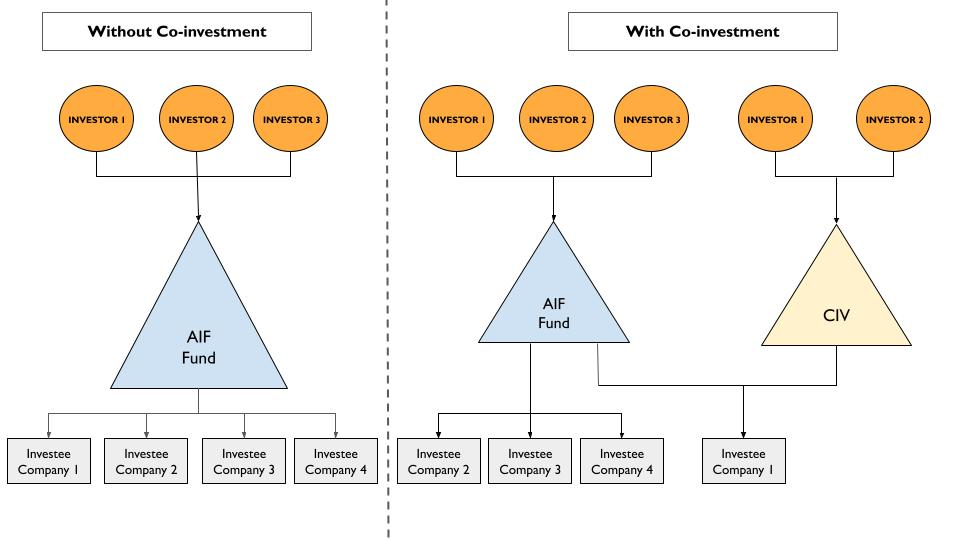
Within an AIF structure, funds are committed by the investors and the AIF in turn, through its Investment Manager, makes investments in investee entities in line with the fund’s strategy. Situations may arise where an investee company of the AIF may require additional capital, that the Investment Manager may not be willing to provide out of the fund’s corpus possibly due to multiple reasons such as over-exposure, non-alignment with funding strategy, capital constraints etc. 

In such cases, the Manager may encourage investors to commit further funds directly into the investee. This gives rise to what is known as ‘co-investment’ an investment by limited partners (LPs or investors) in a specific investee alongside, but distinct from, the flagship fund. Globally, these are also called ‘Sidecar’ funds or ‘parallel’ funds.1

Benefits of co-investments 

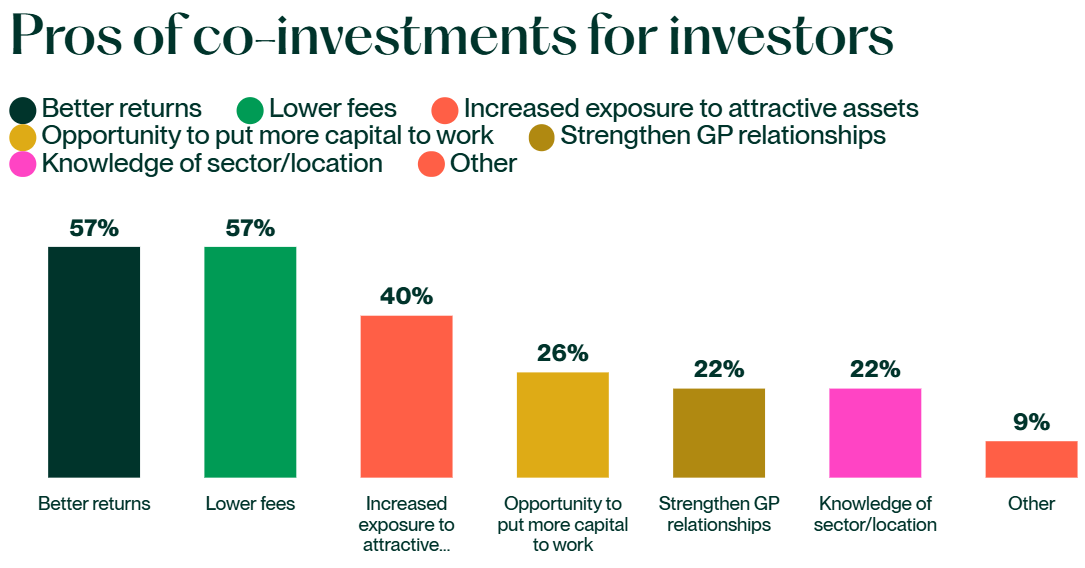
Investors benefit from co-investments primarily in terms of cost efficiency, in the following ways: 

  • No or lower management fees and a reduced rate of carried interest.2
  • Reducing/ removing operational and administrative expenses such as in due diligence process & deal sourcing
  • Where management and incentive fees are directly charged on co-investments, they are usually capped and lower than when investing directly into the PE Fund.3
  • Not only are headline rates4 typically lower, but management fees are often charged on invested rather than committed capital, reducing fee drag and mitigating the J-Curve.5 

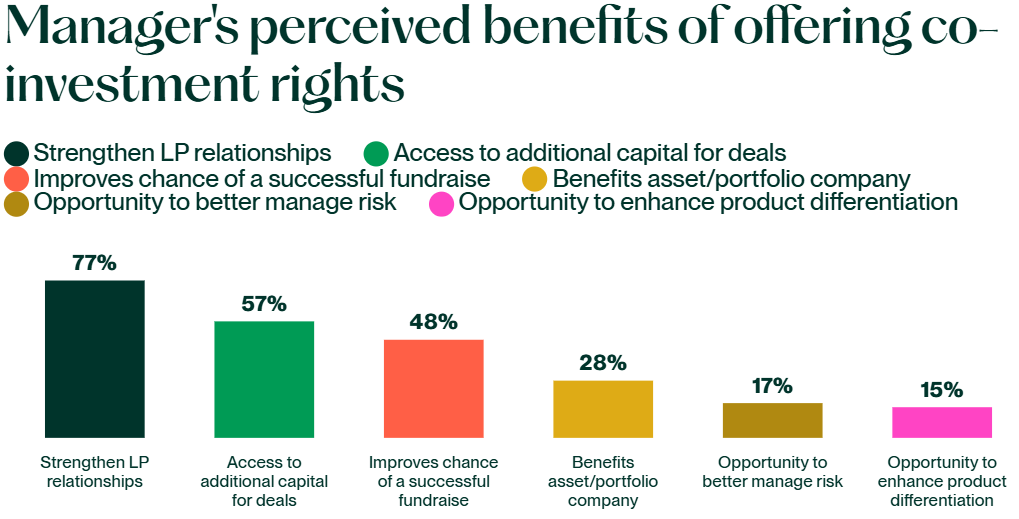
For Managers co-investment offers the following advantages:

  • Provide access to expanded capital; 
  • Enables it to pursue larger transactions without over extending the main fund

A Preqin study6 found that 80% of LPs reported better performance from equity co-investments than traditional fund structures.

Fig 2: Investor’s perceived benefits of co-investment

Source:A&0 Shearman

Fig 2: Manager’s perceived benefits of offering co-investments. 

Source: A&0 Shearman

Regulating Co-investments by AIFs in India

Co-investments by AIF investors in the investees of AIF were primarily offered in accordance with the SEBI (Portfolio Managers) Regulations, 2020 (“PM Regulations”). In 2021, PM Regulations were amended to regulate AIF Managers offering co-investments by acting as a portfolio manager of the investors (see need for regulating the co-investment structure below). The AIF Regulations, in turn, required the investment manager to be registered under PM Regulations, for providing co-investment related services. 

Keeping in view the rising demand for co-investments, SEBI, based on  a recent Consultation Paper issued on 9th May 2025, has amended the AIF Regulations, vide notification dated 9th September, 2025 and issued a circular in September 2025 introducing a dedicated framework for co-investments within the AIF regime itself. Note that the recently introduced framework is in addition to and does not completely replace the co-investment framework through PM as provided in the PM Regulations. 

The newly introduced framework refers to co-investments as an affiliate scheme within the main scheme of the fund, in the form of a Co-investment Vehicle Scheme (CIV) and does not require a separate registration by the Investment Manager in the form of Portfolio Manager under PM Regulations. 

Interestingly, in May 2025, IFSCA also issued a Circular specifying operational aspects for co-investments by venture capital funds and restricted schemes operating in the IFSC. In this article, we discuss the new framework vis-a-vis the existing PMS route.

Need for regulating co-investments

  • Conflicts of interest
    • Especially around the timing of exit. Main fund vs. co-investors may have different preferences.
  • Voting rights alignment
    • Misalignment can fragment decision-making.
  • Risk concentration for investors
    • Exposure to a single company rather than a diversified portfolio.
  • Disclosure and transparency obligations for managers
    • Other fund investors need clarity on why the deal was structured as a co-investment.
    • Questions may arise on whether the main fund had sufficient capacity to invest.
    • Risk of concerns about preferential treatment of select investors.
  • Operational issues:
    • Warehousing: main fund may initially acquire the investment until co-investment vehicle is ready; requires proper compensation to the fund for interim costs.
    • Expense allocation: management costs must be fairly shared between the fund and the co-investment vehicle.

Co-investment through PMS Route – the existing framework 

Under the PMS Route, the AIF Manager intending to offer co-investment opportunities to its investors shall first register itself as a ‘Co-investment Portfolio Manager’ (see reg. 2(1)(fa) of PM Regulations) post which it can invest the funds of investors subject to the following conditions:

  1. 100% of AUM shall be invested in unlisted securities [see reg. 24(4B)];
  2. Only a manager of a Cat I & II AIF is allowed to offer co-investment;
  3. The terms of co-investment in an investee company by a co-investor, shall not be more favourable than the terms of investment of the AIF [see proviso to reg. 22(2)]:
  4. Terms relating to exit of co-investors shall be identical to that of exit of AIF [see proviso to reg. 22(2)];
  5. Early termination/withdrawal of funds by co-investor shall not be allowed. [see reg. 24(2)(a)]

The AIF Manager, registered as a Co-investment Portfolio Manager, is subject to all the compliances as required under the PM Regulations, read with the circulars issued thereunder, except the following: 

  1. The minimum investment limit of Rs. 50 Lac per investor in case of PMS will not apply [see reg. 23(2)];
  2. Min. net worth criteria of Rs. 5 Crore shall not apply to such a PM [see reg. 11(e)];
  3. Appointment of a custodian is not required. (see reg. 26)
  4. Roles and responsibilities of the compliance officer can be discharged by the principal officer of the Manager. [see reg. 34(1)]
ParticularsDiscretionaryNon-discretionaryCo-investment
No. of clients1,92,5486,733609
AUM (Rs. Crores)33,05,9583,18,6854,674

Table 1: No. of co-investment clients and their total AUM as on 31.07.2025.

As per Table 1, it is evident that co-investment under the PMS Regulations has not taken off yet. One of the major reasons is the additional registration & compliance burden associated with this route.

Co-investment through CIV : the recently approved framework

A formal regulatory framework for co-investment has been introduced in the AIF Regulations vide SEBI (Alternative Investment Funds) (Second Amendment) Regulations, 2025. The Amendment Regulations define “co-investment” as: 

“Co-investment” means investment made by a Manager or Sponsor or investor of a Category I or II Alternative Investment Fund in unlisted securities of investee companies where such a Category I or Category II Alternative Investment Fund makes investment;”

The framework is restricted to “unlisted securities” only, for the following reasons: 

  1. There is a greater information symmetry in case of unlisted securities;
  2. In case of investment in listed securities, it is difficult to establish whether an investor’s decision to invest is driven by the fund manager’s  advice or based on the investor’s own independent assessment;
  3. Co-investments are typically undertaken in unlisted entities.

Reg 2(1)(fa) defines co-investment scheme as: 

“Co-investment scheme” means a scheme of a Category I or Category II Alternative Investment Fund, which facilitates co-investment to investors of a particular scheme of an Alternative Investment Fund, in unlisted securities of an investee company where the scheme of the Alternative Investment Fund is making investment or has invested;”

The conditions for co-investment through the AIF route is prescribed through the newly inserted Reg 17A to the AIF Regulations read with the Circular dated September 09, 2025. Additionally, the Circular also refers to the implementation standards, if any, formulated by SFA with regard to offering of the co-investment schemes by the AIFs. Since the CIV operates as an affiliate AIF, in order  to make it operationally feasible, a CIV has been granted the following exemptions under the AIF Regulations [See reg. 17A(10) of AIF Regulations]:

  • No minimum corpus of ₹20 Cr.
  • No continuing sponsor/manager interest (2.5%/₹5 Cr).
  • Exempt from Placement Memorandum contents, filing modalities, tenure requirement.
  • Exempt from 25% single-investee company concentration limit

Investment via PMS vs Investment via CIV of an AIF

Post the AIF Amendment, investors have a choice for investing either through the PMS Route or through the CIV route under AIF Regulations. A comparison between the 2 routes is listed below:

AspectsInvesting through CIVInvesting through PMS
Regulatory frameworkSEBI (Alternative Investment Funds) Regulations, 2012SEBI (Portfolio Managers) Regulations, 2020
Limit on investment by each investorUpto 3 times of investment made by such investor in the investee company through AIF. No limit
Registration requirement for ManagerNo separate registration required Co-investment Portfolio Manager license mandatory. 
Kind of securities only in unlisted securitiesonly in unlisted securities
Mode of investmentThrough and in the name of the CIV schemeDirectly in the securities of the investee company.
Co-terminus exitTiming of exit of CIV = Timing of exit of AIF Scheme from such investee company.Co-terminus exit
Eligibility of investorOnly Accredited InvestorsAny investor
No regulatory bypassCIV cannot:
– Give indirect exposure to such investees where direct exposure is not permitted to the investors;
– Create situations needing additional disclosures;
– Channel funds where investors are otherwise restricted.
Considered as direct investment by the investor.
Ineligibility of investors Defaulting, excused, or excluded investors of AIF cannot participate in CIV.No such exclusion. This seems like a regulatory loophole.
Operational burdenCIV aggregates co-investors’ exposure; hence, only the Scheme appears on the capital table;
Unified voting and simplification of compliance requirements for investees as well
Multiple co-investors appear directly on the investee company’s cap table.
Closing times may be different, and operationally difficult for investors and investees to exercise voting rights and ensure compliances at each investor’s level. 
Scope for co-investmentManagers can extend co-investment services to investors of any AIF managed by them (Sponsor may be same or different)A Co-investment Portfolio Manager can serve only his own AIF’s investors, and others only if managed by him with the same sponsor
Ring-fencing of funds and investmentsSeparate bank & demat accounts for each CIVBank & demat account of investor
Leverage restrictionsCIV cannot undertake any leverage.The PM cannot undertake leverage and invest.
TaxationTax pass through granted to Cat I & II AIFs make the investors directly liable to tax except on business income of the AIFCapital gain and DDT payable by investor directly
Filing a shelf PMManagers are required to file a separate Shelf PM for each CIV Scheme.No such requirement

Conclusion

Much of the future trajectory of co-investments in India will depend on how both investors and managers weigh the relative merits of the PMS and CIV routes. While the PMS framework comes with higher compliance costs and additional registration requirements, the absence of a maximum cap on investments by the co-investors may still serve as a motivational factor for continued usage of the same. By contrast, the CIV framework seeks to simplify execution and preserve alignment with the parent AIF, although the 3 times’ cap on the co-investor’s share may be a hindrance for investors, thus making the CIV structure less attractive. Recently RBI had also issued Directions for regulated entities investing in AIFs with a view to curb evergreening and excessing investing in AIF structures (see our article on the same). The AIF Manager shall be cognizant of these restrictions in order to ensure there is no bypass through CIV. 

Large institutional investors, sovereign funds and pension funds are likely to be the early adopters of CIV structures, given their scale, accredited investor status, and preference for alignment with fund managers. High-net-worth individuals (HNIs) and family offices, on the other hand, may still prefer the PMS route owing to its flexibility and direct exposure. Over time, the regulatory tweaking of these frameworks, if any and the appetite of investors for concentrated exposure will determine how the Indian co-investment landscape unfolds.

  1. Financing Business Innovation: World Bank ↩︎
  2. Goldman Sachs: The Case for Co-investments, Strategic Investment Funds: World Bank ↩︎
  3. Structuring Co-investments in Private Equity: American Bar Association ↩︎
  4. In private equity, the headline rate (e.g., 2% management fee, 20% carry) is what’s stated in the PPM, but the effective rate investors actually pay is usually lower. This depends on factors like fees on committed vs. invested capital, negotiated discounts or preferential terms, and lifecycle adjustments such as fee step-downs post-investment period. ↩︎
  5. The J Curve represents the tendency of private equity funds to post negative returns in the initial years and then post increasing returns in later years when the investments mature. The negative returns at the onset of investments may result from investment costs, management fees, an investment portfolio that is yet to mature, and underperforming portfolios that are written off in their early days: Corporate Finance Institute ↩︎
  6. Private Equity Co-Investment Outlook: Preqin ↩︎

See our other resources on AIFs:

SEBI says SWAGAT to investors

– Team Corplaw | corplaw@vinodkothari.com

– Approves major proposals easing institutional investments in IPOs, minimum offer size for larger entities, AIF entry, increased threshold for related party transaction approvals etc.

Relaxed norms for Related Party Transactions 

  • Introduction of scale-based threshold for materiality of RPTs for shareholders’ approvals based on annual consolidated turnover of the listed entity
Annual Consolidated Turnover of listed entity (in Crores)Approved threshold (as a % of consolidated turnover)
< Rs.20,00010%
20,001 – 40,0002,000 Crs + 5% above Rs. 20,000 Crs
> 40,0003,000 Crs + 2.5% above Rs. 40,000 Crs
  • Revised thresholds for significant RPTs of subsidiaries
    • 10% of standalone t/o or material RPT limit, whichever is lower.
  • Simpler disclosure to be prescribed by SEBI for RPTs that does not exceed 1% of annual consolidated turnover of the listed entity or Rs. 10 Crore, whichever is lower. ISN disclosures will not apply.
  • ‘Retail purchases’ exclusions extended to relatives of directors and KMPs, subject to existing conditions 
  •  Inclusion of validity of shareholders’ approval as prescribed in SEBI circular dated 30th March 2022 and 8th April, 2022 
  • Rationale (See Consultation Paper)

Relaxation in thresholds for Minimum Public Offer (MPO) and timelines for compliance Minimum Public Shareholding (MPS) for large issuers (issue size of 50,000 Cr and above)

  • Reduction in MPO requirements for companies with higher market capitalisation 
  • Relaxed timelines for complying with MPS
  • Post listing, the stock exchanges shall continue to monitor these issuers through their surveillance mechanism and related measures to ensure orderly functioning of trading in shares 
  • Applicable to both entities proposed to be listed and existing listed entities that are yet to comply with MPS requirements 
  • Following changes recommended in Rule 19(2)(b) of Securities Contracts (Regulation) Rules, 1957: 
Post-issue market capitalisation (MCap) MPO requirements Timeline to meet MPS requirements (25%)
Existing provisions Post amendmentsExisting provisions Post amendments
≤ 1,600 Cr25%NA
1,600 Cr < MCap ≤ 4,000 Cr400 Crs  Within 3 years from listing
4,000 Cr < MCap ≤ 50,000 Cr10%Within 3 years from listing
50,000 Cr < MCap ≤ 1,00,000 Cr10%1,000 Cr and at least 8% of post issue  capitalWithin 3 years from listingWithin 5 years from listing
1,00,000 Cr < MCap ≤ 5,00,000 Cr5000 Cr and  atleast 5% of post issue  capital 6, 250 Cr and 2.75% of post issue  capital10% – within 2 years 25% – within 5 yearsIf MPS on the date of listing <15%, then15% – within 5 yrs25% – within 10 yrs
If MPS >15% on the date of listing, 25% within 5 yrs
MCap > 5,00,000 Cr15,000 Cr and 1%of post issue  capital, subject to minimum dilution of 2.5%If MPS on the date of listing <15%, then15% – within 5 yrs25% – within 10 yrs
If MPS on the date of listing  >15%, 25% within 5 yrs
  • Rationale (see Consultation Paper):
    • Mandatory equity dilution for meeting MPS requirement may lead to an oversupply of shares in case of large issues; 
    • Dilution may impact the share prices despite strong company fundamentals. 

Broaden participation of institutional investors in IPO through rejig in the anchor investors allocation

  • Following changes recommended in Schedule XIII of ICDR Regulations.
    • Merge Cat I and II of Anchor Investor Allocation to a single category of upto 250 crores. Minimum 5 and maximum 15 investors subject to a minimum allotment of ₹5 crore per investor.
    • Increasing   the   number   of   permissible  Anchor Investor allottees for allocation above 250 crore in the discretionary allotment –  for every additional ₹250 crore or part thereof, an additional 15 investors (instead of 10 as per erstwhile norms) may be permitted, subject to a minimum allotment of ₹5 crore per investor. 
    • Life insurance companies and pension funds included in the reserved category along with domestic MF; proportion increased from 1/3rd (33.33%) to 40%
      • 33% for domestic MFs
      • 7% for life insurance companies and pension funds
        • In case of undersubscription, the unsubscribed part will be available for allocation to domestic MF.
  • Rationale (See Consultation Paper)
    • Increase in permitted investors:
      • To ease participation  for  large  FPIs  operating  multiple  funds with  distinct  PANs,  which  currently  face  allocation  limits  due  to  line  caps
      • Given the recent deal size, most  issuances  fall  within  the  threshold  of Cat II  or  higher, limiting the relevance of Cat 1, therefore merge Cat 1 and Cat II
    • Including life insurance companies and pension funds:
      • Growing interest in IPOs, the amendment will ensure participation and diversify long term investor base.

Clarifications in relation to manner of sending annual reports for entities having listed non-convertible securities [Reg 58 of LODR]

  • For NCS holders whose email IDs are not registered
    • A letter containing a web link and optionally a static QR code to access the annual report to be sent
      • Instead of sending hard copy of salient features of the documents as per sec 136 of the Act 
      • Aligned with Reg 36(1) (b) of LODR as applicable to equity listed cos
      • Currently, temporary relaxation was given by SEBI from sending of hard copy of documents, provided a web-link  to  the  statement  containing  the  salient  features  of  all  the documents is advertised by the NCS listed entity 
  • Timeline for sending the annual report to NCS holders, stock exchange and debenture trustee
    • To be specified based on the law under which such NCS-listed entity is constituted 
    • For e.g. – Section 136 of the Companies Act specifies a time period of at least 21 days before the AGM.

Light touch regulations for AIFs that are exclusively for Accredited Investors and Large Value Funds

  • Introduction of new category of AIFs having only Accredited Investors 
  • Reduction of minimum investment requirements for Large Value Funds (LVFs) from Rs. 70 crores to Rs. 25 crores per investor 
  • Lighter regulatory framework for AIs – only/ LVFs 
  • Existing eligible AIFs may also opt for AI only/ LVF classification with associated benefits
  • Rationale: see Consultation Paper 

Read detailed article: Proposed Exclusivity Club: Light-touch regulations for AIFs with accredited investors

Facilitating investments in REITs and InVITs

  • Enhanced participation of Mutual Funds through re-classification of investment in REITs as ‘equity’ investments, InVITs to continue ‘hybrid’ classification
    • Results in REITs becoming eligible for limits relating to equity and equity indices 
    • Entire limits earlier available to REITs and InVITs taken together now becomes available to InVITs only
  • Rationale (see Consultation Paper)
    • In view of the characteristics of REIT & InVITts and to align with global practice
  • Expanding the scope of ‘Strategic Investor” & aligning with QIBs under ICDR
    • Extant Regulations cover: NBFC-IFCs, SCB, a multilateral and bilateral development financial institution, NBFC-ML & UL, FPIs, Insurance Cos. and MFs.
    • Scope amended to include: QIBs, Provident & Pension funds (Min Corpus > 25Cr), AIFs, State Industrial Development Corporation, family trust (NW > 500 Cr) and intermediaries registered with SEBI (NW > 500 Cr) and NBFCs – ML, UL & TL
    • Relevance of Strategic Investors: 
      • Invests a min 5% of the issue size of REITs or INVITs subject to a maximum of 25%. Investments are locked in for a period of 180 days from listing
      • Such subscription is documented before the issue and disclosed in offer documents
    • Rationale: see Consultation Paper
      • to attract capital from more investors under the Strategic Investor category
      • to instil confidence in the public issue

SWAGAT-FI for FPIs: relaxing eligibility norms, registration and compliance requirements

  • Registration of retail schemes in IFSCs as FPIs alongside AIFs in IFSC
    • Both for retail schemes and AIFs, the sponsor / manager should be resident Indian
  • Alignment of contribution limit by resident indian non-individual sponsors with IFSCA Regs
    • Sponsor contributions shall now be subject to a maximum of 10% of corpus of the Fund (or AUM, in case of retail schemes)
  • Overseas MFs registering as FPIs may include Indian MFs as constituents
    • SEBI circular Nov 4, 2024 permitted Indian MFs to invest in overseas MFs/UTs that have exposure to Indian securities, subject to specified conditions
  • SWAGAT for objectively identified and verifiably low-risk FIs and FVCIs
    • Introduction of SWAGAT-FI status for eligible foreign investors
      • Easier investment assess
      • Unified registration process across multiple investment routes
      • Minimize repeated compliance requirements and documentation
    • Eligible entities (applicable to both initial registration and existing FPIs):
      • Govt and Govt related investors: central banks, SWFs, international / multilateral organizations / agencies and entities controlled or 75% owned (directly or indirectly) thereby
      • Public Retail Funds (PRFs) regulated in home jurisdiction with diversified investors and investments, managed independently: MFs and UTs (open to retail investors, operating as blind pools with diversified investments), insurance companies (investing proprietary funds without segregated portfolios), PFs
    • Relaxation for SWAGAT-FIs
    • Option to use a single demat account for holding all securities acquired as FPI, FVCI, or foreign investor units, with systems in place to ensure proper tagging and identification across channels

India Market Access – dedicated platform for current and prospective FPIs

To tackle the problem of global investors in accessing Indian laws and regulatory procedures across various platforms, citing the absence of a centralized and comprehensive legal repository.

Read More:

Relaxed Party Time?: RPT regime gets lot softer

LODR Resource Centre

Decoding “Control” in Pooled Investment Funds: Manager, Investors, or no one?

– Sikha Bansal, Senior Partner and Payal Agarwal, Partner  | corplaw@vinodkothari.com 

Corporate relationships and hierarchies are prone to misuse and hence, there are regulatory prescriptions to ascertain and address the areas of conflict. This is usually done through identification of control and/or significant influence, if any, existing between the parties. If there is an element of control /significant influence, the parties may be required to follow a host of protocols – including but not limited to being identified as a promoter, to put in place related party controls, to disclose their  transactions and even go for consolidation of accounts, etc.

While in simple structures, it is still possible to objectively conclude the existence of control/significant influence (or the absence of it); in certain complex structures, particularly where unincorporated entities are involved, the determination can be quite subjective and dependent on multiple factors. For instance, in the case of pooled investment schemes (called “funds” henceforth) like mutual funds, AIFs, ReITs, InVITs, etc., the entity would often be formed as a trust which would hold the common hotchpot of funds contributed by investors. Besides investors, there would be multiple parties involved, viz., the fund sponsor, fund manager, and the trustee. Mostly, the fund may not be a legal entity[1]; however, it is segregated from the funds of either the manager or trustees. If there is any element of control or even significant influence on the funds, by any of these investors/parties, it would necessitate treatment of such funds in accordance with regulatory protocols as discussed above. Further, at the next level, if there is any element of control by such funds on other entities, then there would be concerns around indirect control of investors/parties on such other entities as well, percolating through the fund. Therefore, whether the fund is being controlled or significantly influenced by any person, becomes a pertinent question. 

In this article, we attempt to analyze the same and try to frame some guiding principles for ascertaining circumstances in which a fund would be said to be controlled or significantly influenced. 

Meaning of control

Depending on the specific nature and characteristics, pooled investment funds in India are governed by distinct SEBI regulations, such as, SEBI (Alternative Investment Funds) Regulations 2012, SEBI (Infrastructure Investment Trusts) Regulations 2014, SEBI (Mutual Funds) Regulations 1996, etc. These regulations define the terms “control” or “change in control” in the context of either the sponsor or the manager or both, but not in the context of the fund. Hence, one will have to look towards accounting standards – namely IFRS 10 which sets out guidelines for the assessment of control in the hands of a fund manager. In India, Ind AS 110 replicates the guidance provided under IFRS 10. Detailed discussion on the principles discussed under IndAS 110 is as below.

Components of control

Ind AS 110 refers to three cumulative components of control, viz.,

  1. Power over the investee,
  2. Exposure or rights to variable returns from its involvement with the investee, and 
  3. The ability to use its power over the investee to affect the amount of the investor’s returns.

As evident, the Standard assumes a relationship of investor and investee. In case of funds, while there would be investors; however, the asset manager too, may be required to hold a certain percentage in the fund as skin-in-the-game, pursuant to applicable regulations. Therefore, in the case of funds, the asset manager is also in the position of an investor, besides being in the position of a manager.

Here, it is significant to note that the “existence of power” or “exposure to returns” individually does not indicate an existence of control, unless there is a link between power and returns, that is, the power can be used to direct the relevant activities, which would affect the returns of the investee.

Component of controlTest for existence
Existence of power over the fund Ability to direct the relevant activities, i.e., activities that significantly affect the investee’s returns.
Exposure to or rights over variable returnsPotential to vary investor’s returns through its involvement as a result of investee’s performance
Link between power and returns

Ability to use its powers (of directing relevant activities) to affect the investor’s returns from its involvement with the investee, i.e., the investor shall hold decision-making rights as a principal.  

Also, note that what matters is “ability”, whether there is actual use of such power or not, becomes irrelevant.

As power arises from rights, the investor must have existing rights that give the investor the current ability to direct the relevant activities [para B14]. Such rights have been briefly discussed in the later part of this write-up.

Power to direct relevant activities of the Fund

In the context of a fund, the relevant activity would be the management of the asset portfolio of the fund. The said function is primarily performed by the fund manager, albeit, the same may be in the capacity of an agent to the unitholders. Hence, Para 18 of Ind AS 110 requires a decision-maker to determine whether it is a principal or an agent for the fund, since a delegated power cannot signify control.

Fund manager – a principal or an agent

IndAS requires that an investor with decision-making rights (called as “decision maker”), when assessing whether it controls the investee, shall determine whether it is a principal or an agent. An investor shall also determine whether another entity with decision-making rights is acting as an agent for the investor [para B58]. The investor shall treat the decision-making rights delegated to its agent as held by the investor directly [para B59].

Thus, in cases where the fund manager is acting as a mere agent of the investor (that is, the fund manager is under the control of the investor), the decision-making rights of the fund manager are treated as that of the investor itself, and control is assessed accordingly. Therefore, to say that an investor has control over the fund, it is important to establish that the investor has control over the fund manager, who in turn, is acting as an agent of the investor. Here, whether the fund manager itself is able to control the fund or not also becomes a pertinent point for determination.

Para B60 of Ind AS 110 specifies the factors that need to be considered in order to determine whether the fund manager in its capacity of a decision maker, is merely an agent to the principal (other investors) or exercises its decision-making rights in the capacity of a principal to the fund.

The primary factor, holding the highest weightage, in making such determination – is the kick-out rights available with other investors. However, where the same does not conclude fund manager as an agent, various other factors require consideration.

Determination of fund manager as a principal v/s agent

Determining ‘control’ of the investor

Various tests are relevant for determining the control of the investor over the Fund. A summary view of the same is given below:

The table below shows a detailed analysis of each relevant test for assessing the existence of control:

Sl. No.Test of controlAssessment Remarks
Power to direct relevant activities
1. Nature of rights The nature of rights shall be substantive, i.e., providing an ability to direct relevant activities and not merely protective. Protective rights apply only to protect an investor from fundamental changes in the funds’ activities or in exceptional circumstances and do not imply power over the fund.
2. Majority voting rights

An investor holding more than 50% of voting rights in the fund would generally be considered to have power over the fund, unless such voting rights do not signify substantive decision-making rights.   

Mention is also made of the SEBI Circular dated 8th October, 2024 that requires conducting due diligence for every scheme of AIFs where an investor, or investors belonging to the same group, contribute(s) 50% or more to the corpus of the scheme.

3. Ability to influence other investors into collective decision-makingWhere a right is required to be exercised by more than one party, whether the investor has the practical ability to influence other rights holders into collective decision-making is relevant in assessment of control of the said investor over the fund.
4. Contractual arrangements with other investorsVoting rights as well as other decision-making rights may arise out of contractual arrangements giving an investor sufficient rights to have power over the fund.
5. Size of an investor’s holding relative to size of holding of other parties
  • Significantly high voting rights held by one investor, and
  • Small fragmented holdings by other parties, and
  • Large number of parties required to outvote one investor 

An investor holding substantially higher stake, where other investors are holding fragmented holdings, such that a large number of parties are required to outvote the investor, will give the first investor power over the other investors, even in the absence of majority voting rights.

6. Exercise of voting rights by other investors
  • Absolute size of one investor’s holding is higher than the relative holdings of other investors, and
  • Other investors are passive and do not actively participate in decision-making

Where the stake held by an investor is relatively higher from other investors but not significantly higher to indicate existence of power, however, the other investors do not actively participate in the meetings – the same indicates the unilateral ability of the first investor to direct the relevant activities.

Exposure to, or right over variable returns
7. Dividend and distributable profits proportionate to holdingsThis is directly proportional to the holding of an investor in a fund. Where the holdings of an investor does not comprise a sizable portion of the fund, the same does not indicate a significant exposure to variable returns earned by the fund.
8. Remuneration for servicing the assets and liabilities of the fund

In the context of a fund, the fund manager provides services w.r.t. the management of its assets and liabilities. The remuneration may contain a fixed as well as a variable component, generally, a percentage based fees based on performance of the fund.   However, the same does not indicate an existence of control, if the following elements are present:

  • Remuneration is commensurate with services provided, and
  • Terms and conditions are on arm’s length as per customary arrangements for similar services
9. Returns in other formsIn addition, there might be returns available in other forms providing a right over variable returns of the Fund.

Analysis of examples contained in Ind AS 110

Below, we discuss the examples explained under Ind AS 110 in the context of funds: 

IllustrationFactsAnalysis
13
  • Defined parameters for investment decisions within which fund manager has discretion to invest
  • Fund manager’s stake in Fund – 10%
  • Market based fee for services – 1% of NAV of Fund
  • Assumption that fees are commensurate to services provided
  • No obligation to fund losses
  • No independent board in the fund
  • No substantive rights held by other investors
  • Current ability to direct relevant activities rest with fund manager since no other investor has substantive rights to affect the fund manager’s decision-making authority
  • Variability of returns pursuant to fees and investment does not create significant exposure to classify fund manager as principal  

Fund manager is an agent, so question of holding control does not arise

14
  • Fund manager has decision-making discretion in the best interest of investors and in accordance with governing documents
  • Market based fee for services – 1% of NAV of Fund
  • Profit sharing upon achieving a specified level of profit – 20% of the Fund’s profits
  • Assumption that fees are commensurate to services provided
  • Current ability to direct relevant activities rest with fund manager
  • Variability of returns pursuant to fees and investment does not create significant exposure to classify fund manager as principal  

Fund manager is an agent, so question of holding control does not arise

14A
  • Fund manager has decision-making discretion in the best interest of investors and in accordance with governing documents
  • Market based fee for services – 1% of NAV of Fund
  • Profit sharing upon achieving a specified level of profit – 20% of the Fund’s profits
  • Assumption that fees are commensurate to services provided
  • Fund manager’s stake in Fund – 2%
  • No obligation to fund losses
  • Removal of fund manager – through simple majority vote of investors, but only for breach of contract
  • Current ability to direct relevant activities rest with fund manager
  • Variability of returns pursuant to fees and investment does not create significant exposure to classify fund manager as principal
  • Removal rights with other investors are in the nature of protective rights, hence, not substantive  

Fund manager is an agent, so question of holding control does not arise

14B
  • Fund manager has decision-making discretion in the best interest of investors and in accordance with governing documents
  • Market based fee for services – 1% of NAV of Fund
  • Profit sharing upon achieving a specified level of profit – 20% of the Fund’s profits
  • Assumption that fees are commensurate to services provided
  • Fund manager’s stake in Fund – 20%
  • No obligation to fund losses
  • Removal of fund manager – through simple majority vote of investors, but only for breach of contract
  • Current ability to direct relevant activities rest with fund manager
  • Variability of returns pursuant to fees and investment are substantial for the fund manager to consider personal economic interests in making decisions for the Fund
  • Removal rights with other investors are in the nature of protective rights, hence, not substantive  

Decision-making rights are exercised by the fund manager in the capacity of principal. Variability of returns appears significant to conclude an existence of control. 

14C
  • Fund manager has decision-making discretion in the best interest of investors and in accordance with governing documents
  • Market based fee for services – 1% of NAV of Fund
  • Profit sharing upon achieving a specified level of profit – 20% of the Fund’s profits
  • Assumption that fees are commensurate to services provided
  • Fund manager’s stake in Fund – 20%
  • No obligation to fund losses Independent board in fund
  • Appointment of fund manager – annually through the independent board 
  • Current ability to direct relevant activities rest with fund manager
  • Variability of returns pursuant to fees and investment are substantial for the fund manager to consider personal economic interests in making decisions for the Fund
  • Removal rights with other investors are substantive, since fund manager’s appointment is subject to annual approval of independent board, and can be terminated without cause  

While variability of returns appears significant to indicate control with the fund manager, more weightage is given on substantive removal rights held by other investors. Hence, the fund manager is considered as an agent, and does not control the fund. 

15
  • Investments in fund through both debt and equity instruments
  • First loss protection to debt investors
  • Residual returns to equity investors
  • Assets funded through equity instrument – 10% of the value of the assets purchased
  • Fund manager decision-making within parameters set out in prospectus
  • Market based fee for services – 1% of NAV of Fund
  • Profit sharing upon achieving a specified level of profit – 10% of the Fund’s profits
  • Assumption that fees are commensurate to services provided
  • Fund manager’s stake in Fund – 35% of equity
  • Other investors for remaining equity and debt – large no. of widely dispersed unrelated investors
  • Removal of fund manager – without cause, by simple majority
  • Current ability to direct relevant activities rest with fund manager
  • Variability of returns pursuant to fees and investment, as well as significant exposure to losses on account of equity investments being subordinate to debt investments are substantial for the fund manager to consider personal economic interests in making decisions for the Fund.
  • Removal rights with other investors are without cause, still, not considered substantive, on account of the large number of investors required to exercise such rights.  

Considering the significant level of exposure to variability of returns, the fund manager is considered principal and controls the fund.

16
  • Sponsor establishes a multi-seller conduit
    • Establishes terms of conduit Manages conduit for market based fees (commensurate with services provided)
    • Approves the sellers/ transferors and the assets to be purchased and makes decisions (in best interest of investors)
    • Entitled to residual return
    • Provides credit enhancement (upto 5% of all conduit’s assets, after risk absorption by transferors)
    • Liquidity facilities provided (except against defaulted assets)
  • Transferors sell high quality medium term assets to the conduit
    • Manages receivables on market based service fees
    • Provides first loss protection through over-collateralisation
  • Conduit
    • Issues short term debt instruments to unrelated investors by a conduit
    • Marketed as highly rated medium term asset with minimum exposure to credit risk
  • Investors
    • Do not hold substantive decision-making rights
  • Current ability to direct relevant activities of the conduit
  • Exposure to variability of returns through right to residual returns of the conduit and provision of credit enhancement and liquidity facilities 

Considering the significant level of exposure to variability of returns, the sponsor is considered principal and controls the fund. The obligation to act in the best interests of the investors is not significant.

The “trust” angle

Funds are usually constituted in the form of a trust, where there is an independent trustee. Further, the investment manager is under an obligation to act in a fiduciary capacity towards the investors of AIF, in the best interest of all investors and manage all potential conflicts of interest [Reg 20(1) of AIF Regulations r/w the Fourth Schedule]. In such a scenario, can it be argued that there can be no element of control over a fund, irrespective of who the contributor is?

In SREI Infrastructure Finance Limited vs Shri Ashish Chhawchharia, the NCLAT, in view of the specific facts and circumstances of the case, held the existence of control of the contributor of the AIF over the investee company of the AIF through the AIF. The matter pertained to identification of the appellant as a related party of the corporate debtor in the context of IBC. The surrounding facts and circumstances are briefly put forth as under:

Therefore, in a given set of facts and circumstances, it might be possible to contend that the fund is being controlled by an investor/group of investors.

Conclusion

In questions involving conflict of interest, control, and relationships, Courts have often adopted purposive interpretation in such cases rather than literal interpretation. As held in Phoenix Arc Private Limited v. Spade Financial Services Limited, AIRONLINE 2021 SC 36, albeit in the context of section 21(2) of IBC would still be relevant. Referring to an authoritative commentary by Justice G.P. Singh which states that the terms may not be interpreted in their literal context, if the same leads to absurdity of law, the Supreme Court held: “The true test for determining whether the exclusion in the first proviso to Section 21(2) applies must be formulated in a manner which would advance the object and purpose of the statute and not lead to its provisions being defeated by disingenuous strategies.” Therefore, whether the fund is being controlled by any person/entity is to be seen in the light of all facts and circumstances, and there can be no straight-jacket formula to arrive at a conclusion.

Other resources on AIFs: 


[1] For example, it may be a trust. However, it is possible to envisage funds held in LLP or company format, in which case the fund becomes a separate entity. This article does not envisage a fund formed as a body corporate.

Round-Tripping Reined: RBI Rolls Out Relaxed Rules for Investments in AIFs

-Sikha Bansal, Senior Associate & Harshita Malik, Executive | finserv@vinodkothari.com

Background

The RBI’s regulatory approach to investments by Regulated Entities (REs) in Alternate Investment Funds (AIFs) has undergone a remarkable transformation over the past two years. Initially, the RBI responded to the risks of “evergreening”, where banks and NBFCs could mask bad loans by routing fresh funds to existing debtor companies via AIF structures, by issuing stringent circulars in December 20231 and March 20242 (collectively known as ‘Previous Circulars’). The December 2023 circular imposed a blanket ban on RE investments in AIFs that had downstream exposures to debtor companies, while the March 2024 clarification excluded pure equity investments (not hybrid ones) from this restriction. This stance aimed to strengthen asset quality but quickly highlighted significant operational and market challenges for institutional investors and the AIF ecosystem. Many leading banks took significant provisioning losses, as the Circulars required lenders to dispose off the AIF investments; clearly, there was no such secondary market. 

In response to the feedback from the financial sector, as well as evolving oversight by other regulators like SEBI, the RBI undertook a comprehensive review of its framework and issued Draft Directions- Investment by Regulated Entities in Alternate Investment Funds (‘Draft Directions’) on May 19, 20253. The Draft Directions have now been finalised as Reserve Bank of India (Investment in AIF) Directions, 2025 (‘Final Directions’) on 29th May, 2025. The Final Directions shift away from outright prohibitions and instead introduce a carefully balanced regime of prudential limits, targeted provisioning requirements, and enhanced governance standards. 

Comparison at a Glance

A compressed comparison between Previous Circulars and Final Directions is as follows –

ParticularsPrevious CircularsFinal DirectionsIntent/Implication
Blanket BanBlanket ban on RE investments in AIFs lending to debtor companies (except equity)No outright ban; investments allowed with limits, provisioning, and other prudential controlsMove from a complete prohibition to a limit-based regime. Max. Exposures as defined (see below) taken as prudential limits
Definition of debtor companyOnly equity shares excluded for the purpose of reckoning “investment” exposure of RE in the debtor companyEquity shares, CCPSs, CCDs (collectively, equity instruments) excluded Therefore, if RE has made investments in convertible equity, it will be considered as an investment exposure in the counterparty – thereby, the directions become inapplicable in all such cases.
Individual Investment Limit in any AIF schemeNot applicable (ban in place)Max 10% of AIF corpus by a single RE, subject to a max. of 5% in case of an AIF, which has downstream investments in a debtor company of RE.Controls individual exposure risk. Lower threshold in cases where AIF has downstream investments.
Collective Investment Limit by all REs in any AIF schemeNot applicableMax 20%4 of AIF corpus across all REsWould require monitoring at the scheme level itself.
Downstream investments by AIF in the nature of equity or convertible equityEquity shares were excluded, but hybrid instruments were not. All equity instruments Exclusions from downstream investments widened to include convertible equity as well. Therefore, if the scheme has invested in any equity instruments of the debtor company, the Circular does not hit the RE.
Provisioning100% provisioning to the extent of investment by the RE in the AIF scheme which is further invested by the AIF in the debtor company, and not on the entire investment of the RE in the AIF scheme or 30-day liquidation, if breachIf >5% in AIF with exposure to debtor, 100% provision on look-through exposure, capped at RE’s direct exposure5 (see illustrations below)No impact vis-a-vis Previous Circulars. 
For provisioning requirements, see illustrations later. 
Subordinated Units/CapitalEqual Tier I/II deduction for subordinated units with a priority distribution modelEntire investment deducted proportionately from Tier 1 and Tier 2 capital proportionatelyAdjustments from Tier I and II, now to be done proportionately, instead of equally. 
Investment PolicyNot emphasizedMandatory board-approved6 investment policy for AIF investmentsOne of the actionables on the part of REs – their investment policies should now have suitable provisions around investments in AIFs keeping in view provisions of these Directions
ExemptionsNo specific exemption. However, Investments by REs in AIFs through intermediaries such as fund of funds or mutual funds were excluded from the scope of circulars. Prior RBI-approved investments exempt; Government notified AIFs may be exempt
Provides operational flexibility and recognizes pre-approved or strategic investments.No specific mention of investments through MFs/FoFs – however, given the nature of these funds, we are of the view that such exclusion would continue.
Transition/Legacy TreatmentNot applicableLegacy investments may choose to follow old or new rulesSee discussion later.

Key Takeaways: 

Detailed analysis on certain aspects of the Final Directions is as follows:

Prudential Limits 

Under the Previous Circulars, any downstream exposure by an AIF to a regulated entity’s debtor company, regardless of size, triggered a blanket prohibition on RE investments. The Final Directions replace this blanket ban with prudential limits:

  • 10% Individual Limit: No single RE can invest more than 10% of any AIF scheme’s corpus.
  • 20% Collective Limit: All REs combined cannot exceed 20% of any AIF scheme’s corpus; and
  • 5% Specific Limit: Special provisioning requirements apply when an RE’s investment exceeds 5% of an AIF’s corpus, which has made downstream investments in a debtor company.

Therefore, if an AIF has existing investments in a debtor company (which has loan/investment exposures from an RE), the RE cannot invest more than 5% in the scheme. But what happens in a scenario where RE already has a 10% exposure in an AIF and the AIF does a downstream investment (in forms other than equity instruments) in a debtor company? Practically speaking, AIF cannot ask every time it invests in a company whether a particular RE has exposure to that company or not. In such a case, as a consequence of such downstream investment, RE may either have to liquidate its investments, or make provisioning in accordance with the Final Directions. Hence, in practice, given the complexities involved, it appears that REs will have to conservatively keep AIF stakes at or below 5% to avoid the consequences as above. 

Now, consider a scenario – where the investee AIF invests in a company (which is not a debtor company of RE), which in turn, invests in the debtor company. Will the restrictions still apply? In our view, it is a well-established principle that substance prevails over form. If a clear nexus could be established between two transactions – first being investment by AIF in the intermediate company, and second being routing of funds from intermediate company to debtor company, it would clearly tantamount to circumventing the provisions. Hence, the provisioning norms would still kick-in. 

Provisioning Requirements

Coming to the provisioning part, the Final Directions require REs to make 100 per cent provision to the extent of its proportionate investment in the debtor company through the AIF Scheme, subject to a maximum of its direct loan and/ or investment exposure to the debtor company, if the REs exposure to an AIF exceeds 5% and that AIF has exposure to its debtor company. The requirement is quite obvious – RE cannot be required to create provisioning in its books more than the exposure on the debtor company as it stands in the RE’s books. 

The provisioning requirements can be understood with the help of the following illustrations:

ScenarioIllustrationExtent of provisioning required
Existing investment of RE in AIF Scheme (direct loan and/or investment exposure exists as on date or in the past 12 months)For example, an RE has a loan exposure of 10 cr on a debtor company and the RE makes an investment of 60 cr in an AIF (which has a corpus of 800 cr), the RE’s share in the corpus of the AIF turns out to be 7.5%. The AIF further invested 200 cr in the debtor company of the RE. The proportionate share of the RE in the investment of AIF in the debtor company comes out to be 15 cr (7.5% of 200 cr). However, the RE’s loan exposure is 10 crores only. Therefore, provisioning is required to the extent of Rs. 10 crores.
Existing investment of RE in AIF Scheme (direct loan and/or investment exposure does not exist as on date or in the past 12 months)Facts being same as above, in such a scenario, the provisioning requirement shall be minimum of the following two:-15 cr(full provisioning of the proportionate exposure); or-0 (full provisioning subject to the REs direct loan exposure in the debtor company)Therefore, if direct exposure=0, then the minimum=0 and hence no requirement to create provision.

Some possible measures which REs can adopt to ensure compliance are as follows: 

  1. Maintain an up-to-date, board-approved AIF investment policy aligned with both RBI and SEBI rules;
  2. Implement robust internal systems for real-time tracking of all AIF investments and debtor exposures (including the 12-month history);
  3. Require regular, detailed portfolio disclosures from AIF managers;
  4. appropriate monitoring and automated alerts for nearing the 5%/10%/20% thresholds; and
  5. Establish suitable escalation procedures for potential breaches or ambiguities.

Further, it shall be noted that the intent is NOT to bar REs from ever investing more than 5% in AIFs. The cap is soft, provisioning is only required if there is a debtor company overlap. But the practical effect is, unless AIFs develop robust real-time reporting/disclosure and REs set up systems to track (and predict) debtor overlap, 5% becomes a limit for specifically the large-scale REs for practical purposes. 

Investment Policy

The Final Directions call for framing and implementing an investment policy (amending if already exists) which shall have suitable provisions governing its investments in an AIF Scheme, compliant with extant law and regulations. Para 5 of the Final Directions does not mandate board approval of that policy, however, Para 29 of the RBI’s Master Directions on Scale Based Regulations stipulates that any investment policy must be formally approved by the Board. In light of this broader governance requirement, it is our view that an RE’s AIF investment policy should similarly receive Board approval. Below is a tentative list of key elements to be included in the investment policy:

  • Limits: 10% individual, 20% collective, with 5% threshold alerts;
  • Provision for real-time 12-month debtor-exposure monitoring and pre-investment checks;
  • Clear provisioning methodology: 100% look-through at >5%, capped by direct exposure; proportional Tier-1/Tier-2 deduction for subordinated units; and
  • Approval procedures for making/continuing with AIF investments; decision-making process
  • Applicability of the provisions of these Directions on investments made pursuant to commitments existing on or before the effective date of these Directions.

Subordinated Units Treatment

Under the Final Directions, investments by REs in the subordinated units7 of any AIF scheme must now be fully deducted from their capital funds, proportionately from Tier I and Tier II as against equal deduction under the Previous Circulars. While the March 2024 Circular clarified that reference to investment in subordinated units of AIF Scheme includes all forms of subordinated exposures, including investment in the nature of sponsor units; the same has not been clarified under the Final Directions. However, the scope remains the same in our view.

What happens to positions that already exist when the Final Directions arrive?

As regards effective date, Final Directions shall come into effect from January 1, 2026 or any such earlier date as may be decided as per their internal policy by the REs. 

Although, under the Final Directions, the Previous Circulars are formally repealed, the Final Directions has prescribed the following transition mechanism:

Time of making Investments by RE in AIFPermissible treatment under Final Directions
New commitments (post-effective date)Must comply with the new directions; no grandfathering or mixed approaches allowed
Existing InvestmentsWhere past commitments fully honoured: Continue under old circulars
Partially drawn commitments: One-time choice between old and new regimes

Closing Remarks

The RBI’s evolution from blanket prohibitions to calibrated risk-based oversight in AIF investments represents a mature regulatory approach that balances systemic stability with market development, and provides for enhanced governance standards while maintaining robust safeguards against evergreening and regulatory arbitrage. 

Of course, there would be certain unavoidable side-effects, e.g. significant operational and compliance burdens on REs, requiring sophisticated real-time monitoring systems, comprehensive debtor exposure tracking, board-approved investment policies, and enhanced coordination with AIF managers. Hence, there can be some challenges to practical implementation.  Further, the success of this recalibrated regime will largely depend on the operational readiness of both REs and AIFs to develop transparent monitoring systems and proactive compliance frameworks. 

  1.  https://vinodkothari.com/2023/12/rbi-bars-lenders-investments-in-aifs-investing-in-their-borrowers/ 
    ↩︎
  2.  https://vinodkothari.com/2024/03/some-relief-in-rbi-stance-on-lenders-round-tripping-investments-in-aifs/ 
    ↩︎
  3.  https://vinodkothari.com/2025/05/capital-subject-to-caps-rbi-relaxes-norms-for-investment-by-res-in-aifs-subject-to-threshold-limits/ ↩︎
  4.  The limit was 15% in the Draft Directions, the Final Directions increased the limit by 5 percentage points.
    ↩︎
  5.  This cap at RE’s direct loan and/or investment exposure has been introduced in the Final Directions.
    ↩︎
  6.  Para 29 of the RBI’s Master Directions on Scale Based Regulations stipulates that any investment policy must be formally approved by the Board. 
    ↩︎
  7. SEBI, vide Master Circular for AIFs, had put restrictions on priority distribution model. Later, pursuant to Fifth Amendment to SEBI (AIF) Regulations, 2024, SEBI issued a Circular dated December 13, 2024 wherein certain exemptions were allowed and differential rights were allowed subject to certain conditions. See our article here. ↩︎

Mind the Gap: Plugging Risk Blind Spots with ICAAP for NBFCs

-Chirag Agarwal (finserv@vinodkothari.com)

In our previous article, we discussed the expectations of the regulator along with a probable approach for NBFCs towards ICAAP. Notably, while ICAAP is applicable to banks as well as NBFCs (middle and upper layer), our present write-up focuses on ICAAP in the context of NBFCs.  The inclusion of ICAAP for NBFCs marks a significant shift, from a one-size-fits-all capital adequacy regime, towards a more tailored, risk-sensitive approach that reflects the unique risk profile of each NBFC.

While RBI has not mandated a rigid format or methodology for ICAAP, it has emphasised the need for internal capital assessments that are proportional to the nature, scale, and complexity of operations. The challenge, however, lies in the absence of detailed guidance or templates. Unlike banks that have had years to mature their ICAAP practices, most NBFCs are at the beginning of this journey.

This article attempts to fill that gap. As a sequel to our previous overview, it delves further into how different elements & each category of risk—credit, market, operational, liquidity, concentration, and others—should be considered for ICAAP. 

It may be noted that while the RBI has not issued specific guidelines for NBFCs to undertake ICAAP, they are instructed to be guided by the Master Circular – Basel III Capital Regulations to the extent applicable.

Need of ICAAP for NBFCs

The goal of ICAAP is not merely compliance, it is an internal assessment to ensure that the capital maintained by the NBFC is adequate, not just by regulation, but by the realities of its risk environment. 

The risk weights prescribed for computing the minimum capital adequacy are based on the general experience of the regulators with respect to the respective asset classes. However, risks associated with the assets also depend on the credit underwriting qualities of the originator, the geography in which it operates, concentricity, borrower composition, nature of underlying collateral,  etc. As a result, regulatory risk weights may not always reflect the true risk. This is where ICAAP comes in.

ICAAP helps NBFCs assess whether they hold enough capital based on their specific risk profile, going beyond the regulatory minimum. This self-assessment often goes beyond the basic rules. For example, an NBFC might consider capital required for additional risks, such as market risk, reputational risk, operational risk, etc, even though these aren’t always covered by the minimum capital requirements set by regulators. It might also use its own methods to evaluate more common risks like credit, market, or operational risks.

Apart from these risks, there are several other factors that are often overlooked but are essential to consider under ICAAP. These include off-balance sheet exposures, the NBFC’s future strategic plans, its compensation practices, etc.

NBFCs approach to ICAAP

An NBFC should not treat ICAAP as a mere compilation of regulatory templates such as capital adequacy, liquidity, or other prescribed formats. Doing so would reduce ICAAP to a regulatory compliance exercise, rather than a genuine internal assessment of how capital relates to the NBFC’s inherent risks.

In addition to serving as an assessment of capital adequacy, ICAAP also functions as a key decision making tool for the management. For instance, it helps evaluate whether the company’s existing capital levels are sufficient to support proposed business plans, assess the potential adverse impact of riskier asset classes on business continuity, and determine if planned growth would require capital infusion alongside debt raising. It also allows the company to assess whether its current trajectory is sustainable. In this manner, ICAAP effectively serves as a business continuity check for NBFCs.

Considering the above, the framework of ICAAP should be robust enough to assist management sufficiently. Accordingly, we discuss key elements of ICAAP in the subsequent section.

Key Elements under ICAAP

ICAAP consists of various elements. The detailed discussion on each element is discussed in subsequent sections. The various elements under ICAAP are as follows:

Listing and Assessment of Key Risk

The most critical element of ICAAP is the assessment of risks faced by the NBFC. It is important to note that there are two possible approaches: one, to consider only material risks, and the other, to consider all risks faced by the NBFC. The former approach is for NBFCs with simpler operations, while the latter is more appropriate for NBFCs with moderately complex operations, based on the management’s assessment.

Based on this assessment, a comprehensive list of risks should be identified and categorised as follows:

  • Quantitative Risks: Risks that can be measured and quantified reliably should be assessed using the best available data, tools, and methodologies. The methods employed will naturally differ across NBFCs, depending on their risk profile, operational scope, and internal systems. NBFCs are exposed to various types of risks, including credit risk, market risk, operational risk, interest rate risk, credit concentration risk,  etc. 
  • Qualitative Risks: While the aforementioned risks can be quantified, there are certain other risks which cannot be quantified such as reputational risk and business or strategic risk, and may be equally important for an entity and, in such cases, should be given same consideration as the more formally defined risk types. For example, an entity may be engaged in businesses for which periodic fluctuations in activity levels, combined with relatively high fixed costs, have the potential to create unanticipated losses that must be supported by adequate capital. Additionally, an entity might be involved in strategic activities (such as expanding business lines or engaging in acquisitions) that introduce significant elements of risk and for which additional capital would be appropriate.

Other key elements under ICAAP

Off-Balance Sheet Items: Off-balance sheet items represent potential obligations that do not appear directly on the institution’s balance sheet but can lead to substantial future liabilities. Examples include loan commitments, letters of credit, derivatives, securitizations, and guarantees.

While these exposures may not currently affect a firm’s capital or liquidity metrics, they carry contingent risks that can materialize under stress conditions. If not adequately monitored and incorporated into risk assessments, off balance sheet items may result in underestimated capital needs, particularly under adverse scenarios.

ICAAP Implications:

  • Institutions must employ robust risk identification frameworks to capture the nature, size, and likelihood of off-balance sheet exposures becoming on-balance sheet liabilities.
  • Stress testing should simulate adverse market or credit conditions to evaluate how these contingencies might impact capital adequacy.
  • Capital buffers should be calibrated to reflect not just current exposure, but also potential future liabilities from these items under both baseline and stressed conditions.

Compensation Practices: Compensation structures have a direct influence on employee behavior and, by extension, the institution’s risk culture. When short-term incentives are misaligned with long-term stability goals, they may encourage excessive risk-taking, leading to undesirable financial outcomes and reputational damage.

ICAAP Implications:

  • The capital adequacy framework must consider how incentive structures align with the institution’s risk appetite. Compensation policies should be reviewed to ensure they do not drive behaviors that conflict with prudent risk management.
  • NBFCs should establish compensation deferral mechanisms (e.g., clawbacks, performance-based vesting) and ensure these are factored into risk planning to reinforce sound decision-making.

Future Strategic Plans: Strategic initiatives such as geographic expansion, launching new products, or entering new markets often involve heightened or novel risks. These initiatives may expose the institution to unfamiliar regulatory environments, new credit or operational risks, or increased competition.

ICAAP Implications:

  • Future business plans must be embedded into capital planning and risk modeling. This includes estimating the impact of new initiatives on capital demand, funding needs, and operational capacity.
  • Scenario analysis should test how strategic changes could affect capital ratios under both expected and stressed conditions, especially when entering volatile or unfamiliar sectors.
  • Management must ensure that adequate risk mitigation strategies are in place, and that the institution holds sufficient capital to support growth without compromising its resilience.

Stress Testing: As part of the ICAAP, NBFCs must, at a minimum, conduct periodic stress tests, with a focus on material risk exposures. These tests are designed to assess the institution’s vulnerability to unlikely but plausible adverse events or significant changes in market conditions that could negatively impact its financial position. By implementing a structured stress testing framework, management gains a deeper understanding of the entity’s potential exposures under extreme but realistic scenarios—thereby improving preparedness and resilience. But what exactly is stress in this context? In ICAAP, stress refers to adverse deviations from the base case or normal operating conditions. It could be in the form of macroeconomic shocks, sector-specific downturns, or internal events—such as operational breakdowns or large-scale defaults. The purpose of stress testing is not to predict the future but to examine what could happen if things go wrong. 

There is no fixed threshold for the severity of stress scenarios. However, the scenarios should be severe enough to test the NBFC’s capital and liquidity buffers, yet plausible enough to remain relevant. For example:

  • Interest rate shock of +250 basis points
  • 30% increase in delinquency rates
  • Sudden collapse in collateral valueNBFCs should ideally run multiple stress levels—mild, moderate, and severe—to observe performance across a range of conditions.
  • Adverse regulatory action halts lending in a key segment.
  • Widespread borrower fraud in a key region.
  • Natural disaster (e.g., flood or earthquake) affecting multiple branches, etc

Quantitative Risks

Credit Concentration Risk 

Credit concentration risk arises when a financial institution’s exposures are not well-diversified—either across counterparties, sectors, geographies, asset classes, or even business models. In simple terms, it is  the risk of putting too many eggs in one basket. Risk concentrations are arguably the single most important cause of major problems in entities. Credit risk concentrations, by their nature, are based on common or correlated risk factors, which, in times of stress, have an adverse effect on the creditworthiness of each of the individual counterparties making up the concentration. The credit concentration risk calculations shall be performed at the counterparty level (i.e., large exposures), at the portfolio level (i.e., sectoral and geographical concentrations) and at the asset class level (i.e., liability and assets concentrations). There could be several approaches to the measurement of credit concentration in the entity’s portfolio. One of the approaches commonly used for the purpose involves the computation of Herfindahl-Hirschman Index (HHI). Under the HHI approach, an entity first decides what level of portfolio diversification it considers to be ideal—this is called the target HHI. The HHI for the actual credit portfolio is then calculated and compared with the target HHI. If the actual HHI is higher than the target, it indicates that the portfolio is more concentrated (i.e., riskier) than desired.

To compensate for this additional concentration risk, the NBFC needs to hold extra capital. The amount of additional capital is determined by using a multiplier. This multiplier increases in proportion to how far the actual HHI exceeds the target. The multiplier is the interpolated value of Loss given Default at the current HHI level where the minimum LGD is at the target HHI level and the maximum LGD occurs at the highest possible HHI level i.e. 1. Essentially, the more concentrated the portfolio is, the higher the capital buffer required.

Stress Testing: Stress scenarios for concentration risk can involve:

  • Counterparty default stress, where the largest or top 20 borrowers default simultaneously.
  • Sectoral collapse, where an entire sector (e.g., real estate or microfinance) underperforms.
  • Geographic shocks, like drought or political disruption in a key operating region.

The stress scenarios would result in higher Loss Given Defaults and consequently higher capital requirements for stress scenarios.

Credit Risk

Credit Risk is the most important component of capital required for lending institutions. Despite implementing the most rigorous credit underwriting processes, it is impossible to completely eliminate the possibility of credit defaults. This is because certain factors can evolve over time, potentially leading to heightened strain within the portfolio. Companies use Expected Credit Loss (ECL) models to estimate credit risk. However, it’s important to understand that ECL models are designed to capture only the ‘expected’ portion of credit losses—those that are likely to occur based on current conditions and historical data. Hence, entities should also consider using additional models or approaches to estimate the capital required to cover unexpected losses—those rare, extreme events that could have a significant financial impact but are not captured by ECL models. NBFCs may apply stress scenarios to the probability of default and loss given default parameters in their Expected Credit Loss models, beyond what is assumed in the base case, in order to capture potential unexpected losses.

Stress Testing: To stress credit risk, NBFCs can alter the assumptions used in their ECL models or conduct additional simulations to capture unexpected losses. Examples include:

  • Increasing default rates by 50% to 100% over historical averages.
  • Reducing recovery rates by 20% to simulate distressed recoveries.
  • Assuming sector-specific shocks, such as stress in MSME lending or rural portfolios.

Market Risk 

An entity should be capable of identifying risks arising from trading activities due to movements in market prices. This assessment should take into account factors such as instrument illiquidity, concentrated exposures, one-way market conditions, non-linear or deep out-of-the-money positions, and the likelihood of substantial changes in correlations. Stress testing exercises incorporating extreme events and market shocks should be specifically designed to highlight key vulnerabilities within the portfolio in relation to relevant market developments.

Stress Testing: For market risk, NBFCs should simulate movements in interest rates, exchange rates, and asset prices. Examples of stress scenarios include:

  • A 250–300 bps rise in interest rates, increasing cost of funds and decreasing bond portfolio values.
  • Drop in collateral prices (e.g., gold or real estate) by 20%–30%.
  • Liquidity contraction in trading instruments, rendering assets difficult to exit.

The idea is to identify exposures where market volatility could result in valuation losses or income shocks.

Operational Risk 

An entity should be equipped to evaluate potential risks arising from deficiencies or failures in internal processes, personnel, and systems, as well as from external events. This assessment should also consider the impact of extreme events and shocks associated with operational risk. Such events may include a sudden surge in process failures across multiple business units or a major breakdown in internal controls. As a general practice, companies often use the Business Indicator Component Model for computing the capital requirement for operational risk. In this model, the risk is computed by multiplying the average income of the entity with a prescribed factor. 

Stress Testing: Stressing operational risk requires assumptions about adverse internal or external events. For instance:

  • Simulating a cyberattack that shuts down core systems for 5–10 days.
  • Widespread process failures during a system migration or staff shortage.
  • Vendor risk, where a critical third-party service fails.

Qualitative Risks

Compliance Risk

NBFCs in India operate within a highly regulated environment. NBFCs usually are regulated by multiple regulators, and non-compliance with applicable norms would not only result in imposition of penalties/fines but in few cases may even threaten the continuity of operations of the business. Compliance risk may further act as a trigger factor for other risks faced by the Company, as non-compliance may threaten reputation, operations, profitability as well as other aspects of the Company’s operations. Accordingly, compliance risk is considered as a significant risk for the NBFCs. For ICAAP purposes, entities may begin by identifying the sources of risk and evaluating the internal controls and mitigation measures already in place. Based on this assessment, they can then determine the residual risk—the portion of risk that remains unaddressed—and accordingly estimate the capital required to cover it.

IT Risk

In the current business environment, almost all the businesses, including that of the NBFCs, are assisted by information technology infrastructure, while these assets assist entities in streamlining its processes and reducing risk due to human errors it also poses a significant risk, due to possibility of malfunctioning and downtime.

Off-balance sheet items

An entity may have various contingent liabilities and on occurrence of certain events if these liabilities were to materialize, they could lead to expenses / losses for the entity. 

Hence, despite the uncertainty surrounding these arrangements, it is essential that the entity maintains sufficient capital considering the likelihood of happening of these events.

Compensation practices 

An effective compensation framework plays a critical role in aligning employee behaviour with the long-term objectives of the organization to manage human resource risk. It shall be ensured that the compensation policy does not inadvertently prioritize short-term gains for senior management over the long-term interests of the organization. These measures are designed to prevent compensation practices that may incentivize excessive risk-taking or compromise the Company’s long-term goals in pursuit of short-term performance.

To strike the right balance between performance incentives and long-term business objectives, the entity shall maintain an appropriate mix of variable and fixed pay for its employees. This approach aims to encourage improved performance while safeguarding the Company’s overall long-term interests.

These practices fosters a culture of responsible decision-making and ensures that the employees are motivated to achieve sustainable success and growth, aligning individual performance with the broader objectives of the organization.

Future projections 

In ICAAP, making future projections is important to check if the institution will have enough capital to stay strong in the coming years, even if things go wrong. These projections usually cover the next 3 to 5 years and include key numbers like expected CRAR (capital to risk-weighted assets ratio), future income, asset growth, and risk levels. The CRAR should be estimated by looking at how much capital the institution will earn and keep, how much new capital it might raise, and how much its risk-weighted assets are likely to grow. Income should be projected based on how much the institution expects to earn from interest, fees, and other sources, while also considering possible loan losses and other costs. The growth in assets should reflect the business plans and also think about where and to whom loans will be given. Based on this, the risk-weighted assets should also be estimated to understand how risky the future asset base might be. 

Conclusion

ICAAP represents more than just a regulatory formality—it is a critical framework for NBFCs to understand and manage their unique risk landscape. By systematically identifying, assessing, and planning for both quantifiable and unquantifiable risks, and by applying stress testing to challenge their assumptions, NBFCs can ensure they are adequately capitalised for both expected and unexpected events. A well-executed ICAAP also considers various “blind spots” which often gets overlooked which includes off balance sheet items, compensation practices, future projections, etc. ICAAP not only strengthens financial resilience but also fosters a risk-aware culture, enabling NBFCs to navigate uncertainty with greater confidence and strategic clarity.

Understanding the Governance & Compliance Framework for AIFs

– Payal Agarwal, Partner | payal@vinodkothari.com

Alternative Investment Funds (AIFs) are private investment vehicles registered with and regulated by SEBI. Private investment vehicles, as is understood, are investment vehicles that pool investments from investors on a private basis, and make investments in investee entities based on the investment objectives disclosed to the investors. The returns from such investments, net of the expenses incurred by the vehicle, is distributed back to the investors. A typical AIF structure would look like:

The general obligations of AIFs are provided in the SEBI (Alternative Investment Funds) Regulations, 2012 read with the circulars issued from time to time. In addition to that, the Standard Setting Forum for AIFs (SFA) formulates implementation standards for various compliance requirements, as required by SEBI from time to time.

As may be understood, the AIF takes funds from its investors and makes investments in the investees. As between the sponsor/ manager of the Fund and the investors, there is a fiduciary relationship – since the investment decisions taken by the fund manager is on behalf of the investors, and in accordance with the investment objectives disclosed to the investors. Investor protection and transparency and proper due diligence of the investees become crucial in the context of an AIF. As compared to a traditional company, the AIFs are intermediaries between the investors and investees. This article discusses the various compliance requirements as applicable to AIFs.

Governance structure of AIFs

  • Governing body of AIF: Depending on the legal form of the AIF, the governing body of the AIF may compose of trustee (in case of a trust), directors (in case of a company) or designated partners (in case of an LLP).
  • Manager: The primary responsibility of ensuring compliance with the applicable provisions by an AIF is on the manager of the AIF. Similarly, ensuring compliance with the internal policies and procedures of an AIF is also the responsibility of the manager. The manager is appointed by an AIF, and the Sponsor may also be the manager of the Fund.
  • Investment Committee: Constituted by the manager, the Investment Committee approves the decisions of the AIF and is responsible for ensuring that such decisions are in compliance with the policies and procedures laid down by the AIF. The Investment Committee may be composed of internal members (employees, directors or partners of the Manager) as well as external investors (with the approval of the investors in the AIF/ Scheme). The external members may include ex-officio members who represent the sponsor, sponsor group, manager group or investors, in their official capacity. Pending clarification from RBI, currently non-resident Indian citizens are not permitted to act as an external member in the Investment Committee [Reg 20(7) of AIF Regulations read with Chapter 14 of AIF Master Circular].

The responsibilities of the Investment Committee may be waived by the investors (other than the Manager, Sponsor, and employees/ directors of Manager and AIF), if they have a commitment of at least Rs. 70 crores (USD 10 billion or other equivalent currency), by providing an undertaking to such effect, in the format as provided under Annexure 11 of the AIF Master Circular, including a confirmation that they have the independent ability and mechanism to carry out due diligence of the investments.

  • Key Management Personnel: Key Management Personnel (KMP) of the Manager has been defined to mean:
    • members of key investment team of the Manager, as disclosed in the PPM of the fund;
    • employees who are involved in decision making on behalf of the AIF, including but not limited to, members of senior management team at the level of Managing Director, Chief Executive Officer, Chief Investment Officer, Whole Time Directors, or such equivalent role or position;
    • any other person whom the AIF (through the Trustee, Board of Directors or Designated Partners, as the case may be) or Manager may declare as key management personnel. [Para 13.1.2. of the AIF Master Circular]

The responsibilities of the Manager are complied through the Key Management Personnel of such Manager.

  • Compliance Officer: The Compliance Officer is appointed by the Manager, and is responsible for monitoring of compliance with the applicable laws and requirements as applicable to the AIF. Compliance Officer, shall be an employee or director of the Manager, other than Chief Executive Officer of the Manager or such equivalent role or position depending on the legal structure of Manager [Para 13.1.1. of the AIF Master Circular].

The Compliance Officer is responsible to report any non-compliance observed by him within 7 days from the date of observing such non-compliance.

  • Custodian: The Sponsor/ Manager of the AIF is required to appoint a custodian, registered with SEBI, for safekeeping of the securities of the AIF. An associate[1] of the Sponsor/ Manager may also act as a custodian, subject to compliance with certain conditions[2]. The custodian provides periodic reports to SEBI with respect to the investments of AIFs that are under custody with the custodian in accordance with the standards formulated by SFA.

The various roles and responsibilities at the different levels of the governance structure is discussed below.

Code of Conduct for AIFs [Reg 20(1) of AIF Regulations]

The Code of Conduct, as prescribed under the AIF Regulations, puts forth various requirements applicable to the AIFs and other relevant entities. The Code of Conduct is applicable to various responsibility centers charged with the governance requirements in an AIF. The requirements are given in the Fourth Schedule to the AIF Regulations read with Para 13.3. of the AIF Master Circular.

The applicability to various stakeholders along with the requirements are given in the table below:

Person covered by the CoC Requirements to be adhered to under the CoC
AIF
  • Undertake business activities and investments in accordance with the investment objectives in the placement memorandum and other fund documents [to be ensured by the Manager]
  • Be operated in the interest of all investors, and not limited to select investors, sponsor, manager etc [to be ensured by the Manager]
  • Ensure timely and adequate dissemination of information to all investors
  • Ensure existence of effective risk management process and appropriate internal controls
  • Have written policies for mitigation of any potential conflict of interest
  • Prohibition on use of any unethical means to sell, market or induce any investor to buy its units
  • Have written policies and procedures to comply with anti-money laundering lawsnot offer any assured returns to any prospective investors/unitholders.
  • Manager of AIF
  • KMP of Manager
  • KMP of AIF
  • Abide by the laws applicable to AIFs at all times
  • Maintain integrity, highest ethical and professional standards in all its dealings
  • Ensure proper care and exercise due diligence and independent professional judgment in all its decisions
  • Act in a fiduciary capacity towards investors of AIF and ensure that decisions are taken in the interest of the investors
  • Abide by the policies of AIF in relation to potential conflict of interests
  • Not make any misleading or inaccurate statement, whether oral or written, either about their qualifications or capability to render investment management services or their achievements
  • Record in writing, the investment, divestment and other key decisions, together with appropriate justification for such decisions;
  • Provide appropriate and well considered inputs, which are not misleading, as required by the valuer to carry out appropriate valuation of the portfolio;
  • Prohibition on entering into arrangements for sale or purchase of securities, where there is no effective change in beneficial interest or where the transfer of beneficial interest is only between parties who are acting in concert or collusion, other than for bona fide and legally valid reasons;
  • Abide by confidentiality agreements with the investors and not make improper use of the details of personal investments and/or other information of investors;
  • Not offer or accept any inducement in connection with the affairs of or business of managing the funds of investors;
  • Document all relevant correspondence and understanding during a deal with counterparties as per the records of the AIF, if they have committed to the transactions on behalf of AIF
  • Maintain ethical standards of conduct and deal fairly and honestly with investee companies at all times; and
  • Maintain confidentiality of information received from investee companies and companies seeking investments from AIF, unless explicit confirmation is received that such information is not subject to any non-disclosure agreement.
  • Ensure availability of the PPM to the investors prior to providing commitment or making investment in the AIF and an acknowledgment be received from the investor
  • Ensure scheme-wise segregation of bank accounts and securities accountsnot offer any assured returns to any prospective investors/unitholders.
  • Members of Investment Committee
  • Trustee/ Trustee company
  • Directors of Trustee company
  • Directors of AIF
  • Designated Partners of AIF
  • Maintain integrity and the highest ethical and professional standards of conduct
  • Ensure proper care and exercise due diligence and independent professional judgment
  • Disclose details of any conflict of interest relating to any/all decisions in a timely manner to the Manager of the AIF, adhere with the policies and procedures of the AIF with respect to any conflict of interest and wherever necessary, recuse themselves from the decision making process;
  • Maintain confidentiality of information received regarding AIF, its investors and investee companies; unless explicit confirmation is received that such information is not subject to any non-disclosure agreement.
  • Not indulge in any unethical practice or professional misconduct or any act, whether by omission or commission, which tantamount to gross negligence or fraud
  • Not offer any assured returns to any prospective investors/unitholders.
Compliance with Stewardship Code

The AIFs, being institutional investors, it is mandatory for AIFs to comply with the Stewardship Code in terms of Para 13.4 of the AIF Master Circular. This is applicable in respect of investments in listed equity instruments. Annexure 10 of the Master Circular specifies the broad principles of stewardship and provides guidance for its implementation. Further, the AIFs are required to report the status of implementation of the principles atleast on an annual basis (periodicity may differ for different principles), through the website of the AIFs. Such report may also be sent as a part of annual intimation to its clients/ beneficiaries. An article on the stewardship responsibilities of institutional investors may be read here.

Policies to be formulated by AIFs

In order to ensure that the decisions of the AIF are taken in compliance with all applicable laws and regulations, PPM, investor agreements and other fund documents, detailed policies and procedures are required to be kept in place in terms of Reg 20(3). The policies are jointly approved by:

  • Manager and
  • Relevant governing body of the AIF (viz., the trustee/ trustee company/ board of directors/ designated partners etc)

The Manager is required to ensure that the decisions taken by the AIF are in compliance with such policies and procedures.

Further, the policies should be reviewed periodically, on a regular basis and whenever required as a result of business developments, to ensure their continued appropriateness.

Audit

Annual Audit of terms of PPM

The AIF is required to file Private Placement Memorandum (PPM) with SEBI through a Merchant Banker for the launch of Schemes. The format of PPM is specified under Annexure 1 read with the requirements specified under various other circulars from time to time. In order to ensure that the activities of the AIF are in compliance with the terms of PPM, annual audit of the terms of PPM is required to be done. In this regard, the following needs to be noted:

  • Scope of audit: Compliance with all sections of the PPM. Further, audit of the following sections is optional, viz., ‘Risk Factors’, ‘Legal, Regulatory and Tax Considerations’ and ‘Track Record of First Time Managers’. The format of PPM audit report may be accessed here.
  • Eligibility to conduct audit: an internal or external auditor/legal professional
  • Periodicity of PPM audit: Annual
  • Timeline: within 6 months from the end of the Financial Year
  • Reported to: Governing Body (Trustee or Board of Directors or Designated Partners) of the AIF, Board of directors or Designated Partners of the Manager and SEBI
  • Non-applicability: if no funds are raised from investors, subject to submission of a certificate from CA to that effect within 6 months from end of FY
  • Exemptions: (i) Angel Funds, (ii) AIFs/ Schemes with each investor having a minimum commitment of Rs. 70 crores (USD 10 mn or equivalent), upon providing a waiver for the same. 
Audit of accounts

Reg 20(14) of the AIF Regulations require the books of account to be audited by a qualified auditor annually.

Valuation of Investments of AIF

Reg 23 read with Chapter 22 of the AIF Master Circular specifies the requirements with respect to the valuation of the investments of AIF. The valuation is required to be done by an independent valuer, on a half-yearly basis (may be made an annual requirement subject to consent of 75% of investors in value).

Eligibility criteria have been specified for acting as an independent valuer:

  • shall not be an associate of manager or sponsor or trustee of the AIF
  • shall have at least three years of experience in valuation of unlisted securities
  • shall be a registered valuer with IBBI and a member of ICAI, ICSI or ICMAI or shall be a holding or subsidiary of SEBI-registered CRA

The Manager shall specifically inform the investors, the reasons/ factors for deviation in valuation, in case the deviation is more than:

  • 20% between two consecutive valuations, or
  • 33% in a financial year

In case of Cat III AIFs, the listed and unlisted debt securities are required to be valued by an independent valuer, and the NAV is required to be reported on a quarterly basis for close ended funds, and monthly basis for open ended funds.

Investor complaints and Grievance Redressal Mechanism

Resolution of investor complaints is a role of the Manager of AIF [Reg 24 of AIF Regulations]. Reg 24A requires the Manager to redress investor grievances in a prompt manner, but within a maximum of 21 days from receipt of grievances. The AIF is required to be registered on the SCORES portal for receipt of investor grievances. Further, in terms of Reg 25, the dispute resolution mechanism provided by SEBI (SMARTODR) is applicable to AIFs as well. Refer details under Master Circular for Online Resolution of Disputes in the Indian Securities Market dated 28th December, 2023.

Further, in terms of Para 17.4 of the AIF Master Circular, the AIFs are required to maintain data on investor complaints received against the AIF/ its Schemes on a quarterly basis within 7 days from the end of the quarter, in addition to the disclosure in the PPM. The data includes the following:

S. No. Investor Complaints received from Pending as at the end of the last quarter Received Resolved Total Pending at the end of the quarter Pending complaints > 3months Average Resolution time ^ (in days )
1 Directly from Investors            
2 SEBI (SCORES)            
3 Other Sources            

Matters requiring consent of investors of AIF

The AIFs act in a fiduciary capacity towards the investors, and manage the funds of the investors invested in the AIF. Thus, the decisions of AIF are required to be taken in the interests of the investors. Some matters require approval of the investors of a specified majority, prior to undertaking such activity:

Regulatory reference Matter requiring approval Requisite majority in terms of value of investment 
Reg 9(2) Material alteration to fund strategy 2/3rd of unitholders
Reg 13(5) Extension of tenure of close-ended funds (upto 2 years) 2/3rd of unitholders
Reg 15(1)(e) Investment in associates or units of AIFs managed/ sponsored by its Manager, Sponsor or associates of its Manager or Sponsor 75% of investors
Reg 15(1)(ea) Purchase or sale of investments from/ to: Associates Schemes of AIF managed or sponsored by its Manager, Sponsor or associates of its Manager or Sponsoran investor who has committed to invest at least fifty percent of the corpus of the scheme of AIF 75% of investors, excluding investor covered under (c) where purchase/ sale is from such investor
Reg 20(10) Appointment of external members (other than ex-officio members) in Investment Committee other than as disclosed in the fund documents 75% of investors
Reg 23(2) Reducing frequency of valuation of investments from six months to 1 year 75% of investors
Reg 29(9) In-specie distribution of investments of AIF due to lack of liquidity or enter into liquidation period 75% of investors

Disclosure to investors

The funds of the investors invested in the AIF are managed by the Manager and Sponsor in a fiduciary capacity. In order to ensure transparency, various disclosure requirements apply in terms of Reg 22 of the AIF Regulations – either on a periodic basis or upon the happening of certain events.

Periodic disclosures

The periodic disclosures include:

  • financial, risk management, operational, portfolio, and transactional information regarding fund investments
  • any fees ascribed to the Manager or Sponsor; and any fees charged to the AIF or any investee company by an associate of the Manager or Sponsor

Further, in terms of clause (g) of Reg 22, the following information is required to be disclosed within 180 days from the year end (60 days from the end of each quarter for Cat III AIF):

  • financial information of investee companies.
  • material risks and how they are managed which may include:
    • concentration risk at fund level;
    • foreign exchange risk at fund level;
    • leverage risk at fund and investee company levels;
    • realization risk (i.e. change in exit environment) at fund and investee company levels;
    • strategy risk (i.e. change in or divergence from business strategy) at investee company level;
    • reputation risk at investee company level;
    • extra-financial risks, including environmental, social and corporate governance risks, at fund and investee company level.

Any changes in terms of PPM or other fund documents are required to be intimated to the investors on a consolidated basis within 1 month from the end of each financial year [Para 2.5.3. of AIF Master Circular]

Event-based disclosures

These events are required to be disclosed ‘as and when occurred’:

  • any inquiries/ legal actions by legal or regulatory bodies in any jurisdiction
  • any material liability arising during the AIF’s tenure
  • any breach of a provision of the placement memorandum or agreement made with the investor or any other fund documents
  • change in control of the Sponsor or Manager or Investee Company
  • any significant change in the key investment team

Matters requiring reporting to SEBI

Reg 28 provides power to SEBI to seek such information from the AIFs, as may be required, from time to time. In addition to such powers, there are various specific reporting requirements that are applicable on AIFs under various applicable provisions. These include:

Regulatory reference Matters requiring reporting to SEBI Timelines
Reg 20(12) Any material change from the information provided at the time of application Promptly
Reg 26 Information for systemic risk purposes (including the identification, analysis and mitigation of systemic risks) when so required by SEBI
Para 2.5.2 Any changes in the terms of PPM and other fund documents, along with DD certificate from Merchant Banker  within 1 month from the end of FY
Para 15.1 Reporting on investment activities of AIF in the format specified by SFA 15 calendar days from end of each quarter
Para 15.2 Any violations reported in the Compliance Test Report (refer detailed discussion below) As soon as possible
Reg 20(11) r/w Para 15.4. Investments of AIF that are in custody of the custodian Quarterly

Compliance with provisions applicable to SEBI-registered intermediaries

An AIF, in its capacity of a SEBI-registered intermediary, is required to comply with the SEBI (Intermediaries) Regulations, 2008 read with the circulars issued thereunder. These include, for instance, compliance with the circulars/guidelines as may be issued by SEBI with respect to KYC requirements, Anti-Money Laundering and Outsourcing of activities [Para 13.5 of AIF Master Circular].

The guidelines with respect to anti-money laundering and KYC requirements are contained in a Master Circular dated 6th June, 2024 on the subject. Our various resources on KYC and anti-money laundering can be accessed here.

Compliance Test Report

The manager of AIF is required to report the compliances with various applicable provisions of the AIF Regulations read with the circulars made thereunder, on an annual basis. CTR is submitted within 30 days from the end of the financial year, to the sponsor and trustee (in case AIF is set up as a trust). The trustee/ sponsor provides their comments on the CTR to the manager within 30 days from the receipt of CTR, based on which the manager shall make necessary changes and provide a response within the next 15 days. 

A significant aspect of the CTR is that any violation observed by the trustee/ sponsor is required to be intimated to SEBI, as soon as possible. This requirement is in addition to the obligation of the Compliance Officer to report a non-compliance, within 7 days of becoming aware of the same. The format of CTR is provided in Annexure 12 of the AIF Master Circular.

Other compliances

SEBI specifies various compliances applicable to the AIFs from time to time. The compliances as applicable to the AIFs for the first time during FY 25-26 has been dealt with in our article Regulatory landscape for AIFs: what’s new? Further, there are certain requirements applicable on special categories of AIFs, viz., angel funds, Special Situation Funds, Social Venture Funds etc. Further, there are various prudential requirements applicable to receipt of funds from investors and making of investments by the AIFs.

See our other resources on AIFs:


[1] Associate means:

  • a company or a limited liability partnership or a body corporate
  • in which a director or trustee or partner or Sponsor or Manager of the Alternative Investment Fund or a director or partner of the Manager or Sponsor
  • holds, either individually or collectively, more than fifteen percent of its paid-up equity share capital or partnership interest, as the case may be

[2] The conditions include:

(a) Minimum net worth of the Sponsor or Manager of at least twenty thousand crore rupees at all points of time;

(b) fifty per cent or more of the directors of the Custodian do not represent the interest of the Sponsor or Manager or their associates;

(c) the Custodian and the Sponsor or Manager of AIF are not subsidiaries of each other;

(d) the custodian and the Sponsor or Manager of AIF do not have common directors; and

(e) the Custodian and the Manager of AIF sign an undertaking that they shall act independently of each other in their dealings of the schemes of AIF.

From Rooftops to Ratings: India’s Green Securitisation Debut

– Payal Agarwal, Partner | finserv@vinodkothari.com

Probably the first in India, green securitisation has finally found an entry with the recent issuance of pass-through certificates backed by residential rooftop solar loan receivables in India. The loans were originated by a ‘green-only’ NBFC focussed on climate-positive lending. The present issuance is in the form of green collateral securitisation – since the securitised receivables qualify as ‘green’. Further, given the activities of the originator, it seems that the same may qualify to be a green capital securitisation, with the freed capital of the originator being utilised towards creation of green assets. 

Notably, as per a recent publication of Climate Policy Initiative, the Global Landscape of Climate Finance 2025, India has been ranked as the leading country in the South Asia region in terms of mobilisation of climate finance (as per the data for 2023). Green securitisation may act as a catalyst to the growth of green finance in India. See a whitepaper on the same here.

A broader concept in the context of climate finance is sustainable securitisation, our whitepaper on the same can be accessed here. The recent guidelines of SEBI also permits the issuance and listing of sustainable securitised debt instruments, based on the recommendations of the Working Group constituted for the review of SEBI (Issue and Listing of Securitised Debt Instruments and Security Receipts)  Regulations, 2008, chaired by Mr. Vinod Kothari. An article on the concept of sustainable SDIs may be accessed here.

Our various resources on sustainability finance is available at – https://vinodkothari.com/resources-on-sustainability-finance/

Our various resources on securitisation is available at – https://vinodkothari.com/2025/01/securitisation-resource-centre/ 

Master Direction on ETPs: Key Changes & Compliance Guide

Harshita Malik, Executive | finserv@vinodkothari.com

Background and Overview:

The evolution of Electronic Trading Platform (‘ETPs’) is rooted in the market’s need for speed, efficiency, and enhanced transparency in dissemination of  trade information. Traditional floor based trading methods struggled with sluggish processes, limited data dissemination, and inefficiencies that couldn’t pace with a global financial landscape. In response, industry players and regulators recognised the need for a digital overhaul, a system that could streamline trade execution, provide real-time market data, and foster a more accurate price discovery mechanism. This led to the emergence of specialised platforms, such as those designed for government securities trading, where primary dealers are entrusted with membership and operations. One such platform is ETP. 

An ETP is a computarised system that facilitates the buying, selling and management of a wide range of financial instruments (listed down below). These platforms enable real-time market data dissemination, order execution, and efficient trade processing. For instance, in India, platforms such as the NDS-OM (Negotiated Dealing System – Order Matching) are well-known examples that specialize in government securities (g-sec) trading. Other entities include various bank-operated ETPs such as BARX operated by Barclays Investment Bank (international) and proprietary systems developed by financial institutions such as 360TGTX operated by Three Sixty Trading Networks (India) Pvt. Ltd. 

On June 16, 2025, the RBI issued Master Direction – Reserve Bank of India (Electronic Trading Platforms) Directions, 2025 (‘New ETP Directions’) in supersession of the Electronic Trading Platforms (Reserve Bank) Directions, 2018 dated October 05, 2018 (‘Erstwhile ETP Directions’). This was based on the feedback received on the Draft Directions issued  on April 29, 2024. 

Applivability:

  • Entities operating ETPs facilitating transactions in eligible instruments,under the New ETP Directions,
  • Grandfathering clause:
    • Any entity already authorised under the Erstwhile ETP Directions shall deemed to have been authorised under the New ETP Directions, or
    • any action already taken under the Erstwhile ETP Directions “shall be deemed to have been taken” under the New ETP Directions. 

In practical terms, operators need not re-submit applications, seek fresh authorisations or revisit past actions as long as compliant under the Erstwhile ETP Directions.

Effective Date:

Effective immediately i.e. from June 16, 2025.

All about Electronic Trading Platforms (‘ETPs’)

Before going ahead to analyse the changes let us understand what ETPs are. ETPs are electronic systems, other than recognised stock exchanges, on which transactions in eligible instruments are contracted. But why would someone prefer trading on ETP rather than other exchanges/ platforms such as stock exchanges? ETPs offer eligible entities multi-instrument trading platforms (dealing with money-market, G-Secs, FX, swaps etc.) with tailored tenures and faster settlement process while stock exchanges cater to listed equities and futures with standardised contracts, retail participation and fixed trading hours.

Who operates these electronic systems?

Any entity as defined in the New ETP Directions incorporated in the form of a company and authorised by the RBI in this regard can operate an ETP. Currently, there are 12 authorised ETP operators under the Erstwhile ETP Directions who shall continue to operate under the New ETP Directions.

Types of ETP: Single Dealer Platform v. Multi-Dealer Platform

BasisSingle Dealer PlatformMulti-Dealer Platform
SellerA single bank or financial institutionSeveral banks and financial institutions
PricingTailored pricing from one provider.Competitive pricing with options from several liquidity providers.
LiquidityLowHigh
Liquidity sourceProvided by a single bank or institution.Aggregated liquidity from multiple banks/institutions.
CustomisationTailored interfaces and services designed for specific clients.More standardized interfaces across multiple dealers; less tailored.
Execution qualityStable and consistent execution within one controlled environmentBest execution can be sought across multiple quotes and providers
SuitabilityClients who value a close banking relationship and prefer a dedicated, controlled trading environment Clients who want to compare and execute trades across a range of prices and liquidity providers
ExampleNDS-OM, operated by Clearcorp Dealing Systems (India) Ltd., provides a secondary market platform for government securities owned by RBI360TGTX, operated by Three Sixty Trading Networks (India) Pvt. Ltd., provides a platform for trading in FX Spot, Forwards, Swaps and Options

Players on ETP

  1. Primary Dealers- In 1995, the RBI introduced the system of PDs in the Government Securities (G-Sec) Market. The objectives of the PD system are to strengthen the infrastructure in G-Sec market, development of underwriting and market making capabilities for G-Sec, improve secondary market trading system and to make PDs an effective conduit for open market operations (OMO).

The RBI currently extends various facilities to the PDs to enable them to fulfill their obligations, including memberships of electronic dealing, trading and settlement systems (NDS platforms/INFINET/RTGS/CCIL).

PDs are classified as below:

  1. Standalone Primary Dealers- NBFC-ML
  2. Bank Primary Dealers- Scheduled Commercial Banks and Central Banks- National and International
BasisStandalone Primary DealerBank Primary Dealers
Entity StructureOperate as independent legal entities, often registered as NBFCs or as dedicated subsidiaries/joint ventures.Operate as a departmental function within a scheduled commercial bank (or its branch, including foreign banks).
Regulatory FrameworkRBI guidelinesRBI Guidelines and bank specific norms
Business focusPrimarily focused on government securities trading and related activities, often with more flexibility to diversify (e.g., underwriting, trading derivatives).The primary dealer function is one element of a larger suite of banking services and is more integrated with the bank’s overall operations.
Operational IndependenceGreater operational autonomy, being solely focused on the government securities marketFunctions as an integral part of the bank’s operations, with decisions influenced by the broader business strategy of the bank
PDs registered with RBISBI DFHI LimitedBank of Baroda, Bank of America
  1. Traders

Analysis of Change

Having understood the nomenclature, we may proceed to analyse the changes and what they mean for Regulated Entities. The primary change and intent of the Draft Directions was to curb unregulated entities and platforms, specifically offshore platforms dealing with foreign exchange trading involving inshore/ domestic investors. Please note that foreign exchange instruments have been a part of eligible instruments, however, due to not being defined, the question whether such offshore ETPs would be covered, was always a question. The Draft Directions recommended certain changes, however, the major change was bringing offshore ETPs under the domain of RBI. However, the finalised New ETP Directions do not deal with this aspect.  

While the RBI largely accepted the foundational architecture proposed in the draft, it has revised certain provisions to provide clarity in many areas, especially around risk and operational aspects which are now expressed in more precise terms along with addition of new provisions around enforcement and transitional mechanisms.

Highlights of Major Changes: 

  • Expanded applicability to include outsourcing entities under the purview of the New ETP Directions in essence
  • Carve out to single dealer banks and Standalone Primary Dealer (‘SPD’)
  • Transition to an electronic application process: Moving away from physical submission, the application process is now streamlined through the PRAVAAH portal
  • Quarterly and annual reporting requirements for the operators introduced mandating regular updates thereby tightening regulatory oversight
  •  Framework for data preservation and sharing post-authorisation 

Comparison at a Glance:

AreaErstwhile ETP DirectionsNew ETP DirectionsImplications
Application process for authorisationPhysical submissionThrough PRAVAAH Portal of RBIStreamlining the process, enhancing accessibility, efficiency, and real-time tracking for applicants as well as regulators 
Quarterly reportingNo such requirementQuarterly reporting on functioning of ETPs by Operators (details covered below)Operators to provide periodic updates on operational performance, ensuring regulatory oversight
Annual ReportingNo such requirementAnnual reporting on compliance of the New ETP Directions and terms and conditions prescribed (details covered below)Operators to yearly confirm their adherence to updated regulatory guidelines and contractual conditions
Eligibility CriteriaDid not apply to ETPs operated by SCBs Apply to all the entities including SCBs operated ETPs (except exemption covered below)Banks must now play by the same rulebook as other operators, additionally Public Sector Banks shall have to  incorporate (or spin off) a Companies Act vehicle, infuse requisite capital and adhere to technological standards.
Until now, Public Sector Banks that operate an ETP slipped neatly around the RBI’s “company‐only” eligibility gate. The New ETP Direction takes away that privilege. From the day the change takes effect, every ETP, bank-owned or not must meet the same bar
Preservation, access and use of dataDid not have a provision for treatment of data in the event of cancellation of authorisationSpecifies the requirement to share data, along with form and manner, with the RBI or any agency in the event of cancellation of authorisation as may be called upon by the RBI or any other agency.Enhanced regulatory oversight and post-termination accountability on operators
Definition of ‘Entity’….an agency formed as a ‘company’ and incorporated under the Companies Act, 2013 (or earlier acts)”….any person, natural or legal.Language of the New ETP Directions seems to widen the scope of entity, however reading the impact along with para 6(f)(iii), it only brings the outsourcing entities under the widened scope
Grandfathering RuleNot needed (first issue)All licenses/actions under Erstwhile ETP Directions shall be treated as validNo fresh registration required
ExemptionETPs operated by banks for their customer on a bilateral basis as long as no market is being created for the securitiesCarve out to SCBs (including branches of Foreign Banks operating in India) and SPDs wherein the bank or the SPD operating the electronic system is the sole quote/price provider and a party to all transactions contracted on the system.Banks and SPDs can operate proprietary trading platforms without the full weight of the standard compliance requirements set for multi-dealer platforms. This can streamline their internal processes and reduce regulatory and technological burdens.Acting as the sole quote provider makes these institutions both the operator and counterparty. This can improve execution speed and reduce inter-dealer friction.A single market maker model may lead to faster execution but can constrain competitive pricing, potentially resulting in wider spreads if the operator does not face rival pricing pressures from other dealers.While banks and SPDs gain efficiency due to lesser compliances, they must remain vigilant about disclosure and transparency requirements to avoid any adverse effects on market integrity.Banks and SPDs may develop more tailored platforms, exclusive systems to capture niche market segments.Synchronization with global norms that treat single-dealer platforms as an extension of the dealer’s book and not that of an exchange.

Reporting Requirements:

These new requirements shall have to be complied with along with the existing reporting requirements under the Erswhile ETP Directions from the effective date of the New ETP Directions. Accordingly, the first quarterly report shall be required to be submitted on or before 15th July, 2025 and the annual report shall be submitted on or before 30th April, 2026. The manner of reporting by ETP operators as per the New ETP Directions has been listed below:

Reporting RequirementReporting AuthorityFrequencyFormatTimeline
NewFunctioning of the platform, including but not limited to the following points:Events resulting in disruption of activities, during the quarter, if anyInstances of market abuse, during the quarter, if anyDetails about any material change in trading procedure or technology carried out during the quarterRBIQuarterlyAnnex-2 of the New ETP DirectionsOn or before 15th day of the month following the quarter
Compliance with the New ETP Directions and terms and conditions prescribed at the time of authorisationRBIAnnuallyNot specifiedon or before the 30th of April of the succeeding financial year
Data relating to activities on the ETPRBIPost cancellation of authorisationAs may be prescribedAs may be prescribed
ExistingTransaction informationTrade repository or trading platformAs may be prescribedAs may be prescribedAs may be prescribed
Other report, data and/or information as required by RBIRBIAs may be prescribedAs may be prescribedAs may be prescribed
Data/informationAny agency as required by Indian LawsNot specifiedNot specifiedNot specified
Event resulting in disruption of activities or market abuseRBIEvent-basedNot specifiedNot specified

Conclusion:

By introducing defined protocols for risk management, data governance and reporting, the updated framework seeks to close existing regulatory gaps. Key provisions of the New ETP Directions include, amongst others, a clear exemption for single–dealer platforms and a streamlined application process via the PRAVAAH portal. These measures ensure legal continuity. Ultimately, this transformative framework not only reinforces the integrity of the trading ecosystem but also cultivates an environment conducive to innovation.