The RBI has long been stitching up the seams where AIF structures threatened to pull at the fabric of Banking regulation. The latest amendment to the Reserve Bank of India (Commercial Banks – Undertaking of Financial Services) Directions, 2025 is another careful thread in that ongoing work. The provisions apply not only to banks directly but also to exposures routed through their group entities (meaning subsidiary, JV or associate of the bank). Banks (and their group entities) may still participate in AIFs but only within closely drawn boundaries. The message is unambiguous: the AIF route cannot be used to skirt evergreen exposures or manufacture regulatory arbitrage.
Limits on investment in AIF schemes
For Category I and Category II AIFs, limits apply at both the individual bank level and at the group level.
At the bank level, no bank may contribute more than 10% of the corpus of any AIF scheme;
At the bank group level, investments are permitted within a corridor:
Less than 20% of the corpus of Cat I or Cat II AIFs may be invested without prior approval, provided the parent bank continues to meet minimum capital requirements and has reported net profit in each of the preceding two financial years. This means even the AMC along with the bank cannot hold more than 20%;
Between 20% and 30% of the corpus may be invested with prior RBI approval.
A systemic cap overlays this: contributions from all regulated entities – banks, NBFCs, co-operative banks and AIFIs etc. – cannot collectively exceed 20% of any AIF corpus. Similarly investment in the unit capital of REITs and InvITs is capped at 10%, within the overall ceiling of 20% of net worth for equity, convertible instruments and AIF exposures.
A question may arise on whether such limits, as applicable to investments in AIFs, would also be applicable to making investments in FMEs operating in IFSC? Practically, Indian banks are unlikely to invest in FMEs, because such investments would cause the FME to lose its tax benefits. For an FME to qualify as a “specified fund”, all its units must be held by non-residents, except those held by the sponsor. When this condition is met, the income of the fund is exempt under Section 10(4D) and the income received by non-resident investors is exempt under Section 10(23FBC) of the Income Tax Act.
No circumvention of regulations through investments in AIFs
Banks shall ensure that their exposure in an investee company through their investments in AIF schemes does not result in circumvention of any regulations applicable to banks. (see para 38D). This would mean that where a bank is restricted from having any exposure in an investee company (this may include restrictions on account of the end-use of funds, or restrictions in terms of limits to exposures etc), such exposures cannot be made indirectly through making investments in AIF schemes, which, in turn, leads to the bank’s exposures to such investee companies.
Prohibition on Category III AIFs
The clearest prohibition concerns Category III AIFs. Banks are not permitted to invest in their corpus at all. If a subsidiary is a sponsor, it may hold only the minimum contribution required under SEBI’s regulations (which currently is lower of 5% of the corpus or ₹10 Crore as per proviso to Regulation 10(d) of the SEBI AIF Regulations, 2012). Highly traded, leveraged or long-short strategies are thus kept outside the perimeter of bank funding in a deliberate effort to insulate bank balance sheets from hedge-fund-type risk.
Globally, regulators have taken a different, more permissive route. In the United States, banks are not barred from investing in hedge-fund-type vehicles. Instead, the Volcker Rule restricts ownership to de-minimis levels, generally up to 3% of a fund and 3% of Tier 1 capital in aggregate.1
Under Basel’s CRE 60 framework, investments in funds are permitted, however, discipline lies in capital treatment:
If the bank can look-through to underlying exposures, risk weights are based on the underlying assets2;
Where transparency is not available, risk weights can rise to punitive levels, up to 1,250% – making opaque fund exposures extremely capital-intensive.
Recently, IMF in its October 2025 Financial Stability Report has highlighted that banks’ exposures to non-banks, including private-credit and private-equity funds, have grown materially, raising concerns about concentration and potential spill-over risks.
India therefore stands apart. Where other jurisdictions rely on expensive capital and other constraints to manage hedge-fund-type exposures, the RBI has chosen to keep such structures outside the banking perimeter altogether.
Provisioning and Capital Treatment
Capital consequences have also been tightened. Where a bank holds more than 5% of the corpus of an AIF that subsequently invests – other than in equity instruments3 – into a debtor company of the bank, a 100% provision must be created for the bank’s proportionate exposure (See our write-up on the same here). This directly addresses the risk that AIFs could become conduits for evergreening or indirect refinancing of stressed loans.
Overall Perspective
The Amendment Directions extend the guardrails on AIF participation to the bank group, as against the previous approach of regulating only the bank’s exposures. Guardrails are numerical and backed by provisioning and capital consequences. Any breach in the limits require reporting to RBI, with clear reasons and plan for corrective actions. For existing investments, banks are required to provide an action plan by 31st March, 2026 – ensuring the compliances within a maximum of 2 years, viz., 31st March 2028.
RBI’s stance is more conservative than many international regimes, but the regulatory intent is unmistakable: prudential norms are not to be diluted simply because exposure is packaged through an AIF.
CRE 60 offers three routes for capital treatment – look-through, mandate-based and fall-back – chosen according to how much visibility the bank has into the fund’s underlying assets. ↩︎
Equity instruments means equity shares, compulsorily convertible preference shares (CCPS) and compulsorily convertible debentures (CCDs) ↩︎
Private credit is becoming a new force in India’s lending ecosystem. As traditional banks and NBFCs operate under the strict regulations on capital, exposure and asset quality norms, they are often unable, or unwilling to cater to certain borrowers. In addition, for banks in particular, what kind of lending opportunities can be tapped is often a matter of having typecast lending products, policies and procedures. This leaves occasional, however, lucrative gaps in funding needs which are not serviced by regulated lenders. Into these gaps step in Private Credit AIFs (in India), Business Development Companies (BDCs) and Private Collateralized Loan Obligations (CLOs) (in the USA and Australia), these funds can structure deals creatively, customise financing to borrower needs and capture higher-yield opportunities that conventional lenders must pass over. What is emerging is a parallel channel of credit, one that is nimble, agile and focused.
Globally, this shift hasn’t gone unnoticed. Policymakers and institutions like the IMF have flagged the risks tied to private credit markets, especially around opacity, leverage and borrower quality (see below). Yet in India, the momentum continues to build. Tight constraints on banks, the rise of alternative asset managers and the unmet capital needs of businesses beyond the traditional credit universe are all fuelling rapid expansion.
This article examines what private credit is, why it is growing in India, the risks associated with this market and whether their growth creates regulatory arbitrage relative to banks and NBFCs.
What is Private Credit?
As per an IMF paper1, private credit is defined as “non-bank corporate credit provided through bilateral agreements or small “club deals” outside the realm of public securities or commercial banks. This definition excludes bank loans, broadly syndicated loans, and funding provided through publicly traded assets such as corporate bonds.
Simply, private credit is the lending by non-bank and non-NBFCs. The sector predominantly involves alternative asset managers2 who raise capital from institutional investors using closed-end funds and lend directly to predominantly middle-market firms3.
How is it Different From Normal Credit?
Unlike traditional credit, private credit is typically tailored to the specific needs of each borrower. Repayment terms can, for instance, be aligned with the timing of a funding round or disbursements can be structured to match capital expenditure plans. Interest rates may also be designed on a step-up basis, linked to the borrower’s turnover. Many elements that are otherwise rigid under RBI-regulated lending can be flexibly structured in private credit (see table 2 below). This flexibility is especially valuable for start-ups and small businesses, which often require customised financing solutions that traditional lenders may be unable to provide.
Parameter
Private Credit
Traditional Credit
Source of Capita
Private debt funds (Category II AIFs), investors like HNIs, family offices, institutional investors
Banks, NBFCs and mutual funds
Target Borrowers
Companies lacking access to banks; SMEs, mid-market firms, high-growth businesses
Higher-rated, established borrowers.
Deal Structure
Bespoke, customised, structured financing
Standardised loan products
Flexibility
High flexibility in terms, covenants, and structuring
Restricted by regulatory norms and rigid approval processes
Returns
Higher yields (approx. 10–25%)
Lower yields (traditional fixed-income)
Risk Level
Higher risk due to borrower profile and limited diversification
Lower risk due to stronger credit profiles and diversified portfolios
Regulation
Light SEBI AIF regulations; fewer lending restrictions
Heavily regulated by RBI and sector-specific norms
Liquidity
Closed-ended funds; limited exit options
More liquid; established repayment structures; some products have secondary markets
Diversification
Limited number of deals; concentrated portfolios
Broad, diversified loan books
Role in Market
Fills credit gaps not served by traditional lenders
Core credit providers in the financial system
Table 1: Differences between private credit and traditional credit
How Much of it is in India?
Global private credit assets under management have quadrupled over the past decade to US$2.1 trillion in 20234. Compared with the rest of the world, the private credit market in India is very small, with estimated assets under management of $25 billion to $30 billion as of March 31, 2025, representing about 0.6% of India’s GDP and 30-35% of the total investments made by AIFs in India.5
Figure 1: Private credit share (1%) as a part of overall corporate lending. Source: RBI, AMFI
Figure 2: Size of Private Credit Market. Source: RBI
Reasons for Rise in Private Credit?
Private credit is expanding rapidly because it steps in where traditional banks hesitate. It provides capital for last-mile project completion, cost overruns and promoter equity infusion; areas that fall outside the comfort zone of regulated lending. The asset class has also delivered consistently higher risk-adjusted returns, a compelling draw for global and domestic investors, especially through long phases of low interest rates.6
A key advantage lies in its flexibility. Private lenders can tailor covenants7, link returns to cash flows and restructure repayment terms during stress, offering a level of customisation that conventional bank credit cannot match. For investors, this translates into both diversification and access to high-growth segments that remain beyond the scope of mainstream credit markets.
Sector specific regulatory gaps: There is a concern that tighter bank regulation will continue to encourage the migration of credit from banks to private credit lenders8. Certain regulatory restrictions on banks directly push borrowers toward private credit:
Real estate: Banks cannot lend for land acquisition (Para 3.3.1, Master Circular – Housing Finance), leading to real estate becoming a major private-credit segment, accounting for about one-third of all private credit deals.9
Mergers & acquisitions: Banks are not expected to lend to promoters for acquiring shares of other companies (Para 2.3.1.6, Master Circular – Loans and Advances). Consequently, 35% of private credit deals involve M&A financing. However, RBI’s Draft Directions on Acquisition Finance proposes to somewhat ease this restriction.10
Apart from the above, The IBC significantly strengthened creditor rights and recovery prospects, boosting confidence among lenders and supporting the growth of private credit. At the same time, many borrowers, particularly smaller firms, those with weak earnings, high leverage or insufficient collateral, struggle to access bank loans making private credit a natural alternative11. This shift was further accelerated by an extended period of low global interest rates, which pushed investors to seek higher-yielding opportunities and increased capital flows into private credit strategies.
The most common structure for channelising private credit is an AIF – more specifically, a Category II AIF. A ‘Private Credit AIF’ is essentially an AIF whose primary investment strategy is direct debt financing (by investing in debt instruments) to borrowers outside the conventional banking/syndicated loan market. Since AIFs are not subject to the same regulatory framework as traditional lenders (for example, no deposit-taking, no CRR/SLR requirements etc.), they can offer tailor-made structures such as step‐up interest rates, bullet repayments, equity warrants, convertible features, etc.
A private credit fund requires long-term, stable capital, and frequent redemption demands can disrupt lending strategy. A closed-ended Category II AIF structure suits this model well, as it locks in investor capital for the fund’s life and prevents premature withdrawals. Private credit deals are idiosyncratic and difficult for outside parties to value or trade, lenders typically rely on long-term pools of locked-up capital for financing. One advantage AIFs have over mutual funds is that mutual funds are restricted to investing only up to 10% of their debt portfolio in unlisted plain vanilla NCDs.
Compared to private equity or venture capital, where performance depends heavily on market conditions and timing exits, private credit offers returns that are largely predetermined by contract. The trade-off, however, is that like most AIFs, these investments typically come with multi-year lock-ins and fewer exit opportunities, underscoring their inherently illiquid nature. Typically, investors which can commit long term capital are well-suited to invest in such AIFs – such as pension funds and sovereign wealth funds etc.
Rise of Business Development Companies
A Business Development Company (BDC) is a U.S. investment vehicle designed to channel capital to small and mid-sized businesses that lack easy access to traditional bank financing or public capital markets. BDCs were created by the U.S. in 1980, through amendments to the Investment Company Act of 1940(see sections 2(48), 54 and 55), with a clear policy objective: to allow retail investors to participate in private credit and growth capital, an area previously accessible only to institutional investors.
As per a Federal Reserve Paper: BDCs are a way for retail investors to invest money in small and medium-sized private companies and, to a lesser extent, other investments, including public companies. BDCs are structured in different ways. Public BDCs refer to those with shares traded on national securities exchanges, and those whose shares are not traded on national securities exchanges but placed through SEC-registered or private placement offerings are non-publicly traded BDCs. BDCs typically finance middle-market firms—companies with EBITDA between $5 to $100 million, which historically have had limited access to funding from commercial banks and public debt markets. They also provide finance to development-stage companies in sectors such as technology, life science, healthcare information and services and sustainability industries, and private-equity owned or sponsored companies. Structure and regulatory framework: Legally, a BDC is an unregistered closed-end investment company (fund). To qualify as BDC, a company must invest at least 70% of its assets in ‘eligible portfolio companies’ i.e. firms with market values below $250 million and provide ‘significant managerial assistance’ to its portfolio companies [see section 2(48) of the Investment Company Act, 1940]. These companies are often private, thinly traded public firms, or businesses undergoing financial stress. To avoid corporate-level taxation, they must distribute at least 90% of their taxable income to shareholders each year (like REITs and InvITs in India). BDCs are also permitted to use leverage (up to 2x the amount of assets).
BDCs raise capital through IPOs, follow-on equity issuance, corporate bonds or hybrid securities. While many BDCs are publicly traded on stock exchanges (50 in number), offering daily liquidity to investors, some exist as non-traded BDCs with limited liquidity (47 in number) and yet some as private BDCs (50 in number).12
Investment mix: Although BDCs are permitted to invest in both equity and debt, their portfolios are majorly debt-focused. In practice, 60–85% of a typical BDC portfolio is invested in debt instruments, such as senior secured loans, second-lien loans, or mezzanine debt. Equity investments usually comprise 15–30% of assets.13 Because of this allocation, interest income from loans is the primary driver of BDC earnings. This income tends to be steady and predictable, which aligns well with the BDC structure. For example, Ares Capital, one of the largest BDCs, allocates roughly 78–83% of its portfolio to debt (primarily first-lien loans) and about 17% to equity.
How BDCs generate returns: BDCs generate returns through multiple channels:
Interest income from loans to portfolio companies (the dominant source)
Dividends from preferred or common equity holdings
Capital gains from selling equity stakes or converting and exiting convertible securities
Many BDC loans are floating-rate, which provides partial protection in rising interest rate environments. However, most BDC investments are below investment-grade or unrated and equity positions are often in privately held or financially stressed companies, introducing credit and valuation risk.
Comparison with venture capital, private equity AIFs and Mutual Funds: BDCs are often compared with venture capital and private equity funds because all three invest in private, illiquid companies and may provide strategic or managerial support. The key distinction lies in investor access and structure. Venture capital and private equity funds are privately placed vehicles, restricted to institutions and wealthy investors, with long lock-ups and limited transparency. BDCs, by contrast, are designed to be accessible to retail investors and trade on public exchanges.
This distinction becomes especially relevant when comparing BDCs with AIFs in India, particularly private credit AIFs. Economically, BDCs resemble private credit AIFs; both lend to mid-market companies and rely heavily on interest income. The crucial difference lies in retail participation. In India, AIFs exclude retail participation by making the minimum investment amount of Rs. 1 Crore and prohibiting public issuances. In the U.S., BDCs were created to enable retail participation therefore there are no minimum investment norms and public issuances are allowed for BDCs. In this sense, BDCs can be thought of as private credit AIF-like strategies wrapped in a publicly traded structure, placing them between mutual funds (fully liquid public-market vehicles) and AIFs (illiquid private-market vehicles) on the investment spectrum.
From an Indian regulatory perspective, mutual funds offer the closest structural comparison to BDCs, albeit with important distinctions. Indian mutual funds are not permitted to employ leverage as part of their investment strategy and may borrow only to meet temporary liquidity requirements, capped at 20% of net assets (see Regulation 44 of the SEBI Mutual Fund Regulations). In addition, mutual funds face strict asset-side constraints, including a limit of 10% of the debt portfolio in unlisted plain-vanilla non-convertible debentures (see paragraph 12.1.1 of the SEBI Master Circular on Mutual Funds). These restrictions constrain exposure to illiquid private credit, making a BDC-like structure regulatorily infeasible in India under the mutual fund framework.
Global context: No other major market has created a true equivalent of the BDC. While regions such as Europe, Canada, and Australia have listed private credit funds, specialty finance vehicles, or credit income trusts, these structures typically limit or discourage retail participation. Risk considerations: While BDCs may have stable and regular income, they carry elevated risks. Their portfolios consist largely of non-investment-grade debt and equity in small or distressed companies, often with limited public information. Credit losses, economic downturns or excessive leverage can materially impact returns.
Regulatory Concerns with Growth of Private Credit?
IMF in its 2024 Global Financial Stability Report highlighted risks w.r.t rise in private credit since its growth comes with several structural weaknesses that make the market vulnerable, especially in a downturn. Its rapid expansion is happening largely outside traditional regulatory oversight and because the market has not been stress-tested, the true scale of risk remains unclear. Borrowers tend to be smaller and more leveraged and with most loans being floating-rate, repayment stress can escalate quickly when interest rates rise. Although private credit funds’ leverage appears low compared with other lenders, end borrowers tend to be more highly leveraged than those in public markets, increasing the risks to financial stability.14
The increased complexity and the interconnections with leveraged financial entities create more channels through which unexpected losses in private credit could spread to the broader financial system15
Instruments such as PIK interest16 only defer the problem, increasing loss severity if performance deteriorates. Liquidity is another pressure point since private credit funds are inherently illiquid. Risk is further amplified by layers of hidden leverage, at the borrower, SPV, investor and fund level making contagion hard to track. Layers of leverage are created by the AIF lending against equity to a holding entity, which infuses the equity into an operating company, and the operating company borrowing against such equity.
Because loans are private, unrated and rarely traded, valuation is opaque and losses may remain masked until too late. Growing competition also risks weakening underwriting standards and covenant discipline, particularly as larger banks participate in private deals.
Practical challenges add to this vulnerability. Collateral enforcement may not always hold up legally, say due to restrictions on transferability of collateral (say, shares of a private company). Equity-linked security is volatile as well, and during distress, equity tends to lose its value almost completely. In essence, private credit offers flexibility and returns, but its opacity, leverage, illiquidity and weaker borrower profiles create risks that could surface sharply in stress conditions. Private credit certainly warrants closer attention. Nonbank lenders, especially private credit funds, have grown rapidly in recent years, adding to financial stability risks because they are less transparent and not as firmly regulated.
Do private credit AIFs create any regulatory arbitrage?
What you cannot do directly, you cannot do indirectly – the age-old maxim might apply in case a RE which is otherwise barred by RBI for an object, uses the AIF route to achieve that object. Below we examine some of the distinctions in the regulatory oversight:
Function
Private Credit AIFs
RE
Credit & Investment rules
Credit underwriting standards
No regulatory prescription
No such specific rating-linked limits. However, improper underwriting will increase NPAs in the future.
Lending decision
Manager-led
Investment Committee under Reg. 20(7) may decide lending
Manager controls composition of IC;
IC may include internal/external members;
IC responsibilities may be waived if investor commitment ≥₹70 Cr w/ undertaking Primarily i.e. the main thrust should be in: – Unlisted securities; and/or – Listed debt rated ‘A’ or below
Lending decisions guided by Board-approved credit policy
Exposure norms
Max 25% of investible funds in one investee company.
Exposure is limited to 25% of Tier 1 Capital per borrower and 40% per borrower group for NBFC ML;
No such limit for NBFC BL.
Banks can lend maximum upto 15% of their Tier 1 + Tier 2 capital to a single borrower. Large exposure norms may apply in case of banks and Upper Layer NBFCs
End-use restrictions
None prescribed under AIF Regulations, results in high investment flexibility
Banks cannot lend for land acquisition or for funding a M&A deal [refer ‘sector-specific regulatory gaps’ above] NBFCs do not have any such restrictions. They do have internal limits on sensitive sector exposures which includes capital market and commercial real estate [See Para 92 of SBR]
Related party transactions
Need 75% investors consent [reg 15(1)(e)]
Board approval mandatory for loans ≥₹5 Cr to directors/relatives/interested entities;
Disclosure + abstention from decision-making;Loans to senior officers requires Board reporting [See para 93 of SBR]
Capital, Liquidity & Leverage Requirements
Capital requirements
No regulatory prescription as the entire capital of the fund is unit capital
Minimum net owned funds of ₹10 Cr, CRAR 15% for NBFC-ML and above [See para 133.1 of SBR]9% CRAR in case of banks,
Liquidity & ALM
Uninvested funds may be parked in liquid assets (MFs, T-Bills, CP/CDs, deposits etc.) [15(1)(f)]
NBFC asset size more than 100 Cr. have to do LRM [Para 26]
Leverage limits
No leverage permitted at AIF level for investment activities Only operational borrowing allowed
Leverage ratio of BL NBFC cannot be more than 7 No restriction on NBFC ML however, CRAR of 15% makes results into leverage limit of 5.6 times For Banks, in addition to CRAR, there is minimum leverage ratio is 4%
Monitoring, Restructuring and Settlements
Loan monitoring
No regulatory prescription
RBI-defined SMA classification, special monitoring, provisioning & reporting.
Compromise & settlements
No regulatory prescription
Governed by RBI’s Compromise & Settlement Framework
Governance, Oversight & Compliance
Governance & oversight
Operate in interest of investors Timely dissemination of info Effective risk management process and internal controls Have written policies for conflict of interest, AML. Prohibit any unethical means to sell/market/induce investors Annual audit of PPM termsAudit of accounts 15(1)(i) – investments shall be in demat form Valuation of investments every 6 months
A Risk Management Committee is required for all NBFCs. [See para 39 of SBR] AC [94.1], NRC [94], CRO [95] ID and internal guidelines on CG [100] required for NBFC-ML and above
Diversity of borrowers
Private credit AIFs usually have 15-20 borrowers.
Far more diversified as compared to AIFs
Pricing
Freely negotiated which allows for high structuring flexibility
Guided by internal risk model
Table 2: Differences in regulatory oversight between AIFs and Regulated Entities (REs)
The core difference between private credit AIFs and RBI-regulated lenders lies in regulatory intent. SEBI is a disclosure-driven market regulator, it relies on transparency, governance and informed investor choice. RBI is a prudential regulator tasked with protecting systemic stability, and therefore imposes capital buffers, exposure limits and stricter supervision. Private credit AIFs operate within SEBI’s lighter, disclosure-based approach, while banks and NBFCs function under RBI’s risk-averse framework. This does not always create arbitrage, but it does allow credit activity to grow outside the prudential perimeter. As private credit scales, a coordinated SEBI-RBI framework may be necessary to preserve flexibility without compromising financial stability.
It is important to recognise that Category I and Category II AIFs are prohibited from taking long-term leverage. As a result, any loss arising from their lending or investment exposures does not cascade into the wider financial system. Therefore, concerns around applying capital adequacy requirements to these AIF categories are largely unwarranted.
Conclusion
Though still a small fragment of India’s wider corporate lending landscape, private credit AIFs are steadily gaining ground reaching those nooks and crannies of credit demand that banks and NBFCs often cannot, or would not, serve. Their ability to operate beyond the traditional comfort zone of regulated lenders is what makes this segment structurally relevant and increasingly attractive to borrowers and investors alike.
At the same time, rapid expansion brings the potential for regulatory arbitrage. The RBI has already acknowledged this risk, most notably through its actions on evergreening via AIF structures, ultimately resulting in exposure caps of 10% for individual regulated entities and 20% collectively, along with mandatory full provisioning where exposure exceeds 5% in an AIF lending to the same borrower. These measures serve as guardrails to prevent private credit vehicles from functioning as an indirect tool for evergreening of loans.
A middle-market firm is a firm that is typically too small to issue public debt and requires financing amounts too large for a single bank because of its size and risk profile. The size of middle-market firms varies widely. In the United States, they are sometimes defined as businesses with between $100 million and $1 billion in annual revenue. ↩︎
Payment-in-kind (PIK) is noncash compensation, usually by treating accrued interest as an extension of the loan. ↩︎
See our other resources of Alternative Investment Funds here
https://vinodkothari.com/wp-content/uploads/2023/06/vinod-kothari-logo.png00Staffhttps://vinodkothari.com/wp-content/uploads/2023/06/vinod-kothari-logo.pngStaff2025-12-02 11:01:512026-01-07 14:56:59Private Credit AIFs: Lenders of Last Resort?
Within an AIF structure, funds are committed by the investors and the AIF in turn, through its Investment Manager, makes investments in investee entities in line with the fund’s strategy. Situations may arise where an investee company of the AIF may require additional capital, that the Investment Manager may not be willing to provide out of the fund’s corpus possibly due to multiple reasons such as over-exposure, non-alignment with funding strategy, capital constraints etc.
In such cases, the Manager may encourage investors to commit further funds directly into the investee. This gives rise to what is known as ‘co-investment’ –an investment by limited partners (LPs or investors) in a specific investee alongside, but distinct from, the flagship fund. Globally, these are also called ‘Sidecar’ funds or ‘parallel’ funds.1
Benefits of co-investments
Investors benefit from co-investments primarily in terms of cost efficiency, in the following ways:
No or lower management fees and a reduced rate of carried interest.2
Reducing/ removing operational and administrative expenses such as in due diligence process & deal sourcing
Where management and incentive fees are directly charged on co-investments, they are usually capped and lower than when investing directly into the PE Fund.3
Not only are headline rates4 typically lower, but management fees are often charged on invested rather than committed capital, reducing fee drag and mitigating the J-Curve.5
For Managers co-investment offers the following advantages:
Provide access to expanded capital;
Enables it to pursue larger transactions without over extending the main fund
A Preqin study6 found that 80% of LPs reported better performance from equity co-investments than traditional fund structures.
Fig 2: Investor’s perceived benefits of co-investment
Co-investments by AIF investors in the investees of AIF were primarily offered in accordance with the SEBI (Portfolio Managers) Regulations, 2020 (“PM Regulations”). In 2021, PM Regulations were amended to regulate AIF Managers offering co-investments by acting as a portfolio manager of the investors (see need for regulating the co-investment structure below). The AIF Regulations, in turn, required the investment manager to be registered under PM Regulations, for providing co-investment related services.
Keeping in view the rising demand for co-investments, SEBI, based on a recent Consultation Paper issued on 9th May 2025, has amended the AIF Regulations, vide notification dated 9th September, 2025 and issued a circular in September 2025 introducing a dedicated framework for co-investments within the AIF regime itself. Note that the recently introduced framework is in addition to and does not completely replace the co-investment framework through PM as provided in the PM Regulations.
The newly introduced framework refers to co-investments as an affiliate scheme within the main scheme of the fund, in the form of a Co-investment Vehicle Scheme (CIV) and does not require a separate registration by the Investment Manager in the form of Portfolio Manager under PM Regulations.
Interestingly, in May 2025, IFSCA also issued a Circular specifying operational aspects for co-investments by venture capital funds and restricted schemes operating in the IFSC. In this article, we discuss the new framework vis-a-vis the existing PMS route.
Need for regulating co-investments
Conflicts of interest
Especially around the timing of exit. Main fund vs. co-investors may have different preferences.
Voting rights alignment
Misalignment can fragment decision-making.
Risk concentration for investors
Exposure to a single company rather than a diversified portfolio.
Disclosure and transparency obligations for managers
Other fund investors need clarity on why the deal was structured as a co-investment.
Questions may arise on whether the main fund had sufficient capacity to invest.
Risk of concerns about preferential treatment of select investors.
Operational issues:
Warehousing: main fund may initially acquire the investment until co-investment vehicle is ready; requires proper compensation to the fund for interim costs.
Expense allocation: management costs must be fairly shared between the fund and the co-investment vehicle.
Co-investment through PMS Route – the existing framework
Under the PMS Route, the AIF Manager intending to offer co-investment opportunities to its investors shall first register itself as a ‘Co-investment Portfolio Manager’ (see reg. 2(1)(fa) of PM Regulations) post which it can invest the funds of investors subject to the following conditions:
100% of AUM shall be invested in unlisted securities [see reg. 24(4B)];
Only a manager of a Cat I & II AIF is allowed to offer co-investment;
The terms of co-investment in an investee company by a co-investor, shall not be more favourable than the terms of investment of the AIF [see proviso to reg. 22(2)]:
Terms relating to exit of co-investors shall be identical to that of exit of AIF [see proviso to reg. 22(2)];
Early termination/withdrawal of funds by co-investor shall not be allowed. [see reg. 24(2)(a)]
The AIF Manager, registered as a Co-investment Portfolio Manager, is subject to all the compliances as required under the PM Regulations, read with the circulars issued thereunder, except the following:
The minimum investment limit of Rs. 50 Lac per investor in case of PMS will not apply [see reg. 23(2)];
Min. net worth criteria of Rs. 5 Crore shall not apply to such a PM [see reg. 11(e)];
Appointment of a custodian is not required. (see reg. 26)
Roles and responsibilities of the compliance officer can be discharged by the principal officer of the Manager. [see reg. 34(1)]
Particulars
Discretionary
Non-discretionary
Co-investment
No. of clients
1,92,548
6,733
609
AUM (Rs. Crores)
33,05,958
3,18,685
4,674
Table 1: No. of co-investment clients and their total AUM as on 31.07.2025.
As per Table 1, it is evident that co-investment under the PMS Regulations has not taken off yet. One of the major reasons is the additional registration & compliance burden associated with this route.
Co-investment through CIV : the recently approved framework
“Co-investment” means investment made by a Manager or Sponsor or investor of a Category I or II Alternative Investment Fund in unlisted securities of investee companies where such a Category I or Category II Alternative Investment Fund makes investment;”
The framework is restricted to “unlisted securities” only, for the following reasons:
There is a greater information symmetry in case of unlisted securities;
In case of investment in listed securities, it is difficult to establish whether an investor’s decision to invest is driven by the fund manager’s advice or based on the investor’s own independent assessment;
Co-investments are typically undertaken in unlisted entities.
Reg 2(1)(fa) defines co-investment scheme as:
“Co-investment scheme” means a scheme of a Category I or Category II Alternative Investment Fund, which facilitates co-investment to investors of a particular scheme of an Alternative Investment Fund, in unlisted securities of an investee company where the scheme of the Alternative Investment Fund is making investment or has invested;”
The conditions for co-investment through the AIF route is prescribed through the newly inserted Reg 17A to the AIF Regulations read with the Circular dated September 09, 2025. Additionally, the Circular also refers to the implementation standards, if any, formulated by SFA with regard to offering of the co-investment schemes by the AIFs. Since the CIV operates as an affiliate AIF, in order to make it operationally feasible, a CIV has been granted the following exemptions under the AIF Regulations [See reg. 17A(10) of AIF Regulations]:
No minimum corpus of ₹20 Cr.
No continuing sponsor/manager interest (2.5%/₹5 Cr).
Exempt from Placement Memorandum contents, filing modalities, tenure requirement.
Exempt from 25% single-investee company concentration limit
Investment via PMS vs Investment via CIV of an AIF
Post the AIF Amendment, investors have a choice for investing either through the PMS Route or through the CIV route under AIF Regulations. A comparison between the 2 routes is listed below:
Aspects
Investing through CIV
Investing through PMS
Regulatory framework
SEBI (Alternative Investment Funds) Regulations, 2012
SEBI (Portfolio Managers) Regulations, 2020
Limit on investment by each investor
Upto 3 times of investment made by such investor in the investee company through AIF.
Directly in the securities of the investee company.
Co-terminus exit
Timing of exit of CIV = Timing of exit of AIF Scheme from such investee company.
Co-terminus exit
Eligibility of investor
Only Accredited Investors
Any investor
No regulatory bypass
CIV cannot: – Give indirect exposure to such investees where direct exposure is not permitted to the investors; – Create situations needing additional disclosures; – Channel funds where investors are otherwise restricted.
Considered as direct investment by the investor.
Ineligibility of investors
Defaulting, excused, or excluded investors of AIF cannot participate in CIV.
No such exclusion. This seems like a regulatory loophole.
Operational burden
CIV aggregates co-investors’ exposure; hence, only the Scheme appears on the capital table; Unified voting and simplification of compliance requirements for investees as well
Multiple co-investors appear directly on the investee company’s cap table. Closing times may be different, and operationally difficult for investors and investees to exercise voting rights and ensure compliances at each investor’s level.
Scope for co-investment
Managers can extend co-investment services to investors of any AIF managed by them (Sponsor may be same or different)
A Co-investment Portfolio Manager can serve only his own AIF’s investors, and others only if managed by him with the same sponsor
Ring-fencing of funds and investments
Separate bank & demat accounts for each CIV
Bank & demat account of investor
Leverage restrictions
CIV cannot undertake any leverage.
The PM cannot undertake leverage and invest.
Taxation
Tax pass through granted to Cat I & II AIFs make the investors directly liable to tax except on business income of the AIF
Capital gain and DDT payable by investor directly
Filing a shelf PM
Managers are required to file a separate Shelf PM for each CIV Scheme.
No such requirement
Conclusion
Much of the future trajectory of co-investments in India will depend on how both investors and managers weigh the relative merits of the PMS and CIV routes. While the PMS framework comes with higher compliance costs and additional registration requirements, the absence of a maximum cap on investments by the co-investors may still serve as a motivational factor for continued usage of the same. By contrast, the CIV framework seeks to simplify execution and preserve alignment with the parent AIF, although the 3 times’ cap on the co-investor’s share may be a hindrance for investors, thus making the CIV structure less attractive. Recently RBI had also issued Directions for regulated entities investing in AIFs with a view to curb evergreening and excessing investing in AIF structures (see our article on the same). The AIF Manager shall be cognizant of these restrictions in order to ensure there is no bypass through CIV.
Large institutional investors, sovereign funds and pension funds are likely to be the early adopters of CIV structures, given their scale, accredited investor status, and preference for alignment with fund managers. High-net-worth individuals (HNIs) and family offices, on the other hand, may still prefer the PMS route owing to its flexibility and direct exposure. Over time, the regulatory tweaking of these frameworks, if any and the appetite of investors for concentrated exposure will determine how the Indian co-investment landscape unfolds.
In private equity, the headline rate (e.g., 2% management fee, 20% carry) is what’s stated in the PPM, but the effective rate investors actually pay is usually lower. This depends on factors like fees on committed vs. invested capital, negotiated discounts or preferential terms, and lifecycle adjustments such as fee step-downs post-investment period. ↩︎
The J Curve represents the tendency of private equity funds to post negative returns in the initial years and then post increasing returns in later years when the investments mature. The negative returns at the onset of investments may result from investment costs, management fees, an investment portfolio that is yet to mature, and underperforming portfolios that are written off in their early days: Corporate Finance Institute↩︎
https://vinodkothari.com/wp-content/uploads/2023/06/vinod-kothari-logo.png00Staffhttps://vinodkothari.com/wp-content/uploads/2023/06/vinod-kothari-logo.pngStaff2025-09-18 14:36:572025-09-18 17:12:59CIV-ilizing Co-investments: SEBI’s new framework for Co-investments under AIF Regulations
Corporate relationships and hierarchies are prone to misuse and hence, there are regulatory prescriptions to ascertain and address the areas of conflict. This is usually done through identification of control and/or significant influence, if any, existing between the parties. If there is an element of control /significant influence, the parties may be required to follow a host of protocols – including but not limited to being identified as a promoter, to put in place related party controls, to disclose their transactions and even go for consolidation of accounts, etc.
While in simple structures, it is still possible to objectively conclude the existence of control/significant influence (or the absence of it); in certain complex structures, particularly where unincorporated entities are involved, the determination can be quite subjective and dependent on multiple factors. For instance, in the case of pooled investment schemes (called “funds” henceforth) like mutual funds, AIFs, ReITs, InVITs, etc., the entity would often be formed as a trust which would hold the common hotchpot of funds contributed by investors. Besides investors, there would be multiple parties involved, viz., the fund sponsor, fund manager, and the trustee. Mostly, the fund may not be a legal entity[1]; however, it is segregated from the funds of either the manager or trustees. If there is any element of control or even significant influence on the funds, by any of these investors/parties, it would necessitate treatment of such funds in accordance with regulatory protocols as discussed above. Further, at the next level, if there is any element of control by such funds on other entities, then there would be concerns around indirect control of investors/parties on such other entities as well, percolating through the fund. Therefore, whether the fund is being controlled or significantly influenced by any person, becomes a pertinent question.
In this article, we attempt to analyze the same and try to frame some guiding principles for ascertaining circumstances in which a fund would be said to be controlled or significantly influenced.
Meaning of control
Depending on the specific nature and characteristics, pooled investment funds in India are governed by distinct SEBI regulations, such as, SEBI (Alternative Investment Funds) Regulations 2012, SEBI (Infrastructure Investment Trusts) Regulations 2014, SEBI (Mutual Funds) Regulations 1996, etc. These regulations define the terms “control” or “change in control” in the context of either the sponsor or the manager or both, but not in the context of the fund. Hence, one will have to look towards accounting standards – namely IFRS 10 which sets out guidelines for the assessment of control in the hands of a fund manager. In India, Ind AS 110 replicates the guidance provided under IFRS 10. Detailed discussion on the principles discussed under IndAS 110 is as below.
Components of control
Ind AS 110 refers to three cumulative components of control, viz.,
Power over the investee,
Exposure or rights to variable returns from its involvement with the investee, and
The ability to use its power over the investee to affect the amount of the investor’s returns.
As evident, the Standard assumes a relationship of investor and investee. In case of funds, while there would be investors; however, the asset manager too, may be required to hold a certain percentage in the fund as skin-in-the-game, pursuant to applicable regulations. Therefore, in the case of funds, the asset manager is also in the position of an investor, besides being in the position of a manager.
Here, it is significant to note that the “existence of power” or “exposure to returns” individually does not indicate an existence of control, unless there is a link between power and returns, that is, the power can be used to direct the relevant activities, which would affect the returns of the investee.
Component of control
Test for existence
Existence of power over the fund
Ability to direct the relevant activities, i.e., activities that significantly affect the investee’s returns.
Exposure to or rights over variable returns
Potential to vary investor’s returns through its involvement as a result of investee’s performance
Link between power and returns
Ability to use its powers (of directing relevant activities) to affect the investor’s returns from its involvement with the investee, i.e., the investor shall hold decision-making rights as a principal.
Also, note that what matters is “ability”, whether there is actual use of such power or not, becomes irrelevant.
As power arises from rights, the investor must have existing rights that give the investor the current ability to direct the relevant activities [para B14]. Such rights have been briefly discussed in the later part of this write-up.
Power to direct relevant activities of the Fund
In the context of a fund, the relevant activity would be the management of the asset portfolio of the fund. The said function is primarily performed by the fund manager, albeit, the same may be in the capacity of an agent to the unitholders. Hence, Para 18 of Ind AS 110 requires a decision-maker to determine whether it is a principal or an agent for the fund, since a delegated power cannot signify control.
Fund manager – a principal or an agent
IndAS requires that an investor with decision-making rights (called as “decision maker”), when assessing whether it controls the investee, shall determine whether it is a principal or an agent. An investor shall also determine whether another entity with decision-making rights is acting as an agent for the investor [para B58]. The investor shall treat the decision-making rights delegated to its agent as held by the investor directly [para B59].
Thus, in cases where the fund manager is acting as a mere agent of the investor (that is, the fund manager is under the control of the investor), the decision-making rights of the fund manager are treated as that of the investor itself, and control is assessed accordingly. Therefore, to say that an investor has control over the fund, it is important to establish that the investor has control over the fund manager, who in turn, is acting as an agent of the investor. Here, whether the fund manager itself is able to control the fund or not also becomes a pertinent point for determination.
Para B60 of Ind AS 110 specifies the factors that need to be considered in order to determine whether the fund manager in its capacity of a decision maker, is merely an agent to the principal (other investors) or exercises its decision-making rights in the capacity of a principal to the fund.
The primary factor, holding the highest weightage, in making such determination – is the kick-out rights available with other investors. However, where the same does not conclude fund manager as an agent, various other factors require consideration.
Determination of fund manager as a principal v/s agent
Determining ‘control’ of the investor
Various tests are relevant for determining the control of the investor over the Fund. A summary view of the same is given below:
The table below shows a detailed analysis of each relevant test for assessing the existence of control:
Sl. No.
Test of control
Assessment Remarks
Power to direct relevant activities
1.
Nature of rights
The nature of rights shall be substantive, i.e., providing an ability to direct relevant activities and not merely protective. Protective rights apply only to protect an investor from fundamental changes in the funds’ activities or in exceptional circumstances and do not imply power over the fund.
2.
Majority voting rights
An investor holding more than 50% of voting rights in the fund would generally be considered to have power over the fund, unless such voting rights do not signify substantive decision-making rights.
Mention is also made of the SEBI Circular dated 8th October, 2024 that requires conducting due diligence for every scheme of AIFs where an investor, or investors belonging to the same group, contribute(s) 50% or more to the corpus of the scheme.
3.
Ability to influence other investors into collective decision-making
Where a right is required to be exercised by more than one party, whether the investor has the practical ability to influence other rights holders into collective decision-making is relevant in assessment of control of the said investor over the fund.
4.
Contractual arrangements with other investors
Voting rights as well as other decision-making rights may arise out of contractual arrangements giving an investor sufficient rights to have power over the fund.
5.
Size of an investor’s holding relative to size of holding of other parties
Significantly high voting rights held by one investor, and
Small fragmented holdings by other parties, and
Large number of parties required to outvote one investor
An investor holding substantially higher stake, where other investors are holding fragmented holdings, such that a large number of parties are required to outvote the investor, will give the first investor power over the other investors, even in the absence of majority voting rights.
6.
Exercise of voting rights by other investors
Absolute size of one investor’s holding is higher than the relative holdings of other investors, and
Other investors are passive and do not actively participate in decision-making
Where the stake held by an investor is relatively higher from other investors but not significantly higher to indicate existence of power, however, the other investors do not actively participate in the meetings – the same indicates the unilateral ability of the first investor to direct the relevant activities.
Exposure to, or right over variable returns
7.
Dividend and distributable profits proportionate to holdings
This is directly proportional to the holding of an investor in a fund. Where the holdings of an investor does not comprise a sizable portion of the fund, the same does not indicate a significant exposure to variable returns earned by the fund.
8.
Remuneration for servicing the assets and liabilities of the fund
In the context of a fund, the fund manager provides services w.r.t. the management of its assets and liabilities. The remuneration may contain a fixed as well as a variable component, generally, a percentage based fees based on performance of the fund. However, the same does not indicate an existence of control, if the following elements are present:
Remuneration is commensurate with services provided, and
Terms and conditions are on arm’s length as per customary arrangements for similar services
9.
Returns in other forms
In addition, there might be returns available in other forms providing a right over variable returns of the Fund.
Analysis of examples contained in Ind AS 110
Below, we discuss the examples explained under Ind AS 110 in the context of funds:
Illustration
Facts
Analysis
13
Defined parameters for investment decisions within which fund manager has discretion to invest
Fund manager’s stake in Fund – 10%
Market based fee for services – 1% of NAV of Fund
Assumption that fees are commensurate to services provided
No obligation to fund losses
No independent board in the fund
No substantive rights held by other investors
Current ability to direct relevant activities rest with fund manager since no other investor has substantive rights to affect the fund manager’s decision-making authority
Variability of returns pursuant to fees and investment does not create significant exposure to classify fund manager as principal
Fund manager is an agent, so question of holding control does not arise
14
Fund manager has decision-making discretion in the best interest of investors and in accordance with governing documents
Market based fee for services – 1% of NAV of Fund
Profit sharing upon achieving a specified level of profit – 20% of the Fund’s profits
Assumption that fees are commensurate to services provided
Current ability to direct relevant activities rest with fund manager
Variability of returns pursuant to fees and investment does not create significant exposure to classify fund manager as principal
Fund manager is an agent, so question of holding control does not arise
14A
Fund manager has decision-making discretion in the best interest of investors and in accordance with governing documents
Market based fee for services – 1% of NAV of Fund
Profit sharing upon achieving a specified level of profit – 20% of the Fund’s profits
Assumption that fees are commensurate to services provided
Fund manager’s stake in Fund – 2%
No obligation to fund losses
Removal of fund manager – through simple majority vote of investors, but only for breach of contract
Current ability to direct relevant activities rest with fund manager
Variability of returns pursuant to fees and investment does not create significant exposure to classify fund manager as principal
Removal rights with other investors are in the nature of protective rights, hence, not substantive
Fund manager is an agent, so question of holding control does not arise
14B
Fund manager has decision-making discretion in the best interest of investors and in accordance with governing documents
Market based fee for services – 1% of NAV of Fund
Profit sharing upon achieving a specified level of profit – 20% of the Fund’s profits
Assumption that fees are commensurate to services provided
Fund manager’s stake in Fund – 20%
No obligation to fund losses
Removal of fund manager – through simple majority vote of investors, but only for breach of contract
Current ability to direct relevant activities rest with fund manager
Variability of returns pursuant to fees and investment are substantial for the fund manager to consider personal economic interests in making decisions for the Fund
Removal rights with other investors are in the nature of protective rights, hence, not substantive
Decision-making rights are exercised by the fund manager in the capacity of principal. Variability of returns appears significant to conclude an existence of control.
14C
Fund manager has decision-making discretion in the best interest of investors and in accordance with governing documents
Market based fee for services – 1% of NAV of Fund
Profit sharing upon achieving a specified level of profit – 20% of the Fund’s profits
Assumption that fees are commensurate to services provided
Fund manager’s stake in Fund – 20%
No obligation to fund losses Independent board in fund
Appointment of fund manager – annually through the independent board
Current ability to direct relevant activities rest with fund manager
Variability of returns pursuant to fees and investment are substantial for the fund manager to consider personal economic interests in making decisions for the Fund
Removal rights with other investors are substantive, since fund manager’s appointment is subject to annual approval of independent board, and can be terminated without cause
While variability of returns appears significant to indicate control with the fund manager, more weightage is given on substantive removal rights held by other investors. Hence, the fund manager is considered as an agent, and does not control the fund.
15
Investments in fund through both debt and equity instruments
First loss protection to debt investors
Residual returns to equity investors
Assets funded through equity instrument – 10% of the value of the assets purchased
Fund manager decision-making within parameters set out in prospectus
Market based fee for services – 1% of NAV of Fund
Profit sharing upon achieving a specified level of profit – 10% of the Fund’s profits
Assumption that fees are commensurate to services provided
Fund manager’s stake in Fund – 35% of equity
Other investors for remaining equity and debt – large no. of widely dispersed unrelated investors
Removal of fund manager – without cause, by simple majority
Current ability to direct relevant activities rest with fund manager
Variability of returns pursuant to fees and investment, as well as significant exposure to losses on account of equity investments being subordinate to debt investments are substantial for the fund manager to consider personal economic interests in making decisions for the Fund.
Removal rights with other investors are without cause, still, not considered substantive, on account of the large number of investors required to exercise such rights.
Considering the significant level of exposure to variability of returns, the fund manager is considered principal and controls the fund.
16
Sponsor establishes a multi-seller conduit
Establishes terms of conduit Manages conduit for market based fees (commensurate with services provided)
Approves the sellers/ transferors and the assets to be purchased and makes decisions (in best interest of investors)
Entitled to residual return
Provides credit enhancement (upto 5% of all conduit’s assets, after risk absorption by transferors)
Liquidity facilities provided (except against defaulted assets)
Transferors sell high quality medium term assets to the conduit
Manages receivables on market based service fees
Provides first loss protection through over-collateralisation
Conduit
Issues short term debt instruments to unrelated investors by a conduit
Marketed as highly rated medium term asset with minimum exposure to credit risk
Investors
Do not hold substantive decision-making rights
Current ability to direct relevant activities of the conduit
Exposure to variability of returns through right to residual returns of the conduit and provision of credit enhancement and liquidity facilities
Considering the significant level of exposure to variability of returns, the sponsor is considered principal and controls the fund. The obligation to act in the best interests of the investors is not significant.
The “trust” angle
Funds are usually constituted in the form of a trust, where there is an independent trustee. Further, the investment manager is under an obligation to act in a fiduciary capacity towards the investors of AIF, in the best interest of all investors and manage all potential conflicts of interest [Reg 20(1) of AIF Regulations r/w the Fourth Schedule]. In such a scenario, can it be argued that there can be no element of control over a fund, irrespective of who the contributor is?
In SREI Infrastructure Finance Limited vs Shri Ashish Chhawchharia, the NCLAT, in view of the specific facts and circumstances of the case, held the existence of control of the contributor of the AIF over the investee company of the AIF through the AIF. The matter pertained to identification of the appellant as a related party of the corporate debtor in the context of IBC. The surrounding facts and circumstances are briefly put forth as under:
Therefore, in a given set of facts and circumstances, it might be possible to contend that the fund is being controlled by an investor/group of investors.
Conclusion
In questions involving conflict of interest, control, and relationships, Courts have often adopted purposive interpretation in such cases rather than literal interpretation. As held in Phoenix Arc Private Limited v. Spade Financial Services Limited, AIRONLINE 2021 SC 36, albeit in the context of section 21(2) of IBC would still be relevant. Referring to an authoritative commentary by Justice G.P. Singh which states that the terms may not be interpreted in their literal context, if the same leads to absurdity of law, the Supreme Court held: “The true test for determining whether the exclusion in the first proviso to Section 21(2) applies must be formulated in a manner which would advance the object and purpose of the statute and not lead to its provisions being defeated by disingenuous strategies.” Therefore, whether the fund is being controlled by any person/entity is to be seen in the light of all facts and circumstances, and there can be no straight-jacket formula to arrive at a conclusion.
Other resources on AIFs:
[1] For example, it may be a trust. However, it is possible to envisage funds held in LLP or company format, in which case the fund becomes a separate entity. This article does not envisage a fund formed as a body corporate.
https://vinodkothari.com/wp-content/uploads/2023/06/vinod-kothari-logo.png00Team Corplawhttps://vinodkothari.com/wp-content/uploads/2023/06/vinod-kothari-logo.pngTeam Corplaw2025-09-03 01:03:392025-09-04 17:16:09Decoding “Control” in Pooled Investment Funds: Manager, Investors, or no one?
Since its introduction in 2021, the concept of Accredited Investors (AIs) has been through some changes. A Consultation Paper was published on 17th June, 2025 to provide for certain flexibilities in the accreditation framework. Another Consultation Paper dated 8th August 2025(‘AI CP’) proposed to bring light-touch regulations for AIF schemes seeking investments from only AIs, including extension of various exemptions to such schemes, that are currently available to Large Value Funds (LVFs).
Further, vide another Consultation Paper(‘LVF CP’), some relaxations were also proposed to be extended to Large Value Funds (LVFs) for AIs. Note that the LVFs are available only for AIs, and hence, the Amendment Regulations define the AIs-only schemes to include LVF.
The SEBI (Alternative Investment Funds) (Third Amendment) Regulations, 2025 has been notified on 18th November, 2025, thus introducing the concept of AI-only schemes in the regulatory framework. Note that, vide the 2nd Amendment Regulations, the angel funds have also been exclusively restricted to Accredited Investors only. See an article on the Angel Funds 2.0: Navigating the New Regulatory Landscape.
Accredited Investors – who are they?
An AI is considered as an investor having professional expertise and experience of making riskier investments. Reg 2(1)(ab) of AIF Regulations defines an accredited investor as any person who is granted a certificate of accreditation by an accreditation agency, and specifies eligibility criteria. The eligibility criteria is as follows:
Further, certain categories of investors are deemed to be AIs, that is, certificate of accreditation is not required, such as, Central and State Governments, developmental agencies set up under the aegis of the Central Government or the State Governments, sovereign wealth funds and multilateral agencies, funds set up by the Government, Category I foreign portfolio investors, qualified institutional buyers, etc.
‘Accreditation’ as a measure of risk sophistication
AIFs are investment vehicles pooling funds of sophisticated investors, and not for soliciting money from retail investors. The measure of sophistication, as specified in the AIF Regulations currently, is in the form of the ‘minimum commitment threshold’. Reg 10(c) of the Regulations require a minimum investment of Rs. 1 crore, except in case of investors who are employees or directors of the AIF or of the Manager.
There are certain shortcomings of considering the minimum commitment threshold as the metric of risk sophistication of an investor, such as:
May not necessarily lead to an actual draw-down, thus exposing to the risk of onboarding investors with inflated commitments. As per the data available on SEBI’s website, out of the total commitment of Rs. 13 lac crores for the quarter ended 31st March 2024, only about Rs. 5 lac crores worth of funds were actually drawn down. Similarly, for the quarter ended 31st March 2025, the value of commitment vis-a-vis funds raised
Does not consider the investor’s financial health (income, net worth etc), hence, a potential risk of the investor putting majority of its wealth in AIFs, a riskier investment class.
The concept of AIs, as proposed in February 2021, was to introduce a class of investors who have an understanding of various financial products and the risks and returns associated with them and therefore, are able to take informed decisions regarding their investments. Accreditation of investors is a way of ensuring that investors are capable of assessing risk responsibly.
The June 2025 CP indicated that it is being examined to move AIFs gradually in an exclusively for AIs approach, starting with investments in angel funds and in framework for co-investing in unlisted securities of investee companies of AIFs. Accordingly, the present CP has proposed a gradual and consultative transition from ‘minimum commitment threshold’ to ‘accreditation status’ as a metric of risk sophistication of an investor.
Flexibility for AIs-only schemes vis-a-vis other AIFs
The accreditation status is to be ensured at the time of onboarding of investors only. Therefore, if an investor subsequently loses the status of AI in interim, the same shall still be considered as an AI for the AI only scheme, once on-boarded. The following relaxations have been extended to AIs-only schemes, in order to provide for a light-touch regulatory framework, from investor protection viewpoint, considering that the AIs have the necessary knowledge and means to understand the features including risks involved in such investment products:
This facilitates differential rights to different classes of investors within a scheme.
Extension of tenure of close-ended funds [reg 13(5)]
up to two years subject to approval of two-thirds of the unit holders by value of their investment in AIF
This facilitates a longer tenure extension to an existing close-ended scheme, if suited to investors.
However, it is further clarified that the maximum extension permissible to such AI only schemes, inclusive of any tenure extension prior to such conversion, shall be 5 years.
Certification criteria for key investment team of Manager [reg 4(g)(i)]
Atleast one key personnel with relevant NISM certification
The investors, being accredited, the reliance on key investment team of the Manager is comparatively low.
Further, in case of AIs-only Funds, the responsibilities of Trustee as specified in Reg 20 r/w the Fourth Schedule shall be fulfilled by the Manager itself. This is based on the premise that, the investors, being accredited, the reliance on Trustee for investor protection is comparatively low.
Large Value Funds: a sub-category of AIs only scheme
The concept of LVF was also introduced in 2021, along with the concept of AIs. An LVF, in fact, is an AIs only fund, with a minimum investment threshold. Reg 2(1)(pa) of the AIF Regulations defines LVF as:
“large value fund for accredited investors” means an Alternative Investment Fund or scheme of an Alternative Investment Fund in which each investor (other than the Manager, Sponsor, employees or directors of the Alternative Investment Fund or employees or directors of the Manager) is an accredited investor and invests not less than seventy crore rupees.
Since an LVF is included within the meaning of an AIs-only scheme, all exemptions as available to an AIs only scheme, are naturally available with an LVF, although the converse is not true.
Additional Exemptions available to LVFs (other than as available to AIs only scheme)
In addition to the relaxations extended to an AIs only scheme, there are additional exemptions available to an LVF. These are:
Regulatory reference
Topic
Exemption for LVF
Reg 12(2)
Filing of placement memorandum through merchant banker
Not applicable
Reg 12(3)
Comments of SEBI on PPM through merchant banker
Not applicable, only filing with SEBI required
Reg 15(1)(c)
Investment concentration for Cat I and Cat II AIFs – cannot invest more than 25% of investable funds in an investee company, directly or through units of other AIFs
May invest upto 50% of investable funds in an investee company, directly or through units of other AIFs
Reg 15(1)(d)
Investment concentration for Cat III AIFs – cannot invest more than 10% of investable funds in an investee company, directly or through units of other AIFs
May invest upto 25% of investable funds in an investee company, directly or through units of other AIFs
Reduction in minimum investment size for LVFs
The minimum investment threshold for investors in LVF has been reduced from Rs. 70 crores to Rs. 25 crores, based on the recommendations of SEBI’s Alternative Investment Policy Advisory Committee (AIPAC). The rationale is to lower entry barriers to facilitate improved fund raising, without compromising on the level of investor sophistication. The reduction of investment thresholds would also facilitate investments by regulated entities having a strict exposure limit, such as insurance companies.
Exemptions from requiring specific waivers for certain provisions
The extant regulations permitted that the responsibilities of the Investment Committee may be waived by the investors (other than the Manager, Sponsor, and employees/ directors of Manager and AIF), if they have a commitment of at least Rs. 70 crores (USD 10 billion or other equivalent currency), by providing an undertaking to such effect, in the format as provided under Annexure 11 of the AIF Master Circular, including a confirmation that they have the independent ability and mechanism to carry out due diligence of the investments.
The requirement of specific waiver has been omitted for LVFs considering that AIs are already required to provide an undertaking for the purpose of availing benefits of ‘accreditation’. The undertaking, as per the format given in Annexure 8 of the AIF Master Circular states the following:
(i) The prospective investor ‘consents’ to avail benefits under the AI framework.
(ii) The prospective investor has the necessary knowledge and means to understand the features of the investment Product/service eligible for AIs, including the risks associated with the investment.
(iii) The prospective investor is aware that investments by AIs may not be subject to the same regulatory oversight as applicable to investment by other investors.
(iv) The prospective investor has the ability to bear the financial risks associated with the investment.
Similarly, LVFs have been exempt from following the standard PPM template without the requirement of obtaining specific waiver from investors.
Migration of existing eligible AIFs
One of the proposals of the LVF CP is to permit eligible AIFs, not formed as an LVF, to convert themselves into an LVF and avail the benefits available to LVF schemes. The conversion shall be subject to obtaining positive consent from all the investors. Following the same, the modalities for such migration has been specified by SEBI vide circular dated 8th December, 2025.
Pursuant to such migration, the AIF manager shall ensure that:
Name of the converted scheme contains ‘AI only fund’ or ‘LVF’ as the case may be
Such conversion and change in name to be reported to SEBI within 15 days through dedicated email ID
Such change in name to be reported to depositories within 15 days of conversion
Limit on maximum number of investors
Reg 10(f) puts a cap on the maximum number of investors in a scheme. Pursuant to the Amendment Regulations, the cap of 1000 investors shall not include the AIs.
In practice, the number of investors in an AIF is much lower than 1000, and hence, the amendment may not have much of a practical relevance.
Conclusion
The amendments are a step towards providing a lighter regulatory regime for AIFs, meant for sophisticated investors, capable of making well-informed decisions. The move is expected to witness more schemes focussed on AIs only, and thus, bring an AIs only regime for AIFs. In order to differentiate an AIs only scheme or an LVF from other AIF schemes, it is mandatory for the newly launched schemes henceforth to have the words ‘AI only fund’ or ‘LVF’ as the case maybe.
Core Investment Companies (CIC) and Alternative Investment Funds (AIF) are two very common modes to channelise investments in the Indian market. Both are regulated by different regulators; while CICs are regulated by the RBI, AIFs are regulated by the SEBI. Under their respective regulatory frameworks, both are technically permitted to invest in one another. However, this permissibility introduces an intriguing paradox, especially for a CIC, which is allowed to invest in group companies. It points out that this approach effectively creates two investment pools—one directly under the CICs and another through the AIFs. This dual-pool structure complicates what could otherwise be a straightforward process, introducing unnecessary layers of complexity, thus deviating from the primary purpose of CICs to hold and manage investments efficiently within group companies.
The following article examines the implications of Paragraph 26(a)1 of the Master Direction – Core Investment Companies (Reserve Bank) Directions, 2016 (“CIC Master Directions”), but before delving into the specifics, it may be worthwhile to discuss in brief the concepts of AIF and CIC.
What are AIFs (Alternative Investment Funds)?
AIFs have gained prominence as a pivotal part of the financial ecosystem, providing investors with access to diverse and innovative investment opportunities. The key features of an AIF are as follows:
An AIF is a privately pooled investment vehicle, therefore, it cannot raise money from public at large through a public issue of units;
The investors could be Indian or foreign – there is no bar on the nature of the investor who can invest.
The investments made by the fund should be in accordance with the investment policy.
There are three categories of AIFs, depending on the kind of investments they make, and each category is regulated differently:
Category 1 which invests in start up or early stage ventures or social ventures or SMEs or infrastructure or other sectors or areas which the government or regulators consider as socially or economically desirable and shall include venture capital funds, SME Funds, social venture funds, infrastructure funds and such other Alternative Investment Funds as may be specified.
Category 2 which does not fall in Category I and III and which does not undertake leverage or borrowing other than to meet day to day operational requirements and as permitted in these regulations. It includes private equity funds or debt funds for which no specific incentives or concessions are given by the government or any other regulator shall be included.
Category 3 which employs diverse or complex trading strategies and may employ leverage including through investment in listed or unlisted derivatives.
What are Core Investment Companies (CICs)?
CICs are a specialized subset of Non-Banking Financial Companies (NBFCs) established with the primary purpose of holding and managing investments in group companies. CICs do not engage in traditional financial intermediation but play a vital role in maintaining financial stability within the ‘group companies’. CICs are governed under the CIC Master Directions to ensure that their activities align with regulatory standards.
Below given graph explains the regulatory permissibility of the kind of investments a CIC can make:
In addition with the aforesaid, it may further be noted that CICs are permitted to carry out the following financial activities only:
investment in-
bank deposits,
money market instruments, including money market mutual funds that make investments in debt/money market instruments with a maturity of up to 1 year.
government securities, and
bonds or debentures issued by group companies,
granting of loans to group companies and
issuing guarantees on behalf of group companies.
It may be noted that the RBI’s FAQs on Core Investment Companies, particularly Question 92 has clarified about the 10% of Net Asset –
“What items are included in the 10% of Net assets which CIC/CIC’s-ND-SI can hold outside the group?
Ans: These would include real estate or other fixed assets which are required for effective functioning of a company, but should not include other financial investments/loans in non group companies.”
Who are included in Group Companies?
The term “group companies” is defined under Para 3(1)(v) of the CIC Master Directions. It refers to an arrangement involving two or more entities that are related to each other through any of the following relationships:
Subsidiary – Parent (as defined under AS 21), Joint Venture (as defined under AS 27), Associate (as defined under AS 23), Promoter-Promotee (as per the SEBI [Acquisition of Shares and Takeover] Regulations, 1997 for listed companies), Related Party (as defined under AS 18), Entities sharing a Common Brand Name, or Entities with an investment in equity shares of 20% or more
The Issue with Paragraph 26(a): The paradox
Para 26A of the CIC Master Directions deals with Investments in AIFs. The language of the provisions suggest that CICs are permitted to invest in AIFs. However, this provision introduces a significant legal contradiction that undermines the regulatory framework governing CICs. According to the Doctrine of Colorable Legislation, a legal principle ensuring legislative consistency, what cannot be achieved directly cannot be permitted indirectly. By allowing CICs to invest in AIFs, Para 26(a) effectively circumvents the explicit restriction on investments outside group companies. This indirect allowance is inconsistent with the foundational objectives of the CIC Master Directions and creates substantial legal and operational confusion.
Can there be an AIF which in turn invests in the group only?
Under the SEBI (Alternative Investment Funds) Regulations, 2012, the primary objective of an Alternative Investment Fund (AIF) is to pool funds from investors and allocate them across diverse investment opportunities. However, structuring an AIF to invest predominantly or exclusively in entities within the same group raises concerns regarding compliance with SEBI’s regulatory framework, particularly its diversification. SEBI imposes strict investment concentration limits, as outlined in one of its Circular3.
For Category I and II AIFs, no more than 25% of their investable funds can be allocated to a single investee company, while Category III AIFs are restricted to 10%. These regulations inherently prevent AIFs from focusing solely on group entities unless the investment structure strictly adheres to these limits. For CICs intending to invest in AIFs, these restrictions pose significant limitations if the goal is to channel funds primarily into group companies.
Can AIFs be a Group Entity in a CIC’s Group Structure?
Technically, the answer is affirmative—AIFs can be part of a group entity within a group if it satisfies any of the conditions mentioned in the definition. However, if CICs invest in AIFs within the same group structure, it fails to resolve the underlying issue. AIFs often invest outside the group companies, exposing CICs indirectly to entities external to the group. This contradicts the core purpose of CICs, which is to focus investments within their own group companies. Such a structure not only undermines the original intent of CICs but also raises compliance concerns. The RBI adopts a pass-through approach in these cases and is likely to view such practices as non-compliant.
Conclusion
The regulatory paradox of allowing CICs to invest in AIFs under Para 26(a) of the CICs Master Direction raises important questions about the practicality and purpose of this provision. At its core, CICs are meant to simplify and streamline the management of investments within their group companies. However, the inclusion of AIFs creates an unnecessary layer of complexity, dividing investments into dual investment pools and making it harder to track, manage, and maintain transparency.
This arrangement doesn’t just complicate operations, it also moves CICs away from their original purpose. By routing investments through AIFs, CICs are exposed to entities outside their group, which can lead to compliance risks, regulatory confusion, and inefficiencies. Even from a taxation perspective, the setup offers no real benefits, adding financial burdens without meaningful gains. Paragraph 26(a) of the CICs Master Direction has been taken from the SBR Master Direction, which is applicable to NBFCs. However, including it in the CICs Master Direction, which provided regulation specifically for CICs NBFC does not appear to serve any purpose. Even if it were to be amended, its relevance of stating the same for CICs NBFC would still remain questionable.
https://vinodkothari.com/wp-content/uploads/2023/06/vinod-kothari-logo.png00Staffhttps://vinodkothari.com/wp-content/uploads/2023/06/vinod-kothari-logo.pngStaff2025-01-27 21:19:422025-01-27 21:27:56Can CICs invest in AIFs? A Regulatory Paradox
https://vinodkothari.com/wp-content/uploads/2023/06/vinod-kothari-logo.png00Team Corplawhttps://vinodkothari.com/wp-content/uploads/2023/06/vinod-kothari-logo.pngTeam Corplaw2024-08-20 18:50:072024-08-23 16:39:23Cat I & II AIFs can borrow to meet temporary shortfall in investment drawdown
https://vinodkothari.com/wp-content/uploads/2023/06/vinod-kothari-logo.png00Team Corplawhttps://vinodkothari.com/wp-content/uploads/2023/06/vinod-kothari-logo.pngTeam Corplaw2024-03-17 22:55:342024-03-17 23:17:18SEBI approves uniform approach for market rumour verification, eases on-going compliance requirement for listed companies, eases norms for IPO/ fund raising, AIFs, relaxes requirement for FPI & extends timeline for HVDLE on March 15, 2024
The Reserve Bank of India on 19th December 2023 issued a notification imposing a bar on all regulated entities (REs) with respect to their investments in AIFs. Highlights of the notification are as below –
What has the RBI done?
Prohibited all regulated entities (REs), including banks, cooperative banks, NBFCs and All India Financial Institutions from making investments in Alternative Investment funds (AIFs), if the AIF has made any investment into a “debtor company”.
Debtor company means a company in which the RE currently has or previously had a loan or investment exposure anytime during the preceding 12 months
The bar applies immediately, that is, effective 19th Dec 2023. No further investments to be made.
If investments already exist, the RE shall exit within 30 days, that is, by 18th Jan 2024
Further, if an RE has made an investment in an AIF, and the AIF invests in a debtor company, the RE shall make an exit within 30 days.
Investment by REs in the subordinated units of any AIF scheme with a ‘priority distribution model’ subject to full deduction from RE’s capital funds.
https://vinodkothari.com/wp-content/uploads/2023/06/vinod-kothari-logo.png00Team Finservhttps://vinodkothari.com/wp-content/uploads/2023/06/vinod-kothari-logo.pngTeam Finserv2023-12-22 10:57:512024-10-22 15:49:25RBI bars lenders’ investments in AIFs investing in their borrowers




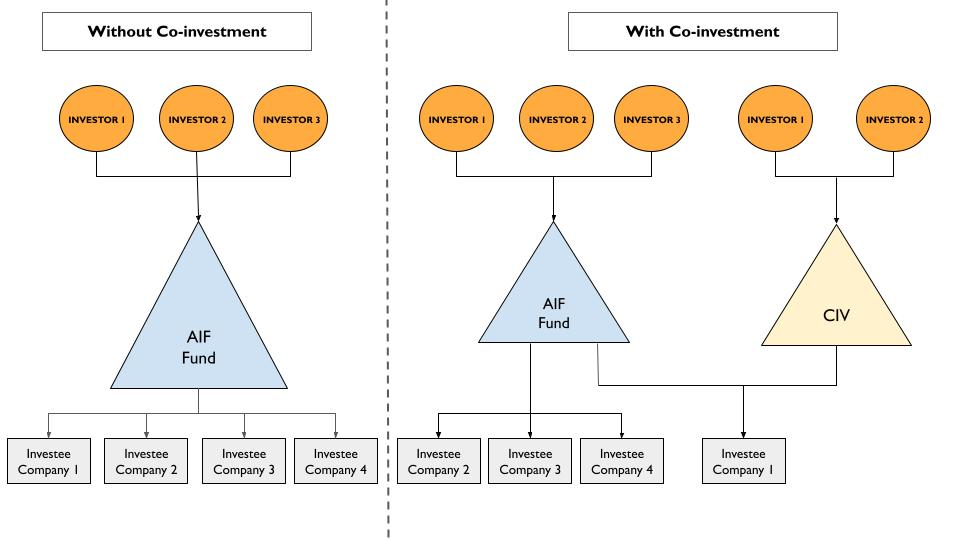
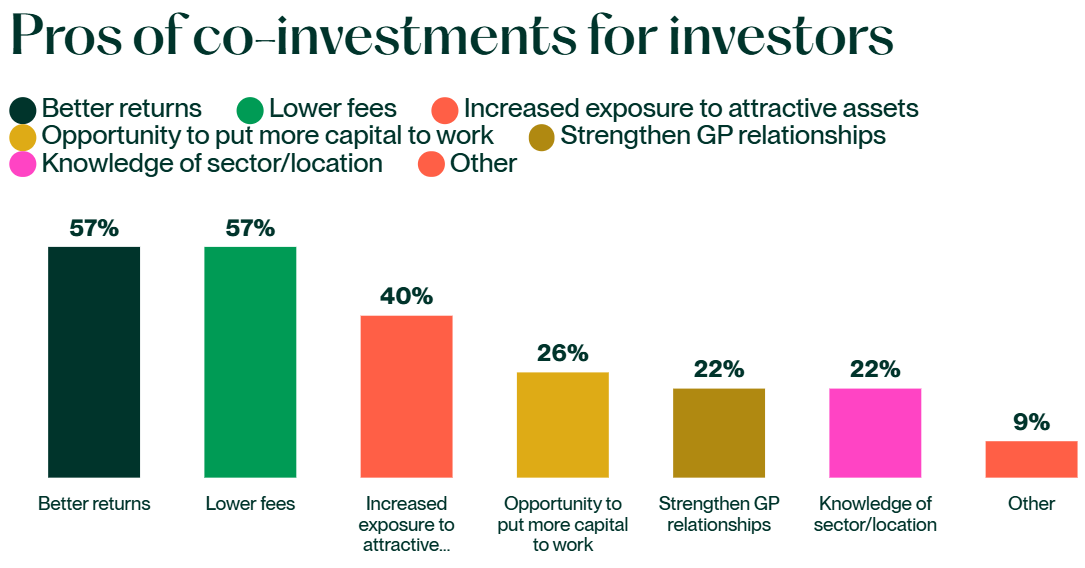
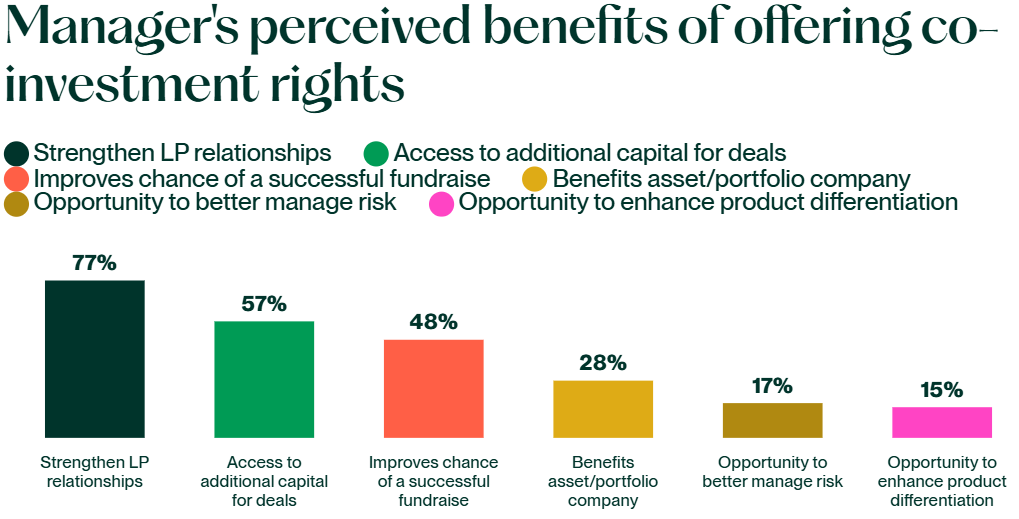




 Reload document
  Open in new tab