The edifice of IBC is premised on value-maximisation, and thus, resolution has always been preferred over liquidation[1]. Even in liquidation, the regulations and Courts have stressed and preferred on selling the entity/business as going concern (referred to as GCS)[2]. However, IBBI, videInsolvency and Bankruptcy Board of India (Liquidation Process) (Second Amendment) Regulations, 2025 (“Amendment”)[3], has amended Liquidation Regulations omitting the option of GCS altogether from the liquidation process. Notably both the GCS options – one, sale of CD as a going concern (reg. 32(e)), and second, sale of business of the CD as a going concern (reg. 32(f)) – have been omitted.
Operational risk, as defined by the Basel framework, refers to the possibility that a financial institution’s routine operations may be disrupted due to failures in processes, systems, people, or external events. While historically treated as secondary to credit and market risk, it has increasingly become a central focus of risk management, particularly for institutions with complex operations, heavy technology dependence, extensive outsourcing, and stringent regulatory obligations. Reflecting this shift, the RBI’s 2024 Guidance Note on Operational Risk Management and Resilience expands its expectations for operational risk management to all NBFCs.
Having previously discussed the guidance note (refer here), this article now explains the fundamentals of operational risk assessment and outlines its process.
Operational Risk Management
Operational risk poses unique challenges because many of the events that cause losses arise from internal factors, making them difficult to generalise or predict. Large operational losses are often viewed as rare, which can make it difficult to get sustained management attention on the steady, routine work required to identify issues and track trends1. Operational risks typically stem from people, processes, systems and external events, ironically, the same resources essential for running the business. Unlike credit and market risk which are modelled and hedged, operational risks are often idiosyncratic, event-driven and subject to human, process and system failure.
Relevance For Financial Institutions
Financial institutions operate with complex processes, large transaction volumes, strict regulatory reporting requirements and often heavy dependence on technology, outsourcing arrangements and third-party service providers. Because of this, operational failures, such as system glitches, fraud, compliance breaches or breakdowns in business continuity, can result in substantial financial losses, regulatory sanctions, reputational harm and other disruptions to business operations.
Given these risks, regulators have placed growing emphasis on the measurement and management of operational risk. Based on our experience, RBI has frequently raised queries regarding the operational risk frameworks of NBFCs during its supervisory inspections. Under Basel II, for instance, banks using the Advanced Measurement Approach were required to maintain strong, demonstrable operational risk management systems. Recognising the importance of operational risk, the Bank of England’s FSA0732 report, which is applicable on banks and large investment firms, requires firms to record the top ten operational risk loss events for each reporting year. This provides a clear view of what went wrong, where it occurred and the scale of the financial impact.
Operational Risk Assessment Process
In its guidance note for operational risk, RBI at many places underscored the importance for risk assessment. One such example is given below:
Principle 6: Senior Management should ensure the comprehensive identification and assessment of the Operational Risk inherent in all material products, activities, processes and systems to make sure the inherent risks and incentives are well understood. Both internal and external threats and potential failures in people, processes and systems should be assessed promptly and on an ongoing basis. Assessment of vulnerabilities in critical operations should be done in a proactive and prompt manner. All the resulting risks should be managed in accordance with operational resilience approach.
6.1 Risk identification and assessment are fundamental characteristics of an effective Operational Risk Management system, and directly contribute to operational resilience capabilities. Effective risk identification considers both internal and external factors. Sound risk assessment allows an RE to better understand its risk profile and allocate risk management resources and strategies most effectively.
Figure 1: Operational Risk Assessment Process
Risk identification
Risk identification means figuring out what exactly you need to assess. It involves recognising the different risk sources and risk events that may disrupt your business. A risk source is the underlying cause, something that has the potential to create a problem. A risk event is when that problem actually occurs. For example, a weak password is a risk source, while a data breach caused by that weak password is the risk event.
As per the RBI’s Guidance Note, REs are expected to take a comprehensive view of their entire “risk universe”. This means identifying all categories of risks, traditional or emerging, that could potentially affect their operations. These may include insurance risk, climate-related risk, fourth- and fifth-party risks, geopolitical risk, AML and corruption risk, legal and compliance risks, and many others. The underlying expectation is simple: an RE should systematically identify everything that can go wrong within its business model, processes, people, systems, and external dependencies, and ensure that no material source of risk is overlooked.
There are many ways to identify risks. You may use questionnaires, self-assessments by business or functional heads, workshops with staff involved in risk management, or you may review past failures within the company. Industry reports, experiences of peers, and linking organisational goals to potential obstacles can also reveal important risks. You can even look at upcoming strategic initiatives and think ahead about the risks that may arise when these changes are implemented.
Every organisation has its own risk profile. A lender may worry about borrowers not repaying, untrained staff, biases in an AI underwriting model, IT system failures, employee fraud, or suppliers not delivering on time. These risks should be recorded in a risk register, but it is important that this register reflects your business. A company offering only physical loans may not face digital lending risks, and should not simply copy any generic list. The goal is to identify risks that genuinely matter to your day-to-day operations.
Assessment
Once you know which risks matter, the next step is to assess each of them. For every risk, ask yourself two basic questions:
What is the likelihood of this risk actually happening? This is simply the chance that the event might occur; You may assign parameters to determine the likelihood – for eg if the risk event is almost certain to occur in the next 1 year or is it likely to occur or it will occur only in remote situations?
If it does happen, what impact will it have on my organisation? Will it hurt my reputation? Lead to financial loss? Negative feedback from customers? Cause a data leak? One can record the impact of the risk as High, medium or low based on its gravity
Figure 3: Illustrative impact assessment of risks
These two questions help you understand how serious the risk is inherently (inherent risk level) i.e, before considering whether you have any controls in place. Note that at this stage, you’re only interested in the natural level of risk that exists ignoring any controls you might already have.
Evaluating Controls
Once the inherent risks are understood, the next step is to look at how these risks are currently being managed. These risk-reducing efforts are your controls or mitigation measures. Controls are simply the actions, checks, or processes already in place to lower the likelihood or impact of a risk. For example: Is your underwriting model checked for bias? Are board committees meeting regularly? Do you have proper maker–checker checks in your V-CIP process? Controls can take many forms such as policies, procedures, tools, system checks, reviews, or even day-to-day practices followed by employees. In essence, a control is any measure that maintains or modifies risk and helps the organisation manage it more effectively.
Residual Risk
After evaluating the controls, you can determine the residual risk i.e. the level of risk that remains even after your mitigation measures have been applied. Residual risk shows whether the remaining exposure is acceptable or whether additional controls are needed. By definition, residual risk can never be higher than inherent risk. Generally, residual risk can be interpreted as follows:
Low Residual Risk: When the effectiveness of internal controls fully covers or even exceeds the inherent risk;
Medium Residual Risk: When controls reduce most of the risk, leaving only a small gap;
High Residual Risk: When controls address only part of the risk and a significant gap still remains;
Category
Risk Source
Risk event
Root cause
Likelihood
Consequence
Level of inherent risk
Control Effectiveness
Level of Residual Risk
People Risk
Employees / Staff
Employee fraud, misappropriation, or collusion
Weak internal controls, poor background checks
Highly Likely
Medium
High
Weak
HIGH
Information Technology & Cyber Risk
IT Infrastructure / Systems
System downtime or core platform failure
Server outage, inadequate IT resilience
Possible
Low
Low
Strong
LOW
Process & Internal Control Risk
Onboarding / KYC Processes
Non-compliance with KYC or onboarding procedures
Inadequate verification, manual errors
Possible
High
High
Adequate
MEDIUM
Legal & Compliance Risk
Outsourcing / LSP Arrangements
Non-compliance in outsourcing / LSP arrangements
Weak SLA oversight, inadequate due diligence
Unlikely
Low
Low
Adequate
LOW
External Fraud Risk
Borrowers / External Parties
Borrower fraud – identity theft, fake borrowers, or collusion
Forged documents, weak KYC
Possible
Low
Low
Strong
LOW
Model / Automation / Reporting Risk
Data Aggregation / Systems
Failure in data aggregation across systems for regulatory returns
System inconsistencies, poor data governance
Highly Likely
Medium
High
Strong
LOW
Reputation Risk / Customer Experience
Customer Communication / Sales Practices
Miscommunication of terms or conditions to customers
Poor training, unclear communication scripts
Possible
Medium
Medium
Weak
MEDIUM
Figure 5: An illustrative Snapshot of Operational Risk Assessment
Understanding residual risk helps decide where further action is required and where the organisation may still be vulnerable.
Conclusion
The goal, therefore, is to move away from a simple “tick-box” approach and make the operational risk assessment truly tailored to the organisation. For ML and above NBFCs, the ICAAP requirement to set aside capital for operational risk is useful, but it covers only a narrow part of what operational risk really involves. A comprehensive assessment goes much further by examining the strength of the entity’s internal controls and how effectively they manage real-world risks. If the residual risk exceeds the organisation’s tolerance level, it should trigger a closer look at those controls and prompt corrective action. Ultimately, the focus should be on building a risk framework that is meaningful, proactive, and aligned with how the organisation actually operates. The ultimate goal is therefore to develop ‘operational resilience’ which as per Bank of England3 is the ability of firms and the financial sector as a whole to prevent, adapt, respond to, recover from, and learn from operational disruptions.
A Non-Banking Financial Company (NBFC), like other financial intermediaries, operates in a risk-intensive environment where credit, operational, technology, liquidity and regulatory exposures evolve continuously. To manage these effectively, regulators and international standard-setters increasingly expect institutions to maintain a clear, documented, and continuously updated risk inventory. This document—commonly called a risk register—forms the backbone of an NBFC’s risk management framework. Standards such as ISO 31000 emphasise that organisations must maintain structured documentation of risks, controls and monitoring processes, while the Basel Committee recognises the importance of tools that consolidate information for oversight by senior management and boards. The Reserve Bank of India (RBI), through its compliance, operational risk, outsourcing, and information technology governance guidelines, also implicitly requires NBFCs to maintain evidence of risk identification, assessment and monitoring. Together, these expectations make a risk register not just a good practice, but an essential governance artefact.
This article explains what risk registers are, outlines the material risks relevant to NBFCs, describes the contents and structure of effective risk registers, discusses the merits of consolidated versus separate registers, and demonstrates how risk registers are used in practice.
What is a Risk Register?
ISO 73:2009 Risk management—Vocabulary defines a risk register as – record of information about identified risks. A risk register is a structured record that captures an organisation’s identified risks, the causes and consequences of those risks, the controls in place to manage them, the effectiveness of those controls, and the actions planned to further mitigate them. It is not merely a compliance document but a living tool that helps decision-makers view exposures at a glance, track risk levels, and allocate resources. The concept and practice are consistent with ISO 31000’s emphasis on systematic identification, assessment and treatment of risk.
For an NBFC, which must demonstrate proactive risk management under multiple RBI frameworks—including the SBR Master Directions, the operational risk guidance note, outsourcing guidelines, digital lending rules, and IT governance expectations—the register is foundational evidence of risk awareness and accountability.
Figure 1: An illustrative Snapshot of a Risk Register
Risks for Which NBFCs Should Maintain Registers
An NBFC typically faces a wide spectrum of material risks that require structured tracking. The most prominent among these is credit risk, arising from borrower defaults and delinquencies, portfolio deterioration and concentration exposures. NBFCs must also track liquidity risks, especially given their reliance on market borrowings and investor confidence. Operational risks, defined by Basel and adopted by the RBI as losses due to failed processes, people, systems or external events, form a substantial part of an NBFC’s potential vulnerabilities—from frauds and system outages to process gaps.
With increasing digitisation, IT and cybersecurity risks have become highly material. RBI’s guidelines on information technology governance frameworks require NBFCs to implement ongoing monitoring and incident tracking mechanisms, all of which depend on clear risk documentation. Similarly, third-party and outsourcing risks, emphasised by both RBI, are significant given NBFCs’ reliance on technology partners, collection agencies, loan service providers and outsourcing arrangements. NBFCs must also account for regulatory and compliance risks, model and data risks, and conduct and reputational risks that emerge from customer interactions and business practices. Finally, strategic and ESG-related risks are gradually gaining prominence in supervisory expectations.
Components of a Risk Register
Although institutions may customise formats, an effective risk register should contain certain core elements. Each entry should describe the risk clearly, including its causes, potential business impact, and the business unit or process where it arises. It should include an inherent risk assessment (before considering controls) and a residual risk assessment (after controls). Controls must be recorded along with their owners and the results of recent effectiveness testing. The register should also assign a responsible risk owner at a senior level to ensure accountability. Key Risk Indicators (KRIs), where relevant, should be linked to the risk entry along with thresholds, recent values and escalation triggers. Finally, each risk entry should reflect remediation actions, timelines and review dates to ensure the register remains a dynamic management tool rather than static documentation.
An actionable risk register should be concise, structured, and linked to governance and reporting. Recommended fields include:
Figure 2: Contents of a Risk Register
What an Enterprise-Wide Risk Register Looks Like
An enterprise-wide risk register (EWRR) consolidates the institution’s major risks across all business lines into a single, coherent view. In practice, this register acts as the central dashboard for senior management and the Board. It includes credit, operational, cyber, market, liquidity, compliance, strategic and reputational risks, each summarised in a uniform format. The EWRR provides an aggregated view of risk severity, risk levels, and concentration areas. For example, it may highlight that operational risks linked to IT outages are trending upward, or that credit risk concentration in a specific sector has crossed internal appetite thresholds.
Importantly, the EWRR does not replace detailed sub-registers maintained by specialised teams; instead, it integrates their findings. Basel supervisory materials emphasise consolidation as essential for Board oversight, and the EWRR serves precisely that purpose.
Separate Risk Registers vs an Enterprise-Wide Register
NBFCs often question whether it is more effective to maintain a single enterprise-wide register or individual registers for each risk category. Two common approaches exist: maintaining one enterprise-wide register (single source of truth) or maintaining focused registers (e.g., Operational Risk Register, Credit Risk Register) with a roll-up to an enterprise view. Both approaches are widely accepted; choice depends on size, complexity and risk-data capabilities.
In practice, the most effective approach is hybrid. Individual registers—for credit, operational, cyber/IT, third-party risk and others—allow specialised teams to capture detailed technical information, testing results, and granular observations. These feed into the enterprise-wide register, which provides the Board and CRO with clear, aggregated insights. Maintaining only the EWRR risks leads to oversimplifying important technical details, while relying exclusively on separate registers makes it difficult to achieve the consolidated oversight that regulators and Boards expect.
The best practice is to have a centralized ownership of taxonomy and scoring methodologies for the specialised risk registers and the EWRR. This is in accordance with para 32 of the Principles for Effective Risk Data Aggregation and Risk Reporting (BCBS), which states –
A bank should establish integrated data taxonomies and architecture across the banking group, which includes information on the characteristics of the data (metadata), as well as use of single identifiers and/or unified naming conventions for data including legal entities, counterparties, customers and accounts.
This fits in well with the hybrid approach where specialized registers maintained for detailed tracking but using a common data definition may be conveniently aggregated into a governance-level enterprise register containing material risks, owners, KRIs and status for Board reporting.
Applications of a Risk Register in Practice
Risk registers influence nearly every stage of the risk management lifecycle. They support risk identification during new product assessments, process reviews and internal audit findings. They allow risk measurement through inherent/residual scoring and KRIs, ensuring early detection of deteriorating risk conditions. They facilitate the evaluation of controls, since internal audit and risk teams use the register as the primary record of what controls exist and how effective they are. Action plans arising from incidents, audits or supervisory observations are also tracked through the register, making it a central management tool.
Regulations call for a number of risk assessments including compliance risk assessment, ML/ TF risk assessment, information technology and cybersecurity risk assessment, outsourcing risk assessment, identification and assessment of operational risks, etc. NBFCs draw on the risk registers to supply the list of risk events, their inherent likelihood and consequence and provide the residual risks remaining with the company.
Risk registers are also a prerequisite for risk based internal audit. Risk registers, containing the list of internal controls, risk events and levels of inherent and residual risk, along with the Board’s risk appetite statement and tolerance limits form the basis of formulating the internal audit coverage. For more information on audit coverage refer to our write up here.
For reporting, the register forms the basis of periodic risk reports, senior management dashboards and regulatory submissions where required. During supervisory reviews, the RBI often tests whether an NBFC can produce documented evidence of risk identification, control ownership, monitoring and remediation—exactly what a well-maintained register provides. In this way, the risk register becomes both a governance mechanism and a demonstration of compliance readiness.
RBI outsourcing directions emphasise documentation of material outsourcing arrangements and evaluation of outsourcing risk. A risk register is the optimum tool for such third-party risk management to track and escalate both foreseeable and actual outsourcing incidents and due-diligence findings.
Conclusion
For NBFCs, maintaining risk registers is not merely a procedural obligation; it is a critical part of the organisation’s risk culture and governance framework. International standards (ISO 31000), global supervisory principles (Basel Committee), and regulatory expectations all converge on the need for structured, documented, and regularly monitored risk inventories. A robust risk register—supported by discipline, clear ownership and periodic review—enables NBFCs to anticipate threats, strengthen controls, improve decision-making and satisfy supervisory expectations. As NBFCs continue to scale, digitalise and partner with third-party ecosystems, the importance of maintaining comprehensive, dynamic and enterprise-aligned risk registers will only grow.
https://vinodkothari.com/wp-content/uploads/2023/06/vinod-kothari-logo.png00Staffhttps://vinodkothari.com/wp-content/uploads/2023/06/vinod-kothari-logo.pngStaff2025-11-18 18:26:282025-11-18 18:49:10Tracking Your Material Risks - Importance of Risk Register for NBFCs
In India, we often say: upar wala sab dekhta hai (God sees it all). However, if I could do things which God the almighty does not or cannot see, I will be most happy to do those. Doing things off-the-balance-sheet is always equally tempting; structurers of Frankenstein financial instruments have already tried to bring ingenuity to explore gaps in accounting standards to create such funding structures where the asset or the relevant liability does not show on the books. Recently, a $ 27 billion bond issuance by an SPV called Beignet Investor, LLC may have the ultimate effect of keeping the massive investment done at the instance of Meta group kept off-the-balance-sheet.
Structural Features
Essentially, the deal involves issuance of bonds to the investors, the servicing of which is through the cash flows generated from the lease payments. Further, a residual value guarantee has been provided by the group entity which has again led to a rating upliftment for the bonds issued.
The essential structure of the transaction involves a combination of project finance, lease payments and a residual value guarantee to shelter investors from project-related risks, and use of an operating lease structure, apparently designed to keep the funding off the balance sheet of Meta group. It is a special purpose joint venture which keeps the funding liability on its balance sheet.
Let us understand the transaction structure:
Meta intends to do a huge capex to build a massive 2.064-GW data center campus in Richland Parish, LA. The cost of this investment is estimated at $27 billion in total development costs for the buildings and long-lived power, cooling, and connectivity infrastructure at the campus. The massive facility will take until 2029 to finish.
The expense will be incurred by a joint venture, formed for the purpose, where Meta (or its group entities) will hold a 20% stake, and the 80% stake will come from Blue Owl Capital. The two of them together form the JV called Beignet Investor, LLC (issuer of the bonds).
The JV Co owns an entity called Laidley LLC, which will be the lessor of the data center facilities.
The lessee is a 100% Meta subsidiary, called Pelican Leap LLC, which enters into 4 year leases for each of the 11 data centers. Each lease will have a one-sided renewal option with 4 years’ term each, that is to say, a total term at the discretion of the lessee adding to 20 years. The leases are so-called triple-net (which is a term very commonly used in the leasing industry, implying that the lessor does not take any obligations of maintenance, repairs, or insurance).
The 20-year right of use, though in tranches of 4 years at a time, will mean the rentals are payable over as many years. This is made to coincide with the term of amortisation of the bonds issued by the Issuer, as the bonds mature in 2049 (2026-2029 – the development period, followed by 20 years of amortisation).
If the lease renewal is at the option of the lessee, then, how is it that the lease payments for 20 years are guaranteed to amortise the bonds? This is where the so-called “residual value guarantee” (RVG) comes in. RVG is also quite a common feature of lease structures. In the present case, from whatever information is available on public domain, it appears that the RVG is an amount payable by Meta Platforms under a so-called Residual Value Guarantee agreement. The RVG on each renewal date (gaps of 4 years) guarantees to make a payment sufficient to take care of the debt servicing of the bonds, and is significantly lower than the estimated fair value of the data center establishment on each such date.
The diagram below by provides for the transaction structure:
Off-balance sheet: Gap in the GAAP?
Of course, as one would have expected, the rating agency Standard and Poor’s that was the sole rating agency having given rating for the bonds, its report does not say the structure is off-the-balance sheet for the lessee, a Meta group entity. However, various analysts and commentators have referred to this funding as off-the-balance sheet. For example, Bloomberg report says “The SPV structure helps tech companies avoid placing large amounts of debt on their balance sheets”.Another report says that the huge debt of $ 27 billion will be on the balance sheet of Beignet, the JV, rather than on the books of Meta. An FT report says that bond was priced much higher than Meta’s balance sheet bonds, at a coupon of 6.58%, as a compensation for the off-balance sheet treatment it affords. A write up on Fortune also refers to this funding as off-the-balance sheet.
In fact, Meta itself, on its website, gives a clear indication that the deal was struck in a way to ensure that the funding is not on the balance sheet of Meta or its affiliates. Here is what Meta says:
“Meta entered into operating lease agreements with the joint venture for use of all of the facilities of the campus once construction is complete. These lease agreements will have a four-year initial term with options to extend, providing Meta with long-term strategic flexibility.
To balance this optionality in a cost-efficient manner, Meta also provided the joint venture with a residual value guarantee for the first 16 years of operations whereby Meta would make a capped cash payment to the joint venture based on the then-current value of the campus if certain conditions are met following a non-renewal or termination of a lease.”
Here, two points are important to understand – first, the operating lease/financial lease distinction, and second, the so-called residual value guarantee – what it means, and why it is opposite in the present case.
The distinction between financial and operating leases, the key to the off-balance sheet treatment of operating leases, was the product of age-old accounting standards, dating back to the 1960s. In 2019, most countries in the world decided to chuck these accounting standards, and move to a new IFRS 16, which eliminates the distinction between financial and operating leases, at least from the lessee perspective. According to this standard, every lease will be put on the balance sheet, with a value assigned to the obligation to pay lease rentals over the non-cancellable lease term.
However, USA has not aligned completely with IFRS 16, and decided to adopt its own version called ASC 842 for lease accounting. The US accounting approach recognises the difference between operating leases and financial leases, and if the lease qualifies to be an operating lease, it permits the lessee to only bring an amount equal to the “lease liability”, that is, the discounted value of lease rentals as applicable for the lease term.
As to whether the lease qualifies to be an operating lease, or financial lease, one will apply the classic tests of present value of “lease payments” [note IFRS uses the expression “minimum lease payments”], length of lease term vis-a-vis the economic life of the asset, existence of any bargain purchase option, etc. “Lease payments” are defined to include not just the rentals payable by a lessee, but also the minimum residual value. This is coming from para 842-10-25-2(d). The reading of this para is sufficiently complicated, as it makes cross references to another para referring to a “probable payment” under “residual value guarantees”. The reference to para 842-10-55-34 may not be needed in the present case, as the residual value agreed to be paid by the lessee is included in “lease payment” for financial lease determination by virtue of the very definition of financial lease. Therefore, it remains open to interpretation whether the leases in the present case are indeed operating leases.
Considering that the residual value guarantee from the parent company in the present case may not meet the requirements for its inclusion in “lease payments”, it is unlikely that the lease payments over any of the 4 year terms will meet the present value test, to characterise the lease as a financial lease. Also, the economic life of the commercial property in form of the data centers may be significantly longer than the 20 year lease period, including the option to renew. Hence, the lease may quite likely qualify as an operating lease.
Residual value guarantee: Rationale and Implications
In lease contracts, a residual value guarantee by the lessee is understandable as a conjoined obligation with fair use and reasonable wear and tear of assets. In the present case, if the lessee is a tenant for only 4 years, and the renewal thereafter is at the option of the lessee. If the lessee chooses not to renew the lease, the lessee is exercising its uncontrolled discretion available under the lease. So, what could be the justification for the parent company being called to make a payment for the residual value of the property? After all, the property reverts to the lessor, and whatever is the value of the property then is the asset of the lessor.
In the present case, it seems that the RVG comes under a separate agreement – whether that agreement is linked with the leases is not sure. However, for the holistic understanding of any complicated transaction, one always needs to connect all the dots together to get a a complete understanding of the transaction. If the lessee or a related party is paying for future rentals, it transpires that the understanding between the parties was a non-cancelable lease, and the RVG is a compensation for the loss of future rentals to the lessor. If that is the overall picture, then the lease may well be characterised as a financial lease.
Is the lessee’s balance sheet immune from the bond payment liability?
A liability is what one is obligated to pay; a commitment to pay. The $ 27 billion liability for the bonds in the present case sits on the balance of the JV Company. However, the question is, ultimately, what is it that will ensure the repayment of these bonds? Quite clearly, the payment for the bonds is made to match with the underlying lease payments, with a target debt service coverage. In totality, it is the lease payments that discharge the bond obligation; there is nothing else with the JV company to retire or redeem the bonds. From this perspective as well, an off-balance-sheet treatment at the lessee or at the group level seems tough.
However, off-balance-sheet may not be the objective really. What matters is, does the structure insulate Meta group from the risks of the payments from the data center. From the available data, it appears that the project related risks, from delays in completion to non-renewal, are all taken by Meta. Therefore, even from the viewpoint of project-related risks, there do not seem to be sufficient reasons for any off-balance sheet treatment.
Disclaimer: The analysis in the write-up above is limited to the reading that could be done from write-ups/materials in public domain.
https://vinodkothari.com/wp-content/uploads/2023/06/vinod-kothari-logo.png00Staffhttps://vinodkothari.com/wp-content/uploads/2023/06/vinod-kothari-logo.pngStaff2025-11-18 14:35:482025-11-18 15:01:47Meta-morphed: A corporate bond that puts $27 billion off-the-balance-sheet
https://vinodkothari.com/wp-content/uploads/2023/06/vinod-kothari-logo.png00Staffhttps://vinodkothari.com/wp-content/uploads/2023/06/vinod-kothari-logo.pngStaff2025-11-15 19:44:052025-11-15 23:35:06Relaxing FEMA reforms to boost global trade
The Union Budget 2025-26 also provided specific tax incentives for transactions involving GRCTC, exempting such transactions from the purview of deemed dividend under section 2(22)(e) of the Income Tax Act, 1961. Vide a recent amendment to Companies (Meetings of Board and its Powers) Rules, 2014, published on 6th November, 2025 in the Official Gazette, Finance Companies undertaking the activities of GRCTCs have been exempt from the application of section 186 of the Companies Act, 2013 with respect to compliances pertaining to granting of loans, making investments, providing security or guarantee.
What is a GRCTC?
Simply put, a treasury centre is supposed to be an in-house bank, managing funds and providing liquidity across different entities in the group. Thus, the main objective of a GCRTC is to manage funds centrally and optimise the use of funds within the various entities of the group. Key responsibilities include intra-group financing, managing cash and liquidity and providing financial advisory services to group entities.
Activities of Global/ Regional Corporate Treasury Centres (GRCTC)
Service Recipients [Clause 12]
Permissible Activities [Clause 13]
Group Entities of GRCTC [Clause 2(1)(d)]
Subsidiary-Parent (Ind AS 110/AS 21)
Joint venture (Ind AS 28/ AS 27)
Associate (Ind AS 28/ AS 23)
Related Party (Ind AS 24/ AS 18)
Common brand name
Investment in equity shares > 20%
Group Entities of Parent [Clause 2(1)(g)]
Parent in case of FC – group entities desirous to set up FC to undertake GRCTC
Parent in case of FU – entity desirous to set up branch to undertake GRCTC
Branches of Parent/ Group Entities
Parent/ Group Entities may either be Person Resident in India (PRI) or Person Resident Outside India (PROI)
Raising capital by issuance of equity shares;
Borrowing including in the form of inter-company deposits;
Credit arrangements;
Transacting or investing in financial instruments issued in IFSC or outside IFSC;
Undertaking derivative transactions (Over the counter (OTC) and Exchange traded);
Foreign exchange transactions in such currencies as specified by the Authority;
Factoring and Forfaiting;
Acting as a Re-invoicing centre;
Liquidity management;
Maintaining relationships with financial counterparties;
Management of obligations of its service recipients towards insurance and pension related commitments;
Advisory service related to aforesaid activities, and relating to:
financial management including financial risk management;
funding and capital market activities;
Acting as a holding company;
Any other activity, notified u/s 3(1)(e)(xiv) of IFSC Act, with the prior approval of the Authority
Borrowing and Lending by GRCTCs – Compliance Considerations and Tax Implications
Compliance with FEMA Directions
Pursuant to the notification of the FEM (International Financial Services Centre) Regulations, 2015, any financial institution or branch of a financial institution set up in the IFSC and permitted/ recognised as such by the Government of India or a Regulatory Authority shall be treated as a person resident outside India. A Finance Company established in IFSC, including GRCTC, is recognised as a financial institution and hence, shall be treated as a person resident outside India (PROI) for the purpose of FEMA Directions.
Therefore, from compliance perspective, the applicability of FEMA Directions may be understood as follows:
GRCTC is a Finance Company or Finance Unit, incorporated as a company under the Companies Act, 2013 or as a branch of such a company. Therefore, compliance with the provisions of the Companies Act, 2013 attract. Certain exemptions are also extended to IFSC entities from the provisions of the Companies Act. Refer to the table below:
Activities by GRCTC
Applicable provisions
Relaxation to GRCTCs
Lending by GRCTC
Section 179 – Approval of Board
May be taken through circular resolution instead of board meeting
Section 186 – Limit on loans, investments, guarantee, security Unanimous approval of board Approval of shareholders Minimum rate of interest on loans Disclosure in financial statements Maintenance of registers
May be taken through circular resolution instead of board meeting
Section 180 – Limits on borrowings and approval of shareholders
Does not apply in case of private companyIn case of public company, relaxations may be provided through the Articles
Tax implications
The tax benefits available to IFSC units coupled with the exemption granted to GRCTC vide the Finance Act, 2025 incentivise fund raising from foreign sources in India. For instance, an Indian group incorporates a GRCTC in IFSC. The GRCTC may avail borrowings from non-residents, and lend the same to the Indian company. In such a case, the following tax benefits attract:
The GRCTC borrows money from a non-resident. The interest paid on such borrowings is exempt from tax in terms of section 10(15)(ix) of the IT Act, 1961. Since the interest income itself is exempt, the question of withholding tax does not arise.
GRCTC is merely a treasury centre, the funds will ultimately be utilised by one or more of the group entities. To this end, lending/ borrowing between a GRCTC and its group entities is exempt from the application of deemed dividend u/s 2(22)(e) of the IT Act.
In terms of section 2(22)(e) of the IT Act, loans or advances by a closely held company to the following are taxable as “deemed dividend” under income from other sources:
Shareholder holding 10% or more of the voting power of such company,
Any concern in which such shareholder is a member or a partner and in which he has a substantial interest (beneficial entitlement to 20% or more of the voting power)
Sub-clause (iia) of the said section read with Explanation 3 thereto, provides exemption from such treatment where one of the entity is a GRCTC for undertaking treasury activities/ services and the parent entity/ principal entity is listed on the stock exchange of a country or territory outside India (except for countries falling under the restricted list notified by CBDT, if any).
Pursuant to the exemptions granted to a Finance Company videnotification dated 7th March 2024, no TDS is required to be deducted on the interest income on ECBs/ loans as required in terms of section 195/ 194A of the IT Act.
Interest income of GRCTC qualifies for tax holiday in terms of section 80LA of the IT Act.
Concluding Remarks
GRCTC seems to be an effective means of managing the finances of large groups, with an access to the world at large, towards the funding needs of the group. The non-resident status under FEMA coupled with the income tax exemptions and the exemptions from procedural compliances under the Companies Act makes it easier to manage the group wide funds, with more flexibility and lesser compliance burden.
https://vinodkothari.com/resources-on-ifsca/
https://vinodkothari.com/wp-content/uploads/2023/06/vinod-kothari-logo.png00Staffhttps://vinodkothari.com/wp-content/uploads/2023/06/vinod-kothari-logo.pngStaff2025-11-15 17:57:532025-11-15 18:34:19Corporate Treasury Centres: Managing your money with a window to the world
Call it Trump relief! The RBI announced relief measures on the 14th Nov to help the exporters of certain specified items, who may have availed export credit facilities from a regulated lender, whereby all regulated entities (REs) “may” provide a moratorium, from 1st September 2025 to 31st December, 2025. The grant of such a relief shall be based on a policy, consisting of the criteria for grant of the subject relief, and such criteria shall be disclosed publicly. Not only this, REs shall also make a fortnightly disclosure of the reliefs granted to eligible borrowers on a RBI format on Daksh portal.
The Reserve Bank of India (Trade Relief Measures) Directions, 2025 (‘Directions’) are applicable to NBFCs and HFCs as well. This is accompanied with amendment to Foreign Exchange Management (Export of Goods and Services) (Second Amendment) Regulations, 2025 for extension of the period for both realization/repatriation of export value (from 9 to 15 months) and the shipment of goods against advance payment (from 1 to 3 years).
Highlights:
Whether your company grants an export credit or not, if your borrower is the one who has availed export credit for export of specified goods or services, the borrower may approach you for the moratorium.
Are you bound to grant the moratorium? Answer is, no. However, basis a policy which is publicly hosted, you will consider the eligibility of the borrower. The relevant factors on which the eligibility will be examined may also form a part of the policy, and ideally, should include the extent of dependence on exports of specified items to the USA, tariff-based disruption in the cashflows, alternative markets and transitioning possibilities, etc.
Effective: Immediately.
Actionables: (a) Framing of policy to consider the eligibility of affected borrowers; (b) Hosting the policy on public website; (c) Creating mechanism for receiving and transmission of borrower requests for the moratorium and giving timely responses to the same (d) RBI fortnightly reporting.
What is the intent?
To mitigate the disruptions caused by global headwinds, and to ensure the continuity of viable businesses.
Tariff impositions by the USA are likely to impact several exporters. There may be a ripple effect on penultimate sellers or other segments of the economy as well, but the intent of the Trade Relief Directions seems limited to the direct exporters only.
Which all regulated entities are covered?
The Directions are applicable to following entities:
Commercial Banks
Primary (Urban) Co-operative Banks, State Co-operative Banks and Central Co-operative Banks
NBFCs
HFCs
All-India Financial Institutions
Credit Information Companies (only with reference to paragraph 16 of these Directions).
Does it matter whether the RE in question is giving export credit facilities or not? In our view, it does not matter. The intent of the Directions is to mitigate the impact of trade disruptions. Of course, the borrower in question must be an exporter, must have an export credit facility outstanding as on 31st Aug 2025, and the same must be standard.
If these conditions are met, then the RE which holds the export credit, as also other REs (of course, the nexus between the trade disruption and the servicing of the credit facility will have to be seen) should consider the borrower for the purpose of grant of relief.
Relief may or may not be granted.
Policy on granting relief
The consideration of the grant of relief will be based on a policy.
Below are some of the brief pointers to be incorporated in the policy:
Purpose and Scope: define which loan products, sectors, or borrower categories are covered; effective period for granting relief
Eligibility Criteria for borrowers
Assessment criteria for relief requests received from the borrowers
Authority responsible for approving such request
Relief measures that can be offered to borrowers
Impact on asset classification and provisioning
Disclosure Requirements
Monitoring and Review: Authority which is responsible for monitoring such accounts; periodicity of review
How is the assessment of eligible borrowers to be done?
In our view, the relevant information to be obtained from the candidates should be:
Total export over a relevant period in the past, say 3 years
Break up of export of “impacted items” and other item
Of the above, exports to the USA
Gross profit margin
Impact on the cashflows
Information about cancellation of export orders from US importers
Any damages or other payments receivable from such importers
Any damages or other payments to be made to the penultimate suppliers
Alternative business strategies – repositioning of markets, alternative buyer base, etc
Cashflow forecasts, and how the borrower proposes to pay after the Moratorium Period.
What sort of lending facilities are covered?
Please note the following from the preamble: “mitigating the burden of debt servicing brought about by trade disruptions caused by global headwinds and to ensure the continuity of viable businesses”. Therefore, clearly, the relief intended here is one where “trade disruptions” create such a burden on debt servicing, which may impact the viability of the business.
From this, it implies that the entity in question must be a business entity, and the loan in question should be a business loan.
In our thinking, the following facilities seem covered:
Export credits of all forms, including packing credit, funded as well as unfunded, letters of credit, etc.
Buyer’s credit or facilities for inward acquisitions/purchases by an exporter
Cash credits, overdrafts or working capital related facilities, intended for export business of impacted items.
Term loans relating to an impacted business
Loans against property, where the end use is working capital
Eligible and ineligible borrowers:
Eligible borrowers:
Borrowers who have availed credit for export
Borrower had an outstanding export credit facility from a RE as of August 31, 2025 (However, in case the borrower has a sanctioned facility pending disbursement as on Aug 31, the same shall not be eligible)
Borrower with all REs was/were classified as ‘Standard’ as on August 31, 2025
In our view, the following borrowers/ credit facilities are not eligible for the relief:
Individuals or borrowers who have not borrowed for business purposes
Home loans or loans against specific assets or cashflows, where the debt servicing is unconnected with the cash flows from an export business
Loans against securities or against any other financial assets
Gold loans, other than those acquired for business purposes
Car loans, loans against commercial vehicles or construction equipment, unless the borrower is engaged in export business and the cashflows have a nexus with such business
Borrower is engaged in exports relating to any of the sectors specified
Borrower accounts which were restructured before August 31, 2025
Accounts which are classified as NPA as on August 31, 2025
Consider a borrower who is not an exporter himself, but an ancillary supplier, supplying to a trading house. Will such a penultimate exporter be covered by the Relief Directions? In our view, the answer is negative, as the “eligible borrowers” are defined to mean an exporter.
Impacted items and impacted markets
The list of impacted items broadly covers a wide spectrum of manufacturing and export-oriented sectors, including marine products, chemicals, plastics, rubber, leather goods, textiles and apparel, footwear, stone and mineral-based articles, jewellery and precious metals, metal products, machinery, electrical and electronic equipment, automobiles and auto components, medical and precision instruments, and furniture and furnishing items.
Is it mandatory that the borrower shall be exporting to USA? While the Directions do not specifically mandate that the borrower shall be exporting to the USA, the concerned REs should, as part of their assessment, evaluate whether the borrower genuinely requires such relief measures and, in our view, should consider the extent to which the borrower depends on exports of the specified items to the USA.
Why have HFCs been covered?
Generally speaking, the servicing of home loans is not supposed to be based on business cashflows, and therefore, the impact of trade disruptions on servicing of a home loan does not seem easy to establish.
However, HFCs grant other credit facilities too, including LAP or business loans. Therefore, there is no carve out for HFCs as such. HFCs are also expected to prepare the policy referred to above and be sensitive to requests from impacted borrowers.
Is the moratorium retrospective?
Yes, clearly, the moratorium is retrospective, as it covers the period from 1st September to 31st December. This is the range over which the moratorium may be granted; of course, the decision as to how much moratorium, within the above maximum range, is warranted in the particular case, is that of the lender. Let us call the agreed moratorium as the Moratorium Period.
If the moratorium is granted from 1st Sept., then any payments which were due for the period covered by the Moratorium Period will not be taken as having fallen due. This will have significant impact on the loan management systems:
Considering that we are already in the middle of November, the day count for any payments due during the part of the Moratorium Period will be set to zero. In other words, day count will stop during the Moratorium Period. Thus, if an account was showing a DPD status of 60 days as on Aug 31, 2025, the DPD count will remain at a standstill till the moratorium period is over.
However, in case a borrower has made payment during the moratorium period, will the DPD count decrease or will it remain the same?
The RBI Directions state that the days past due (DPD) count during the moratorium period will be excluded. However, this does not imply that a borrower who makes payments during this period should be denied the corresponding benefit. In our view, if a payment is received from the borrower, the DPD count should accordingly be reduced.
Any payments already made during the part of the Moratorium Period already elapsed may be taken towards principal, or may be held to be adjusted against the future dues of the borrower, after the Moratorium Period. This should also, appropriately, be captured in the policy.
Further, for accounts for which the CIC reporting has already been done on or after Aug 31, 2025, and the lender decides to extend the moratorium benefit, it must be ensured that the DPD count is revised so as to reflect the status as on Aug 31, 2025.
Do lenders have to necessarily grant moratorium, or grant partial interest/principal relief?
The RBI Directions do not mandate REs from granting such relief measures. Accordingly, the concerned RE will need to assess individual cases based on the sectors, the need for such relief and the extent to which such relief may be granted.
Lenders may grant full moratorium during the Moratorium Period, or may grant relief as may be considered appropriate.
Do lenders take positive actions, or simply respond to borrower requests?
The lenders must establish a policy for granting such relief measures prior to extending any relief, as the authority to do so will be derived from this policy. As discussed above, the discretion to grant relief rests with the concerned RE; therefore, each request submitted by a borrower must be evaluated on an individual basis.
For this purpose, the following information must be obtained from the borrowers seeking relief:
The concerned sector and how the same has been impacted necessitating such relief
Information relating to the current financial condition of the business of the borrower
Facilities taken and outstanding with other REs
Non-compounding of interest during the Moratorium Period:
Para 9 (iii) provides that while interest will accrue during the Moratorium Period, but the interest shall be simple, that is, shall not be compounded.
This may require REs to tweak their loan management systems to stop the compounding of interest during the Moratorium Period.
However, the actual population of affected borrowers for a particular RE may be quite limited. Hence, REs may do manual or spreadsheet-based adjustments for affected borrowers, instead of making adjustments to their LMS itself.
Recomputation of facility cashflows after Moratorium:
During the moratorium period, as per the RBI directive, the lender can only accrue simple interest. Accordingly, the IRR of the credit facility will have a negative impact unlike the covid moratorium where the compound interest loss was compensated by the central government.
Further, it has also been provided that the accrued interest may be converted into a new term loan which shall however be repayable in one or more installments after March 31, 2026, but not later than September 30, 2026. Accordingly, the accrued interest should anyhow be received by September 30, 2026.
Similar moratoriums in the past
Moratorium on loans due to COVID-19 disruption: Refer to our write-up here.
Moratorium 2.0 on term loans and working capital: Refer to our write-up here.
https://vinodkothari.com/wp-content/uploads/2023/06/vinod-kothari-logo.png00Staffhttps://vinodkothari.com/wp-content/uploads/2023/06/vinod-kothari-logo.pngStaff2025-11-15 11:57:082025-11-15 13:49:41RBI Trade Relief Directions: How is your company impacted?
https://vinodkothari.com/wp-content/uploads/2023/06/vinod-kothari-logo.png00Staffhttps://vinodkothari.com/wp-content/uploads/2023/06/vinod-kothari-logo.pngStaff2025-11-14 07:00:002025-11-15 11:52:40Data Privacy Law and Rules notified: 18 months’ time to implement
Statutory provisions for mandatory CSR spending envisage that companies go out of their business models, and “give back to the society” at least to the extent of 2% of their net profits. The underlying principle is that before the profits are distributed to the stakeholders, companies should contribute a minimal amount on social engagement. However, how do we relate this requirement to a company which does not exist for profit-making? How do we relate it to a company which cannot distribute even one penny, in whatever form, to its shareholders? Or all the more importantly, how do we relate this to a company whose business model itself is for some social good? It is formed for, and exists for social good, and that is what it does. So how does the company spend that 2% on social good, if that is what the company does with all that it earns?
We are talking about section 8 companies, which are commonly referred to non-profit organizations (NPOs), or not-for-profit (NFP) companies. A lot of NPOs exist in non-corporate form – e.g. trusts, where the question of applying sec 8 of the Companies Act, 2013 (‘‘Act’’) will not arise. However, there is an increasing number of NPOs registering as sec 8 companies. As on October, 2024[1][2], there are 52000+ companies registered as sec 8 companies in India, of which nearly 40,000+ companies are registered on Darpan Portal.[3] These companies may not exist for profits, but of course, they may make profits. If they make profits, the question of applicability of sec. 135 of the Act comes – whether a 2% of the average profits needs to go “outside the business model” into activities that are listed in Schedule VII.
Before we delve any further, it is important to note that not every company licensed u/s 8 is engaged in activities listed in Schedule VII. To cite examples: a sec 8 co may be running a hospital or educational institution which serves the higher segments of the population pyramid. A sec 8 co may be running a microfinance business or be running as an industry association such as Association of Mutual Funds in India (AMFI) or Association of Registered Investment Advisers (ARIA). The key feature of a sec 8 is the bar on distribution of profits, whereas Schedule VII has a list of activities which are treated as CSR-eligible.
So, the questions that we are trying to answer in this write up are:
Will a company, whose business model is to carry the activities listed in Schedule VII, for the masses and social good, have to spend 2% of the profits on CSR over and above their routine spending?
Will a company, whose business model is to carry the activities listed in Schedule VII, but not for masses or BoP (base of pyramid) segment, have to spend 2% of the profits on CSR?
Will a company, whose business model is to not engage in activities listed in Schedule VII, have to spend 2% of the profits on CSR?
In either case, even if there is no spending requirement, will the company have to do procedural compliance, viz., a CSR Committee, to examine the obligations of the company from a large social perspective, and give a report to the Board whether the company at all needs to go beyond its domain and spend on a larger social good?
Fitting into the ‘frame of CSR’ – the paradox!
A company required to spend on CSR is inter-alia required to ensure two things while selecting for an activity / project to be undertaken:
The activity / project proposed to be undertaken should be covered under the Schedule VII of the Act; and
The activity / project proposed to be undertaken should satisfy the condition set out under rule 2(1)(d) of CSR Rules[4].
Rule 2(1)(d) of CSR Rules inter-alia states that an activity undertaken in pursuance of normal course of business of the company cannot be undertaken as a CSR activity / project. Now, for a section 8 company which undertakes activities covered under Schedule VII of the Act in its normal course of business, complying with section 135 would become an impossibility. On one hand, such a company is obligated to spend 2% of its net profits on Schedule VII activities. On the other hand, if the company does so, one may also contend that such activity is in its normal course of business which is prohibited under the regulatory framework for CSR.
Further, Section 8 companies can also act as an ‘implementing agency’ for the companies covered u/s 135(1) of the Act. An implementing agency essentially undertakes CSR activities / Schedule VII activities on behalf of a company. Therefore, even for a section 8 company acting as an implementing agency, it is engaged in Schedule VII activities in its normal course and being as such it is likely to receive restricted funds specifically provided for implementing CSR projects. Accordingly, if a sec. 8 company undertakes any Schedule VII activity to fulfil its own CSR obligation, it may, in effect, be pursuing an activity that forms part of its normal course of business, thereby conflicting with the prohibition under the CSR regulatory framework.
Another interesting situation to be noted is a case where a sec 8 company being an implementing agency or a beneficiary receives restricted funds which could not be entirely spent in a particular financial year due to a number of reasons, say, disbursement by a company just before conclusion of the financial year. In such a case, it will be absolutely illogical to consider the increase in the net profit of the company to the extent attributable to unutilized restricted funds. The reasoning is simple – when the company does not have the discretion to use these funds freely and they are earmarked for a specific purpose, considering such amounts as income and hence, part of profits for the company in the context of CSR applicability or spending should be incorrect.
Now, coming back to the issue, even if one takes the view that such section 8 company may undertake, as a CSR activity / project, any Schedule VII activity other than those it already undertakes in its normal course of business, this contention would be counterintuitive, as it would essentially create no distinction between the activities such section 8 company is already undertaking and the ones it would otherwise be required to pursue.
The High level CSR Committee had recommended for Section 8 companies to be exempted from the provisions on CSR. It had been noted by the said Committee that “Section 8 companies are ‘not for profit’ companies registered under Section 8 of the Companies Act, 2013 (Section 25 of Companies Act, 1956) with the basic object of working in social and developmental sector. Their involvement in charitable and philanthropic activities is already 100 percent. These companies prepare income and expenditure statements which reflect the surplus/deficit of an organization and not the profit of the company. The surplus accrued to such company is not distributed amongst members, but is ploughed back to the expenditure of the company, that in turn is spent on social welfare activities already included in Schedule VII. Therefore, it may be not necessary for these companies to undertake CSR activities outside the ambit of their normal course of business.” The Committee, however, felt that it would not be appropriate to give differential treatment to section 8 companies in the matter of providing exemptions from compliance of CSR provisions, as there are certain areas where examples could be found of section 8 and other companies co-existing, for example, companies in microfinance business. Further, there should not be a difficulty in section 8 companies using the prescribed percentage of its surplus for CSR activities. Thus, it was decided not to recommend for exemption of Section 8 companies from the CSR provisions of the Act.
XXX
The recommendations of the High Level CSR Committee (’HLC’) were not accepted and no exemption was conferred upon section 8 companies from the CSR provisions. However, the views of the HLC are still relevant for a section 8 company which is otherwise engaged in Schedule VII activities in its normal course of business. Their contribution towards CSR activities is 100 percent (far beyond the regulatory threshold of 2% of networth). Therefore, requiring them to comply with the CSR provisions seems to be quite quixotic.
Worthwhile to note that even the FAQ of ICSI on section 8 company states that a section 8 Company would not be considered as compliant with CSR provision if it contributes the CSR amounts towards its own activities which may be charitable in nature and in line with the CSR approved.
7.2 Is Section 8 Company compliant if it contributes the CSR amounts towards its own activities which may be charitable in nature and in line with the CSR approved areas of spent?
No, spending by the company in its own activities will not qualify as CSR spend. The amount needs to be spend on activities other than normal activities of the company and not for the benefit of the company or its employees.
Seemingly, the FAQ confirms, to some extent, the paradox discussed above. However, we humbly hold a different view for the reasons discussed below.
What looks like a sensible interpretation?
1. For sec 8 companies carrying on CSR like activities and reaching masses
To take a view on the subject matter, one may look into the basic intent of the CSR provisions. The idea behind CSR is to ensure that besides the business motive, companies should be doing ‘social spending’ so that it gives back to the society from where it is earning its bread and butter. In other words, the idea is that besides distributing the profits to the shareholders, a company is also expected to undertake certain activities for the welfare of the society by taking out certain portions of its profits. A section 8 company engaged in Schedule VII activities in its normal course of business is already fully engaged in social development and contributes significantly towards social causes. More so, their entire profits are applied towards social activities only. In this way, one can logically conclude that such a section 8 company is already compliant with the true spirit of CSR.
Therefore, for a section 8 company discussed above which is covered u/s 135(1) of the Act, the sensible interpretation would be to ignore the stipulation mentioned under rule 2(1)(d)(i) of CSR Rules which states that ‘activities undertaken in pursuance of normal course of business of the company’ are not in the nature of eligible CSR activities. To contend otherwise would be to fall squarely into the paradox discussed above. Accordingly, in our view, while all the other requirements envisaged in CSR provisions including constitution of CSR committee, formulating a CSR policy, preparing a CSR report etc., would require to be complied by a section 8 company, it may consider not to undertake a separate CSR activity/ project and spent 2% of its net profit thereon since the activities undertaken by its are eligible CSR activities itself. In this regard, the committee or similar body in a section 8 company should take note of such a situation and explicitly take note of the fact that since it is already pursuing CSR activities by the nature of activities, it need not spend funds additionally for some other project thereby putting its existing projects at stake.
Accordingly, in this case, the compliances that would be required to be observed in this case would be as follows:
Constitution of CSR committee
Formulating a CSR policy (wherein the said policy should include a reference of this interpretation in the context of mandatory CSR spending) and making the same available on the website of the company;
Approval of the minimum budget and Annual Action Plan (here the AAP would refer to include those spending areas for the specific year which are to be considered for this obligation);
Monitoring of the specific part of the spending that is considered to be made as a part of CSR spending; and
CSR Reporting i.e. providing CSR report in the Board’s report and filing of form CSR-2.
For example: say a company is spending INR 15 lacs across three projects (Project 1: Healthcare – 10 lacs, Project 2: Education – 4 lacs and Project 3: Sports – 1 lac). Suppose the CSR obligation of the company comes to INR 1 lac. Now, for the purpose of compliance, the company may consider the expenditure towards Project 3 as its CSR expenditures. Accordingly, the following shall also ensue:
The AAP shall contain details about Project 3 in manner set out in rule 5 of CSR Rules
The spending on Project 3 shall also be reported in the CSR report forming part of the board’s report and form CSR-2.
The CSR committee shall be required to monitor the progress of Project 3 on a periodic basis.
2. For sec 8 companies either not carrying out CSR like activities or those serving the privileged segment of society
Unlike the views shared above, the same cannot be applied in cases where the sec 8 company is not serving the BoP segment of the society. For such entities, the intent is not to serve or reach out to the masses but to serve the privileged segment of the society. In doing so, the cost for the services offered is so high that a normal public cannot afford and therefore, even though the nature of service is that of a social good, it is limited to the privileged section of the society. In such cases, if the sec 8 company falls under the ambit of mandatory CSR spending, it needs to go out of its normal course of business and actually carry out CSR activities based on its CSR policy and comply with all other requirements as would have been made applicable to any other non-sec 8 company covered under section 135 of the Act. On the other hand, for sec 8 companies not pursuing CSR like activities (as in those falling under Sc VII), there also the need to comply with the CSR spending and other related provisions will be made applicable.
https://vinodkothari.com/wp-content/uploads/2023/06/vinod-kothari-logo.png00Team Corplawhttps://vinodkothari.com/wp-content/uploads/2023/06/vinod-kothari-logo.pngTeam Corplaw2025-11-13 22:25:002025-11-14 13:21:03Social spending for social companies: The paradox of CSR spend for not-for-profit companies
India’s lending landscape is evolving from traditional, branch-led lending to digital and now “phygital” models, involving multiple intermediaries connecting borrowers and lenders. For regulated entities (REs), three different terms referring to loan intermediaries are commonly seen: Lending Service Providers (LSPs), Direct Selling Agents (DSAs) and Referral Partners.
At first glance, these roles may appear similar since all “bring in business.” But as far as the RBI is concerned, the difference determines how much regulatory oversight the lender must exercise over these participants. This article attempts to answer who’s who in this lending chain, and more importantly, where a simple referral ends and a regulated lending function begins.
The Lending Trio: LSPs, DSAs and Referral Partners
LSPs: The digital lending backbone
In the digital lending framework, the most central participant is the LSP who are engaged by the REs to carry out some functions of RE in connection with its functions on digital platforms. These LSPs may be engaged in customer acquisition, underwriting support, recovery of loan, etc. The RBI’s Digital Lending Directions, 2025 define an LSP as:
“An agent of a RE (including another RE) who carries out one or more of the RE’s digital lending functions, or part thereof, in customer acquisition, services incidental to underwriting and pricing, servicing, monitoring, or recovery of specific loans or loan portfolios on behalf of the RE, in conformity with the extant outsourcing guidelines issued by the Reserve Bank.”
The emphasis on the term “agent” is crucial since being an agent becomes a precondition to becoming an LSP. An agent is a person employed to act for another; to represent another in dealings with third persons within the overall authority granted and can legally bind the principal by their actions (more discussion on agency later). This distinguishes an agent from a mere vendor or service provider who delivers a contracted service but has no authority to affect the principal’s relationship with third parties and neither is subjected to a degree of control from the principal.
DSAs: The traditional middle ground
DSAs, though not formally defined by the RBI, their appointment, conduct and RE’s oversight on them is governed by Annex XIII of the SBR Directions (Instructions on Managing Risks and Code of Conduct in Outsourcing of Financial Services by NBFCs) for NBFCs and by Guidelines on Managing Risks and Code of Conduct in Outsourcing of Financial Services by Banks for Banks. DSAs operate largely in physical or “phygital” lending models, focusing on loan sourcing. They represent the lender while dealing with potential borrowers. However, their functions are narrower than those of an LSP. A DSA’s role typically ends with lead generation and preliminary documentation, without involvement in underwriting, servicing or recovery. While the DSA is an agent, it plays a more limited role in the lending value chain and has minimal borrower-facing obligations post origination.
Referral Partners: The nudge before negotiation
Referral Partners perform the most limited role. They simply share leads or basic borrower information with the lender and have no authority to represent or bind the lender. Their role is confined to referral i.e. the providing the first nudge to the lender. They are treated as independent contractors or service providers, not agents and operate under commercial referral agreements. The RE does not exercise control over their operations, nor is it responsible for their actions beyond the agreed referral activity. The distinction lies not in what they do (introducing borrowers) but in what they cannot do i.e. represent the lender or perform any of its lending functions.
Referral ≠ Representation: The Agency Test
The most important question then arises “How does one determine whether a person is an LSP, DSA, or a referral partner?”. All three may assist in borrower acquisition, but the answer might lie in distinguishing referring from representing. To be classified as an LSP (or even a DSA), the person must first be the agent of the RE, not just a vendor or service provider. The test of agency has been laid down in the Supreme Court’s decision in Bharti Cellular Ltd. v. Commissioner of Income Tax1. The Court, in para 8, observed that the existence of a principal–agent relationship depends on the following elements:
The authority of one party to alter the legal relationship of the other with third parties;
The degree of control exercised by the principal over the agent’s conduct (less than that over a servant, but more than over an independent contractor);
The existence of a fiduciary relationship, where the agent acts on behalf of and under the guidance of the principal;
The obligation to render accounts to the principal, and the entitlement to remuneration for services rendered.
Further, the Court clarified in para 9 that the substance of the relationship, not just its form, determines whether agency exists. If a person is neither authorised to affect the principal’s relationship with third parties nor under its control, and owes no fiduciary obligation, the person is not an agent, regardless of what the contract calls them.
Similarly, in Bhopal Sugar Industries v. Sales Tax Officer2, the Supreme Court had observed that the mere word ‘agent’ or ‘agency’ is not sufficient to lead to the inference that parties intended the conferment of principal-agent status on each other. Mere formal description of a person as an agent is not conclusive to show existence of agency unless the parties intend it so hence, “the true relationship of the parties in such a case has to be gathered from the nature of the contract, its terms and conditions, and the terminology used by the parties is not decisive of the said relationship.”
On the aspect of supervision and control, the Supreme Court in para 40 of the Bharti Cellular ruling stated:
An independent contractor is free from control on the part of his employer, and is only subject to the terms of his contract. But an agent is not completely free from control, and the relationship to the extent of tasks entrusted by the principal to the agent are fiduciary….The distinction is that independent contractors work for themselves, even when they are employed for the purpose of creating contractual relations with the third persons. An independent contractor is not required to render accounts of the business, as it belongs to him and not his employee.
In lending transactions, therefore, the relevant considerations to determine whether an agency exists or not may be:
Does the agency have the authority, under a contract with the principal, to represent the principal to create any relationship with the borrower?;
Does the agency have the authority to approach potential borrowers, representing that the agency can source a loan from the RE?;
What is the role of the agency in the loan contract – is the loan contract established between the lender and the borrower through the agent?;
Does the agency agreement control/regulate the manner of the agent’s dealings with the borrowers?;
Effectively, is the agency the interface between the RE and the borrowers?
Paanwala and the Poster: Not everyone who sells a loan lead is an LSP
To illustrate the difference between LSP/DSA and Referral Partner, consider a simple example. You stop at your neighbourhood paanwala for your regular paan or pack of mints. Between the faded ads for mobile recharges and UPI QR codes, one new poster catches your eye “Need a personal loan? Look No Further ! Fast approvals”. Curious, you ask if the shopkeeper has joined the finance world. Smiling, he replies, “Arre nahi sahib, I just share numbers! You give me your name and phone number, I’ll send it to my guy. If your loan gets approved, I get a small tip!” No exchange of KYC documents, no app, no credit score. Now, does this make the paanwala an LSP under the Digital Lending Directions? He may appear as performing a part of the customer acquisition function of the lender so should he now comply with outsourcing norms, data protection protocols and grievance redressal requirements? Of course not.
The paanwala is a pure referral partner. His role ends with introducing a potential borrower to a contact connected to a lender. He does not represent the lender, verify or collect documents, underwrite, service, or recover loans, nor can he legally bind the lender through his actions. Mere referral, without agency and without performing a lending function, does not make one an LSP. Passing a phone number over a cup of chai does not amount to digital intermediation.
Basis
Referral Partner
LSP
Scope of activity
Limited to sharing leads with the lender
Performs one or more of the lenders functions w.r.t in customer acquisition, services incidental to underwriting and pricing, servicing, monitoring, recovery
Access to prospective customer’s information and documents
Only basic contact information necessary for the lender to approach the customer for the loan is shared
To the extent relevant for carrying out its functions
Representation
Does not represent the RE
Represents the RE
Agency & Principal
Not an agent
Appointed as an agent
DLG
Cannot provide
Can provide (in case of Digital Lending and Co-lending)
Applicability of Outsourcing Guidelines
Not applicable
Applicable
Mandatory due diligence before appointment
Not applicable
Applicable
Appointment of GRO
No such requirement
LSP having interface with borrower needs to appoint a GRO
Right to audit
No right of RE
RE has a right
Disclosure on the website of the lender
Not applicable
Applicable
Table 1: Distinction between Referral Partner and LSP
Conclusion
As digital lending continues to expand in India, ensuring that every intermediary’s role aligns with its true legal character is essential. The key in determining the true nature of the relationship would ultimately rest on the contractual terms that must reflect the true nature of the relationship. Misclassifying these entities can expose lenders to compliance risks under RBI’s outsourcing and digital lending guidelines.
https://vinodkothari.com/wp-content/uploads/2023/06/vinod-kothari-logo.png00Staffhttps://vinodkothari.com/wp-content/uploads/2023/06/vinod-kothari-logo.pngStaff2025-11-13 19:03:342025-11-13 19:09:52Referral or Representation? The Fine Line Between LSP, DSA and Referral Partner


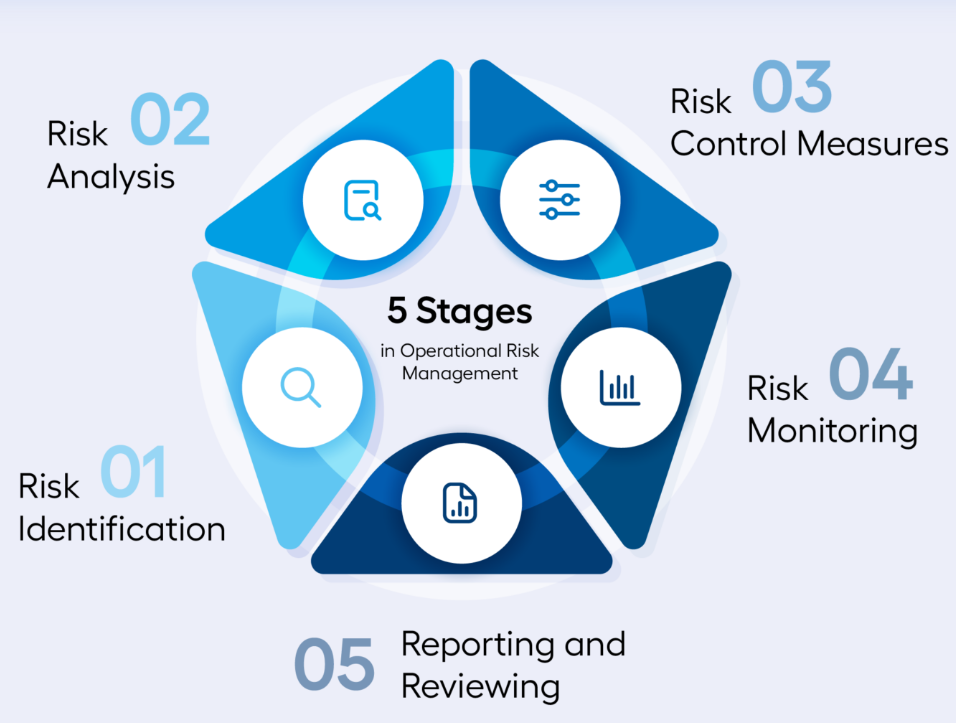
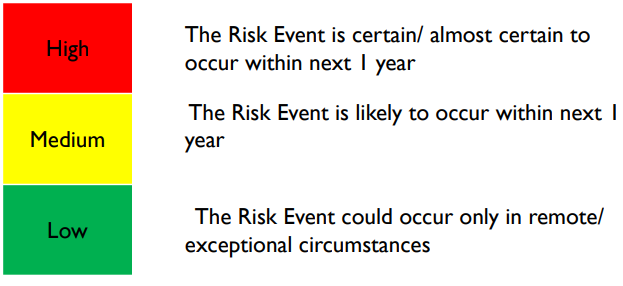
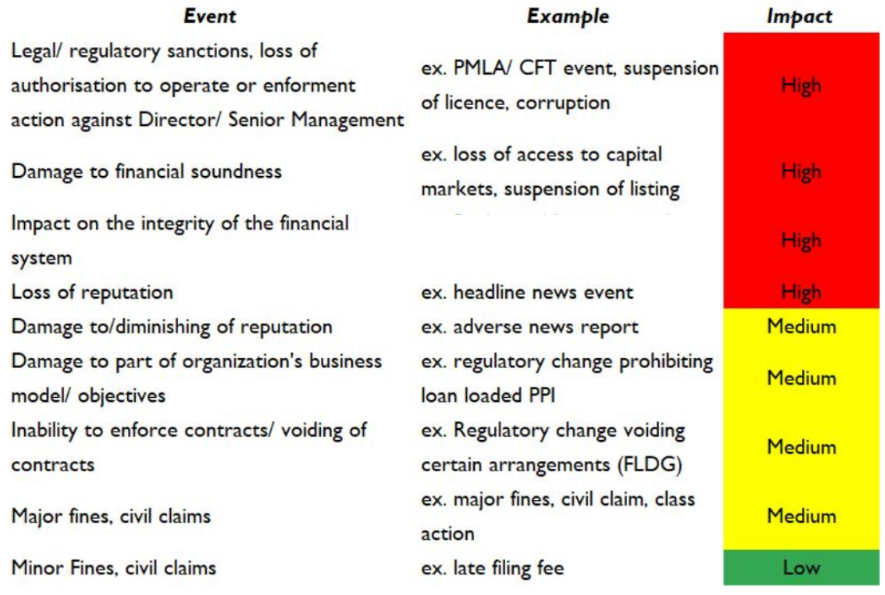




 Reload document
  Open in new tab