Taxation in Securitisation: A judicial overview

-Anirudh Grover, Executive | finserv@vinodkothari.com

Introduction

Securitization transactions in India post the pandemic has seen significant improvement with volumes growing by 70% to Rs. 73000 crores in FY 2023 compared to Rs. 43000 crores in FY 2022.[1] This growth was also highlighted in one of our recent write up wherein it can be seen from the data laid down that despite the global slowdown in the world economy on account of the pandemic, the volume of securitization transactions in India gained a lot of popularity. Given the impetus of this fundraising mode, it is important to have a vibrant securitization market. This can be only achieved if the governing framework with respect to taxation does not impose an additional taxation burden on the parties. Through this article, the writer will be reviewing the stance of various courts by highlighting the principles with respect to the taxation of the parties involved in a securitization framework i.e. Originator, Special Purpose Vehicle(‘SPV’), and the Investors. For a better understanding of the framework of securitization, the readers can also refer to our Article on Securitization: A Primer.

Read more

IS THIS LENDING DIGITAL OR PHYSICAL?

Anita Baid in conversation with Vinod Kothari

Live on YouTube – 20th April | 05:00 p.m. – https://www.youtube.com/live/89PtYjU5S3Y?feature=share

Loader Loading…
EAD Logo Taking too long?

Reload Reload document
| Open Open in new tab

Download as PDF [279.87 KB]

Impact of Artificial Intelligence in the Lending Ecosystem

-Dayita Kanodia, Executive | finserv@vinodkothari.com

 “It is the quality of lending over the quantity of lending”

   -Lewis Thompson Preston

Banking everywhere but never at a bank[1]

Disbursement in the Indian lending market witnessed a growth of 11 percent and reached Rs.174 trillion in FY22, compared to Rs.11.4 trillion in FY17, with a record growth of CAGR 72 percent. The disbursement is further expected to grow and reach Rs.274 trillion by FY26.

Out of the total lending volumes, India’s digital lending market was worth USD 270 billion in 2022 and is expected to reach USD 350 billion by 2023.[2]

Amid surging demand for online loans, lending institutions are claiming that they are adding more than 10000 users a day and have amassed more than 6 million users to date. It seems that the financial sector has finally accepted the change for ‘banking everywhere but never at a bank’. Given the significance and relevance of this subject, this article intends to discuss how AI is impacting the lending business.

Before delving into the intricacies  of artificial intelligence and its use, it is important to note that the financial sector regulator, the Reserve Bank of India, concerned on this mushrooming of digital lending apps, has already come out with various guidelines on digital lending to protect customers’ data and reduce the increasing number of frauds in the system[3]. These regulations by the RBI among other things emphasizes on permitting only regulated entities like banks and non-banking financial institutions to extend loans over a digital platform, provide a mandatory cooling off period and make it compulsory to have a customer’s consent before increasing their credit limit.[4]

Transformation in the lending industry

It is believed that Robotic Process Automation, machine learning and artificial intelligence can together  act a set of support mechanisms for internal staff and customers.

The lending process involves a series of activities that lead to the approval or rejection of a loan application. A well- integrated AI, Automation and ML models would enhance the entire lending process, increase it’s efficiency, conjunction with other technologies like OCR and NLP. The majority of documentation work happens during the initial stages of loan processing which are highly time consuming. Enabling automation throughout the lending cycle, AI in loan processing reduces the overall time spent significantly. It can complete much of the credit evaluation and background research faster and without any human intervention.

Loan Monitoring

Companies can easily use Machine Learning to pick out loans that have the possibility to go bad and help to analyze on-going loans. This will help lenders take precautionary steps against borrowers whose loans are likely to default. Again, institutions can combine the AI to automate their debt collection team’s intelligence methods such as AI can spot trends for defaulting loans and refine early response processes, including more detailed and personalized approaches to customers.

Credit-Scoring Scheme

Artificial intelligence can identify risk profiles and assess the ability to pay based on factors other than just the credit score. Again, most of the online transactions are done through a smartphone today, lenders can easily track a prospective customer’s online activity. Therefore, artificial intelligence can build a credit score for them by analyzing their online activities.

Further, AI powered lending tools can scrutinize all the data in the documents and then compare it with the loan requirements and provide meaningful insights that can help the lender make more effective decision on the borrower’s creditworthiness.

Artificial Intelligence and Machine Learning can allow lenders to look beyond credit scores and see data patterns that can help establish the character and capability to repay -that are the foundation of lending. For instance, inexperienced or new borrowers do not have a credit history and therefore their credit scores do not necessarily reflect their likelihood of repaying a loan, but their complete tradeline data can offer more detail about the timeliness of their payments and other behaviors that may qualify them for certain lending products.  

Artificial Intelligence and Machine Learning can help banks and lending organizations improve rule based underwriting. These advancements have a major impact on accuracy, particularly while processing loan applications in bulk.

Meeting Customer Expectations

A seamless client onboarding process is the first step in making a great first impression. It all starts with a potential lead which connects with the sales team and goes through several steps to compile crucial data and carry out the various regulatory, legal and due diligence checks.

At present, a large part of the commercial banking system are based on human networking. The dependence on human intervention not only impacts speed but also results. AI has removed this by churning the applications through its algorithms to search for patterns and deliver insights and decisions based on the same. Therefore, zero emotions are involved.

ChatBots have grounded itself as a strong tool for customer satisfaction and is thus an unmatched support for the organisations supporting them to save a lot of time and cash. AL and ML have ensured that there is less chance for errors and provides organisations with exceptional analytical and clear thinking.

Automating the complicated lending process and streamlining it to provide results in a matter of minutes by using AI and ML is a win for the lending industry as the faster the lenders churn loans, the better their revenues and profit margins, and the happier the customers.

We can say that customer delight has become a fact rather than a myth in the age of AI and ML in lending.

Can AI do everything?

We cannot ignore the fact that relationship banking plays a large part in the entire lending- borrowing process. Companies do not necessarily take loans from the bank which offers them the cheapest finance. Instead, companies take loans from banks that they consider to be a business partner and have good working relationships with.

One should also consider the fact that artificial intelligence based system is made out of deep neutral networks which take data from a wide variety of sources. The sources of their data as well as the process undertaken to arrive at a decision can be quite complex and may not be completely transparent to a layman.

Hence, the end result is that some of the decisions made by the system are incomprehensible to humans. For instance, the systems may deny a loan to a long time customer of a commercial bank and the reasons may not be easy to decipher.

Concluding remarks

There is requirement for supervised AI which sorts data based on the rules created by humans. This will enable the organizations to be able to deliver even better services by bringing together the best of humans and machine capabilities into their craft, making an even more attractive prospect for their clients. At the end of the day, it is humbling to know that no matter how advanced our technology becomes it cannot replace human creativity, intuition and experience.


[1] Book by Brett King

[2] https://bfsi.economictimes.indiatimes.com/news/fintech/indias-digital-lending-market-worth-270-bln-in-2022-disbursement-grew-by-11-reports/97388937

[3] Our variousother  articles on Digital Lending can be read here- https://vinodkothari.com/?s=digital+lending

[4] https://www.rbi.org.in/scripts/NotificationUser.aspx?Id=12382&Mode=0

Classification of fraud and reporting

Should borrower be given an opportunity of being heard?

-Rhea Shah, Executive | rhea@vinodkothari.com

Background

A recent ruling of the Supreme Court placed emphasis on the classification of an account as fraudulent and the consequences thereof. The ruling is in favour of incorporating the principles of natural justice during the process of declaring an account as fraudulent.

Fraud classification by banks and NBFCs is essentially guided by Master Directions on Frauds – Classification and Reporting by commercial banks and select FIs[1] and the Master Direction – Monitoring of Frauds in NBFCs (Reserve Bank) Directions, 2016[2], respectively (‘Fraud Directions’). However, there has been a certain extent of ambiguity as to the procedural aspects of the classification. While the basic purpose of such classification remains to ensure the early detection and reporting of a fraudulent transaction, it also entails significance in implementing a procedure that is fast and robust for the RBI to disseminate information regarding fraudulent borrowers and related parties.

Read more

Full-day Workshop on Securitisation, Transfer of Loans and Co-lending

Register here: https://forms.gle/6x1GrZzRQoFzSVRm8

We are also organising the 11th edition of the Securitisation Summit, an annual coming together of stakeholders in structured finance industry in India to be held on 19th May, 2023 i.e. the day after this workshop. You are requested to register for both – the workshop and the 11th Securitisation Summit for a refresher on the securitisation market in India. Read more: https://vinodkothari.com/secsummit/

Loader Loading…
EAD Logo Taking too long?

Reload Reload document
| Open Open in new tab

Download as PDF [506.08 KB]

Securitisation: Indian market grows amidst global volume contraction

Timothy Lopes, Manager

finserv@vinodkothari.com

Global Securitisation Volumes, 2022

The global securitisation market in 2022[1] saw a decline in volumes as compared to record issuance volumes seen in the year 2021. The decline was mainly driven by 24% year-on-year decline in volumes in the United States, obviously because of inflation, general economic conditions and low level of business confidence,  coupled with supply chain disruptions and uncertainty caused by the Russia-Ukraine conflict[2].

Read more

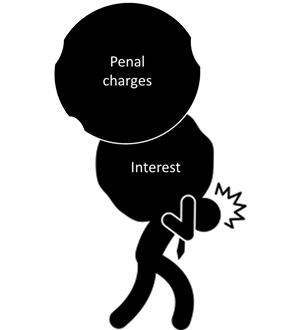
Penal charges not a cash-cow for lenders

RBI issues draft guidelines on fair lending practices for penal charges

Aanchal Kaur Nagpal, Manager and Dayita Kanodia, Executive | finserv@vinodkothari.com

Introduction

Levying of penal interest/ charges is a punitive measure adopted by lenders on borrowers defaulting in making repayments and/ or breaching any terms and conditions mutually agreed in the loan agreement. The Reserve Bank of India also allows lenders to charge such rates as long as the same are communicated to the borrower and are in accordance with the Board approved policy framed in this behalf.

However, lenders, cashing in on such autonomy and flexibility, have adopted varied practices which are often prejudicial to the borrower. These include charging exorbitant rates, capitalisation of penal charges, charging of penal interest on the loan amount and not the defaulted portion etc.

The RBI, in its Statement on Developmental and Regulatory Policies dated February 08, 2023[1], announced policy measures for introduction of guidelines for regulating the penal charges levied by financial institutions[2]. Pursuant to the same, RBI, on April 12, 2023 has issued a draft circular on Fair Lending Practice – Penal Charges in Loan Accounts (‘Draft Circular’) to persuade lenders to use penal charges for their true compensatory nature and not as a revenue enhancement tool. 

While the Draft Circular comes with good intentions, there are certain provisions that may seem ambiguous and contradictory, and the final guidelines would need to provide sufficient clarity to achieve the desired execution.

Read more

RBI regulates outsourcing of IT Services by financial entities

-Anirudh Grover, Executive | finserv@vinodkothari.com

1. Introduction

With the penetration of the internet in India, newer and more efficient technologies are being built and these dynamic technologies are being leveraged by various sectors of the economy, and the financial sector is one of them. Financial institutions have extensively been outsourcing their IT services requirements to third parties in order to get easier access to newer technologies. In this process of availing the services of a third party, financial institutions expose themselves to significant financial, operational, and reputational risk as the Reserve Bank of India has pointed out.

Accordingly, the RBI in the year 2022 had in its Statement on Developmental and Regulatory Policies proposed to issue draft directions on outsourcing of IT services since the existing Directions on Managing Risks and Code in Outsourcing of Financial Services (‘Guidelines on Outsourcing of Financial Services’) as provided for in the Master Direction- Non Banking Financial Company- Systemically Important Non Deposit taking Company and Deposit taking Company (Reserve Bank) Directions, 2016 (Updated as on December 29, 2022) (‘SI Directions’)  specifically excluded IT services from its ambit. Following which on June 23, 2022 the RBI issued Draft Master Direction on Outsourcing of IT Services (‘Draft IT Outsourcing Directions’) for public comments. We had briefly in our previous write up discussed the introduction of the Draft IT Outsourcing Directions. 

Read more

RBI Framework for Green Deposits

– Team Finserv | finserv@vinodkothari.com

Climate change is clearly one of the most pertinent regulatory themes in recent times, as the move to sustainable business practices and energy efficient technologies need massive funding.  The availability of finance for move to sustainability has an important role to play in mitigating climate change. To this effect, RBI also conducted a survey in January 2022 to assess the status of climate risk and sustainable finance in leading scheduled commercial banks, and observed a need for concerted effort and further action in this regard. Following the same, RBI conducted a discussion, and released a press release indicating its intention to release a framework for acceptance of green deposits in India. On 11th April, 2023, RBI released the Framework for Acceptance of Green Deposits (“Framework”) for banks and deposit-taking NBFCs/HFCs, to be applicable from 1st June, 2023.

Our video lecture on the topic is available here: https://youtu.be/7rRhVYR-zT0

As the green deposits formally mark its presence in the Indian financial markets, one may be inquisitive on various aspects related to it. We have tried to analyze and put our views on the same in this write-up.

The Green Deposit Framework
Banks and deposit-taking NBFCs/HFCs may raise green deposits, in accordance with the Framework, from 1st June, 2023
Money raised by Green deposits to be deployed only for “green finance”; India’s taxonomy for the same to be developed. In the meantime, a list of eligible green activities/ projects has been announced, in line with SEBI’s definition of green bonds under NCS Regulations
Third party assessment/verification of use of proceeds mandatory
Impact assessment to be optional for FY 23-24, and mandatory from FY 24-25
Disclosure of green deposits and utilization in the annual financial statements
Read more

A Critical Analysis on Corporate Guarantees under Service Tax and GST

Dayita Kanodia, Executive | finserv@vinodkothari.com

“The Supreme Court’s only armour is the cloak of public trust; its sole ammunition, the collective hopes of our society.” – Irving R. Kaufman

Background

The Supreme Court has ruled that service tax will not be levied on corporate guarantees by a parent company to its subsidiaries where there is no consideration involved.

This article discusses the impact of this ruling on companies which issue corporate guarantees without consideration.

Read more