Webinar on Corporate Laws (Amendment) Bill, 2026
Register here: https://forms.gle/1iR2xaFKGBU1kRJ3A
Read our brief analysis of the proposals here:
Corporate Laws Amendment Bill: Easing, Streamlining and Updating the Regulatory Framework

Register here: https://forms.gle/1iR2xaFKGBU1kRJ3A
Read our brief analysis of the proposals here:
Corporate Laws Amendment Bill: Easing, Streamlining and Updating the Regulatory Framework
– Vinod Kothari and Payal Agarwal | corplaw@vinodkothari.com
Finance Bill, 2026 brings tax relief to investors for share buybacks, by partially restoring the position that existed before the Finance Bill 2024 amendment. The 2024 Finance Bill changed the taxability of buybacks to impose tax on buyback consideration, taxing the entire “receipt” as “dividend”, implying tax at applicable regular tax rates rather than as capital gains.[See our article on the 2024 amendments here.]
The 2026 Bill proposes omission of Section 2(40) (f), [dealing with deemed dividend] and amendments to Section 69, [specifically dealing with tax on buybacks]. The net result of this:
Applicability of the amendments: The amended provisions apply for buybacks done on or after 1st April, 2026. The existing provisions were introduced effective 1st Oct., 2024 and therefore, they would have had a life of only 15 months.
Buyback is not merely a means of distribution of profits to the shareholders. There may be various reasons or motivations for which buyback may be done by a company, for example:
For detailed guidance on the procedure and compliances involved, refer to our FAQs on buyback here.
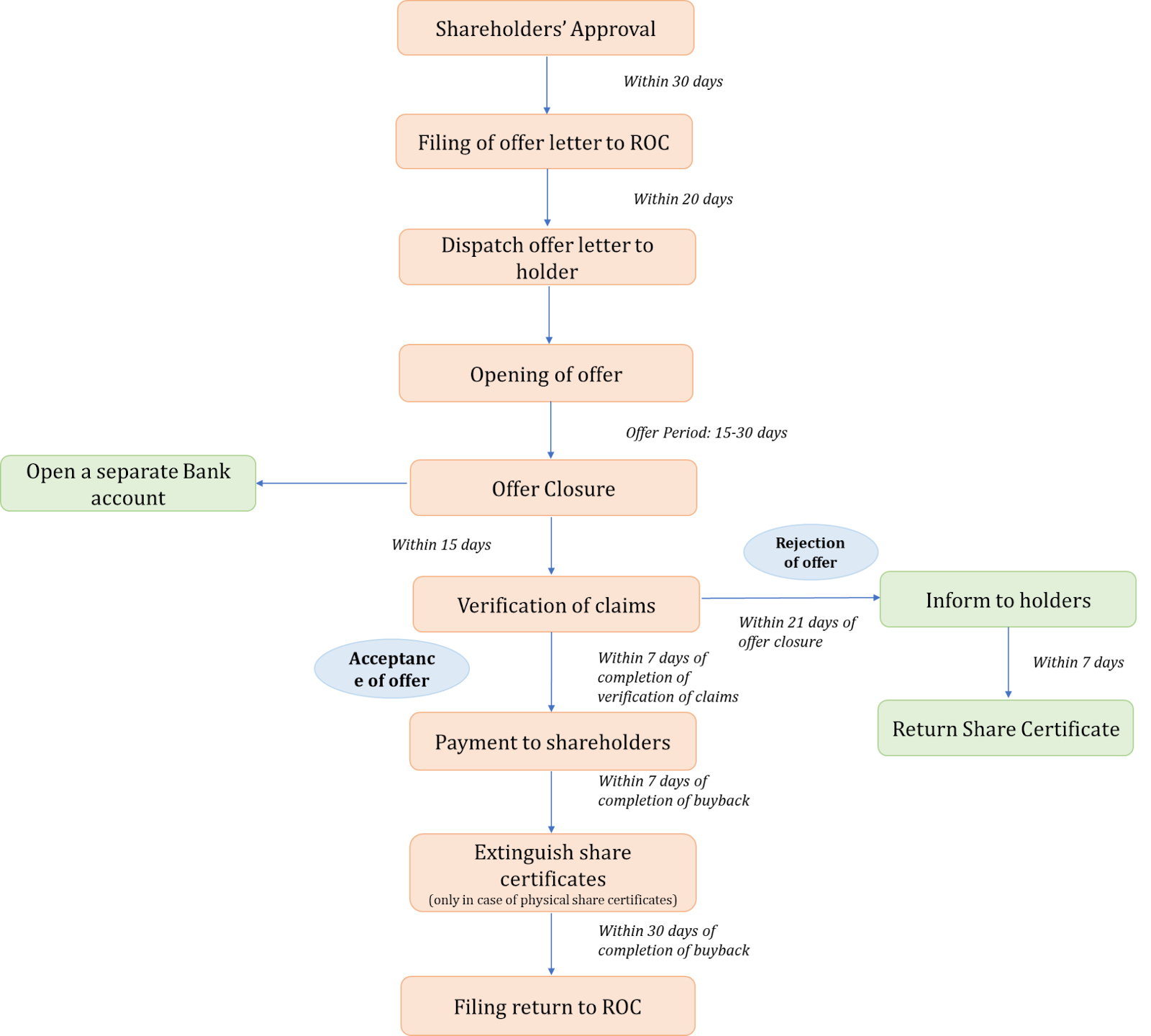
Figure 1: Buyback process and timelines under Companies Act
For buyback of capital beyond the statutory limits, the provisions of capital reduction u/s 66 apply. With the buyback consideration being taxed as deemed dividends, capital reduction through NCLT route was also being seen as an alternate route for scaling down capital in a relatively tax-efficient manner. There are rulings favouring capital reduction as an alternative to buyback, for instance, the ruling of NCLAT in the matter of Brillio Technologies Pvt. Ltd v. ROC, subsequently also referred to by NCLT Mumbai in the matter of Reliance Retail Ltd. Some of these rulings even permitted selective reduction of capital. See our article on reduction of capital here.
One of the primary deterrents in capital reduction u/s 66 of the Companies Act is the approval requirements – of the shareholders, creditors and even the NCLT.
The scope of dividend distribution is quite narrower as compared to share buybacks. The primary difference between the two is in the source of payment. Dividend distribution can be made only out of surplus; where free reserves are proposed to be utilised for dividend payment, additional conditions are applicable. In no case, can such declaration be made out of securities premium, or proceeds of fresh issuance – which are permissible sources for buyback. Buyback, on the other hand, requires mere liquidity, availability of profits is not mandatory. Therefore, dividends are merely a way to upstream the earned profits; buyback can even be the way to scale down, for example, by releasing the share premium, or using one class of shares to buy back the other.
Once dividend is approved by shareholders with requisite majority, there is no provision for a shareholder to waive off his right to the dividend [see our article on the same here], and unclaimed dividend, if any, are kept in a separate account to be transferred to IEPF. In case of buyback, while the same is also offered to all shareholders, the buyback consideration is paid only to such shareholders who tender their shares for buyback; the question of waiver of rights or unclaimed amounts does not arise.
| Particulars | Finance Bill, 2024 | Finance Bill, 2026 |
| Applicability for buybacks done | w.e.f. 1st October, 2024 | w.e.f. 1st April, 2026 |
| Taxable as | Deemed dividend. The holding cost of the bought back shares allowed as short term capital loss | Capital gains |
| Tax incidence on | Recipient shareholder | Recipient shareholder |
| Amount taxable | Entire buyback consideration | Gains on buyback, that is, Buyback consideration minus, cost of acquisition |
| Rate of tax | Applicable income tax slab rate | LTCG – 12.5%, subject to exemption upto Rs. 1.25 lacs STCG: 20% In case of promoters: 22%/ 30% (depending on whether domestic company/ otherwise) |
| Differential treatment for promoter shareholders | No | Yes, additional tax rates apply |
Under the erstwhile regime, the entire buyback consideration was taxable as deemed dividend, with the cost of acquisition claimable as capital loss. In such a case, the higher the cost of acquisition on such shares, higher would have been disincentive in the form of taxing the cost component as dividends. The benefits of capital loss depend on the existence of capital gains, and hence, the effective tax rates on buyback could not be ascertained.
In the amended tax regime, buyback consideration, minus, cost of acquisition, is taxed at flat rates of capital gains – 12.5%/ 20%, depending on whether the capital gains are long-term or short-term in nature.
The disincentives were two-fold:
Resultant market reaction: a sharp decrease in buyback offers during FY 24-25 as compared to previous financial years. As per the publicly available data in case of listed companies, the total buyback size for 2024-25 was ₹7,897 Crores when compared to 2023-24 with a buyback offer size of Rs. 49,836 crores, indicating a decrease of 84.2 per cent.
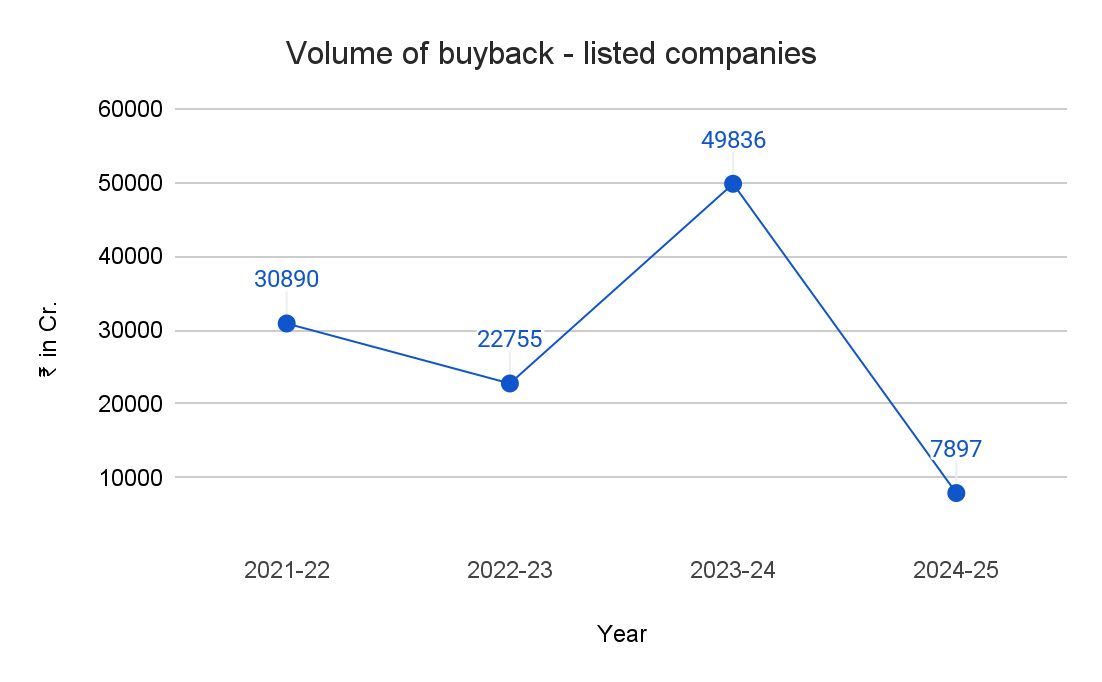
The number of buyback offers sharply declined, with only 17 instances of buyback offer by listed entities between 1st October 2024 till date (3rd February, 2026) as compared to about 36-40 instances in each of FY 22-23 and FY 23-24.
Pursuant to the Finance Bill, 2026, the buyback taxation appears to be rationalised in the following manner:
With this, while the tax incentive remains in the hands of the recipient shareholders, the tax treatment is rationalised in the form of value that is to be taxed and the manner in which tax is levied. However, the provision differentiates between a promoter and non-promoter shareholder.
In case of listed company
| Promoter | Promoter group |
| Person having control over the affairs of the company, or Named as promoter in annual return, prospectus etc. | Includes immediate relatives of promoters Entities in which >20% is held by promoters Entities that hold >20% in promoters etc. Persons identified as such under “shareholding of the promoter group” in relevant exchange filings |
The scope of “promoter group” thus, is much broader than “promoter”.
In case of an unlisted company
Question may arise on what does “indirect” shareholding mean? Does it include shareholding through relatives, or through other entities as well? The word “indirect” is not the same as “together with” or “persons acting in concert”. Indirect shareholding should usually mean shares held through controlled entities.
The amendments bring higher tax rates for promoters, in view of the distinct position and influence of promoters in corporate decision-making including in relation to buyback transactions. Promoters may want to influence buyback decisions for various reasons, for example:
In view of the promoter’s ability to influence buyback decisions to meet own objectives, additional tax is levied on buyback consideration received by the promoters, thus addressing any tax-arbitrage that could have been created through buybacks.
See our Quick Bytes on Budget, 2026 at here
Our other resources on buyback at here
Decoding Supreme Court ruling in Jindal Equipment Leasing Consultancy Services Ltd. v. Commissioner of Income Tax Delhi-II, New Delhi
– Sourish Kundu | corplaw@vinodkothari.com
One of the most common modes of corporate restructuring is merger, and one of the most crucial aspects in assessing the commercial viability of a proposed merger is its tax implications. Typically, in a merger, the shareholders of the transferor company are issued shares of the transferee company in order to avail the exemption under section 70(1)(f) of the IT Act, 2025 [corresponding to section 47(vii) of the IT Act, 1961]. The said provision grants exemption in case of scheme of amalgamation in respect of the transfer of a capital asset, being shares held by a shareholder in the transferor company, where (i) the transfer is made in consideration of the allotment of shares in the transferee company (other than where the shareholder itself is the transferee company) and (ii) the amalgamated company is an Indian company.
However, a recent Supreme Court ruling in the matter of Jindal Equipment Leasing Consultancy Services Ltd. v. Commissioner of Income Tax Delhi-II, New Delhi [2026 INSC 46] has opened a new avenue for debate w.r.t the taxation on receipt of shares of the transferee company in a scheme of amalgamation. In this case, the Supreme Court ruled that the exemption as provided under section 47(vii) of the IT Act, 1961 [corresponding to section 70(1)(f) of the IT Act, 2025] shall not be available to shareholders of the transferor company who are not perceived as “investors”, that is to say long term investors as opposed to traders, in the transferor company. And accordingly, any notional gain in a share swap deal pursuant to an amalgamation shall be taxed u/2 28 of the IT Act, 1961 [corresponding to section 26 of the IT Act, 2025].
In this article, we decode the nuances of the ruling, the impact it is expected to have in the sphere of merger deals and other related concerns.
So far, the common understanding of consideration in case of amalgamations was that an amalgamation is merely a statutory replacement of one scrip for another, with no real “transfer” or “income” until the new shares are actually sold for cash, or in other words, mere substitution of shares in the books of the involved entities. However, the Apex Court in the instant judgement has now effectively set a different precedent for those holding shares as stock-in-trade, i.e. current investments.
The Court clarified that while Section 47(vii) provides a safe harbor for investors (treating mergers as tax-neutral corporate restructuring), this exemption does not extend to “business assets”, a.k.a. stock in trade. For a trader and investment houses, shares held in stock-in-trade represent “circulating capital”, and the objective of holding them is not capital appreciation, but conversion into money in the ordinary course of business. Therefore, replacing shares of an amalgamating company with those of an amalgamated company of a higher, ascertainable value constitutes a “commercial realisation in kind”.
The SC applying the doctrine of real income emphasised in Commissioner of Income-Tax v. Excel Industries Ltd. and Anr. [(2013) 358 ITR 295 (SC)], established a three-pillar test, which is to be applied on a case to case basis to determine if allotment of shares pursuant to a merger triggers taxation of business income u/s 28 of the IT Act, 1961:
This test was further elaborated by two situations viz. allotted shares being subject to a statutory lock-in, which hinders the disposability of the asset, and allotted shares being unlisted, which cannot be said to be realisable, since no open market exists to ascribe a fair disposal value.
Additionally, the SC also held that the trigger is the date of allotment of the shares of the amalgamated entity, and neither the “appointed date” nor the “date of court sanction” or what is called as “effective date” in the general parlance, as no tradable asset exists in the shareholder’s hands until the scrips are actually issued.
While the ruling provides reasonable clarity on the treatment of shares received as a result of amalgamation, when the same is held in inventory, it leaves several operational questions unanswered, leaving a gap to determine the commercial feasibility of these deals.
If the Revenue can tax “notional” gains arising from a higher market value at allotment, correspondingly assessees should be allowed to book notional losses, if any on such deals as well. In cases where a merger swap ratio or a market dip results in the new shares being worth less than the cost of the original holding, the taxpayer should, by the same logic, be entitled to claim a business loss u/s 28 of the IT Act, 1961, or in other words, if the substitution is a “realisation” for profit, it must be a “realisation” for loss as well.
A major concern is the potential for double taxation. If the assessee is taxed on notional gain, being the difference between the cost of acquisition of the original shares and the FMV of the shares of the transferee company on the date of allotment, such FMV should logically become the new cost of acquisition. If an assessee is taxed on the difference between the book value and the FMV at the time of allotment, but the increased cost of acquisition is not allowed, the same appreciation gets taxed twice. It is first taxed as business income at the time of allotment and again at the time of the actual sale.
This issue remains prone to litigation, that is, who determines the nature of the investment, whether it is current or non-current? Will it be determined basis the books of account of the investor?
A CBDT circular lays down certain principles along with some case laws to distinguish between shares held as stock-in-trade and shares held as investments, and decide the treatment of shares held by the investing company. Further, factors such as intention of the party purchasing the shares, [discussed by Lord Reid in J. Harrison (Watford) Ltd. v. Griffiths (H.M. Inspector of Taxes); (1962) 40 TC 281 (HL)], and method of recording the investments [highlighted in CIT v. Associated Industrial Development Co (P) Ltd (AIR1972SC445)], are considered as the deciding factors for making a demarcation between treating an asset as capital asset or stock-in-trade.
As highlighted in the instant case, while the initial classification is made by the companies in the financial statements, the AO is empowered to overlook the same, and determine whether the shares were held as stock-in-trade or as capital assets, as without that determination, the taxability or eligibility for exemption u/s 47 could not be ascertained.
It should be noted that the line between a long-term strategic investment and a trading asset is often thin, and the Jindal ruling places the burden on the Revenue to prove the stock status and the “present realisability” of the shares.
Proving by contradiction, the Apex Court has added that: “If amalgamations involving trading stock were insulated from tax by judicial interpretation, it would open a ready avenue for tax evasion. Enterprises could create shell entities, warehouse trading stock or unrealised profits therein, and then amalgamate so as to convert them into new shares without ever subjecting the commercial gain to tax. Equally, losses could be engineered and shifted across entities to depress taxable income. Unlike genuine investors who merely restructure their holdings, traders deal with stock-in-trade as part of their profit-making apparatus; to exempt them from charge at the point of substitution would undermine the integrity of the tax base”
Discussing the concept of “transfer”, “exchange” and “realisability”, the SC has affirmed that mergers do not entail a mere replacement of shares of one company with that of another, as for persons holding the same as stock-in-trade cannot be said to be a continue their investment, instead the new shares being capable of commercial realisation gives rise to taxable business income. The Jindal Equipment ruling seems to effectively end the assumption of automatic tax neutrality for all merger participants, subject to fulfillment of applicable conditions prescribed in the IT Act. As a result, if the tax officers believe that the shareholders hold the shares as stock in trade, and could cash out the same at the next possible instance, the assessee shall be under the obligation to pay tax even without encashing any gain in actuals. Further, the tax implications in such cases shall not be at the special rates prescribed for capital gains.
Read more:
Understanding “Undertaking” in the Context of Investment Demergers
Budget 2025: Mergers not to be used for evergreening of losses
– Aparajita Das, Executive | corplaw@vinodkothari.com
The recently issued RBI (Commercial Banks – Credit Risk Management) Amendment Directions, 2026 has revised and consolidated the regulatory framework governing lending to related parties. The revised framework strengthens governance standards, expands the scope of “related parties”, and introduces enhanced approval, monitoring, and disclosure requirements. The amendments have been discussed briefly in our article here (for commercial banks) and here (for NBFCs).
Section 20 of the Banking Regulation Act, 1949 places a statutory prohibition on lending to directors and entities in which directors are interested, to prevent conflict of interest, self-dealing, and misuse of depositor funds. Pursuant to clause (a) of Explanation to sub-section (4) thereof, Para 15A has been issued under the CRM Directions to clarify how these restrictions apply in the context of foreign banks operating in India through branches. Prior to the Amendment Directions, the same was specified in Para 15(2) of the erstwhile CRM Directions.
The RBI has clarified that foreign banks cannot circumvent Section 20 merely because the Board is located outside India. The regulatory intent is to ensure functional and ethical parity between Indian banks and foreign bank branches operating in India, particularly in relation to related party exposure.
Applicability of Restrictions to Foreign Bank Branches, Officers, Boards and Foreign / Indian Entities
1. Regulatory Background
Related party lending by banks in India is primarily governed by section 20 of the Banking Regulation Act, 1949.
Section 20(1) of the Act imposes statutory prohibition on banks from granting loans or advances to:
The said provisions are mandatory and prohibitory in nature and are intended to prevent conflicts of interest and misuse of fiduciary position.
2. Applicability to Foreign Banks in India – Para 15A(1) of CRM Directions
Para 15A, issued in pursuance of clause (a) of the Explanation to Section 20(4) of the BR Act, provides that the sanction or grant of credit facilities to companies in India by a foreign bank having branches in India shall be in compliance with the spirit of Section 20 of the Banking Regulation Act, 1949.
Accordingly, an Indian branch of a foreign bank shall not lend to any firm or company in India if:
RBI in its direction has explicitly stated –
Therefore, Indian branches cannot claim regulatory insulation by arguing that the Director is not involved in Indian operations.
3. Exceptions and Permissible Transactions
The Directions provide limited and narrowly construed exceptions which includes:
4. Application to Officers and Specified Employees of Foreign Banks
Although Para 15A directly addresses directors, its effect extends to officers and senior management of foreign bank branches in the following manner:
Further, under the Related Party Lending framework (Chapter V), officers classified as specified employees are subject to disclosure obligations, recusal from decision-making, arms-length pricing and approval norms as per the Credit Policy of the bank.
5. Application to Board of Directors of Foreign Bank (Abroad)
Para 15A squarely applies where a Director of the Foreign Bank abroad has substantial interest, control, directorship, promoter position or guarantee obligation in regard to the Indian Borrower Entity. In such a case, the Indian branch must treat the borrower as prohibited even if the lending transaction has taken place in India. The foreign Director has no role in the Indian branch.
The restriction extends to Indian subsidiaries of foreign holding companies, step down subsidiaries and group entities where foreign Director has any indirect interest.
6. Application to Indian Entities
Indian entities are covered if a Foreign Bank’s Director has interest or control or if the entity is a subsidiary of any other Indian or foreign entity in which such Director is interested. However, the prohibition still applies, irrespective of the Indian entity being listed or unlisted or fund lending being fund based or non-fund based.
7. Application to Foreign Entities
Similarly, on account of Para 15A, foreign persons and entities may also be treated as related parties due to control, shareholding, or board nomination rights where lending to foreign entities is otherwise permissible, materiality thresholds, Board/Committee approvals, and recusal norms shall apply and any structure designed to circumvent Para 15A through offshore routing may be treated as regulatory evasion.
8. Conclusion
The norms clearly provide that the foreign banks must also follow regulatory requirements on conflict of interest specified in the BR Act read with CRM Directions. Thus, the Indian branches of foreign banks must carefully check the interests of overseas board members, and loan decisions must look at governance issues as well as normal credit risk. If these rules are not followed, the bank may face regulatory action, fines, and disciplinary action against staff.
Therefore, Para 15A makes sure that foreign bank branches in India follow the same ethical and safety standards as Indian banks. It stops foreign directors from indirectly giving benefits to themselves and protects the trust and stability of the Indian banking system. These rules apply broadly to foreign bank branches, their officers, overseas boards, and both Indian and foreign entities, based on who has interest, control, or influence and not on where they are located.
Our other resources:
– Pammy Jaiswal and Saket Kejriwal | corplaw@vinodkothari.com
In recent times, the use of partly-paid shares has seen some traction[1] where several listed companies[2] came up with issuance of partly-paid shares[3]. While the law provides for the issuance of partly-paid securities, it is important to understand how this instrument has not been used merely as a capital-structuring tool, but arguably, as a regulatory workaround. An analogy may be drawn to a situation where a customer is allowed to purchase a valuable by paying a token money today and pay the full consideration after a period of say 1-2 years at the same price which prevailed at the time of payment of token money. Specifically, promoters and investors appear to be utilizing partly-paid shares as a substitute for share warrants, by paying a minuscule part of the value of shares as a part of application money and the balance payment is allowed to be made at any time in the future, sometimes after an unreasonably long time.
In this article, we argue that the issue of such partly-paid shares is as good as issuing share warrants, However, circumventing the challenges associated with warrants.
Ashare warrant is a security issued by a company that grants its holder the right/option to subscribe to equity shares of the company (i.e. Future Equity) at a predetermined price, within a predetermined period, upon the upfront payment of a token amount referred to as the option premium.
Legal Context
A share warrant, being marketable in nature, provides a right in securities, therefore, it is treated as a security under Section 2(h) of the Securities Contracts (Regulation) Act, 1956. Some of the relevant legal provisions would include:
Key Features
Pricing
The value of option premium is generally determined by Black Scholes Model, Binomial Options Pricing Model or Monte Carlo Simulation Method. The most appropriate method for calculation of option premium, in the context of companies using warrants as a regulatory workaround, is the Simulation Method.
One of the key features of share warrants is that the longer the life of the option, there is a higher probability of its price being high. In accordance with the above models, issuing share warrants for an extended period can raise the option premium to a point where it becomes undesirable. Therefore, it is recommended that the life of a warrant should be just and reasonable, and that it should not be used as a substitute for long‑term convertible instruments such as OCDs, CCDs, CCPS, or other similar securities.
While both partly‑paid shares and warrants involve an upfront payment towards a future right in equity shares, they differ significantly on the following points:
| Basis of Difference | Partly-Paid Shares | Share Warrants |
| Right and Obligation | Holder is obligated to pay the remaining call money when demanded by the company. Failure to pay will lead to forfeiture of the subscription and call money received by the company. | Holder has a right, but not an obligation, to subscribe to equity shares at a future date. |
| Nature of Investment | These are equity shares issued with part of the value paid upfront, making the holder a shareholder of the company. | These are options issued for a premium, entitling the holder to subscribe for equity shares in the future. |
| Valuation | Shares are subscribed at fair value computed as on the date of making the first subscription/ call money | Shares are subscribed at current fair value on a future date along with payment of option premium |
| Shareholder Rights | Partly-paid equity shareholders enjoy rights proportionate to their paid-up amount. | No rights until conversion. |
Partly-paid shares in its usual nature when used for capital needs in tranches serves the permitted purpose for this concept was introduced, however, this benefit becomes a governance concern when it is used as an alternative to share warrants and as evident from the table above, the two differ in various aspects. The primary reason for this mirroring lies in valuation. In the case of share warrants issued with a longer tenor, the cost of the warrant, representing the right to subscribe to future equity, tends to be higher when calculated using fair value methods, making this option impractical. As an alternative, many companies have opted to issue partly-paid shares, allowing an investor to pay only a minimal upfront amount (similar to the option premium in the case of a warrant) as part of the application money and reserving the right with the investor to infuse the remaining funds for a longer period like 5-10 years which would not be possible in case of warrants as the premium will increase drastically, if calculated as per fair value methods.
It is imperative to note that in case of share warrants, the price paid upfront is the option premium which is basically the price paid to get the equity at the current value at the future date as against in case of partly-paid shares, where the investor becomes a shareholder on the first payment date by even paying a nominal part amount reflecting the fair value (consisting of part face value and proportionate premium) as on the date of making such first payment. The catch lies in the fact that there is no legal prescription on the maximum time within which a company needs to make the final call on such partly-paid shares (except in case of IPOs) which in case of warrants runs up to 18 months for listed securities as well as size of the calls which in the case of listed companies requires at least 25% of the consideration amount calculated as per the formula for exercise price[4] with reference date being the record date shall be received at the time of option premium.
One may argue that, given the fundamental difference between the two instruments is that one comes with a right (warrants) and the other with the security (partly-paid shares), they can not be used as substitutes as in case of partly-paid shares the right to call money lies with the Board and the investor is obligated to pay on demand, failing which shares may be forfeited, resulting in the loss of upfront amount paid.
On the other hand, a share warrant gives a right to the investor to decide when, or even if, to make the payment. If the investor chooses not to exercise the option, the upfront money paid is still forfeited, with the key difference being that the loss occurs at the investor’s discretion.
The above argument is valid theoretically. However, in practice, this mirroring is frequently used by start‑ups, which are generally incorporated as private companies. In such cases, although the ‘right to call money’ rests with the Board of Directors, the Board itself typically comprises the promoters i.e. the very investors who subscribe to these mirrored partly-paid shares or in the case of external investors/subscribers, their appointed representatives form an integral part of the Board. As a result, the obligation on the subscriber to pay the balance can, in reality, be viewed more as a right, given that it is exercised by a Board largely aligned with the interests of the investors themselves.
Additionally, partly-paid shares provide several benefits to the investor, like proprietary rights, chances to book profits in case of transfer, etc.We have discussed the same below:
Partly-paid shares are not merely rights in equity shares but allotment of the shares itself. Once an investor pays the subscription money/ first call, the shares are allotted to the investor who becomes a shareholder immediately and gets ownership rights from day one. Having said that, while the benefits arising out of such ownership is proportional to the amount paid up on the shares, it still dilutes the stake of the other investors who hold fully paid up shares.
The investor’s economic risk is lower compared to a fully paid-up shareholder since only part of the share price has been paid, the investor’s capital at risk is limited to the amount actually contributed, while the ownership position in the company already stands created.
If an investor who has paid only a nominal amount intends to sell such shares for reasons like liquidity or apprehension of the investee not doing well for some reason, he stands a chance to make profits on the part payment where the fair value of such shares have appreciated at the time of such transfer. A purchaser can acquire ownership interest by paying only the fair value of the amount paid-up, while the remaining payment is effectively locked in at the historical fair value. This allows the investor to benefit from future upside without proportionately funding the company at the prevailing fair value for the unpaid portion, which remains priced at the value as on the date of issuance.
Imagine a situation where Mr. A invests in the partly-paid up equity shares of XYZ Ltd. The fair value of the equity shares is say INR 150 (face value INR 10) where Mr. A invests only INR 30 as paid up amount. Thereafter he decides to sell these partly-paid shares to another investor after 2 years by which time the balance amount is still uncalled. The transfer of these partly-paid shares would be done at a fair value where lets assume the value of the shares have appreciated and as a consideration, Mr. A receives INR 80 as the sale consideration and also passes on the legacy of holding partly-paid shares to the buyer.
However, this issue does not arise in listed companies, where market mechanisms ensure fair price discovery.
Situation where a partly-paid share shall not be considered as a share warrant
In our view, partly‑paid shares should be supported by a concrete plan or blueprint specifying when the call money is expected to be raised along with its purpose. This includes:
Even if an exact date cannot be determined, it is advisable to link the call to milestones/events ,such as regulatory approvals, project launches, or specific capital needs, rather than leaving it open-ended. This approach distinguishes a legitimate capital-raising intent from doppelganger design of warrants.
Situation where a partly-paid share shall be considered as a share warrant
A partly-paid share may raise regulatory concerns when above conditions do not exist. This includes situations where the initial application amount is nominal, resulting in minuscule capital infusion. Additionally, if the call structure is vague and lacks a defined timeline or commercial justification, it creates ambiguity around the company’s intention to actually raise the remaining capital. The concern is further amplified when the Board of Directors, which holds the discretion to make the call on these partly-paid shares, is influenced or controlled by the very investors who subscribed to these shares. In such scenarios, the obligation to pay the balance amount may become just theoretical.
The intention behind partly-paid shares is to raise capital while allowing the issuer to secure future source of funding, However, when a minuscule amount is paid at the time of subscription of partly-paid shares and the remaining calls are deferred for a long period without any definite /concrete plan, this raises concern as sighted above and from a valuation perspective may not be seen as a partly-paid shares.
[4] Regulation 67 of SEBI ICDR, 2018
Read more:
Share warrants under cloud – are companies not allowed to issue share warrants?
– Team Corplaw | corplaw@vinodkothari.com
See our other resources:
– Payal Agarwal, Partner | Vinod Kothari & Company | corplaw@vinodkothari.com
Year 2025 will go down in the history of independent India as the year of the most brisk legislative activity – mostly by way of consolidation of some of the major laws. Income Tax Act, labour laws, securities markets, IBC, RBI Regulations etc – everywhere, we find the lawmakers have been quite busy themselves, of course making the subjects and companies even busier. The Securities Market Code (SMC) has been introduced in the Lok Sabha, pursuant to the announcement in the Union Budget 21-22. Divided into a total of 18 chapters, the SMC seeks to consolidate and repeal the following:
The Code reflects a structural consolidation exercise, however, also with an underpinning attempt to make rule making more practical and principled, providing for investor protection by reintroducing ombudsman, providing legal sanctity to inter-regulatory coordination, covering complex securities transactions, etc. Further, the gazette notifications issued in relation to the aforesaid Acts are also proposed to be made a part of the Code.
Simrat Singh | finserv@vinodkothari.com
India’s aspiration to become a US $30 Trillion economy by 2047 rests on its ability to mobilise long-term, stable and affordable capital. Debt capital can be an attractive source for this. While banks have historically been the backbone of credit intermediation in India, a bank-dominated financial system may be inadequate to meet the financing needs of a developing country like India which includes long-gestation exposures to infrastructure, climate transition, manufacturing and other emerging sectors. Recognising this constraint, NITI Aayog’s report on Deepening the Corporate Bond Market in India (‘Report’) lays out reforms to develop corporate bonds as another major tool for mobilising long-term low-cost capital.
In this note we highlight some of the reforms being advocated in the Report.
A central theme of the Report is the need to reduce regulatory friction arising from fragmented and overlapping oversight by SEBI, RBI and the MCA for corporate bonds. Inconsistent treatment of similar bonds, procedural complexity, overlapping disclosures and different approval timelines are identified as major constraints, particularly for public issuances and lower-rated issuers. A specific concern highlighted is issuer-based regulation: bonds issued by banks and NBFCs are regulated by the RBI, while similar bonds issued by non-financial corporates fall under SEBI and MCA oversight. This results in different disclosure standards and compliance processes for similar bonds
To combat this, first, the Report calls for stronger inter-regulatory coordination and recommends measures such as mutual recognition of disclosures, a joint regulatory help desk/single point of contact as well as joint circulars detailing the jurisdictions of each regulator – essentially a centralised coordination mechanism involving SEBI, RBI, MCA and the Ministry of Finance.
Second, the Report emphasises the need to rationalise disclosure norms for public bond issuances, which are significantly more onerous than those applicable to private placements. This asymmetry has led to an overwhelming reliance on private placements, which account for nearly 98% of corporate bond issuances in India (p. 25). Drawing on global practices, the Report recommends a differentiated disclosure regime for well-compliant issuers (p. 66). Specific reforms include extending the validity of offer documents from one year to two or three years, removing ISIN-wise issuance constraints, simplifying PAS-2 and Information Memorandum filings through digital automation on the MCA portal, and introducing a “Well-Known Seasoned Issuer” framework to enable fast-track access to public bond markets for reputed issuers.
Third, the Report stresses the need for regulatory clarity for hybrid instruments, including covered bonds1, securitised debt and infrastructure-linked securities. Many instruments used globally to fund long-term assets do not fit neatly within India’s regulator-specific silos. Jurisdictional ambiguity (which regulator oversees which instrument?) and the absence of standardised regulatory treatment have impeded market development. The Report recommends clearly defined frameworks to facilitate market clarity. In this context, it also highlights tax distortions; for instance, SDIs2 currently attract significantly higher TDS than corporate bonds. The Report states that SDIs are taxed at a higher rate than corporate bonds which prevents securitisation of bonds. However, effective 1.04.2025, SDI TDS rates are aligned with bond rate; both at 10% (See section 194LBC of Tax Act).
Bonds are heterogeneous instruments, varying by type of issuer, tenor, covenants and structure. Unlike equities, electronic order matching alone cannot ensure immediacy of execution or continuous liquidity in the secondary market, particularly in lower-rated or infrequently traded bonds. Despite progress through electronic platforms such as RFQ for secondary trading and EBP for primary issuance, trading volumes remain shallow and concentrated in highly rated bonds.
The Report recommends expanding electronic trading, enhancing post-trade reporting (to improve price discovery) and increasing the proportion of trades settled on a Delivery-versus-Payment (DVP) basis3. Absence of a robust market-making ecosystem is seen as a major constraint on secondary-market liquidity (pp. 22, 36, 106). Limited risk appetite and balance-sheet constraints deter intermediaries from providing continuous two-way quotes, especially in lower-rated and longer-tenor bonds.
To address this, the Report recommends enabling market-making through regulatory incentives and improved access to repo markets. In particular, the creation of a standing repo facility by RBI for high rated corporate bonds would allow market makers4 to monetise inventories efficiently and support continuous liquidity provision. While corporate bonds are included in the RBI’s list of repo-eligible instruments, their treatment differs materially from Government securities (G-Secs). Repos in G-Secs are exempt from CRR and SLR computation which means Banks can access funds through G-Sec repos without providing SLR and CRR on those funds. In contrast, cash raised through repos backed by corporate bonds is treated as a liability for CRR and SLR purposes, hence banks have to provide CRR and SLR on the resulting liquidity. Also, unlike G-Secs, which are centrally cleared and settled through CCIL, corporate bond repos lack a single, standardised clearing and settlement mechanism; they are cleared through F-TRAC and stock exchanges. The result is that the volume of corporate bond repo is negligible (exact data on corporate bond repo could not be sourced).
The Report also flags structural weaknesses in the credit rating ecosystem, including rating inflation, conflicts of interest under the issuer-pays model, and excessive regulatory reliance on ratings (p. 71). Strengthening governance standards is the key recommendation for credit ratings. To improve credit rating access for smaller issuers, the Report suggests exploring alternative credit assessment models, including technology-driven frameworks using GST-returns and other turnover based data and digital transaction histories.
Further, the Report recommends strengthening the existing framework requiring large corporates to raise a portion of incremental borrowings through debt securities (LCB Framework)5. Proposed enhancements include increasing the minimum market borrowing requirement and progressively extending the framework to smaller corporates with lower thresholds.
Drawing on the IMF’s FSAP 2025, the Report also recommends allowing high-quality corporate bonds to be used as collateral in RBI’s repo operations. International experience from the ECB, Bank of Japan, and Reserve Bank of Australia suggests that such measures can enhance secondary-market liquidity and broaden the investor base, subject to appropriate safeguards.
Equally important is the creation of a government-backed, centralised corporate bond data repository. Fragmented data across regulators and exchanges currently hampers price discovery and covenant monitoring. A unified, real-time repository is recommended to improve transparency for issuers, investors, and regulators.
The Report makes it clear that regulatory reforms alone are insufficient; product and market innovation are essential to expand depth and distribute risk. India’s bond market remains narrow not only due to investor risk aversion but also due to the limited availability of instruments aligned with diverse risk–return preferences and long-gestation financing needs. Green bonds, sustainability-linked bonds6, and transition bonds are identified as important instruments for financing climate action and infrastructure. However, the absence of a standardised green taxonomy and concerns around greenwashing have constrained growth. The Report, therefore, recommends establishing clear definitions, disclosure standards and verification frameworks to ensure credibility and scale ESG-oriented bond markets.
The Report proposes institutionalising a dedicated class of Corporate Bond Dealers (CBDs), modelled on the U.S. primary dealer system. Eligible banks, NBFCs and other financial institutions would be required to provide continuous two-way quotes, supported by incentives such as capital relief on bond inventories and access to RBI refinance and repo facilities. Enhanced market surveillance, real-time trade reporting, price dissemination and inventory disclosures are also recommended.
Broadening the investor base is identified as another critical reform pillar. Long-term institutional investors such as insurance companies, pension funds and provident funds are natural holders of long-duration bonds, yet regulatory investment norms constrain exposure only to higher-rated securities. The Report recommends a calibrated relaxation of these norms.
For retail investors, the Report proposes lowering minimum investment thresholds (from existing ₹ 10,000), increasing retail quotas in public bond issuances, particularly for tax-free and ESG-linked bonds7, and simplifying TDS provisions to address tax inefficiencies in secondary market trades. OBPPs have been acknowledged to contribute to secondary market liquidity, however, the volumes are low. Further, there is no mention of concerns w.r.t downselling through OBPPs which was recently highlighted by SEBI8
On the issuer side, India’s corporate bond market remains heavily concentrated among AAA and AA-rated entities. To address this imbalance, the Report advocates scaling up credit enhancement mechanisms such as PCEs and support from development finance institutions. It also highlights the need to promote longer-tenor issuances, especially for infrastructure and climate-linked projects, where asset lives significantly exceed typical corporate bond maturities. In this context, it is noteworthy that NITI Aayog has cited our resource, “Partial Credit Enhancement: A Catalyst for Boosting Infrastructure Bond Issuances?”, in the Report while discussing the role of partial credit enhancement mechanisms in deepening the corporate bond market (pp. 75 and 99). Further, regulatory subsidies for first-time or low-volume issuers and pooled issuance platforms to facilitate market access for smaller issuers is also recommended (pp. 65, 75).
The Report recognizes that CDS are underdeveloped. Currently, CDS can be purchased only by investors who already own the underlying bond, which prevents trading in the CDS market. Further, only single-name CDS are permitted, which means a separate CDS contract is required for each issuer, unlike global markets such as the U.S., where index CDS allows one CDS to cover a basket of bonds. Lastly, there is a limit on FPI investors providing CDS which is 5% of the outstanding corporate bond market. These restrictions have resulted in limited CDS protection. The Report also recommends bigger NBFCs to act as CDS market makers
NITI Aayog’s recommendations envisage a corporate bond market that evolves from a supplementary funding channel into a core pillar of India’s financial system. If implemented in a coordinated manner, these reforms could expand the market to ₹100–120 trillion by 2030, improve financial stability, and channel long-term capital into productive investment. The real challenge, however, lies in execution, particularly in achieving sustained regulatory coordination and market-making capacity. Addressing these constraints will be critical if corporate bonds are to play a meaningful role in financing India’s long-term growth and infrastructure ambitions under the vision of Viksit Bharat by 2047.
See our other resources on bonds

Highlights:

Following a 32-pager consultation paper proposing significant amendments to RPT provisions, towards ease of doing business, rolled out by SEBI on August 4, 2025, several amendments were approved by SEBI in its Board Meeting on 12th September, 2025. The SEBI (Listing Obligation and Disclosure Requirements) (Fifth Amendment) Regulations, 2025 have been notified on 19th November, 2025 amending the RPT framework for listed entities.
Some of our comments on the proposals, as recommended to SEBI, have also been accepted in the approved decisions. Our comments on the Consultation Paper may be read here.
While the Amendment Regulations have been notified, the amendments with respect to the RPT framework are effective from the 30th day of the notification of the Amendment Regulations, that is, with effect from 19th December, 2025.
A scale-based threshold mechanism has been approved, such that the RPT materiality threshold increases with the increase in the turnover of the company, though at a reduced rate, thus leading to an appropriate number of RPTs being categorized as material, thereby reducing the compliance burden of listed entities. The maximum upper ceiling of materiality has been kept at Rs. 5,000 crores, as against the existing absolute threshold of Rs. 1000 crores. The thresholds have been provided in Schedule XII, along with an illustration towards better understanding of the materiality thresholds.
Materiality thresholds as specified in Schedule XII:
| Annual Consolidated Turnover of listed entity (in Crores) | Approved threshold (as a % of consolidated turnover) | Maximum upper ceiling (in Crores) |
| < Rs.20,000 | 10% | 2,000 |
| 20,001 – 40,000 | 2,000 Crs + 5% above Rs. 20,000 Crs | 3,000 |
| > 40,000 | 3,000 Crs + 2.5% above Rs. 40,000 Crs | 5,000 (deemed material) |
Back-testing the proposal scale on RPTs undertaken by top 100 NSE companies show a 60% reduction in material RPT approvals for FY 2023-24 and 2024-25 with total no. of such resolutions reducing from 235 and 293, to around 95 to 119. The 60% reduction may itself be seen as a bold admission that the existing regulatory framework was causing too many proposals to go for shareholder approval.
With the amendments becoming effective, RPT regime is all set to be a lot relaxed, with the absolute threshold for taking shareholders’ approval to be doubled to Rs. 2000 crores. In addition, for larger companies, there will be a scalar increase in the threshold, rising to Rs. 5000 crores. A lot lesser number of RPTs will now have to go before shareholders for approval in general meetings.
In times to come, a multi-metric approach, depending on the nature of the transaction, may be adopted, drawing on a consonance-based criteria as seen in Regulation 30 of the LODR Regulations, thus offering a more balanced and effective approach. See detailed discussion in the article here.
Pursuant to the amendments in 2021, RPTs exceeding a threshold of 10% of the standalone turnover of the subsidiary are considered as Significant RPTs, thus, requiring approval of the Audit Committee of the listed entity. The following modifications have been approved with respect to the thresholds of Significant RPTs of Subsidiaries:
This is a mathematical impossibility, since materiality threshold is based on “consolidated turnover”, and hence, includes the turnover of the subsidiary. Further, unlike networth, turnover cannot be a negative number, and hence, even if one or more of the subsidiaries of the listed entity are loss-making entities, the same cannot reduce the consolidated turnover of the listed entity to a number below the standalone turnover of its subsidiaries, whose accounts are being consolidated with the entity.
The aggregate value of paid-up capital and securities premium, to be considered for the purpose of determination of Significant RPTs, should not be older than three months prior to the date of seeking AC approval. Since the value of paid-up capital and securities premium would be available with the company on a real-time basis, the same does not result in any additional compliance burden.
For newly incorporated subsidiaries, the Consultation Paper proposed linking the thresholds with net worth, and requiring a practising CA to certify such networth, thus leading to an additional compliance burden in the form of certification requirements. Following the approval in SEBI BM, the Amendment Regulations provide a threshold based on paid-up share capital and securities premium, and hence, certification requirement does not arise.
The existing provisions [Para (C)11 of Section III-B of LODR Master Circular] permit the validity of the omnibus approval by shareholders for material RPTs as:
Pursuant to the Amendment Regulations, the timelines have been incorporated as a proviso to Reg 23(4). Further, a clarification has been incorporated that the AGM to AGM approval will be valid till the date of next AGM held within the timelines prescribed as per section 96 of the Companies Act.
Proviso (e) to Regulation 2(1)(zc) of the extant SEBI LODR Regulations exempted transactions involving retail purchases by employees from being classified as Related Party Transactions (RPTs), even though employees are not technically classified as related parties. Conversely, it includes transactions involving the relatives of directors and Key Managerial Personnel (KMPs) within its ambit.
The CP proposed that the exemption related to retail transactions should be expressly limited to related parties (i.e., directors, KMPs, or their relatives) to grant the appropriate exemption.
Under the extant framework, retail purchases made on the same terms as applicable to all employees were excluded from the meaning of RPTs when undertaken by employees, but not when made by relatives of directors or KMPs. This led to an inconsistent treatment, where similarly situated individuals receive different regulatory treatment solely on the basis of their relationship with the company.
Pursuant to the Amendment Regulations, the exclusion for retail purchases has been extended to the relatives of the directors/ KMP, when undertaken on “terms which are uniformly applicable/offered to all employees, directors, key managerial personnel and relatives of directors or key managerial personnel ”. While the language refers to terms offered to “employees, directors, key managerial personnel and relatives of directors or key managerial personnel”, the same cannot be read to mean that preferential terms can be granted to “director”, “KMPs” or “relatives of such directors/ KMPs” as a separate class. The terms need to be uniform to what is otherwise offered to “employees” by such a listed entity/ its subsidiaries.
Regulation 23(5)(b) provides an exemption from audit committee and shareholder approvals for transactions between a holding company and its wholly owned subsidiary. However, the term “holding company” used in this context has remained undefined, leaving ambiguity as to whether it refers only to a listed holding company or includes unlisted ones as well.
A clarification has been inserted to provide the interpretational guidance that the term ‘holding company’ refers to the listed entity. The relevance of the aforesaid clarification would primarily be in cases where the unlisted subsidiary of the listed entity enters into a significant RPT with its wholly owned subsidiary (step-down subsidiary of the listed entity). Pursuant to the aforesaid proposal, as approved, no exemption will be available in such a case.
The amendments seem more or less welcoming, relaxing the RPT regime for listed entities. With the new leadership at SEBI meant to rationalise regulations, it was quite an appropriate occasion to do so. In sum, SEBI’s iterative approach to RPT governance demonstrates commendable responsiveness, contributing to the ease of compliances and in turn, of doing business by the companies.
Our resources:


 Reload document
  Open in new tab