Do NBFCs Qualify as Small Companies?

Mahak Agarwal | corplaw@vinodkothari.com

Introduction

Recently, there has been considerable discussion regarding whether NBFCs can qualify as small companies. This debate erupts from point (c) of the proviso to Section 2(85) of the Companies Act, 2013 (‘the Act’), which excludes “a company or body corporate governed by any special Act” from being eligible as a small company.

Small is simple

Small companies are private companies operating on a small scale, having paid up share capital and turnover limits not exceeding Rs.4 crs and Rs.40 crs respectively. These companies contribute significantly to the economy, carrying the potential of becoming large corporations. The idea behind providing various relaxations to small companies was to remove the burden of additional compliances otherwise applicable to large public listed companies. The same has also been discussed in the 2005 Report on Company Law by Dr. J.J. Irani:

“The small companies have to be enabled to take quick decisions, be adaptable and nimble in the changing economic environment, yet be encouraged to comply with the essential requirements of the law through low cost of compliance. The Government may prescribe special regime for such companies through a system of exemptions.”

Read more

A policy on policies: Guide to writing corporate policies

finserv@vinodkothari.com | corplaw@vinodkothari.com

Why Policies:

  • Policies have become a regulatory necessity in many cases. The Companies Act and Listing regulations require several policies: for example, nomination and remuneration policy, CSR policy, whistle blower policy, policy for determination of material subsidiary etc.
  • The RBI’s regulations require policies every now and then – an indicative list of policies needed by NBFCs (for base layer and middle layer) is here
  • RBI regulations for banks require an even larger list of policies. An indicative list of policies for banks can be accessed here.
  • To conclude: policies are needed for companies in many respects/fields.

What’s the policy behind policies:

Read more

Indicative List of Policies for NBFCs (Base and Middle layer)

Team Finserv | finserv@vinodkothari.com

Loader Loading…
EAD Logo Taking too long?

Reload Reload document
| Open Open in new tab

Download as PDF [96.16 KB]

FAQs on Verification of Market rumour by Listed Entities

Team corplaw | corplaw@vinodkothari.com

Loader Loading…
EAD Logo Taking too long?

Reload Reload document
| Open Open in new tab

Download as PDF [864.16 KB]

Refer to our related resources below:

  1. Presentation on Verification of Market Rumour by listed entities and other related amendments
  2. SEBI notifies rumour verification requirements, application of market cap based provisions etc.
  3. Silence no more golden: New regulatory regime forces top listed companies to respond to rumours
  4. Getting material on “material” events and information: SEBI notifies amendments to Listing Regulations
  5. Youtube lecture: Demystifying rumour verification by listed entities
  6. Resource centre on LODR

Trade Receivables Financing: Tale of 3 Modalities

Dayita Kanodia | Finserv@vinodkothari.com

Trade receivables form an important part of working capital, and given the increasing trend toward the provision of buyers’ credit, occupying an ever-increasing part thereof. Traditionally, it is funded by usual modes of working capital funding. However, businesses have been searching for alternative modes of receivables financing. 

Read more

Presentation on Verification of Market Rumour by listed entities and other related amendments

Team Corplaw | corplaw@vinodkothari.com

Loader Loading…
EAD Logo Taking too long?

Reload Reload document
| Open Open in new tab

Download as PDF [1.07 MB]

Also, refer to our related resources below:

  1. FAQs on Verification of Market rumour by Listed Entities
  2. SEBI notifies rumour verification requirements, application of market cap based provisions etc.
  3. Silence no more golden: New regulatory regime forces top listed companies to respond to rumours
  4. Getting material on “material” events and information: SEBI notifies amendments to Listing Regulations
  5. Youtube lecture: Demystifying rumour verification by listed entities
  6. Resource centre on LODR

Recovery of debt by HFCs and initiation of SARFAESI action in case of a decided civil suit: Two significant rulings by High Courts

-Shrestha Banerjee & Archisman Bhattacharjee I finserv@vinodkothari.com

Introduction

The High Courts of Madhya Pradesh and Kerala recently rendered two judgments delving into crucial legal inquiries surrounding the recoverability and enforcement of security interests in instances of borrower default via initiation of SARFAESI proceedings by financial institutions.

The Madhya Pradesh High Court’s ruling specifically addresses the recoverability of Housing Finance Companies (HFCs) in relation to the initiation of SARFAESI actions following borrower default. Conversely, the Kerala High Court’s judgement examines the enforcement of security interests through SARFAESI actions, where the same has been initiated without placing consideration on any judgement delivered by the civil courts concerning such recovery.

In this article, we aim to analyse both judgments, shedding light on their implications and legal interpretations.

Read more

Vikas Path: The Securitised Path to Financial Inclusion

Loader Loading…
EAD Logo Taking too long?

Reload Reload document
| Open Open in new tab

Download as PDF [7.75 MB]

Key Takeaways – 12th Securitisation Summit, 2024

Loader Loading…
EAD Logo Taking too long?

Reload Reload document
| Open Open in new tab

Download as PDF [2.88 MB]

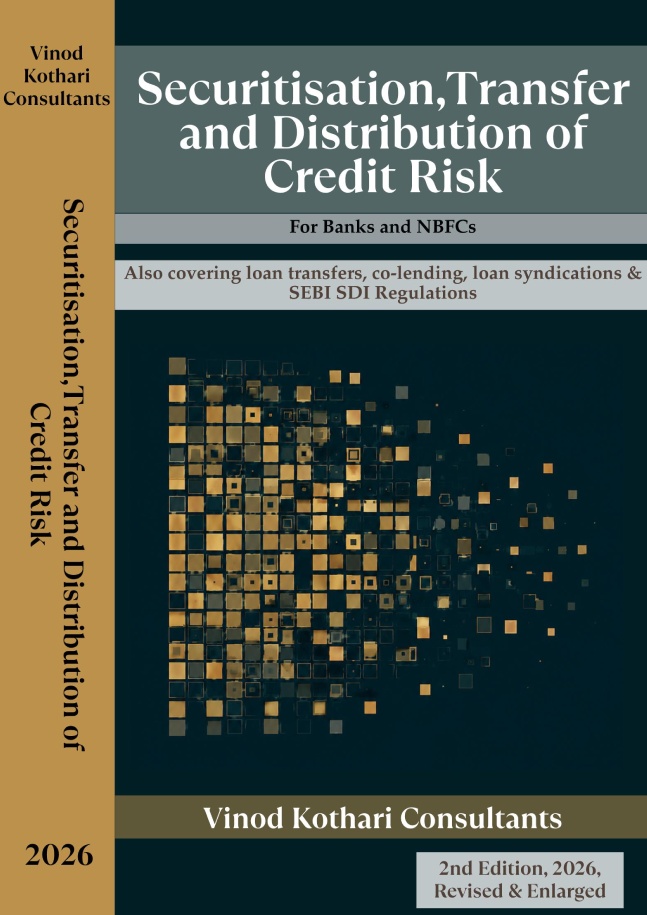
Access our Publication launched during the 12th Securitisation Summit here.