Master Direction on ETPs: Key Changes & Compliance Guide

Harshita Malik, Executive | finserv@vinodkothari.com

Background and Overview:

The evolution of Electronic Trading Platform (‘ETPs’) is rooted in the market’s need for speed, efficiency, and enhanced transparency in dissemination of  trade information. Traditional floor based trading methods struggled with sluggish processes, limited data dissemination, and inefficiencies that couldn’t pace with a global financial landscape. In response, industry players and regulators recognised the need for a digital overhaul, a system that could streamline trade execution, provide real-time market data, and foster a more accurate price discovery mechanism. This led to the emergence of specialised platforms, such as those designed for government securities trading, where primary dealers are entrusted with membership and operations. One such platform is ETP. 

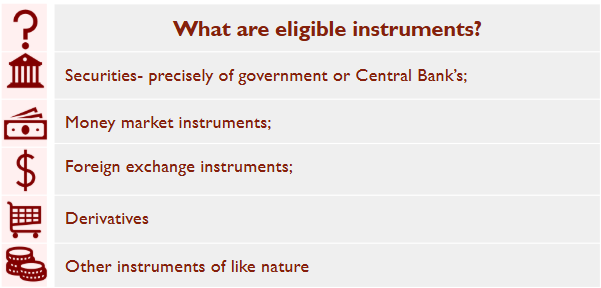
An ETP is a computarised system that facilitates the buying, selling and management of a wide range of financial instruments (listed down below). These platforms enable real-time market data dissemination, order execution, and efficient trade processing. For instance, in India, platforms such as the NDS-OM (Negotiated Dealing System – Order Matching) are well-known examples that specialize in government securities (g-sec) trading. Other entities include various bank-operated ETPs such as BARX operated by Barclays Investment Bank (international) and proprietary systems developed by financial institutions such as 360TGTX operated by Three Sixty Trading Networks (India) Pvt. Ltd. 

On June 16, 2025, the RBI issued Master Direction – Reserve Bank of India (Electronic Trading Platforms) Directions, 2025 (‘New ETP Directions’) in supersession of the Electronic Trading Platforms (Reserve Bank) Directions, 2018 dated October 05, 2018 (‘Erstwhile ETP Directions’). This was based on the feedback received on the Draft Directions issued  on April 29, 2024. 

Applivability:

  • Entities operating ETPs facilitating transactions in eligible instruments,under the New ETP Directions,
  • Grandfathering clause:
    • Any entity already authorised under the Erstwhile ETP Directions shall deemed to have been authorised under the New ETP Directions, or
    • any action already taken under the Erstwhile ETP Directions “shall be deemed to have been taken” under the New ETP Directions. 

In practical terms, operators need not re-submit applications, seek fresh authorisations or revisit past actions as long as compliant under the Erstwhile ETP Directions.

Effective Date:

Effective immediately i.e. from June 16, 2025.

All about Electronic Trading Platforms (‘ETPs’)

Before going ahead to analyse the changes let us understand what ETPs are. ETPs are electronic systems, other than recognised stock exchanges, on which transactions in eligible instruments are contracted. But why would someone prefer trading on ETP rather than other exchanges/ platforms such as stock exchanges? ETPs offer eligible entities multi-instrument trading platforms (dealing with money-market, G-Secs, FX, swaps etc.) with tailored tenures and faster settlement process while stock exchanges cater to listed equities and futures with standardised contracts, retail participation and fixed trading hours.
Who operates these electronic systems?

Any entity as defined in the New ETP Directions incorporated in the form of a company and authorised by the RBI in this regard can operate an ETP. Currently, there are 12 authorised ETP operators under the Erstwhile ETP Directions who shall continue to operate under the New ETP Directions.

Types of ETP: Single Dealer Platform v. Multi-Dealer Platform

BasisSingle Dealer PlatformMulti-Dealer Platform
SellerA single bank or financial institutionSeveral banks and financial institutions
PricingTailored pricing from one provider.Competitive pricing with options from several liquidity providers.
LiquidityLowHigh
Liquidity sourceProvided by a single bank or institution.Aggregated liquidity from multiple banks/institutions.
CustomisationTailored interfaces and services designed for specific clients.More standardized interfaces across multiple dealers; less tailored.
Execution qualityStable and consistent execution within one controlled environmentBest execution can be sought across multiple quotes and providers
SuitabilityClients who value a close banking relationship and prefer a dedicated, controlled trading environment Clients who want to compare and execute trades across a range of prices and liquidity providers
ExampleNDS-OM, operated by Clearcorp Dealing Systems (India) Ltd., provides a secondary market platform for government securities owned by RBI360TGTX, operated by Three Sixty Trading Networks (India) Pvt. Ltd., provides a platform for trading in FX Spot, Forwards, Swaps and Options

Players on ETP

  1. Primary Dealers- In 1995, the RBI introduced the system of PDs in the Government Securities (G-Sec) Market. The objectives of the PD system are to strengthen the infrastructure in G-Sec market, development of underwriting and market making capabilities for G-Sec, improve secondary market trading system and to make PDs an effective conduit for open market operations (OMO).

The RBI currently extends various facilities to the PDs to enable them to fulfill their obligations, including memberships of electronic dealing, trading and settlement systems (NDS platforms/INFINET/RTGS/CCIL).

PDs are classified as below:

  1. Standalone Primary Dealers- NBFC-ML
  2. Bank Primary Dealers- Scheduled Commercial Banks and Central Banks- National and International
BasisStandalone Primary DealerBank Primary Dealers
Entity StructureOperate as independent legal entities, often registered as NBFCs or as dedicated subsidiaries/joint ventures.Operate as a departmental function within a scheduled commercial bank (or its branch, including foreign banks).
Regulatory FrameworkRBI guidelinesRBI Guidelines and bank specific norms
Business focusPrimarily focused on government securities trading and related activities, often with more flexibility to diversify (e.g., underwriting, trading derivatives).The primary dealer function is one element of a larger suite of banking services and is more integrated with the bank’s overall operations.
Operational IndependenceGreater operational autonomy, being solely focused on the government securities marketFunctions as an integral part of the bank’s operations, with decisions influenced by the broader business strategy of the bank
PDs registered with RBISBI DFHI LimitedBank of Baroda, Bank of America
  1. Traders

Analysis of Change

Having understood the nomenclature, we may proceed to analyse the changes and what they mean for Regulated Entities. The primary change and intent of the Draft Directions was to curb unregulated entities and platforms, specifically offshore platforms dealing with foreign exchange trading involving inshore/ domestic investors. Please note that foreign exchange instruments have been a part of eligible instruments, however, due to not being defined, the question whether such offshore ETPs would be covered, was always a question. The Draft Directions recommended certain changes, however, the major change was bringing offshore ETPs under the domain of RBI. However, the finalised New ETP Directions do not deal with this aspect.  

While the RBI largely accepted the foundational architecture proposed in the draft, it has revised certain provisions to provide clarity in many areas, especially around risk and operational aspects which are now expressed in more precise terms along with addition of new provisions around enforcement and transitional mechanisms.

Highlights of Major Changes: 

  • Expanded applicability to include outsourcing entities under the purview of the New ETP Directions in essence
  • Carve out to single dealer banks and Standalone Primary Dealer (‘SPD’)
  • Transition to an electronic application process: Moving away from physical submission, the application process is now streamlined through the PRAVAAH portal
  • Quarterly and annual reporting requirements for the operators introduced mandating regular updates thereby tightening regulatory oversight
  •  Framework for data preservation and sharing post-authorisation 

Comparison at a Glance:

AreaErstwhile ETP DirectionsNew ETP DirectionsImplications
Application process for authorisationPhysical submissionThrough PRAVAAH Portal of RBIStreamlining the process, enhancing accessibility, efficiency, and real-time tracking for applicants as well as regulators 
Quarterly reportingNo such requirementQuarterly reporting on functioning of ETPs by Operators (details covered below)Operators to provide periodic updates on operational performance, ensuring regulatory oversight
Annual ReportingNo such requirementAnnual reporting on compliance of the New ETP Directions and terms and conditions prescribed (details covered below)Operators to yearly confirm their adherence to updated regulatory guidelines and contractual conditions
Eligibility CriteriaDid not apply to ETPs operated by SCBs Apply to all the entities including SCBs operated ETPs (except exemption covered below)Banks must now play by the same rulebook as other operators, additionally Public Sector Banks shall have to  incorporate (or spin off) a Companies Act vehicle, infuse requisite capital and adhere to technological standards.
Until now, Public Sector Banks that operate an ETP slipped neatly around the RBI’s “company‐only” eligibility gate. The New ETP Direction takes away that privilege. From the day the change takes effect, every ETP, bank-owned or not must meet the same bar
Preservation, access and use of dataDid not have a provision for treatment of data in the event of cancellation of authorisationSpecifies the requirement to share data, along with form and manner, with the RBI or any agency in the event of cancellation of authorisation as may be called upon by the RBI or any other agency.Enhanced regulatory oversight and post-termination accountability on operators
Definition of ‘Entity’….an agency formed as a ‘company’ and incorporated under the Companies Act, 2013 (or earlier acts)”….any person, natural or legal.Language of the New ETP Directions seems to widen the scope of entity, however reading the impact along with para 6(f)(iii), it only brings the outsourcing entities under the widened scope
Grandfathering RuleNot needed (first issue)All licenses/actions under Erstwhile ETP Directions shall be treated as validNo fresh registration required
ExemptionETPs operated by banks for their customer on a bilateral basis as long as no market is being created for the securitiesCarve out to SCBs (including branches of Foreign Banks operating in India) and SPDs wherein the bank or the SPD operating the electronic system is the sole quote/price provider and a party to all transactions contracted on the system.Banks and SPDs can operate proprietary trading platforms without the full weight of the standard compliance requirements set for multi-dealer platforms. This can streamline their internal processes and reduce regulatory and technological burdens.Acting as the sole quote provider makes these institutions both the operator and counterparty. This can improve execution speed and reduce inter-dealer friction.A single market maker model may lead to faster execution but can constrain competitive pricing, potentially resulting in wider spreads if the operator does not face rival pricing pressures from other dealers.While banks and SPDs gain efficiency due to lesser compliances, they must remain vigilant about disclosure and transparency requirements to avoid any adverse effects on market integrity.Banks and SPDs may develop more tailored platforms, exclusive systems to capture niche market segments.Synchronization with global norms that treat single-dealer platforms as an extension of the dealer’s book and not that of an exchange.

Reporting Requirements:

These new requirements shall have to be complied with along with the existing reporting requirements under the Erswhile ETP Directions from the effective date of the New ETP Directions. Accordingly, the first quarterly report shall be required to be submitted on or before 15th July, 2025 and the annual report shall be submitted on or before 30th April, 2026. The manner of reporting by ETP operators as per the New ETP Directions has been listed below:

Reporting RequirementReporting AuthorityFrequencyFormatTimeline
NewFunctioning of the platform, including but not limited to the following points:Events resulting in disruption of activities, during the quarter, if anyInstances of market abuse, during the quarter, if anyDetails about any material change in trading procedure or technology carried out during the quarterRBIQuarterlyAnnex-2 of the New ETP DirectionsOn or before 15th day of the month following the quarter
Compliance with the New ETP Directions and terms and conditions prescribed at the time of authorisationRBIAnnuallyNot specifiedon or before the 30th of April of the succeeding financial year
Data relating to activities on the ETPRBIPost cancellation of authorisationAs may be prescribedAs may be prescribed
ExistingTransaction informationTrade repository or trading platformAs may be prescribedAs may be prescribedAs may be prescribed
Other report, data and/or information as required by RBIRBIAs may be prescribedAs may be prescribedAs may be prescribed
Data/informationAny agency as required by Indian LawsNot specifiedNot specifiedNot specified
Event resulting in disruption of activities or market abuseRBIEvent-basedNot specifiedNot specified

Conclusion:

By introducing defined protocols for risk management, data governance and reporting, the updated framework seeks to close existing regulatory gaps. Key provisions of the New ETP Directions include, amongst others, a clear exemption for single–dealer platforms and a streamlined application process via the PRAVAAH portal. These measures ensure legal continuity. Ultimately, this transformative framework not only reinforces the integrity of the trading ecosystem but also cultivates an environment conducive to innovation.

Capital subject to “Caps”: RBI relaxes norms for investment by REs in AIFs, subject to threshold limits

-Sikha Bansal (finserv@vinodkothari.com)

Introduction

The RBI has issued Draft Reserve Bank of India (Investment in AIF) Directions, 2025 (‘Draft Directions’), vide Press Release dated 19th May, 2025, marking a significant revision to the existing regulatory framework governing investments by regulated entities (REs) in Alternative Investment Funds (AIFs). These new directions, once finalised, will replace the existing circulars dated December 19, 2023 (“2023 Circular”), and March 27, 2024 (“2024 Clarification”) (collectively, referred to as “Existing Directions”), which currently govern such investments.

The Existing Directions prohibit REs from making investments in any scheme of AIFs which has downstream investments either directly or indirectly in a debtor company of the RE. In case of any such investment full provision is required to be maintained by the RE. Such prohibition is imposed to address the concerns of evergreening while making investments by an RE. See our analytical article on the same here.

However, the Draft Directions now propose to allow investment by the RE in such AIF upto 5% of the corpus of the AIF scheme. Any investment exceeding this 5% limit will require full capital if AIF has made debt investments in the debtor company. Note that these norms are entirely directed towards debt or debt instruments (whether at the RE level or the AIF level), as all sorts of equity instruments (equity shares, compulsorily convertible preference shares and compulsorily convertible debentures) are excluded – detailed discussion follows.

Comparison of Existing and Draft Directions

Below is a snapshot of what is going to change once the Draft Directions are finalised and notified, and certain important implications are discussed further:

Particulars2023 Circular read with 2024 clarificationDraft Directions
Investment by REs in scheme of AIFRE completely prohibited from investing in any scheme of AIF which has downstream investments in debtor company of the RE.Any investment already made had to be liquidated within 30 days of the issuance of the Circular. Similarly, where the RE had already invested, but AIF makes investment in a debtor company of RE, RE shall liquidate investments in AIF within 30 days.To be allowed subject to individual and collective limits:Max. contribution of single RE to an AIF scheme – 10% of its corpusMax. contribution of multiple REs – 15% of its corpusSee illustrations later in this article.
Debtor companyShall mean any company to which the RE currently has or previously had a loan or investment exposure anytime during the preceding 12 months.Shall imply any company to which the RE currently has or previously had a loan or investment exposure (excluding equity instruments) anytime during the preceding 12 months.
Provisioning requirementsInability to liquidate investments within 30-day liquidation period would entail 100% provisioning against such investments.Investment by the RE in such AIF allowed upto 5% of the corpus of the AIF scheme, without looking into the form of downstream investments made by AIF. Hence, no provisioning required.
If investment by RE exceeds 5%, it will require full capital, if downstream investments by AIF in debtor company are not permissible investments (see below). See illustrations later in this article
Provisioning required proportionately and not on entire investmentsProvisioning is required only to the extent of investment by the RE in the AIF scheme which is further invested by the AIF in the debtor company, and not on the entire investment of the RE in the AIF schemeNorms remain the same – RE shall be required to make 100 per cent provision to the extent of its proportionate investment in the debtor company through the AIF Scheme
Permissible forms of investments by AIF scheme in debtor companyInvestment in equity shares (by AIF scheme in debtor company) were excluded from the prohibition by 2024 clarification. However hybrid instruments were still included.All forms permitted, if investment by RE does not exceed 5%. Therefore, even debt investments by AIFs are permissible.Only equity shares, CCPS, and CCDs allowed, if investments by RE exceeds 5%. If AIF makes other forms of investments in debtor company, RE will have to provide for full capital.Note that, irrespective of the form of downstream investments by AIF in the debtor company, RE can take a maximum exposure of 10% in an AIF.
Priority distribution modelinvestment by REs in the subordinated units of any AIF scheme with a ‘priority distribution model’ shall be subject to full deduction from RE’s capital funds. Deduction shall be made from Tier I and II equally.Norms remain the same.
Investment policyNo specific requirement Investment policy to have suitable provisions to ensure that investments in an AIF Scheme comply, in letter and spirit, with the extant regulatory norms. In particular, such investments shall be subject to the test of evergreening.
Exemption by regulatorNo specific enabling provisionExempted category to be decided by RBI in consultation with GoI.

Illustrations on investment limits by RE

Below are certain illustrations to explain the implications of the investment thresholds under Draft Directions:

ScenariosImplications under Draft Directions
Investment of Rs. 10 Crores by an RE in an AIF scheme having corpus of 50 croresCannot make since the threshold limit of 10% will be breached.
Investment of Rs. 5 Cr by an RE in an AIF scheme having corpus of 50 crores with other REs contributing Rs. 15 CrWhile the investment by the RE individually is within the limit of 10%, the collective investment is more than 15%. Hence, such an investment cannot be made by the concerned RE. Further, since the total investment of 15 cr by other REs will also breach the threshold of 15%, the investments will not be possible.
Investment of Rs. 5 Cr by an RE in an AIF scheme having a corpus of 50 Cr. The AIF in turn has a downstream debt investment in a debtor company of the RE. Cannot be made since the limit of 5% will be breached.
Investment of Rs. 1 Cr by an RE in an AIF scheme having a corpus of 50 Cr. The AIF in turn has a downstream debt investment in a debtor company of the RE. This constitutes only 2% of the corpus of the AIF scheme. Hence, permissible – even when the downstream investment of the AIF is a debt investment.
Investment of Rs. 5 Cr by an RE in an AIF scheme having a corpus of 50 Cr. The AIF in turn has a downstream equity investment in a debtor company of the RE. Can be made as the downstream investment of the AIF is in equity of the debtor company. However, the maximum cap of 10% would apply to the RE.

Certain points of discussion/implications

  • Prospective applicability: The Draft Directions, once notified, will be applicable prospectively. It says, “These Directions shall come into force from the date of final issue (‘effective date’), substituting the existing circulars. Provided that, all outstanding investments as on the effective date, or subsequent drawdowns out of commitments made prior to the effective date, shall continue to be guided by the provisions of the existing circulars.” Therefore, no relaxations would be available to the existing investments/commitments by REs. If the same had not been liquidated so far – those will require to be liquidated. The Draft Directions will apply only to fresh investments by REs.
  • Maximum cap on investments by RE in AIF: Under Existing Directions, there is a blanket prohibition on RE to invest in AIF scheme which has invested in a debtor company. However, if such downstream investment is in equity shares, such prohibition would not apply. As such RE could invest in the said AIF without any limits. However, now, even if the AIF has invested only in equity instruments of the debtor company (equity shares, CCPS and CCDs), RE can only invest upto 10% of the corpus of the AIF scheme. Hence, to that extent, the Draft Directions are more restrictive than the Existing Directions. Note that, SEBI Circular on specific due diligence with respect to investors and investments of the AIFs does not provide any carve out for equity investments.
  • Exclusion of equity instruments (equity shares, CCDs and CCPS) from investment exposure of REs in the debtor company: Such exclusion is not explicitly there in the Existing Directions; which might have led to a possible interpretation that investment would include any nature of investment, including equity. Although, it was evident from the use of terminology that a debtor company would only mean a company where RE has extended only debt. The Draft Directions has clarified the same through explicit exclusion. Therefore, the directions will be applicable only where RE has investment in debt/debt instruments of the investee company.
  • Investments in AIF through intermediary funds: Existing directions exclude investments by REs in AIFs through intermediaries such as fund of funds or mutual funds from the scope of the directions. However, Draft Directions are silent on the same. We are of the view that such exclusion should continue to apply – as funds such as mutual funds are required to be well-diversified in terms of the SEBI Regulations, and investment decisions are taken by an independent investment manager.

Closing Remarks

We had earlier indicated that the Existing Directions may need to be reviewed and softened. The Draft Directions take a step in the same direction – however, a few concerns may still remain open. For instance, the Draft Directions retain the outreach of these restrictions to all AIFs, and not only affiliated AIFs. In our previous article, we had discussed how the concerns as to evergreening, etc. would arise mostly in cases involving affiliated AIFs, and not those AIFs which are completely unrelated to the RE..Further, no distinction has been made between various categories of AIF – therefore, investments in any AIF (Cat I, II, III) would be governed by these directions.

Balancing between Bling & Business: RBI proposes new Gold Lending rules

– Team Finserv | finserv@vinodkothari.com

Genesis of the change

The RBI on September 30, 2024, flagged several concerns in gold lending practices of financial entities. Further, there were separate guidelines for banks and NBFCs leading to regulatory arbitrage and operational ambiguity. On April 09, 2025, the RBI introduced the Reserve Bank of India (Lending Against Gold Collateral) Directions, 2025 (Draft Directions).

 The Draft Directions intend to:

  1. Harmonise guidelines w.r.t. gold lending across all REs.
  2. Address previous observations raised by RBI in lending practices and plug any loopholes.

In this write-up, we highlight the major changes for lenders, and particularly for NBFCs (The same are subsequently elaborated in the article).

Read more

Preventing Financial Frauds: Regulatory and Institutional Safeguards for Voice Calls and SMS

Harshita Malik and Anshika Agarwal (finserv@vinodkothari.com)

Tokenisation of Real World Assets – The Way Ahead for Creating Securities

-Subhojit Shome (subhojit@vinodkothari.com)

Introduction

The tokenisation of real-world assets (RWA) using cryptographic technology is rapidly emerging as a transformative innovation in the financial ecosystem. Note here that the term RWA refers to all traditional assets including both real assets as well as traditional financial assets that exist in the physical world. By leveraging blockchain technology, tokenisation enables the representation of tangible assets, such as real estate, commodities, and artwork, or intangible assets like intellectual property, as digital tokens on a distributed ledger. This development is reshaping the way assets are managed, traded, and accessed, creating new opportunities and challenges.

RWA tokenisation has garnered attention due to several converging factors. Blockchain technology offers a streamlined alternative to traditional systems by reducing intermediaries, lowering transaction costs, and ensuring faster settlement times. Fractional ownership of high-value assets makes them accessible to a broader range of investors, enhancing market liquidity. Blockchain’s immutable nature provides a transparent record of transactions and ownership, reducing fraud and enhancing trust. Additionally, tokenised assets are borderless, enabling seamless cross-border trading and investment opportunities.

According to market reports, the capital locked in tokenised RWA is expected to touch $50 billion by the end of 2025 surpassing all previous records. In 2024, the ecosystem had achieved a 32% annual growth rate.

In this article, we look at the impetus behind this technology, its status of adoption in India and critical issues that act as roadblocks in its development. 

Development

The tokenisation market has witnessed significant advancements in a number of areas. Real estate tokenisation has enabled properties to be tokenised for fractional ownership, reducing entry barriers for smaller investors. Similarly, commodities like gold and other precious metals have been tokenised, providing an efficient means of trading and ownership. High-value artworks and collectibles are being tokenised to allow multiple investors to own shares in masterpieces. Tokenisation has also extended into private equity and debt markets, enabling innovative funding mechanisms and the development of secondary market opportunities. Moreover, the emergence of regulated tokenisation platforms in certain developed economies (e.g. the UK) underscores the growing maturity of this market.

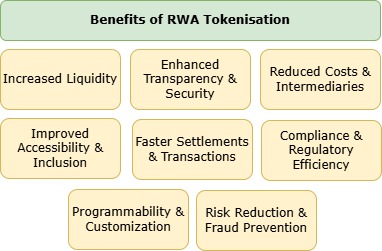
Figure 1: Benefits of Tokenisation of Real-World Assets using Blockchain

Fractional ownership creates liquidity in traditionally illiquid assets. It also democratises investment by enabling wider participation through reduced minimum investment thresholds. Here the emphasis is not on reduction of any regulatory investment threshold but rather, being represented in the digital world, RWA tokenisation allows infinitesimally fractional parts of an asset to be bought and sold. Cost efficiency is achieved by reducing reliance on intermediaries, which lowers transaction and administrative costs. Blockchain’s transparency increases trust and reduces fraud risks. Furthermore, smart contracts enable automation of compliance, dividend distribution, and other processes.

Process

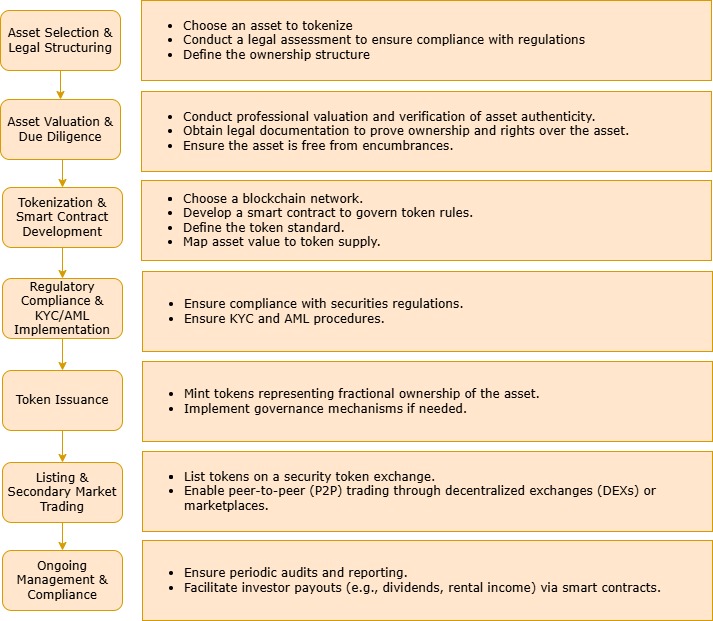
The process of RWA tokenisation broadly involves the following steps –

Figure 2: Process of RWA tokenisation

In the tokenisation process one may note that the custody of the underlying asset is separated from the ownership of the asset. While the ownership is represented by use of tokens, the underlying asset may need to be held with a custodian ‘off-chain’ (i.e. in the physical world). 

Issues

However, tokenisation is not without challenges. Regulatory uncertainty remains a significant hurdle due to inconsistent global regulatory frameworks. Technology risks, such as cybersecurity concerns and vulnerabilities in smart contracts, could undermine trust. Market volatility is another concern, as tokens may experience higher price fluctuations compared to their underlying assets. Some tokenised assets may face illiquidity risks if the secondary markets lack sufficient depth. Additionally, legal ambiguity regarding ownership rights and the enforceability of tokenised claims persists in many jurisdictions.

Several key regulatory considerations must be addressed. Asset classification is crucial for defining whether tokenised assets are securities, commodities, payment instruments or another category altogether.

In India, regulatory uncertainty remains the key issue in the implementation of RWA tokenisation. Say, for instance, there is tokenisation of real estate in which the management of the property is overseen by the issuer or by a manager appointed by such issuer and fractional ownership units are offered for sale to retail investors. Such a transaction starts to take on the colour of a collective investment scheme and SEBI may intervene and mandate the issuer to register as such with the regulator. In the case of real estate these schemes can also be viewed as having a structure akin to a REIT especially SM REIT

The SEBI is yet to notify any regulatory prescription specifically for the purposes of regulating crypto-assets and or token offerings to the retail public and it has been reported in the press1 that the securities market regulator has informed the Parliamentary Standing Committee on Finance that regulation of crypto-assets would be difficult given the nature of technology that sustains them. In the matter of, An RTI enquiry, as referenced in the matter of Appeal No. 4532 of 2021 filed by Rohith Methayil Rajagopal, was raised with the SEBI’s CPIO as to the stand of Regulator with regard to “digital trading and possession of Cryptocurrencies by the Indian Citizens” and if SEBI had any “legal document and its date that permits digital trading of Bitcoin / Cryptocurrencies in India”. The response of the CPIO, as affirmed by the appellate authority, was that it did not have the knowledge of either matter. Based on this one can conclude that the Regulator has not, yet, formalised its stance over dealings in crypto assets. Recently, however, the Regulator has expressed an openness to a multi-regulator based oversight framework for crypto-assets.2

There have been interest shown by mutual fund houses to invest in ETFs or indices on blockchain-based projects and crypto-assets and draft scheme information documents were filed with the Regulator. SEBI, however, has expressed its reservations3 on approving such funds/ fund of funds. Highlighting high degree of regulatory uncertainty when it comes to crypto-assets which is not an ideal situation either for business houses looking to raise funds using crypto-assets or for investors who have invested in such assets.

Another major inhibitor is the tax treatment of such tokenised assets. This is because given the construct of such token it will get classified as virtual digital asset  under section 2(47A)4 of the Income Tax Act, 1961. The implication of this is that income on sale of such assets will get taxed at a flat rate of 30%. Other than the cost of acquisition, any other expenses incurred with respect to such assets are not allowed to be deducted while computing the income. Further, any loss from the transfer of such assets are also not allowed to be set-off against such income or under income computed under any provision of the act. Accordingly, such losses are also not allowed to be carried forward to any succeeding assessment years.

GIFT City

Recently, however, there has been some headway in asset tokenisation in Gujarat International Finance Tec-City (GIFT City) which may be poised to host India’s inaugural regulated platform for the tokenization of real estate and infrastructure assets. This initiative aims to democratize investment opportunities by enabling fractional ownership through digital tokens, leveraging blockchain technology to enhance liquidity and transparency in the sector. To this extent the IFSCA has constituted an ‘Expert Committee on Asset Tokenization’; the terms of reference of this committee are as follows –

  • Develop regulations and policy guidelines for tokenization of real and physical assets
  • Examine the legal validity of Smart Contracts
  • Develop a risk management framework for digital tokens
  • Examine the role of Digital Custodians in the asset tokenization model and develop operational policy measures

Conclusion

Tokenisation is a transformative technology that has the capability to change the very nature of real world assets in the way they are managed and traded. The flow of capital into this sector is an indication of the potential of this sector in contributing to the economic growth of a country. In the formation of the working group on crypto-assets to reform US digit asset regulations, the US has taken stock of this development in the market and the need to make such technologies mainstream. It is encouraging to see India’s intention to move ahead with such innovation in the GIFT City. It is now time to wait and watch whether tokenisation will find acceptance in the economic mainstream and for this to happen a clear regulatory architecture has to emerge in India.

  1. Why has the market watchdog said it is difficult to regulate such currencies? What is the status of the bill? – Article in The Hindu, June 12, 2022 ↩︎
  2. SEBI considers regulatory role in crypto trading, diverging from RBI’s approach. Here’s what experts think – Article in the Economic Times, May 17, 2024 ↩︎
  3.  Sebi says no to mutual funds for cryptos. What are your alternatives? – Article in the Economic Times, December 30, 2021 ↩︎
  4. Virtual crypto-assets as defined under Section 2(47A) of the Act means—
     any information or code or number or token (not being Indian currency or foreign currency), generated through cryptographic means or otherwise, by whatever name called, providing a digital representation of value exchanged with or without consideration, with the promise or representation of having inherent value, or functions as a store of value or a unit of account including its use in any financial transaction or investment, but not limited to investment scheme; and can be transferred, stored or traded electronically; a non-fungible token or any other token of similar nature, by whatever name called;
    any other crypto-asset, as the Central Government may, by notification in the Official Gazette specify. 
    However, the Central Government is empowered to exclude any crypto-asset from the definition of virtual crypto-asset by a notification in the official gazette on this behalf.

    ↩︎

A policy on policies: Guide to writing corporate policies

finserv@vinodkothari.com | corplaw@vinodkothari.com

Why Policies:

  • Policies have become a regulatory necessity in many cases. The Companies Act and Listing regulations require several policies: for example, nomination and remuneration policy, CSR policy, whistle blower policy, policy for determination of material subsidiary etc.
  • The RBI’s regulations require policies every now and then – an indicative list of policies needed by NBFCs (for base layer and middle layer) is here
  • RBI regulations for banks require an even larger list of policies. An indicative list of policies for banks can be accessed here.
  • To conclude: policies are needed for companies in many respects/fields.

What’s the policy behind policies:

Read more

Risk Management Function of NBFCs – A Need to Integrate Operational Risk Management & Resilience 

An examination of the RBI Guidance Note on Operational Risk Management and Resilience

Subhojit Shome & Archisman Bhattacharjee | finserv@vinodkothari.com

Loader Loading…
EAD Logo Taking too long?

Reload Reload document
| Open Open in new tab

Download as PDF [238.77 KB]

Related articles –

12th Securitisation Summit

The who’s who of structured finance is joining the 12th edition of our flagship event, the Securitisation Summit on May 15, 2024, in Mumbai. Be shoulder-to-shoulder with leading originators, investors, lawyers, rating agencies, consultants, regulators, mediators, market makers, and everyone else who matters.

For details of the event and to book your seat, please visit our Summit page – HERE

Operation of Pre-sanctioned credit lines at Banks through UPI

Eliza Bahrainwala, Executive | eliza@vinodkothari.com

Loader Loading…
EAD Logo Taking too long?

Reload Reload document
| Open Open in new tab

Download as PDF [776.52 KB]