LLPs slated for more stringent reforms

Significant provisions of the Act made applicable on LLPs

Payal Agarwal| Senior Executive| Vinod Kothari and Company

Last updated – 27th June, 2022

Introduction                          

Limited Liability Partnerships (LLPs) being a hybrid form of entity with characteristics of both companies as well as partnerships are governed by the provisions of Limited Liability Partnership Act 2008 (“LLP Act”).  LLPs are popular since due to less compliance requirements as compared with a company.

In view of the existing framework for LLPs, the Ministry of Corporate Affairs (MCA) had published a news material on its website on 18th February 2021 stating that certain provisions of the Companies Act 2013 (“the Act”) will be soon made applicable on the LLPs. The same has been made effective vide a notification dated 11th February 2022 (“Amendment Notification”). The notification specifies certain sections of the Companies Act, 2013 which shall also be applicable on LLPs. These include some very significant provisions like identification of Significant Beneficial Ownership (SBO), application of the criteria for disqualification, capping on the max number of partners/ DPs, etc.

The provisions are applicable immediately from the date of the notification itself, and will require the LLPs to review their existent position to conform that they remain compliant of the provisions newly made applicable on the same.

Intent behind the amendments

LLPs are seen to be entities having less regulatory supervisions and more benefits of the corporate forms of entities. Therefore, conversion of companies into LLPs can be sought as a means of regulatory arbitrage. However, it has to be noted that the regulatory authorities are now set to bring LLPs under the ambit of some stricter supervision. The Company Law Committee Report on Decriminalization of LLP Act also indicated that the attention of the regulatory authorities are now shifted towards the LLPs. Our write up on the same can be read here. In India, mostly the professional service providers such as law firms, practising professionals etc. are formed as LLPs. Also, the AIFs are mostly formed as LLPs. In the aforesaid report too, fund raising by way of issue of Non-Convertible Debentures (NCDs) by the LLPs were barred except for the entities regulated by SEBI or RBI. So, the intent of the Government seems to monitor the activities of LLPs.

Discussion on the changes

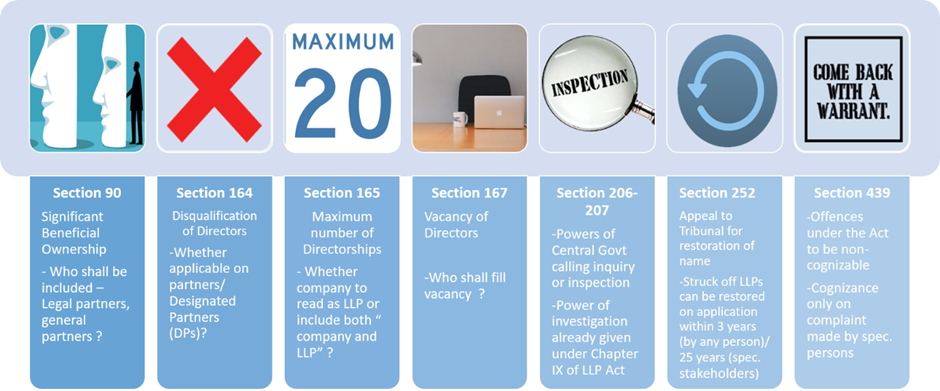
The specified provisions of the Act have mostly been made applicable to the LLPs, as it is under the Act, with substitution of the terms “member” with “partner”, “director” with “Designated Partner” and “company” with “LLP”, save as otherwise expressly provided below. The tabular presentation below discusses the requirements of the provisions which have been made applicable on the LLPs along with our analysis on each of them.

Sec No.Deals withRequirements of the Act made applicable to LLPsImpact analysis and immediate actionable
90 except sub-section (12)Significant Beneficial Ownership (SBO)-Declaration of beneficial interest by SBO( 25% or more interest or as specified in the Rules)  
-Company shall maintain register of SBO  
-Inspection of such register by members   Co. shall file return of SBO with ROC  
-Co. shall take necessary steps for identification of SBO  
-Notice by co. to persons who are likely to be/have knowledge of/ were SBO and not registered.  
-Info to be given by concerned person within 30 days of notice  
-Co. shall apply to Tribunal within 15 days if info not provided by the concerned person  
-Tribunal may restricts rights on such shares relating to concerned persons after reasonable opportunity of hearing.  
-Aggrieved person may apply for lifting/ relaxation of such orders   Punishment on contravention  
While this provisions have been made applicable on LLPs, there could be various points to discuss so that the impact can be analysed. Some of these include:  
-The Act intends to identify a natural person controlling or exercising beneficial interest on the company. Under an LLP, the ownership and management need not be different as in the case of companies. LLPs can have partners of various categories like Limited Partner (one who only contributes capital) and General Partner (one who manages the LLP). As we understand, the intent behind introducing the SBO identification for LLPs should be similar to that for companies, i.e. to understand the beneficial owner. The Amendment Notification does not differentiate between the various categories of Partners and include both for the purpose of determination of SBO.  
-From here, we move to the next point for discussion, i.e. the meaning of beneficial interest. Section 89 of the Act defines beneficial ownership. Again, it has to be seen that the word “Significant” is defined under Section 90(1) to mean an interest of 25% or more or such other proportion as prescribed in the Rules. Currently, the same has been prescribed at 10%.   Following the Amendment Notification, the LLP Amendment Rules have also been prescribed, however, no similar thresholds have been provided with respect to SBO as given under the Companies Rules.    
-Further, sub-section (12) has not been made applicable on account of the fact that it relates to punishment under Section 447 of the Act.  
-The amendments will broadly require the LLPs to – Identify the SBO Take declarations from SBO Maintain register of SBO  
164(1) and (2)Disqualification of DirectorsCannot be a Director if –
-Declared unsound mind
-Undischarged insolvent
-Applied to be adjudicated as insolvent
-Convicted and sentenced imprisonment of 6 months or more and 5 years has not elapsed yet from release ( If sentenced for 7 years or more, permanently disqualified)
-Disqualified by an order of Court or Tribunal
-Not paid calls in respect of shares held by him for atleast 6 months from last day fixed for payment of call
-Convicted of offence dealing with RPT u/s 188 during last 5 years
-Not complied with Section 152(3)
-Not complied with Section 165(1)   —

Cannot be appointed in any other co./ re-appointed in that co. for 5 years from the date of failure if is/has been a Director of a co. which has  
-Not filed financial statements/annual returns for 3 consecutive FYs.
-Failed to repay deposits/debentures/pay interest thereon/ dividend declared for 1 year or more
-The grounds of disqualification of Directors under the Act has been made applicable to the Designated Partners of LLPs as well.
-The various grounds for disqualification are linked with certain personal defaults and filing defaults.   An interesting observation with respect to the Amendment is that, for the purposes of sub-section (2), a person being the “director” in a defaulting “company” is also disqualified to act as a Designated Partner in LLP, however, no similar amendments have been made in the Act to make the DPs of a defaulting LLP disqualified from acting as a director in a company.
-The provisions being applicable immediately, there is a need to review the existing DPs in light of the disqualification factors so as to ensure that none of the DPs are disqualified from holding office as such.    
165 except sub-section (2)Number of DirectorshipsMax no. of directorships- 20
-Of which public cos. – max 10
-Dormant co. not included

Person holding directorships above specified limit shall within 1 year of commencement of Act-
-Choose to continue in companies within specified limit
-Resign from other companies
-Intimate his choice to the companies and the ROC

-Resignation under (3)(b) will become effective immediately from despatch of notice to the co.
-No person can hold excess directorship –

Once he resigns from the extra companies or
Expiry of 1 year from commencement, whichever is earlier

-Penalty in case of violation        
-By making this section applicable on LLPs, an upper cap has been put on the maximum number of LLPs in which a person can hold the position as a DP.    
-The DPs have been provided with a timeline of one year within which any person holding office as a DP in more than 20 LLPs is required to choose the ones where he intends to continue and resign from the other LLPs. He is also required to provide an intimation to that effect to the LLPs as well as the Registrar having jurisdiction over such LLPs.  
-In case of violation, the DPs may be liable to fine ranging from Rs. 5,000 upto Rs. 25,000.
167 except sub-section  (4)Vacation of office by DirectorOffice of Director becomes vacant when
-Incurs disqualifications under Section 164
-Contravention of Section 188Fails to disclose interest u/s 184
-Disqualified by an order of Court/Tribunal
-Convicted and sentenced for imprisonment of 6 months or more
-Removed in pursuance of this Act
-Punishment on violation  
-Where all Directors vacate, the promoter ( CG in his absence) shall appoint required number of Directors till appointment of Directors in GM  
On account of disqualification incurred, the DPs will be required to vacant their positions. Where all the DPs vacate office in pursuance of section 164, the partners, or, in their absence, the Central Government shall appoint DPs to meet the minimum requirements of law.    
206(5)InspectionThe Central Government may, if it is satisfied that the circumstances so warrant, direct inspection of books and papers of a company by an inspector appointed by it for the purpose.Powers of inspection into the affairs of LLP has been given to Central Government by way of inclusion of these provisions under the LLP Act.   It is to be noted that powers of investigation already lies with the Central Government under Chapter IX of the LLP Act.
207(3)Conduct of Inspection and InquiryNotwithstanding anything contained in any other law for the time being in force or in any contract to the contrary, the Registrar or inspector making an inspection or inquiry shall have all the powers as are vested in a civil court under the Code of Civil Procedure, 1908, while trying a suit in respect of the following matters, namely:— (a) the discovery and production of books of account and other documents, at such place and time as may be specified by such Registrar or inspector making the inspection or inquiry; (b) summoning and enforcing the attendance of persons and examining them on oath; and (c) inspection of any books, registers and other documents of the company at any place.Necessary powers with respect to the conduct of inspection and inquiry has been vested upon the concerned officer by way of these provisions.
252Appeal to Tribunal against strike-off-Agg person against order of ROC dissolving a company, may appeal to Tribunal within 3 years to get the name restored
-ROC may also file app. for restoration if satisfied that name struck off on incorrect particulars
-Tribunal’s order filed with ROC within 30 days to restore name
-Company, its member, creditor, or workman, if aggrieved, can apply to Tribunal within 20 years of striking off order.
The striking off of LLPs are governed by Section 75 of the LLP Act read with Rule 37 of the LLP Rules.   The inclusion of the given provision will provide a way for restoration of LLPs whose names were struck off.   The time period of 20 years for an application for restoration of name has been reduced to 5 years in case of LLPs.  
439Non-cognizable offences-Notwithstanding CrPC, every offence under this Act shall be deemed to be non-cognizable
-No court shall take cognizance unless complaint made by ROC, a shareholder or member of company, or person authorised by CG
-Personal appearance of ROC, or person auth. by CG not necessary unless Court requires the same
-The provisions of (2) shall not apply on actions taken by liquidator on any offence during winding up.
Section 212(6) of the Act provides that only those offences that are covered under Section 447 of the Act are cognizable.   Section 447 of the Act dealing with fraud is not recognised under the LLP Act.   This renders a non-cognizable nature to the offences of the LLP.   No court will be able to take cognizance of any offence by an LLP or its partners/DPs unless complaint is made by some specified persons, such as Registrar, or any person authorised by Central Government.   This may be said to be in furtherance of the Report on Decriminalization of offences of LLPs.    

Conclusion

The provisions of the Act that have been incorporated under the LLP Act is likely to cause a wide-spread effect The provisions of the Act have been made applicable immediately, without providing any preparatory time to the LLPs. The amendments result into an increased level of supervision and control on the working and management of the LLPs. The integration of various provisions of the Act with the LLPs indicate an era of LLPs becoming similar with companies.

Our related resources on the topic:

  1. MCA paves way for e-adjudication of penalties, extends C-PACE for LLPs strike off

Extending provisions of the Companies Act, 2013 to Limited Liability Partnerships

Vinod Kothari and Company

corplaw@vinodkothari.com

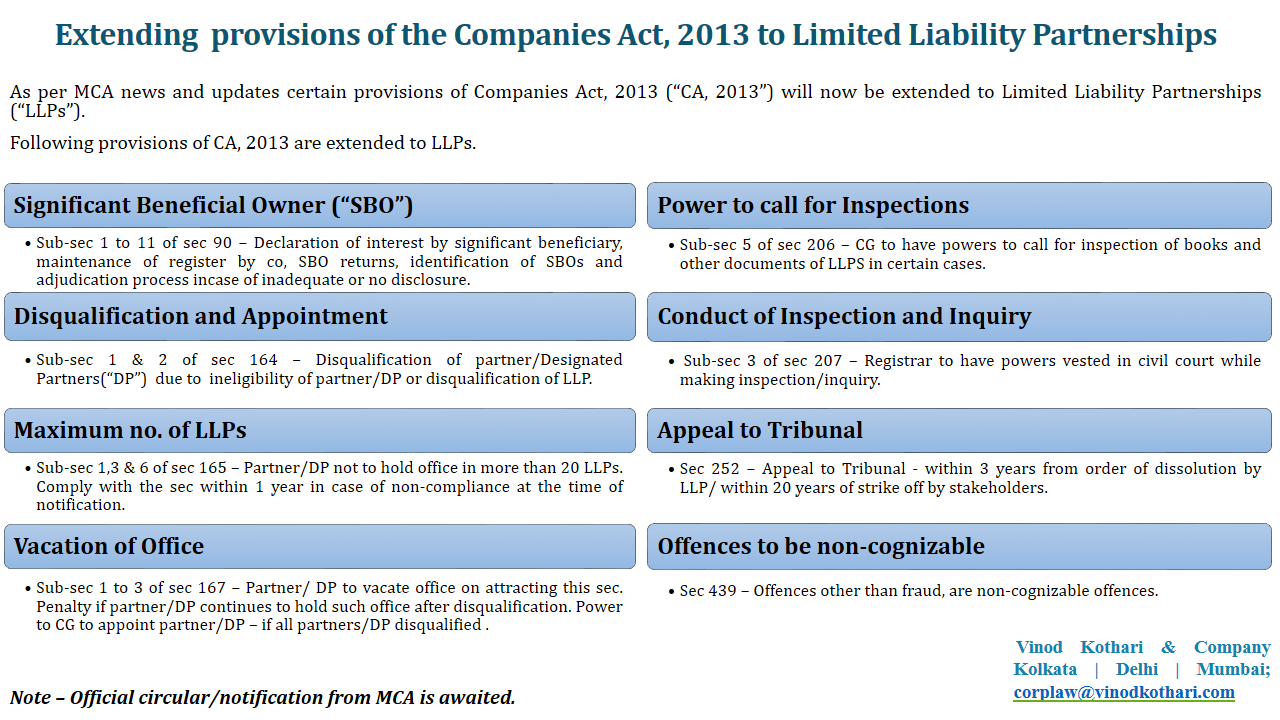
As per MCA news and updates certain provisions of Companies Act, 2013 (“CA, 2013”) will now be extended to Limited Liability Partnerships (“LLPs”). Below is a snippet covering  list of provisions of CA, 2013 extended to LLPs.

RBI consolidates directions for Housing Finance Companies

– Qasim Saif (finserv@vinodkothari.com)


Finance Minister in her speech for the budget 2019-20[1] stated that “Efficient and conducive regulation of the housing sector is extremely important in our context. The National Housing Bank (NHB), besides being the refinancer and lender, is also regulator of the housing finance sector. This gives a somewhat conflicting and difficult mandate to NHB. I am proposing to return the regulation authority over the housing finance sector from NHB to RBI. Necessary proposals have been placed in the Finance Bill.” Subsequently, the provisions of National Housing Bank Act, 1987 were amended w.e.f August 09, 2019[2] pursuant to the Finance Act, 2019 thereby shifting the power to govern Housing finance Companies (HFCs) from National Housing Bank (NHB) to the Reserve Bank of India (RBI). Consequently, the RBI on June 17, 2020[3], issued a draft for review of extant regulatory framework for HFCs, and had invited comments from the industry on the same. After considering the inputs received from the industry, the RBI, on October 22, 2020[4] issued the Regulatory Framework for HFCs (‘Regulations’).

Our write-up covering the changes made by Regulations issued on October 22, 2020 and its analysis can be accessed here

After the Regulations were notified, the regulatory framework for HFCs became patchy as requirements came in from different sources and the need for a single point reference was felt.

To deal with the said issue, RBI has now issued the Master Directions – Non-Banking Financial Company – Housing Finance Company (Reserve Bank) Directions, 2021 on February 17, 2021[5] (“Directions”). The Directions broadly accumulate the regulatory requirements, from the Regulations notified on October 22, 2020, erstwhile Master Circular for Housing Finance Companies (NHB) Directions, 2010 and other applicable circulars[6]. The Directions neither impose any new requirements nor amend any existing regulation, but merely aggregate them.

Overview of the Direction

In order to get a comprehensive understanding of the Directions we have summarised the major requirements and also provided the original regulations from where the requirement arises.

Para Regulation in Master Direction Reference Circular
3 Following guidelines made applicable to HFC-

➔    Guidelines on Liquidity Risk Management Framework

➔    Guidelines on Maintenance of Liquidity Coverage Ratio

➔    Guidelines on Securitization Transactions and reset of Credit Enhancement

➔    Managing Risks and Code of Conduct in Outsourcing of Financial Services

➔    Implementation of Indian Accounting Standards

➔    Master Direction – Know Your Customer (KYC) Direction, 2016,

➔    Master Direction – Monitoring of Frauds in NBFCs (Reserve Bank) Directions, 2016,

➔    Master Direction – Information Technology Framework for the NBFC Sector dated June 08, 2017,

October 22, 2020 Regulations
3 LTV for Loan Against Shares and Gold Jewellry capped at 50% and 75% respectively
4 “Housing finance company” shall mean a company that fulfils the following conditions:

a. It is an NBFC whose financial assets, in the business of providing finance for housing, constitute at least 60% of its total assets (netted off by intangible assets)

b. Out of the total assets (netted off by intangible assets), not less than 50% should be by way of housing finance for individuals.

  Existing HFCs to comply the limits in phased manner till 2023
5 NOF Requirement to be increased to Rs. 20 Cr

Existing HFCs to achieve NOF of

➔    Rs. 15 Cr by 31.4.2022 and

➔    Rs. 20 Cr by 31.4.2023

HFC unable to fulfil the NOF requirement may convert to NBFC-ICC

6 HFCs shall, CRAR consisting of Tier-I and Tier-II capital which shall not be less than-

➔    13% on or before 31.4.2020;

➔    14% on or before 31.4.2020; and

➔    15% on or before 31.4.2020 and thereafter

The Tier-I capital, at any point of time, shall not be less than 10%

NHB Notification dated 17th June 2019[7]


7-17 Asset Classification, Provisioning and Accounting requirements As per the existing NHB Guidelines
19 LTV for grant of housing loans to individuals shall be capped at:

➔     < 30 lakhs                             90%,

➔     > 30 lakhs and < 75 lakhs    80%

➔     > 75 lakhs                             75%.

20 Norms for credit/investment concentration
21 Exposure of HFCs to group companies engaged in real estate business October 22, 2020 Regulations
22 Investment in real estate by HFC capped at 20% of capital funds
23 Limits on housing finance companies’ exposure to capital market
Chapter VII Acceptance of Public Deposits As per the existing NHB Guidelines
Chapter VIII Prior approval for change in control and directorship
Chapter IX Corporate Governance Norms
Section IV Miscellaneous Instructions
Chapter XIII Fair Practice Code

Pursuant to the consolidation as above, the corresponding extant NHB Guidelines as well as the October, 22 Regulations have been repealed.


[1] Speech Budget 2019-2020

[2] Transfer of Regulation of Housing Finance Companies (HFCs) to Reserve Bank of India

[3] Review of extant regulatory framework for Housing Finance companies (HFCs) – Proposed Changes

[4] Review of regulatory framework for Housing Finance Companies (HFCs)

[5] Master Direction – Non-Banking Financial Company – Housing Finance Company (Reserve Bank) Directions, 2021

[6] Master Circular – The Housing Finance Companies (NHB) Directions, 2010

[7] NHB Notification dated June 17, 2019


Our Other Related Write-ups can be viewed here-


Draft Credit Derivatives directions: Will they start a market stuck for 8 years?

Vinod Kothari (vinod@vinodkothari.com) and Abhirup Ghosh (abhirup@vinodkothari.com)

Credit derivatives, an instrument that emerged around 1993–94 and then took the market by storm with volumes nearly doubling every half year, to fall off the cliff  during the Global Financial Crisis (GFC), have been a widely used instrument for pricing of credit risk of entities, instruments, and countries. Having earned ignoble epithet as “weapons of mass destruction” from Warren Buffet, they were perceived by many to be such. However, the notional outstanding volume of CDS contracts reached a volume of upwards of USD 9 trillion in June, 2020, the latest data currently available from BIS website.
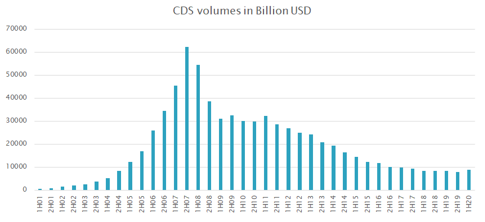
In India, CDS has been talked about almost every committee or policy recommendation that went into promoting bond markets, and yet, CDSs have been a non-starter ever since the CDS guidelines were first issued in 2013. A credit derivative allows a synthetic trade in a credit asset, and is not merely a hedging device. One of the primary limitations with the 2013 guidelines was that the RBI had taken a very conservative stand and would permit CDS trades only for hedging purposes. The 2021 draft Directions seek to open the market up, on the realisation that much of the activity in the CDS market is not a hedge against what is on the balance sheet, but a synthetic trade on the movement in credit spreads, with no underlying position on the reference bonds or loans.

What is a CDS?

Credit derivatives are derivative contracts that seek to transfer defined credit risks in a credit product or bunch of credit products to the counterparty in the derivative contract. The counterparty to the derivative contract could either be a market participant, or could be the capital market through the process of securitization. The credit product might either be exposure inherent in a credit asset such as a loan, or might be generic credit risk such as bankruptcy risk of an entity. As the risks, and rewards commensurate with the risks, are transferred to the counterparty, the counterparty assumes the position of a virtual or synthetic holder of the credit asset.

The counterparty to a credit derivative product that acquires exposure (called the Protection Seller), from the one who passes on such exposure (called the Protection Buyer), is actually going long on the generalised credit risk of the reference entity, that is, the entity whose debt is being synthetically traded between the Protection Seller and Protection Buyer. The compensation (CDS premium) which the Protection Buyer pays and the Protection Seller receives, is based on the underlying probability of default, occurring during the tenure of the contract, and the expected compensation (settlement amount) that the Protection Seller may be called to pay if the underlying default (credit event) occurs. Thus, this derivative product allows the protection buyer to receive . Thus, the credit derivative trade allows the parties to express on view on (a) whether a credit event is likely to occur with reference to the reference entity during the tenure; and if yes, (b) what will be the depth of the insolvency, on which the compensation amount will depend. As a result, the contract allows people to trade in the credit risk of the entity, without having to trade in a credit asset such as a loan or a bond.

Credit default swaps (CDSs) are the major credit derivative product, which itself falls within the bunch of over-the-counter (OTC) derivatives, the others being interest rate derivatives, exchange rate derivatives, equity derivatives, commodity derivatives, etc.  There are, of course, other credit derivative products such as indices trades, basket trades, etc.

Structure of a plain vanilla CDS contract has been illustrated in the following figure:

Fame and shame

Credit derivatives’ claim to fame before the GFC, and shame thereafter, was not merely CDS trading. It was, in fact, synthetic CDOs and their more exotic variations. A synthetic CDO will bunch together several CDS contracts, create layers, and then trade those layers, mostly leaving the manager of the CDO with a fee income and an equity profit. While it could take years to ramp up a book of actual bonds or loans, a synthetic CDS book could be ramped in a matter of hours. In the benign market conditions before the GFC, there were not too many defaults, and therefore, synthetic CDOs and structured finance CDOs would be happily created and sold to investors, with happiness all over. However, since every synthetic CDO would, by definition, be a highly leveraged structure (the lowest tranche bearing the risk of the entire edifice), and multiple sequential layers of such leverage were built by structured finance CDOs, the entire edifice came crumbling during the GFC, as modeling assumptions based on good times of the past were no more true.

RBI hesitatingly allows CDS

The RBI developed cold feet looking at the mess in the global CDS market, and rightly so, and therefore, the RBI has never been bullish on unbridled CDS activity. Hence, the 2013 Guidelines were very guarded and limited permission – only for hedging purposes. Hedging was not something that the Indian bond market needed, as India mostly had highly rated bonds, and the bondholder earning fine spreads will not pay out of these spreads to shell out the risk of a highly rated, mostly held-to-maturity bond investment. Hence, the CDS market never took off.

Nearly every committee that talked about bond markets in India talked about the need to promote CDS. In August 2019[1], the FM announced several reforms that could boost economic growth. One of the proposals was that the MOF, in consultation with the RBI and SEBI will work on the regime for CDS so that it can play an important role in deepening the bond markets in India.

Latest move of the RBI

The Reserve Bank of India (“RBI”) in the Statement of Developmental and Regulatory Policies dated 4th December, 2020[2], expressed its desire to revise the regulatory framework for Credit Default Swaps as a measure to deepen the corporate bonds market, especially the ones issued by the lower rated issuers.

Subsequently, on 16th February, 2021[3], the RBI issued draft Reserve Bank of India (Credit Derivatives) Directions, 2021 (“Draft Directions” or “Proposed Directions”) to replace the Guidelines on Credit Default Swaps (CDS) for Corporate Bonds which was last revised on 7th January, 2013[4] (“2013 Guidelines”).

This write-up attempts to provide a detailed commentary on the Draft Directions, with references to the 2013 Guidelines as and where required, however, before that let us take a note of the key highlights of the proposed revised directions.

Highlights of the Draft Directions

  1. Participants in a CDS transaction:

The major participants in the proposed transactions:

    1. Market-makers: they are financial institutions
    2. Non-retail users: they can be protection buyers as well as protection sellers, and purpose of their engagement could be for hedging their risk or otherwise. An exhaustive list of the institutions has been laid down who can be classified as non-retail users
    3. Retail users: they can be protection buyers as well as protection sellers, however, the purpose of their engaged should be for hedging their risk only. A user who fails to qualify as non-retail user, by default becomes a retail user. Additionally, the Proposed Directions also allow non-retail users to reclassify themselves as retails users.

Persons resident in India are allowed to participate freely, however, persons resident outside India are allowed to participate as per the directions issued by the RBI, which are yet to be issued.

2. Only single-name CDS contracts are permitted:

The Proposed Directions allow single-name CDS contracts only, that is, the CDS contracts should have only one reference entity. Therefore, other forms of the CDS contracts like bucket or portfolio CDS contracts are not allowed.

3. Presence of a reference obligation:

Credit derivatives could either have a reference entity or a reference obligation. The Proposed Directions however envisages the presence of a reference obligation in a CDS contract. This is coming out clearly from the definition of the CDS states that the contract should provide that the protection seller should commit to compensate the other protection buyer for the loss in the value of an underlying debt instrument resulting from a credit event with respect to a reference entity, for a premium.

4. Eligible reference obligations:

The reference obligations include money market instruments like CPs, CDs, and NCDs with maturity upto 1-year, rated rupee denominated (listed and unlisted) corporate bonds, and unrated corporate bonds issued by infrastructure companies. In this regard, it is pertinent to note that the

5. Structured finance transactions:

Neither can credit derivatives be embedded in structured finance transactions like, synthetic securitisations, nor can structured finance instruments like, ABS, MBS, credit enhanced bonds, convertible bonds etc., be reference obligations for CDS contracts.

Commentary on some of the Key Provisions of the Draft Directions

Applicability

The Proposed Directions will apply on all forms of the credit derivatives transactions irrespective of whether they are undertaken in the OTC markets and or on recognised stock exchanges in India.

Definitions

5. Cash settlement:

Relevant extracts:

(i) Cash settlement of CDS means a settlement process in which the protection seller pays to the protection buyer, an amount equivalent to the loss in value of the reference obligation.

Our comments:

The Proposed Directions allow cash settlement of the CDS, where the protection seller pays only the actual loss in the reference obligation to the protection buyer. There are usually two ways of computing the settlement amount in case of cash settlement – first, based on the actual value of the loss arising from the reference obligation, and second, based on a fixed default rate which is agreed between the parties to the contract at its very inception.

To understand the second situation, let us take an example of a contract where the protection seller agrees to compensate the losses of the protection buyer arising from a reference obligation. Say, the seller agrees to compensate the buyer assuming a 10% default in the buyer’s exposure in a debt instrument on happening of a credit event. In this case, if the credit event happens, the seller will compensate the buyer assuming a 10% default rate, irrespective of the whether losses are more or less than 10%.

However, in the first case, settlement amount would work out based on the assessment of actual losses arising due to happening of the credit event.

Apparently, the definition of cash settlement seems to include only the first case, as it refers to an amount equivalent to the loss in value of the reference obligation.

6. Credit default swaps

Relevant extracts:

(iii) Credit Default Swap (CDS) means a credit derivative contract in which one counterparty (protection seller) commits to compensate the other counterparty (protection buyer) for the loss in the value of an underlying debt instrument resulting from a credit event with respect to a reference entity and in return, the protection buyer makes periodic payments (premium) to the protection seller until the maturity of the contract or the credit event, whichever is earlier.

Our comments:

CDS contracts can be drawn with reference to a particular entity or to a particular obligation of an entity. In the former case, the reference is on all the obligations of the reference entity, whereas in the latter case, the reference is on a particular debt obligation of the reference entity – which could be a loan or a bond.

However, the definition of CDS in the Proposed Directions states the contract should be structured in a manner where the protection seller commits to compensate the protection buyer for the loss in the value of an underlying debt instrument. Therefore, the exposure has to be taken on a particular debt obligation, and it cannot be generally on the reference entity.

 7. Credit event:

Relevant extracts:

(iv) Credit event means a pre-defined event related to a negative change/ deterioration in the credit worthiness of the reference entity underlying a credit derivative contract, which triggers a settlement under the contract.

Our comments:

In the simplest form of a credit derivative contract, credit event is a contingent event on happening of which the protection buyer could incur a credit loss, and for which it seeks protection from the protection seller. The definition used in the Proposed Directions is a very generalised one. As per ISDA, the three most credit events include –

  1. Filing for bankruptcy of the issuer of the debt instrument;
  2. Default in payment by the issuer;
  3. Restructuring of the terms of the debt instrument with an objective to extend a credit relief to the issuer, who is otherwise under a financial distress.

8.Deliverable obligation

Relevant extracts:

(v) Deliverable obligation means a debt instrument issued by the reference entity that the protection buyer can deliver to the protection seller in a physically settled CDS contract, in case of occurrence of a credit event. The deliverable obligation may or may not be the same as the reference obligation.

Our comments:

Refer discussion on physical settlement below.

In case of physical settlements, the question arises, what is the asset that protection buyers may deliver? As discussed under physical settlement, protection buyers may exactly hold the reference asset. A default on this asset would also imply a default on other parallel obligations of the obligor: therefore, market practices allow parallel assets to be delivered to protection sellers. Essentially, a protection buyer may select out of a range of obligations of the reference entity, and logically, will select the one that is the cheapest to deliver. To ensure that the asset delivered is not completely junk, certain filters are covered in the documents, and the deliverable asset must conform to those filters. In particular, these limitations are quite relevant when the reference entity has not really defaulted on its obligations, but only undergone a restructuring credit event.

9. Physical settlement

Relevant extracts:

(xv) Physical settlement of CDS means a settlement process in which the protection buyer transfers any of the eligible deliverable obligations to the protection seller against the receipt of notional/face value of the deliverable obligation.

Our comments:

We discussed earlier that one of the ways of settling a CDS contract is the cash settlement. The other way of settling a CDS contract is the physical settlement. In case of physical settlement, protection buyers physically deliver; that is, transfer an asset of the reference entity and get paid the par value of the delivered asset, limited, of course, to the notional value of the transaction. The concept of deliverable obligation in a credit derivative is critical, as the derivative is not necessarily connected with a particular loan or bond. Being a transaction linked with generic default risk, protection buyers may deliver any of the defaulted obligations of the reference entity.

In case of physical settlement, there is a transfer of the deliverable reference obligation to protection sellers upon events of default, and thereafter, the recovery of the defaulted asset is done by protection sellers, with the hope that they might be able to cover some of their losses if the recovered amount exceeds the market value as might have been estimated in the case of a cash settlement. This expectation is quite logical since the quotes in case of cash settlement are made by potential buyers of defaulted assets, who also hope to make a profit in buying the defaulted asset. Physical settlement is more common where the counterparty is a bank or financial intermediary who can hold and take the defaulted asset through the bankruptcy process, or resolve the defaulted asset.

10. Reference entity:

Relevant extracts:

(xvi) Reference entity means a legal entity, against whose credit risk, a credit derivative contract is entered into.

Our comments:

As may be noted later on in the writeup, reference entity in the context of the Proposed Directions refers to a legal entity resident in India.

11. Reference obligation

Relevant extracts:

(xvii) Reference obligation means a debt instrument issued by the reference entity and specified in a CDS contract for the purpose of valuation of the contract and for determining the cash settlement value or the deliverable obligation in case of occurrence of a credit event.

Our comments:

Reference obligation is the underlying debt instrument, based on which the contract is drawn. In practice, this obligation could be loan, or a bond of the obligor. However, the Proposed Directions refer to certain money market instruments and corporate bonds. Discussed later.

12. Single-name CDS

Relevant extracts:

(xix) Single-name CDS means a CDS contract in which the underlying is a single reference entity.

Our comments:

Usually, CDS could be created with reference to either a single obligation, or obligations from a single reference entity, or a portfolio of obligations arising from different reference entities. The Proposed Directions completely rules out portfolio derivatives, and allows CDS contracts with reference to a single entity only.

Eligible participants

Relevant extracts:

  1. Eligible participants

The following persons shall be eligible to participate in credit derivatives market:

(i) A person resident in India;

(ii) A non-resident, to the extent specified in these Directions.

Our comments:

Any person resident in India is eligible to participate in the credit derivatives market. Even retail investors have been allowed to be a part of this, however, restrictions have been imposed on specific classes of users concerning the purpose of their participation.

Non-resident users, like FPIs, have also been allowed to participate on a restricted basis, however, specifics of their limitations will come by way of specific directions which will be issued by the RBI in due course.

Permitted products

  1. Permitted products in OTC market

(i) Market-makers and users may undertake transactions in single-name CDS contracts.

(ii) Market-makers and users shall not deal in any structured financial product with a credit derivative as one of the components or as an underlying.

As already discussed earlier, only single-name CDS contracts are allowed, bucket or portfolio CDS contracts are not permitted. One of the reasons for this could be that RBI might like to test the market before allowing the users to write contracts on exposures on multiple obligors.

Clause (ii) prohibits the use of credit derivatives in the structure finance products. Synthetic securitisation is one of the products that use embeds a credit default swap in the securitisation transaction. Presently, the Securitisation Guidelines[5] has put a bar on synthetic securitisation, in fact, the draft Guidelines on Securitisation, issued by the RBI in 2019[6], also retained the bar on synthetic securitisation.

Vinod Kothari, in his article Securitisation – Should  India be moving to the next stage of development?[7], stated:

It is notable that a synthetic securitisation uses CDS to shift a tranched risk of a pool of assets into the capital markets by embedding the same into securities, without giving any funding to the originator. Synthetic structures are intended mainly at capital relief, both economic capital as well as regulatory capital.

Synthetic securitisation may come in handy for Indian banks to gain capital relief. Synthetic securitisation structures are seen by many to have made a comeback after the GFC. In fact, the European Banking Authority has launched a consultation process for laying down a STS framework for synthetic securitisations as well[8]. A Discussion Paper of EBA says: “The 2008 financial crisis marked a crash of the securitisation market, after which, also due to stigma attached to the synthetic segment, the securitisation market has gradually emerged in particular in the traditional (and retained) form. With respect to synthetic securitisation following a few years of subdued issuance, the synthetic market has been recovering in the recent years, with both the number and volume of transactions steadily increasing. Based on the data collection conducted by IACPM, altogether 244 balance sheet synthetic securitisations have been issued since 2008 up until end 2018. In 2018, 49 transactions have been initiated with a total volume of 105 billion EUR.”[9]

In the USA as well, credit risk transfer structure has been used by Freddie Mac and Fannie Mae vide instruments labelled as Structured Agency Credit Risk (STACR) and Connecticut Avenue Securities™ (CAS) bonds. Reportedly, the total volume of risk transferred using these instruments, for traditional single family dwelling units, has crossed USD 2.77 trillion by end of 2018[10].

There may be merit in introducing balance sheet synthetic securitisations by banks and NBFCs. To begin with, high quality portfolios of home loans, consumer loans or other diversified retail pools may be the reference pools for these transactions. Gradually, as the market matures, further asset classes such as corporate loans may be tried.

Synthetic securitisations were frowned upon by financial regulators across the globe after the GFC, however, as may have been noticed in the extracts quoted above, several developed jurisdictions now allow synthetic securitisation, with the required level of precautions added to the regulatory framework dealing with it.

Reference entities and obligations for CDS

Relevant extracts:

  1. Reference Entities and Obligations for CDS

(i) The reference entity in a CDS contract shall be a resident legal entity who is eligible to issue any of the debt instruments mentioned under paragraph 5(ii).

(ii) The following debt instruments shall be eligible to be a reference / deliverable obligation in a CDS contract:

  1. Commercial Papers, Certificates of Deposit and Non-Convertible Debentures of original maturity upto one year;
  2. Rated INR corporate bonds (listed and unlisted); and
  3. Unrated INR bonds issued by the Special Purpose Vehicles set up by infrastructure companies.

(iii) The reference/deliverable obligations shall be in dematerialised form only.

(iv) Asset-backed securities/mortgage-backed securities and structured obligations such as credit enhanced/guaranteed bonds, convertible bonds, bonds with call/put options etc. shall not be permitted as reference and deliverable obligations.

Our comments:

As per Clause 5(i), only resident legal entities can be reference entities for the purpose of CDS contracts, however, the Proposed Directions are silent on the meaning of the term resident legal entity. One could argue that entities which are registered in India should be treated as resident legal entities, however, a clarification in this regard shall remove the ambiguities.

Clause (ii) allows the use of the following instruments as a reference obligations:

  1. Money market instruments like CPs, CDs and short-term NCDs
  2. Rated Rupee-denominated corporate bonds, both listed and unlisted
  3. Unrated rupee-denominated corporated bonds issued by infrastructure companies.

The 2013 Guidelines also provided for similar set of instruments. However, it is pertinent to note that the Proposed Directions provide for an express bar on usage of the following structured products as reference obligations:

  1. Asset backed securities
  2. Mortgage backed securities
  3. Credit enhanced or guranateed bonds
  4. Convertible bonds
  5. Bonds with embedded call/ put options

Loans continue to be ineligible for use as reference obligation.

Market makers and users

Relevant extracts:

6.1 Market-makers

(i) The following entities shall be eligible to act as market-makers in credit derivatives:

  1. Scheduled Commercial Banks (SCBs), except Small Finance Banks, Payment Banks, Local Area Banks and Regional Rural Banks;
  2. Non-Bank Financial Companies (NBFCs), including Housing Finance Companies (HFCs), with a minimum net owned funds of ₹500 crore as per the latest audited balance sheet and subject to specific approval of the Department of Regulation (DoR), Reserve Bank.
  3. Standalone Primary Dealers (SPDs) with a minimum net owned funds of ₹500 crore as per the latest audited balance sheet and subject to specific approval of the Department of Regulation (DoR), Reserve Bank.
  4. Exim Bank, National Bank of Agriculture and Rural Development (NABARD), National Housing Bank (NHB) and Small Industries Development Bank of India (SIDBI).

(ii) In case the net owned funds of an NBFC, an HFC or an SPD as per the latest audited balance sheet fall below the aforesaid threshold subsequent to the receipt of approval for acting as a market-maker, it shall cease to act as a market-maker. The NBFC, HFC or SPD shall continue to meet all its obligations under existing contracts till the maturity of such contracts.

(iii) Market-makers shall be allowed to buy protection without having the underlying debt instrument.

(iv) At least one of the parties to a CDS transaction shall be a market-maker or a central counter party authorised by the Reserve Bank as an approved counterparty for CDS transactions.

Our comments:

When compared to the 2013 Guidelines, the only addition to list of entities that are eligible to act as market makers is housing finance companies. The net-worth requirements for NBFCs and SPDs remain the same as that under 2013 Guidelines. However, here it is pertinent to note that while the banks are not required to obtain any specific approval from the RBI, NBFCs and SPDs will have to obtain specific approval from the Department of Regulation. The RBI may reconsider this position and remove the requirement of obtaining special approval for the NBFCs and SPDs and put them in a level playing field with the banks.

Relevant extracts:

6.2 User Classification Framework

(i) For the purpose of offering credit derivative contracts to a user, market-maker shall classify the user either as a retail user or as a non-retail user.

(ii) The following users shall be eligible to be classified as non-retail users:

  1. Insurance Companies regulated by Insurance Regulatory and Development Authority of India (IRDAI);
  2. Pension Funds regulated by Pension Fund Regulatory and Development Authority (PFRDA);
  3. Mutual Funds regulated by Securities and Exchange Board of India (SEBI);
  4. Alternate Investment Funds regulated by Securities and Exchange Board of India (SEBI);
  5. SPDs with a minimum net owned funds of ₹500 crore as per the latest audited balance sheet;
  6. NBFCs, including HFCs, with a minimum net owned funds of ₹500 crore as per the latest audited balance sheet;
  7. Resident companies with a minimum net worth of ₹500 crore as per the latest audited balance sheet; and
  8. Foreign Portfolio Investors (FPIs) registered with SEBI.

(iii) Any user who is not eligible to be classified as a non-retail user shall be classified as a retail user.

(iv) Any user who is otherwise eligible to be classified as a non-retail user shall have the option to get classified as a retail user.

(v) Retail users shall be allowed to undertake transactions in permitted credit derivatives for hedging their underlying credit risk.

(vi) Non-retail users shall be allowed to undertake transactions in credit derivatives for both hedging and other purposes.

Our comments:

As brought out earlier under the highlights section, there can be two types of users – non retail and retail users. Financial institutions, resident corporates with networth of Rs. 500 crores or above, and FPIs can become non-retail users. The non-retail users can participate in these contracts either for hedging their credit risk or any other purposes.

On the other hand, anyone who is not eligible to become a non-retail user, by default becomes a retail user. Additionally, non-retail users have been given an option to reclassify themselves as retail issuers should they want. Retail users are allowed to undertake these transactions only for the hedging their credit risk.

The provisions under the Proposed Directions differ significantly from that under the 2013 Guidelines which allowed only financial institutions and FIIs to participate as users. Further, neither did the Guidelines differentiate between retail and non-retail users, nor did it allow the use of CDS for other than hedging purposes.

The classification between retail and non retail users is welcome move where they have not put any restriction on the more serious non-retail users, who can use these even for speculative purposes, apart from hedging. This could increase the liquidity of the instruments, therefore, deepening the market.

Operations and standardisations

Relevant extracts:

7.1 Buying, Unwinding and Settlement

(i) Market-makers and users shall not enter into CDS transactions if the counterparty is a related party or where the reference entity is a related party to either of the contracting parties.

(ii) Market-makers and users shall not buy/sell protection on reference entities if there are regulatory restrictions on assuming similar exposures in the cash market or in violation of any other regulatory restriction, as may be applicable.

(iii) Market-makers shall ensure that all CDS transactions by retail users are undertaken for the purpose of hedging i.e. the retail users buying protection:

  1. shall have exposure to any of the debt instruments mentioned under paragraph 5(ii) and issued by the reference entity;
  2. shall not buy CDS for amounts higher than the face value of the underlying debt instrument held by them; and
  3. shall not buy CDS with tenor later than the maturity of the underlying debt instrument held by them or the standard CDS maturity date immediately after the maturity of the underlying debt instrument.

To ensure this, market-makers may call for any relevant information/documents from the retail user, who, in turn, shall be obliged to provide such information.

(iv) Retail users shall exit their CDS position within one month from the date they cease to have underlying exposure.

(v) Market participants can exit their CDS contract by unwinding the contract with the original counterparty or assigning the contract to any other eligible market participant.

(vi) Market participants shall settle CDS contracts bilaterally or through any clearing arrangement approved by the Reserve Bank.

(vii) CDS contracts shall be denominated and settled in Indian Rupees.

(viii) CDS contracts can be cash settled or physically settled. However, CDS contracts involving retail users shall be mandatorily physically settled.

(ix) The reference price for cash settlement shall be determined in accordance with the procedure determined by the Credit Derivatives Determinations Committee or auction conducted by the Credit Derivatives Determinations Committee, as specified under paragraph 8 of these Directions.

Our comments:

The Proposed Directions imposes restrictions on the users to enter into contracts involving their related parties.

Further, as noted earlier, contracts entered into by the retail users must be for the purpose of the hedging credit risks only, in addition to it there are some other restrictions with respect to the tenor and amount of the protection. However, the onus to ensure that these conditions are met with have been imposed on the market makers. This leads to an additional compliance on the part of the market makers.

In terms of settlement, the Proposed Directions allow both cash and physical settlement, however, for retail users only physical settlement is allowed.

Further, the Proposed Directions also provide for the manner of exiting a CDS contract. In practice, there are three ways of settling a credit derivative contract – first, by settlement in cash or physically, second, by entering into a matching contract with a third party, therefore knocking off the contract in the hands of the protection buyer, and third, by assigning the contract to third parties. The Proposed Directions allow all of these.

Relevant extracts:

7.2 Standardisation

(i) Fixed Income Money Market and Derivatives Association of India (FIMMDA), in consultation with market participants and based on international best practices, shall devise standard master agreement/s for the Indian CDS market which shall, inter-alia, include credit event definitions and settlement procedures.

(ii) FIMMDA shall, at the minimum, publish the following trading conventions for CDS contracts:

  1. Standard maturity and premium payment dates;
  2. Standard premiums;
  3. Upfront fee calculation methodology;
  4. Accrual payment for full first premium;
  5. Quoting conventions; and
  6. Lookback period for credit events.

Our comments:

FIMMDA has been authorised to standardise the documents, and conventions for CDS contracts. World-over standard CDS products are prevalent with standard maturity dates, coupon payments, rates. Standardisation of key terms of a credit derivative contract transform the product from bespoke bilateral transactions to standard marketable products.

Some of the prevalent conventions used internationally are the Standard North Amercian Corporate Convention (SNAC) or the Standard European Corporate (SEC) Convention. The aim of both these conventions is to standardize the trading mechanics of credit default swaps (the SNAC for North American corporate names and the SEC for European corporate names) and facilitate trading through a central clearing counterparty, as well as to reduce uncertainty associated with credit events. This is because in order to make trades completely fungible (i.e., so they have the quality of being capable of exchange or interchange), all trading conventions have to be fully standardized.

Both the conventions have the following trading mechanics:

  1. They have a fixed coupon and an upfront fee.
  2. The first coupon of a CDS accumulates from the date of the last coupon, regardless of the trade date.
  3. The quoted spread for a given maturity is assumed to be a flat spread, rather than representing a point in the term structure.

References from the aforesaid conventions could be drawn while standardisation of the CDS conventions for the Indian market.

Prudential norms, accounting and capital requirements

Relevant extracts:

  1. Prudential norms, accounting and capital requirements

Market participants shall follow the applicable prudential norms and capital adequacy requirements for credit derivatives issued by their respective regulators. Credit derivative transactions shall be accounted for as per the applicable accounting standards prescribed by The Institute of Chartered Accountants of India (ICAI) or other standard setting organisations or as specified by the respective regulators of participants.

Our comments:

The market participants shall have to follow prudential norms and capital adequacy requirements for credit derivatives issued by the sectoral regulators. For NBFCs, for credit protection purchased, for corporate bonds held in current category – capital charge has to be maintained on 20% of the exposure, whereas for corporate bonds held in permanent category, and where there is no mismatch between the hedged bond and the CDS, full capital protection is allowed. The exposure shall stand replaced by exposure on the protection seller, and attract risk weights at 100%.

Similar provisions apply for banks, however, for bonds held in the permanent category, where there is no mismatch between the hedged bonds and CDS, the capital charge on the corporate bonds is nil, whereas, the capital charge on the exposure on protection sellers is maintained at 20% risk weight.

In terms of accounting, for NBFCs and HFCs, Ind AS 109 will have to be followed. Banks however will have to rely on ICAI’s Guidance Notes, if any, to do the accounting.

Our other resources on the topic:

  1. Our dedicated page on Credit Derivatives: https://vinodkothari.com/cdhome/
  2. Our articles on Credit Derivatives: https://vinodkothari.com/creart/
  3. Our book, Credit Derivatives & Structured Credit Trading, by Vinod Kothari – https://vinodkothari.com/crebook/

[1] https://static.pib.gov.in/WriteReadData/userfiles/ASss%2023%20August.pdf

[2] https://www.rbi.org.in/Scripts/BS_PressReleaseDisplay.aspx?prid=50748

[3] https://www.rbi.org.in/Scripts/BS_PressReleaseDisplay.aspx?prid=51138

[4] https://www.rbi.org.in/scripts/NotificationUser.aspx?Id=7793&Mode=0

[5] https://rbidocs.rbi.org.in/rdocs/notification/PDFs/C170RG21082012.pdf

[6]https://rbidocs.rbi.org.in/rdocs/PublicationReport/Pdfs/STANDARDASSETS1600647F054448CB8CCEC47F8888FC78.PDF

[7] https://vinodkothari.com/2020/01/securitisation-india-and-global/

[8] https://eba.europa.eu/eba-consults-on-its-proposals-to-create-a-sts-framework-for-synthetic-securitisation

[9] https://eba.europa.eu/file/113260/download?token=RpXCSVe2,

[10] Based on https://www.fhfa.gov/AboutUs/Reports/ReportDocuments/CRT-Progress-Report-4Q18.pdf

Understanding the borderline between implementing agencies and beneficiaries

Sikha Bansal, Partner and Payal Agarwal, Executive

corplaw@vinodkothari.com 

Introduction

Read more

RBI directs NBFCs to limit fresh investments from FATF non-compliant jurisdictions to 20% of voting rights

Our article as published in moneylife can be accessed through the link below:

https://www.moneylife.in/article/nbfcs-asked-to-limit-fresh-investments-to-20-percentage-of-voting-rights-from-fatf-non-compliant-jurisdictions/62964.html

Snapshot of Companies (Share Capital and Debentures) Amendment Rules, 2021

Vinod Kothari & Company

corplaw@vinodkothari.com

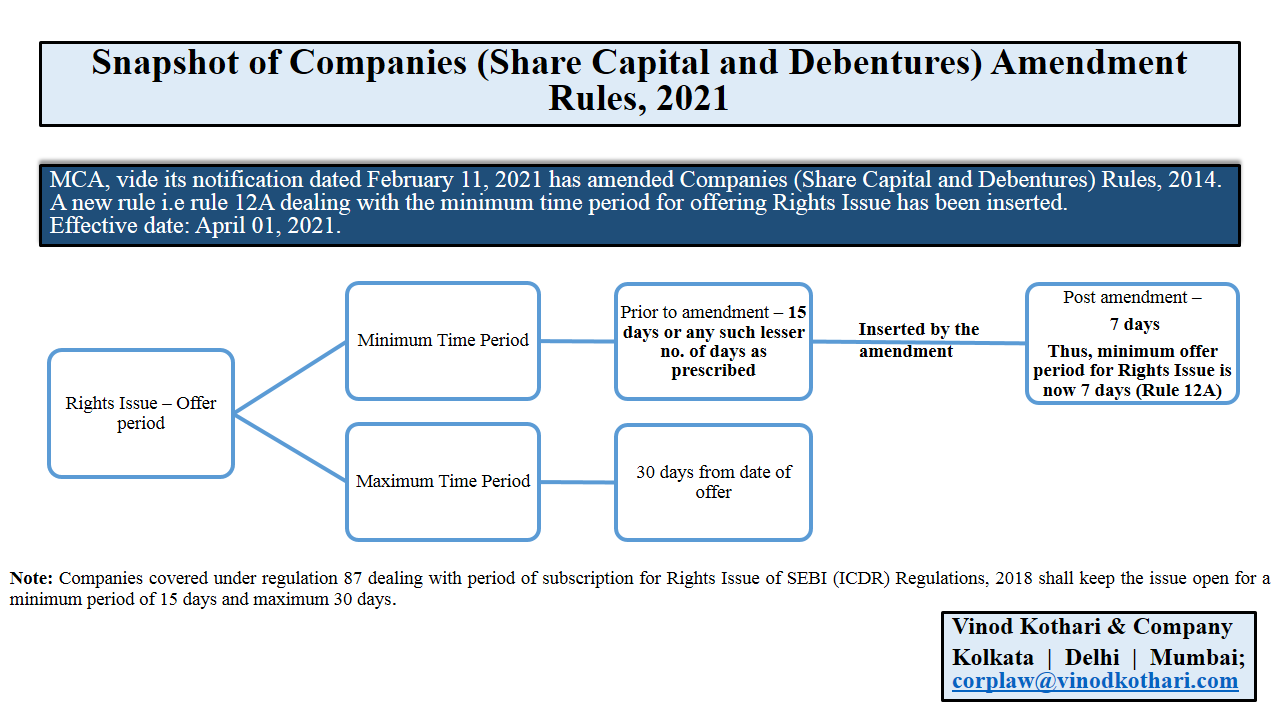
Below is a short snippet on Companies (Share Capital and Debentures) Amendment Rules, 2021.

Presentation on scalar regulatory framework for the NBFC sector

The video of “Round table discussion on RBI’s proposed regulatory framework for NBFCs” can be viewed here 

Our write-up on the topic titled “Scalar regulatory framework for the NBFC sector” can be viewed here

Maharashtra Stamp Act amended to clarify legal stand in case of mortgage deeds executed for distinct transactions

The Ordinance additionally plugs gaps on differential rates in case of different mortgages

Aanchal Kaur Nagpal

aanchal@vinodkothari.com

Introduction –

Stamp duty computation, especially in case of complex transactions involving multiple transactions being given effect vide a single instrument, received the sanctity of Hon’ble Supreme Court (SC) in a landmark judgement in case of Controlling Revenue Authority v. Coastal Gujarat Power Ltd[1], where the SC upheld payment of separate stamp duty for different transactions involved interpreting Section 5 of Gujarat Stamp Act, 1958. Following the said judgement, Maharashtra stamp authorities rolled out a circular on September 28, 2015 informing the stand taken by SC; however, no amendment was carried out in Maharashtra Stamp Act, 1958.

Further, it was observed by the stamp authorities that in view of rate difference in case of stamp duty on equitable mortgage (mortgage by deposit of title deeds) as per article 6 (1) and simple mortgage as per article 40, parties played about the same in the instruments thereby creating difficulties in adjudication of amount of proper stamp duty chargeable for them.

The Maharashtra Stamp (Amendment and Validation) Ordinance, 2021 (‘Ordinance’) dated 9th February, 2021 amends Maharashtra Stamp Act, 1958 (‘Stamp Act’) to fill several gaps in the aforementioned provisions. The same have been discussed below –

Arbitrage in rate of stamp duty levied on equitable mortgage and simple mortgage –

Levy of stamp duty in case of mortgage is under the state list and thus the same will be governed by the respective state acts. In case of Maharashtra, the stamp duty chargeable in case of an equitable mortgage is less than that in case of a simple mortgage. Taking advantage of the said arbitrage, mortgage documents have been drafted in such a way that, even though the nomenclature of the document indicates an equitable mortgage, it attempts to cover even a simple mortgage. Thus, simple mortgages are disguised to indicate an equitable mortgage just to pay a lesser stamp duty.  Such documents create difficulties in adjudication of amount of proper stamp duty.

Further, certain towns had been notified by the State of Maharashtra under the Transfer of Property Act to enable execution of agreement relating to an equitable mortgage. However, in cases of towns not notified, a person was forced to opt for execution of simple mortgage deed instead of an equitable mortgage, where stamp duty is higher in case of the former.

Owing to the above, the Act has been amended in order to align the stamp duty chargeable on the instruments of an equitable mortgage and simple mortgage deed under the articles 6 and 40, respectively.

Particulars Erstwhile stamp duty Amended stamp duty Remarks
Mortgage by deposit of title deeds under article 6(1) of schedule I If amount secured by the deed is more than Rs. 5 lakhs, rate of stamp duty is 0.2% of the secured amount.


If amount secured by the deed is more than Rs. 5 lakhs, rate of stamp duty is 0.3% of the secured amount.


Rate of stamp duty has been increased from 0.2% to 0.3% in case of secured amount above Rs. 5 lakhs.


In case of secured amount below 5 lakhs, rate of stamp duty has not been changed.


Pledge, hypothecation of movable property under article 6(2) of schedule I If amount secured by the deed is more than Rs. 5 lakhs, rate of stamp duty is 0.2% of the secured amount.


If amount secured by the deed is more than Rs. 5 lakhs, rate of stamp duty is 0.3% of the secured amount.


Rate of stamp duty has been increased from 0.2% to 0.3% in case of secured amount above Rs. 5 lakhs.


In case of secured amount below 5 lakhs, rate of stamp duty has not been changed.


Simple mortgage under article 40(b) of schedule I


When possession is not given or agreed to be given as aforesaid.


0.5% of the amount secured by such deed.

Minimum duty – Rs. 100

Maximum duty – Rs. 10 lakhs

If the amount secured – less than Rs. 5 lakhs –0.1% of the amount secured. Minimum – Rs. 100.


If the amount secured is more than Rs. 5 lakhs – 0.3% of the amount secured. Maximum- Rs 10 lakhs


While the minimum and maximum amount of stamp duty has been kept the same, the ad valorem rate of duty has been divided into two instances.


Amendments to stamp duty rates will be effective from the date of the notification i.e. 9th February, 2021.

Wordplay between ‘matters’ and ‘transactions’ under section 5 –

Stamp duty is chargeable on an instrument rather than a transaction. However, the Finance Act, 2019 drew an exception to this principle in case of stamp duty on securities’ transactions, particularly in case of securities in demat form. Nevertheless, the general rule remains the same.

However, there can be a case where a single instrument embodies various matters. Section 5 of the Act deals with stamp duty in case of such instruments relating to several matters. As per the existing section, ‘any instrument comprising or relating to several distinct matters shall be chargeable with the aggregate amount of the duties with which separate instruments, each comprising or relating to one of such matters, would be chargeable under this Act.’

Therefore, if an instrument consists of various matters, stamp duty will be charged on such matters separately as would have been the case if such matters were executed under separate instruments. However, a lot of debates arose on what would ‘matters’ include- whether matters would only be restricted to ‘matters’ or would include ‘transactions’ as well.

The Gujarat Stamp Act, 1958, was amended to include instruments consisting of distinct transactions along with distinct matters.

The above question was also raised before the Gujarat High Court, where the Court held that that the stamp duty was payable on the instrument and not on the transactions. The High Court opined that there being only one instrument creating a mortgage by borrower in favour of the Security Trustee and since the relationship between the borrower and the Security Trustee is independent of relationship between the borrower and the lending Banks, the High Court took the view that the instrument did not involve either distinct matters or distinct transactions.

However, the Supreme Court held an opposing view  in Controlling Revenue Authority v. Coastal Gujarat Power Ltd[2], where it adjudged that instruments under section 5 of the Gujarat Stamp Act would also include instruments containing distinct transactions.

The question before the Court was whether a single mortgage executed in favour of a
the security trustee for the benefit of several syndicated lenders would be treated as a single document or as multiple documents (equivalent to the number of syndicated lenders).

The Supreme Court concluded that the agreement shall be construed separately for each syndicated lender and stamped as such (i.e. multiple documents). It was opined that

It appears from the trustee document that altogether 13 banks lent money to the mortgagor, details of which have been described in the schedule and for the repayment of money, the borrower entered into separate loan agreements with 13 financial institutions. Had this borrower entered into a separate mortgage deed with these financial institutions in order to secure the loan there would have been a separate document for distinct transactions. On proper construction of this indenture of mortgage it can safely be regarded as 13 distinct transactions which falls under Section 5 of the Act.

The above view was also taken under The Member, Board of Revenue v. Arthur Paul Benthall, 1955 SCR 84[3].

Similar question was raised before the Bombay High Court in Navi Mumbai SEZ Pvt. Ltd. v. The State of Maharashtra & Ors.[4], where it was contended that a perusal of the two statutes (Gujarat Stamp Act and the Act) would evince that the difference between the two is that whereas in the Gujarat Act the phrase ‘or distinct transactions’ follows the phrase ‘several distinct matters’ at two places where the said phrase exists, in the Maharashtra Act the said phrase ‘or distinct transactions’ does not occur.

It was highlighted that section 5 of the Indian Stamp Act, 1899 is in pari materia with Section 5 of the Stamp Act in the State of Maharashtra. Further, the Bombay High court quashed the argument that the decision of the Supreme Court in Coastal Gujarat Power Limited’s case (supra) would not be binding while interpreting Section 5 of the Stamp Act in Maharashtra for the reason the phrase ‘distinct matters’ is equivalent to the phrase ‘distinct transactions’. The names are different but the two are identical.

The Court took guide of the judgement of the Madras High Court in The Board of Revenue, Madras v. Narasimhan & Anr.[5], AIR 1961 Mad 504, (1961) 2 MLJ 538, where it was held that that where more than one of the matters or things i.e. indentures, leases, bonds or deeds, thereby charged with any stamp duty should be engrossed on one piece of vellum, the duties should be charged on every one of such matters. For example, if several landlords, each severally interested in the piece of land mentioned against his name in the Schedule were to act collectively, the instrument would be chargeable with stamp duty by treating each underlying transfer of interest and then aggregating the amount of duties as would be chargeable if separate instruments were executed.

The Madras High Court in The Board of Revenue, Madras v. Narasimhan & Anr., pertaining to a document which was a multi-purpose document or multifarious document, held that the expression ‘distinct matters’ connotes ‘distinct transactions’ and for the purposes of levy of stamp duty under the Indian Stamp Act requires the identity of the parties in respect of the underlying transaction. The importance of the said decision is that the expression ‘distinct matters’ was treated to be the same as ‘distinct transactions’.

The Allahabad High Court in Ram Sarup v. Toti & Anr.[6] AIR 1973 P H 329, with reference to Section 5 of the Indian Stamp Act, 1899 also held that the expression ‘distinct matters’ is equivalent to ‘distinct transactions’.

As per Halsbury’s Law of England, 4th edition, volume 44, paragraph 613 at page 399:-

  1. Instrument relating to several matters. Except where there is statutory provision to the contrary, an instrument containing or relating to several distinct matters is to be separately charged, as if it were a separate instrument, with stamp duty in respect of each of the matters, and an instrument made for any consideration in respect of which it is chargeable with ad valorem duty, and also for any further or other valuable consideration, is separately chargeable, as if it were a separate instrument, in respect of each of the consideration.”

Therefore, to bring the provisions in line with the Gujarat Stamp Act and the Supreme Court Order, the Ordinance amends section 5 of the Stamp Act to include distinct transactions as well to bring absolute clarity. Thus, the amended section is as below –

Instruments relating to several distinct matters or transactions –

Any instrument comprising or relating to several distinct matters or transactions shall be chargeable with the aggregate amount of the duties with which separate instruments, each comprising or relating to one of such matters or transactions, would be chargeable under this Act.

The amendment to section 5 has been made effective retrospectively from 11th July, 2015, i.e. from the date of the decree of the Supreme Court.

What does ‘distinct’ matter/ transaction mean?

The term distinct does not refer to matters or transactions that are totally different in nature. Transactions even of similar nature will be covered under section 5 as long as they are different in nature. The Supreme Court In Coastal Gujarat (supra) also held that section 5 deals only with the instrument which comprises more than one transaction and it is immaterial  for the purpose whether those transactions are
of the same category or of different categories. It was immaterial for the purpose whether the underlying transactions are of the same category or of different categories.

Stamp duty on instrument for additional security

The Ordinance has also added a new clause under article 6 which provides stamp duty in case of any instrument in the form of an equitable mortgage, pledge or hypothecation, which will be executed as a collateral or auxiliary or additional security and where the proper duty has been paid on the principal or primary security under the said article. Stamp duty in such cases will be a flat amount of Rs. 500 irrespective of the amount of security.

Similar provision already exists under article 40, where every instrument executed as a collateral or auxiliary or additional security, where stamp has already been paid on the principal security, is chargeable with a stamp duty of Rs. 200.

Impact on debentures secured by a mortgage or hypothecation

The Finance Act, 2019 inserted section 4(3) in the Indian Stamp Act, 1899, which provides that –

Notwithstanding anything contained in sub-sections (1) and (2), in the case of any issue, sale or transfer of securities, the instrument on which stamp-duty is chargeable under section 9A shall be the principal instrument for the purpose of this section and no stamp-duty shall be charged on any other instruments relating to any such transaction.

Thus, there lies an exemption if issue of securities is charged with stamp duty, then any other instrument relating to such transaction will be exempt to stamp duty. The exemption was erstwhile specifically mentioned in case of debentures secured by way of a mortgage deed, where stamp duty on debentures was exempt if the same had been paid on the mortgage deed. On an understanding of the exemption, in case secured debentures have been allotted against a collateral in the form of a mortgage deed, stamp duty may be paid only at the time of issue of debentures on the allotment list (principal instrument) providing for allotment of secured debentures and not on the security deed. However, companies do not avail this benefit and pay stamp duty on both the transactions/ matters considering it as distinct transactions.

Thus, increase in stamp duty on mortgage deed/ hypothecation may not have an impact on issue of debentures in demat mode due to exemption under section 4(3). However, section 4(3) does not make reference to section 9B (issue of securities in case of physical securities/ debentures) and thus the exemption may not be enjoyed by such debentures and they would feel the burden of the additional stamp duty on the security documents. (Maharashtra Stamp Act will not apply since levy of stamp duty in case of debentures is governed by the Central List and therefore Indian Stamp Act).

Validation clause

The Ordinance also clarifies that any stamp duty paid under section 5 and articles 6 and 40 of schedule I in accordance with any decree/judgement, will be deemed to be validly levied and collected as if the said provisions as amended by the Ordinance were continuously in force. Any suit or proceedings initiated against the stamp authorities for refund of excess stamp duty paid and no court can direct refund of such excess duty.

Conclusion –

These amendments to the Stamp Act mainly relate to stamp duty in case of mortgage deeds, executed in case of consortium lending as a single instrument.

  • The law now explicitly provides that in case of a common instrument consisting of multiple transactions, such transactions should be levied with separate stamp duty. This will have an impact on instruments where stamp duty is paid in the following manner–
  • Where stamp duty is of a fixed amount on an instrument – since the transactions will be charged as separate instruments, the amount of stamp duty will be multiplied by the number of transactions,
  • Where stamp duty is on an ad valorem basis along with a maximum cap,

This will not have an impact where the rate of stamp duty is on an ad valorem basis with no maximum cap since the amount of stamp duty will any way be calculated on the total value of secured amount. However, making the amendment to section 5 effective retrospectively seems oppressive and burdensome to parties of such instruments. In case the instruments are not stamped in accordance with the said provisions, it may be required to be impounded before admitting as an evidence, where required.

  • Rates in case of equitable and simple mortgage have been aligned to prevent taking undue advantage of loopholes. Also, it will now be favourable for parties to execute a simple mortgage over an equitable mortgage since the former not only can be executed in all areas and not just in notified towns but also is a better mode of security.
  • However, stamp duty in case of additional collateral has been kept at a low rate of Rs. 500. Further, in case of multiple securities for a single loan, securities in the form of a pledge/ pawn/ equitable mortgage and such other securities under section 6, may be termed as additional security.

[1] https://indiankanoon.org/doc/178953244/

[2] https://indiankanoon.org/doc/178953244/

[3] https://indiankanoon.org/doc/1553487/

[4]https://bombayhighcourt.nic.in/generatenewauth.php?bhcpar=cGF0aD0uL3dyaXRlcmVhZGRhdGEvZGF0YS9jaXZpbC8yMDE5LyZmbmFtZT1XUDIwMDg5MTkxMTA5MTkucGRmJnNtZmxhZz1OJnJqdWRkYXRlPSZ1cGxvYWRkdD0xNi8wOS8yMDE5JnNwYXNzcGhyYXNlPTExMDIyMTE1MTUwMg==

[5] https://indiankanoon.org/doc/1937173/

[6] https://indiankanoon.org/doc/1046533/


Our other resources on similar topic –

  1. https://vinodkothari.com/2020/11/sebis-stringent-norms-for-secured-debentures/
  2. https://vinodkothari.com/2020/07/amendments-in-the-stamp-act-issues-and-need-for-further-clarification/