Virtual Certificate Course on Grooming of Chief Compliance Officers of NBFCs

Register your interest here: https://forms.gle/dBgva39FYWpBGDP4A

Loader Loading…
EAD Logo Taking too long?

Reload Reload document
| Open Open in new tab

Download as PDF [2.12 MB]

Dividends Denied: Why InvIT SPV CashFlows Don’t Flow Up

Simrat Singh | Finserv@vinodkothari.com

REITs and InvITs are often discussed together as parallel innovations in India’s capital markets, reflecting a push towards deploying capital in real estate and infrastructure. Both frameworks were introduced in 2014, share a trust-based structure and are subject to broadly similar regulatory principles, including mandatory cash distribution requirements and both also have a common tax provision in section 115UA of Income Tax Act, 1961 (section 223 in the 2025 Tax Act). Comparatively, InvITs have witnessed a significantly stronger growth, largely driven by the government’s sustained push towards infrastructure development. The data clearly reflects this divergence. As of April, 2026, there are 6 registered REITs and 28 InvITs in India, managing an AUM of ₹2,50,000 Crores and ₹6,20,000 Crores respectively. Among the InvITs, Road sector InvITs dominate the total AUM. (see our write-up on distribution of AUM of InvITs here). Notable, the national monetisation pipeline 2.0 proposed monetization of approx ₹3,35,000 Crores worth of highway assets under InvIT/TOT models (see our write-up on this here). 

While InvITs are required to distribute 90% of their cash flows, the underlying SPVs, mandated to be in company form, are constrained by dividend distribution rules that rely on accounting profits rather than actual cash generation. In sectors such as roads and power, where assets are finite-life concession rights or long term power purchase agreements, such assets are subject to heavy amortisation which leads to SPVs report book losses despite generating steady cash flows. As a result, cash exists within the SPV but cannot be upstreamed efficiently as dividends. This issue stems from treating InvITs on par with REITs despite differences in investments and nature of assets and from disallowing flexibility in the legal form of SPVs.

Industry workaround has been towards debt-heavy (thin capitalisation) structures, enabling distributions through interest and loan repayments, though these might raise tax issues (discussed below). Beyond such workarounds, more durable solutions are explored in line with international models like US Master Limited Partnerships and Singapore Business Trusts such as permitting dividend declarations based on cash flows rather than accounting profits, reconsidering the mandated company form of SPVs to allow more flexible structures such as trusts or LLPs etc.

Nature of investments by REITs and InvITs

REITs and InvITs are different in the sense that one invests in a property and looks at long term appreciation/rentals. The other looks at an infra asset which gives cash flows only for a certain period

REITs hold income-generating real estate assets with no fixed economic life. These assets can be retained, redeveloped/renovated or replaced over time. At the SPV level, there is no restriction on holding multiple assets and the portfolio of assets can be managed through acquisitions and divestments.

In contrast, InvITs, particularly in the road sector, hold assets that are inherently finite. These assets are in the form of concession rights and are intangible assets where the concessioning authority (usually NHAI) grants a right to operate and collect revenue for a defined period, say 15 to 20 years. Note that the road asset is not the asset that is taken on the balance sheet of the SPV, rather it is the intangible right to collect revenue on the road that is capitalised. At the end of the concession period, the asset reverts back to the concessioning authority, leaving no residual economic value. At this stage, the SPV merely becomes a shell entity, holding in itself only residual litigations or tax demands awaiting its eventual outcome of being wound-up.

Moreover, there are certain constraints imposed by the concession agreement entered into between the SPV and NHAI. Under standard concession agreements, each road project is required to be housed in a separate SPV. Which is why the name of the SPVs are in the style “[Name of Road Stretch] Tollway/Toll Road Private Limited”. The “one project, one SPV” model prevents aggregation of road assets within the same SPV and keeps the rights, obligations and risk allocation clearly demarcated. While this mandatory housing of each project in a separate private limited entity has its advantages, such as lender protection, bankruptcy remoteness and clarity in enforcement of contractual rights, it also creates rigidity for the InvIT. 

The inability to pool assets or recycle assets within the SPVs prevents capital recycling. Unlike REIT SPVs, InvIT SPVs cannot recycle capital either by selling assets or acquiring new ones within the same entity. As a result, while REITs can operate vehicles with a perpetual asset base, InvITs function as portfolios of wasting assets that are depleted over time and cannot be replaced within the same SPV. 

Distribution requirement and the dividend constraint

Both REITs and InvITs (and their SPVs/HoldCos) are required to distribute at least 90% of their net distributable cash flows. This distribution can occur through interest on loan, loan repayment or dividends from the SPVs. The challenge for InvITs arises at the SPV level, in the case of dividend distribution. Under Section 123 of the Companies Act, a company can declare dividends only out of distributable profits or accumulated reserves. The books of such SPVs are loaded with high upfront capitalisation of construction costs and subsequent recognition of a concession asset. This asset is depreciated (or amortised in case of intangible assets such as concession right) over the concession period along with the amortization of the earlier capitalised expenditure, leading to significant non-cash expenses in the profit and loss account which continues to hit the Profit and Loss account even when the SPV starts collecting cash. As a result, even when the SPV generates operating cash flows from toll collections, it remains in ‘book losses’ for a portion of the concession life. The consequence is that such SPV is unable to declare dividend distribution to the InvIT despite the availability of cash.

Depreciation on a non-replaceable asset?

Accounting principles require allocation of asset cost over its useful life. This is conceptually sound for assets that are expected to be replaced or reinvested in. A machinery may be required to be replaced once its useful life is over, therefore, it is only prudent to set aside a part of the cost so there is enough cushion when the entity goes to replace the machinery. 

In the case of REITs, this logic holds good. Depreciation reflects the wear and tear of the replaceable asset and the entity has the ability to reinvest/replace the asset over time (i.e. purchase a new rent yielding building in the same SPV). The economic cycle supports the accounting treatment.

For InvIT SPVs especially in the road sector, the asset is not replaced at the end of its life; it is handed back to the concessioning authority. The SPV has no ability to deploy accumulated depreciation (or amortization in case of an intangible asset) towards acquisition of a new asset. Its economic life is co-terminus with the concession period. This creates a disconnect between accounting profits and economic cash flows. Depreciation suppresses book profits without corresponding economic relevance in terms of asset replacement within the SPV.

International comparisons 

Singapore’s Business Trusts

Singapore offers the clearest analogy to and resolution of this problem. The Business Trusts Act 2004 (BTA), administered by the Monetary Authority of Singapore (MAS), created a hybrid structure that combines features of a company (separate legal personality, professional management) with features of a trust (cash-based distributions). The defining advantage of the Singapore Business Trust (BT) is stated explicitly in the legislation and was articulated in the MAS’s explanatory brief for the Business Trusts (Amendment) Bill 2022:

“A key advantage of a BT structure is the ability of a trust to pay dividends to unitholders out of its cash profits. In contrast, a company can only pay dividends out of its accounting profits (i.e. after deducting non-cash expenses such as depreciation). The BT structure is thus particularly suited to businesses with stable growth and high cash flow.”

Singapore listed 15 Business Trusts as of 2026, covering assets including power generation, toll roads, and shipping. For infrastructure BTs, the cash-based distribution right is central to the investment proposition. Critically, the BT does not interpose a company-form SPV between the trust and the infrastructure asset; the trust itself holds the operational assets. This avoids the Section 123-equivalent constraint that would arise if a company-form subsidiary were the operating entity.

The Singapore model, however, is not directly transplantable to the Indian road sector context for the reason explained above ie NHAI’s requirement for a company-form concessionaire. 

The US Master Limited Partnership Model

In the United States, the Master Limited Partnership (MLP) structure, originally developed for oil and gas pipelines and subsequently applied to other infrastructure sectors, avoids the dividend constraint through the partnership form. Partnerships are not subject to corporate dividend restrictions; distributions to limited partners (akin to unitholders in InvITs) are made based on cash available for distribution, a metric that is equivalent to NDCF and adds back non-cash charges including depreciation and amortisation. Interestingly, MLPs typically grant the General Partner (GP is somewhat analogous to the investment manager in an InvIT), a share in the distributable cash flows through Incentive Distribution Rights (IDRs). These rights are structured on a tiered basis, such that as distributions to Limited Partners increase, the GP becomes entitled to a progressively larger share of incremental cash flows. This creates a performance-linked incentive for the GP to enhance distributable cash. At the same time, the GP retains discretion over the quantum of cash to be distributed versus retained.

Possible approaches

In the original consultation process leading to the introduction of InvITs, SEBI did take note of international structures such as the Master Limited Partnerships in the United States, which allow cash-based distributions without being constrained by law dividend rules. However, there was no discussion on the legal form of the SPV and the final regulations settled on a company structure for underlying entities. Had there been flexibility to allow SPVs to be structured as trusts and/or LLPs, the present issue may not have arisen in the first place.

Thin capitalisation

A commonly adopted workaround is to maintain a thinly capitalised SPV, with the bulk of funding structured as loans from the InvIT rather than equity investment. In such cases, distributions are routed primarily through interest payments and loan repayments instead of dividends, a structure widely used in InvIT arrangements. However, this approach may attract limitations under Section 94B of the Income Tax Act, 1961 (section 177 in the 2025 Act), which operates as a Specific Anti-Avoidance Rule (SAAR) on excessive interest deductions. The provision applies where an Indian borrower incurs interest expenditure exceeding ₹1 crore in respect of debt from a non-resident associated enterprise (or even third-party debt backed by such an enterprise). In such cases, the deduction for interest is restricted to 30% of EBITDA or the actual interest payable to associated enterprises, whichever is lower and any excess interest is disallowed. Accordingly, in InvITs where non-residents usually hold the majority of the units, thin capitalisation may lead to disallowance of interest deductions for SPVs.

Allowing Dividend Declaration Based on NDCF

A more targeted solution would be a targeted regulatory relaxation by the Ministry of Corporate Affairs, permitting dividend declaration by InvIT SPVs based on NDCF rather than accounting profits. This would essentially create a sector-specific carve-out from Section 123’s profit test for companies that are 100% subsidiaries of registered InvITs or HoldCos of InvITs. 

Tweaking the legal form of the SPV

One possible approach is to reconsider the legal form of SPVs. Allowing SPVs to be structured as trusts could align the distribution framework more closely with cash flows rather than accounting profits. However, this would require a shift in regulatory and contractual frameworks as SEBI and NHAI both need to be onboarded on this. This solution seems far-fetched as Road assets vesting in a trust is a scenario which NHAI will not be comfortable with.

Conclusion

The principle is clear: regulation must follow the nature of the asset, not force the asset into an ill-fitting form. To mandate distribution without enabling it is, as in the tale of King Canute, to command the tide to rise while forbidding it a shore. An instruction complete in form, but wanting in effect. India’s InvIT framework is, without a doubt, a notable financial innovation, a bridge that has opened public infrastructure to private capital and supported the National Monetisation Pipeline. But the task is not merely to invite capital but to also ensure that the channels through which it flows are kosher. The present framework, in treating REITs and InvITs as parallel structures, overlooks divergence. While REITs rest on perpetuity of assets, InvITs are built on finite-life concessions that steadily deplete. This mismatch, compounded by accounting norms, contractual structures of NHAI and the Companies Act, creates a distribution bottleneck, where cash is generated but cannot be cleanly upstreamed. Industry has found workarounds, principally by way of intercompany loans. But the issue warrants policy attention. We can take guidance from comparative regimes, such as the Singapore Business Trust framework and U.S. MLPs and recognise infrastructure as a cash-flow distribution business and permit distribution mechanisms that reflect this reality. It is therefore imperative that SEBI, MCA, and NHAI act in concert to resolve this misalignment. Only then can InvITs evolve from a promising innovation into a durable pillar of India’s infrastructure architecture.

See our other resources on InvITs:

  1. InvITs and REITs: Regulatory actions for more enabling environment
  2. PPT on InvITs
  3. Roads to Riches: A snapshot of InvITs in India
  4. CG norms for REITs and InvITs aligned with equity-listed entity

RBI’s Draft PPI Norms: Stricter Cash Rules, Simplified Categories, No Cross Border Payments and More

Simrat Singh and Jeel Ranavat | Finserv@vinodkothari.com

The RBI has proposed an overhaul of the existing prepaid payment instruments (PPI) framework through its draft Master Direction, 2026. The changes aim to, inter-alia, simplify classification, tighten cash usage, restrict cross border payments etc. In this note, we discuss some of the key proposals of the draft master directions.

Simpler classification

Two overarching categories are proposed: 

  1. General Purpose PPI: Comprising Full-KYC PPI and Small PPI (single type, no further sub-types); 
  2. Special Purpose PPI: comprising Gift PPI, Transit PPI, PPI for Foreign Nationals/NRIs (UPI One World) and any other with prior RBI approval. PPI-MTS renamed into Transit PPI

Credit card loading restricted

With a view to curb ‘loan-loaded PPIs’, it is proposed that credit cards can now be used only for Special Purpose PPIs, while General Purpose PPIs are limited to bank account debit, cash or another PPI. This signals a clear intent to ring-fence credit-backed spending to specific use cases. See our resource around loan loaded PPIs here.

Statutory auditor certification for net worth compliance

The draft introduces a procedural clarification by requiring non-bank PPI applicants to submit a certificate from their statutory auditor confirming compliance with the minimum net worth criteria of ₹5 Crores. While the threshold itself remains unchanged, earlier a CA certificate was required; the draft now specifically mandates certification by the statutory auditor in a prescribed format..

Sharp cut in cash usage

Cash usage sees the biggest tightening. Cash loading for Full-KYC PPIs is reduced from ₹50,000 to ₹10,000 per month, pushing higher-value transactions towards bank-linked digital modes. The move appears designed to curb anonymity and improve traceability.

P2P transfers also curtailed

Peer-to-peer transfer (i.e. transfer to another person’s bank account or PPI) limits have been standardised. Instead of differentiated limits based on beneficiary registration, a flat cap of ₹25,000 per month is now proposed.

Monthly usage cap formalised

While earlier regulations relied on outstanding balance caps, the draft introduces an explicit ₹2 lakh monthly debit limit for Full-KYC PPIs. In substance, this aligns with the existing ceiling but adds clarity on usage.

Banks get faster go-live

Banks issuing PPIs will no longer require prior approval if they are already qualified to issue debit cards. A prior intimation to RBI will be sufficient, allowing faster product launches. This acknowledges that regulated banks already meet baseline prudential standards.

This significantly reduces time-to-market and reflects regulatory reliance on the existing prudential and compliance standards applicable to banks. The change is expected to enhance agility, support faster product innovation, and strengthen banks’ participation in the digital payments ecosystem.

Non-bank approvals streamlined

For non-bank issuers, the process is simplified with perpetual authorisation and removal of the explicit in-principle approval stage. The timeline for submission post-regulatory NOC is also relaxed to 45 days from the earlier requirement of 30 days. The draft is silent on the earlier requirement of submitting a System Audit Report (SAR) at the time of authorisation. However, an IS Audit report is proposed to be submitted annually by the issuer.

Core portion interest computation shifts to monthly basis

The draft revises the methodology for computing interest on the core portion by moving from a fortnightly to a monthly calculation framework. Instead of averaging 26 lowest fortnightly balances, issuers will now compute the average of 12 lowest monthly outstanding balances, with the minimum one-year operational requirement continuing. This change appears to be a pragmatic step towards operational simplification, reducing computational intensity while aligning the framework with more conventional monthly cycles. While the earlier explicit restriction on availing loans against such deposits is not reiterated, the fiduciary nature of PPI funds implies that pledging or leveraging customer balances would, in our view, remain impermissible.

Foreign wallet norms liberalised; A push for UPI One World

In contrast to tightening elsewhere, the framework for foreign users is expanded. The UPI One World wallet will now be available to all foreign nationals and NRIs, with a higher ₹5 lakh monthly usage limit.

This step is aimed at making UPI more accessible to international users, especially inbound travellers who often face challenges in using domestic payment systems. By enabling seamless, wallet-based access to UPI, the framework improves convenience and enhances the overall payment experience in India.

Cross-border usage removed

A key change is the blanket removal of cross-border transaction capability for PPIs. Earlier, AD-1 bank issued PPIs could be used for limited overseas transactions. The draft eliminates this entirely, narrowing the scope of PPIs.

Other notable changes

Closed system PPIs continue to remain outside regulation but marketplaces are explicitly excluded from claiming this status. The definition of “merchant” has been broadened, removing the requirement of contractual acceptance. Small PPIs will now expire after 24 months with mandatory balance transfer in case the same has not been converted into Full-KYC PPI, instead of merely restricting further credits.

See our existing resources on PPI:

  1. Checklist on PPI
  2. The future of loan loaded prepaid instruments
  3. The law of prepaid instruments
  4. PPT on Prepaid Instruments
  5. De novo master directions on PPIs
  6. Mobile Wallets

Workshop on Financial Sector Entities: RBI Related Party Lending Restrictions and Related Party Transactions under Listing Regulations /Companies Act

Register your interest: https://forms.gle/csBgaWLpmantMK4d8

Self-paced Certificate Course on Insider Trading for Compliance Officers

Register here: https://forms.gle/Tm52BjbwjtNGU6TT7

MCA Proposes Simplified Incorporation Rules

– Jayesh Rudra, Executive | corplaw@vinodkothari.com

MCA, with the objective of simplifying the incorporation process and enhancing ease of doing business, has issued a public notice dated April 08, 2026, proposing amendments to the Companies (Incorporation) Rules 2014 (“Incorporation Rules”), and inviting public comments on the same. The proposed amendments, inter alia, aim to rationalise and merge multiple forms, reduce documentation requirements, introduce greater flexibility in incorporation and post-incorporation compliances, enable digital modes of communication, and streamline approval processes, thereby providing an overall boost to ease of doing business. 

A comparative summary of the existing requirements and the changes proposed is provided below:

ParticularExisting provision/requirementsChanges proposed
Merging of Existing Forms for change of name, shifting of RO, Conversion and approvalsMultiple forms are required for different actions-
For change of name and registered office
INC-4 (Change in member/nominee by OPC) INC-22 (Change in RO within local jurisdiction)INC-23 (Shifting of RO from one State to another)INC-24 (For change of company’s name)
For conversions / approvals / orders: 
INC-6 (Conversion of OPC)INC-12 (Section 8 licence application)INC-18 (Conversion of Section 8 company)INC-20 (Surrender/revocation of Section 8 licence)INC-27 (Conversion between public/private company)RD-1 (Application to Regional Director) INC-28 (Filing of Court/Tribunal orders) 
To  reduce multiplicity of filings and repetitive disclosures, the draft draft proposes consolidation of several incorporation-related forms into two simplified e-forms-“E-CHNG” – one single form for changes in registered office and name“E-CON”– one single form for  conversions, approvals and orders)
Withdrawal of Reserved nameRule 9A provides for filing of application before Registrar vide SPICE+ for reservation of name at the time of incorporation and RUN at the time of change of nameA proviso to Rule 9A is proposed to be inserted thereby providing flexibility for withdrawal of reserved names permitted before filing of main  incorporation forms or name change application. 
Conversion of Section 8 Company Existing provisions do not allow conversion of a Section 8 company limited by guarantee to a Section 8 company limited by shares.Rule 39 is proposed to be amended to allow conversion of section 8 company limited by guarantee to a Section 8 company limited by shares
Liability of Deceased Subscriber Currently, there is no specific provision addressing liability where a subscriber dies before paying for shares at incorporation New Rule 23B proposed to be inserted thereby providing clarity that in such cases (other than OPCs), the legal representative shall be liable to pay the unpaid amount. Upon payment, the legal representative will assume the rights of the subscriber as if originally subscribed. 
Shifting of Registered office
Proof of existence of registered office – Acceptable Documents Currently, under Rule 25, limited set of documents are accepted as a proof of existence of RO-Ownership proof (registered title document in company’s name)Notarised lease/rent agreement with recent rent receipt (≤ 1 month)Owner’s authorisation/NOC with ownership proofUtility bill (telephone, gas, electricity, etc.) in owner’s name (≤ 2 months) Rule 25 is proposed to be substituted so that-Clearly cover different scenarios – owned, leased/rented, co-working spaces, and SEZ unitsExpand list of acceptable documents such as title deed, property tax receipt, municipal records (khata), allotment/possession letters, payment receipts, and recent utility billsProvide clarity on requirement of authorisation letter in different cases 
Shifting of Registered Office during pendency of inquiry investigation Currently, shifting of registered office is not allowed if any inquiry, inspection or investigation has been initiated against the company or any prosecution is pending against the company under the Act.Rule 30 (9) is proposed to be revised thereby allowing shifting of the registered office even during pending inquiry, inspection, or investigation, subject to Board undertaking.
It also permits shifting in IBC cases where defaults occurred prior to the change in management. 

Apart from the key changes discussed above, the draft rules also propose certain additional amendments, including: 

  • For conversion of private limited company into OPC:
    • requirement of obtaining an affidavit from directors confirming that all the members of the company have given their consent for conversion, to be omitted. [Rule 7(4)(iii)]
    • Criminal liability specific to OPCs under Rule 7A is proposed to be omitted
  • Rule 8 that provides guidance for Names which resemble too closely with name of existing company is proposed to be simplified and rule 8A regarding trademark related objections is proposed to be substituted thereby providing more clarity thereto.
  • List of KYC docs and information required from subscribers at the time of incorporation, as provided in Rule 16, is proposed to be reduced;
  • Cap on number of directors for whom DIN can be applied at the time of incorporation is proposed to be increased from three to five.
  • Requirement of separate filing of DIR-12 for first directors is proposed to be omitted.
  • Copies of public notices to-
    • the Chief Secretary and Income Tax Department at the time of shifting of RO or conversion, 
    • debenture-holders, creditors, Registrar, SEBI and concerned regulators under various sub-rules.
      may now be sent via speed post or e-mail, with the registeredpost requirement proposed to be removed
  • Physical verification of RO is proposed to be made more flexible through insertion of new Rule 25B, allowing the Registrar to conduct such verification via an authorised person, in the presence of two local witnesses, with assistance from local police if required 

Overall, the proposed amendments are a positive step towards making the company incorporation process simpler, faster, and more practical. By reducing the number of forms, easing documentation requirements, and allowing more flexibility in procedures, the MCA aims to lower the compliance burden on companies, especially startups and small businesses.

The changes also bring better clarity in areas like registered office documents, liability of subscribers, and shifting of registered office, which will help avoid confusion and practical difficulties. 

Currently, the amendments are in draft form only and comments have been invited from stakeholders on the same by 9th May, 2026. Practical difficulty, if any, in implementation, particularly while filing the revised or new e-forms, can be better assessed once the amendments are finalised and the corresponding e-forms are made available.

RBI Proposes TReDS Overhaul in Draft 2026 Directions

Introduces Credit Guarantee, Mandatory CERSAI Registration among other changes.

RBI has released draft Reserve Bank of India (Trade Receivables Discounting System) Directions, 2026, proposing a comprehensive overhaul of the existing TReDS framework. These draft directions, if notfied, will replace all existing directions and circulars on TReDs.

Below are the 5  key changes proposed:

🔹Introduction of credit guarantee:

Financiers are now permitted to avail credit guarantee cover (via NCGTC) for exposures on TReDS. This is a significant step towards de-risking receivables financing and encouraging wider participation by lenders. Notably, RBI had already expanded the ecosystem in 2023 by permitting insurers as participants to provide credit insurance cover for such exposures.

🔹  Simplified onboarding for MSMEs:

In line with the Governor’s statement, the draft seeks to streamline MSME onboarding by removing the earlier requirement on due diligence of the MSME prior to onboarding.

🔹 Mandatory registration of assignment with CERSAI:

The draft mandates (earlier recommended) registration of assignment of receivables with CERSAI, strengthening legal enforceability and improving transparency of receivables financing transactions.

🔹Annual, monthly and event-based reporting requirements:

Annually (by 30 Sept): submit audited net-worth certificate and IS/Cyber Security Audit report.
Monthly (by 7th): submit TReDS statistics.
Event-based: report any change in Board along with director declaration/undertaking.

🔹Minimum net worth of Rs. 25 Crores for entities setting up a TReDS

The draft requires TReDS entities to maintain a minimum net worth of ₹25 crore (replacing the earlier paid-up capital requirement), duly certified by the statutory auditor. Existing players must meet this requirement by 31 March 2027.

Link to the draft directions: https://lnkd.in/gkuHNJW9

Delegation of powers by Board made prescriptive yet principle based

Governance Directions of Banks set to be amended effective September 1, 2026

– Vinita Nair and Saloni Khant |  finserv@vinodkothari.com

RBI continues its drive of regulatory reforms for the banking sector, with the recent one being the amendment proposed in the governance directions applicable to commercial banks i.e. Draft Reserve Bank of India (Commercial Banks – Governance) Amendment Directions, 2026 (Draft Directions) relating to policy and non-policy matters placed before the Board for approval, review, information etc. proposed to be made applicable from September 1, 2026. As indicated in RBI’s Statement on Developmental and Regulatory Policies, RBI has undertaken comprehensive review and rationalization of all earlier instructions in an endeavor to enable Boards to utilize its time effectively, and to facilitate a more focused and qualitative engagement on strategy and risk governance.

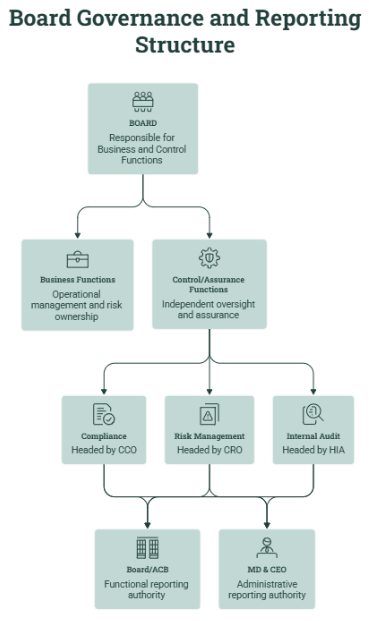
While, the Draft Directions provide a compilation of matters to be placed before the Board and those that can be delegated to a specific committee or any committee of board/ management, it also provides the principles to be considered by the board while delegating the matters thereby ensuring the adequate oversight of the board  on delegated matters. The amendment would primarily affect the manner in which information is placed before the board of banks, manner and extent of delegation of their powers to committees of board and/or management and reporting requirements for such matters.

The Draft Directions are applicable to both public sector banks and private sector banks.

In this piece, the authors analyse the proposed amendment, impact and indicate the likely actionables for Banks if the amendment is notified as is.

The Role of the Board

The Board of a Bank is expected to majorly focus on overseeing the risk profile of the Bank, monitoring the integrity of its business and control mechanisms, ensuring the expert management, and maximising the interests of its stakeholders. The Board always had the power to delegate certain items to management and board committees, in some cases by way of express provisions in RBI directions, guidelines. But at the same time, it must set and enforce clear lines of responsibility and accountability for itself as well as the senior management.

The Draft Directions draw a clear line between the matters to be dealt by the Board and the matters which can be delegated to committees with only material matters being placed before the Board. Further, a principle based approach is provided for the manner in which information is placed before the Board.

Principle Based Approach for matters to be placed before the Board

The objective of these principles is for the Board to consciously examine the areas where it devotes its valuable time and expertise. The principles require the Board to document express guidelines on the manner in which information is being placed before it.

The board is required to clearly articulate the matters reserved for its approval or to be brought to its notice for information or reporting, based on applicable laws and define the nature, level of detail and frequency of information required from the management. To optimize the time of the Board for real value addition, the chairperson of the Board shall have the primary responsibility of setting the agenda of the meeting.

The matters being placed before it or the Board committees, sub-committees or senior management must be reviewed periodically. This would enable the Board to examine and revoke delegation or further delegate responsibilities wherever required. The review must be detailed enough to include the timelines for circulation of agenda items, adequacy of information captured in the agenda, time allotted for important matters, etc.

The Powers of Delegation

The RBI (Commercial Banks – Governance) Directions, 2025 (existing Directions) provide for delegation of specific items viz. reviews dealing with various performance areas, monitoring of the exposures (both credit and investment) of the bank, review of the adequacy of the risk management process and upgradation thereof, internal control system, ensuring compliance with the statutory / regulatory framework, etc. to a Committee of Board. For ease of reference, the Draft Directions compile as well as draw a clear line between the matters to be dealt by the Board and the matters which can be delegated to committees with only material matters being placed before the Board.

This distinction would enable the Board to focus on its key areas of responsibility – risk and strategy governance and strengthens its powers of oversight over the risk management system, exposures to related entities and conformity with corporate governance standards[1].

Policy Matters

A list of policies which must be placed before the Board for its approval and which may be delegated for review are prescribed in Appendix-I of the Draft Directions. The Board is responsible for approving the policies at the time of framing and only periodical review is to be delegated to the committees. In case of any ‘material amendments’ (to be defined by the Board), the Board’s approval must be sought. Thus, the Board does not lose complete oversight.

Along with a major consolidating exercise, the Draft Directions also indicate policies where delegation is expressly allowed, even where the underlying directions/ guidelines did not expressly provide for the same. Accordingly, the amendments are enabling in nature in certain cases, as illustrated below:

ProvisionsContentsDelegation to
Para 7(3) and 7(4) of RBI (Commercial Banks – Undertaking of Financial Services) Directions, 2025Where the bank intends to function as a Professional Clearing Member in commodity derivatives, policy for-Specification of risk control measures and prudential norms for exposure limits for each trading member;Governing the bank’s exposure to trading members, ensuring consistency with the overall risk appetite and regulatory requirements.Risk Management Committee
Para 7(2) and 7(3) of the RBI (Commercial Banks – Miscellaneous) Directions, 2025Policy on- Courses / certifications required for specialised areas of operationsList of sensitive positions to be covered under mandatory leave requirementsAny Committee to which powers have been delegated by the Board.

Matters other than policy

Matters other than policies which must be placed before the Board for its approval, review or information are given in Appendix-II of Draft Directions. While several matters must be mandatorily taken up by the Board, the Board shall have the discretion to delegate certain matters even where the underlying directions/ guidelines did not expressly provide for the same. Accordingly, the amendments are enabling in nature in certain cases – for e.g. matters relating to risk assessment methodology for RBIA, Annual Audit Plan, analysis of incidents of operational risk failures & their impact to audit committee, matters relating to investment portfolio to risk management committee.

The Draft Directions also provide for discontinuation of about 6 matters at the discretion of the Board. In certain cases, such as ATM transactions including failed transactions and penalties paid, certain details are to be placed before the Board. The details must be forwarded to RBI along with the Board’s observations. The Draft Directions proposes that such review may be discontinued at the discretion of the Board. Accordingly, amendments would be required in the underlying laws as well.  Similarly in case of matters relating to loans to stockbrokers and market makers where the provisions mandate half-yearly review of the aggregate portfolio, its quality and performance by the Board, the board will have to exercise its discretion depending on the extent of exposure.

Proposed Omissions

Certain provisions of the existing Directions proposed to be omitted are as follows:

ParaProvision deals withVKC Remarks
14The Board should focus on the 7 themes of: Business Strategy, Risk, Financial Reports and their integrity, Compliance, Customer Protection, Financial Inclusion, Human ResourcesInstead of specifying the themes, the proposed amendment indicates that the ultimate responsibility for the bank’s performance, conduct and control rests with the Board and that it needs to ensure that sufficient time is dedicated to strategy and risk governance.
16Review of action taken on points arising from earlier meetings till the satisfaction of the boardBroader discretion provided to Banks to decide internal processes and articulate matters requiring its approval or to be brought for reporting or noting of information.
17Placing regulatory communication from RBI and the government along with supplementary information before the Board
18Delegation expressly permitted for: Reviews dealing with various performance areas and only a summary on each of the reviews may be put up to the Board at periodic intervals; Monitoring of the exposures (both credit and investment) of the bank; Review of the adequacy of the risk management process and upgradation thereof; Internal control system; Ensuring compliance with the statutory / regulatory framework, etc.A prescriptive list of permitted delegation has been specified by RBI, refer discussion below.
19Procedural technicalities relating to placing a summary of key observations by directors at the next board meeting and confirmation by directors for their observations, dissents etc. Broader discretion provided to Banks to decide internal processes.

Conclusion

The Draft Directions propose to optimise the time of the Board of Banks to focus on strategic and governance matters instead of operational matters. While this measure aims to boost the productivity of Banks and bring ease of doing business in the short term, once notified, several actionables would arise for Banks. Banks must examine their current decision making structure, at the level of the Board and delegation to committees, to understand how they would align it with the proposed amendments.


[1] Para 15 of the existing directions retained as para 11A of the Draft Directions.

Refer to our other resources:

  1. Representation for issues related to RBI (Commercial Banks – Credit Risk Management)(Amendment) Directions, 2026
  2. RBI Directions on Lending to Related Parties: Frequently Asked Questions
  3. Navigation Roadmap through New Consolidated RBI Directions – Presentation

Indian Securitisation in FY26: Securitised Paper Volumes grow, with originator and asset diversity 

– Vinod Kothari & Chirag Agarwal | finserv@vinodkothari.com

Volumes of securitisation (which, of course, have always included bilateral assignments or so-called DA transactions) fell by 6% in FY 26, if the origination volume by Reliance group entities in the first half were to be excluded. However, the market has shown more originator diversity, with an increasing share of smaller issuers, including those tasting the market for the first time.

The dip in volumes is because of the larger issuers who were prominently absent or subdued – Shriram Finance as the largest issuer having raised on-balance sheet liquidity, and banking companies. However, the share of gold loans went up sharply, largely due to the sharp increase in gold prices and gold lending, Microfinance companies went more for securitisation, rather than direct assignment transactions.

For anyone studying the Indian securitisation market, it is important to note the following:

  • Reported volumes in India include direct assignments, which, in international parlance, are not “securitisation” (pure bilateral loan sales). However, in India, traditionally, DA has been a close and quick proxy for securitisation, and hence, mostly included. In FY 26, the split of DA/PTC volumes shows PTC transactions having gained in proportion. One rating agency1 reports an increase of PTC volume percentage from 54% to 60%; another one2 shows the increase from 48% to 52%.
  • Indian transactions mostly show LAP transactions as a part of MBS, whereas what the world reports as RMBS is quite small in India. Last year, there was a prominent transaction by LIC Housing Finance, through the NHB-promoted RDCL. There was no RDCL issuance this year. It seems that RMBS volume was either too small to be reportable, or was completely absent.
  • Microfinance sector has been under some stress in the recent past; however, MFIs have increasingly resorted to PTC issuances, with small deal sizes. Some deal sizes are even below 100 crores. This is indicating greater diversity of issuers, and of course, yields and ratings.
  • The market also seems to be showing larger acceptance for lower rated securities i.e., BBB+.

Overall, in a stressful global scenario, securitisation has stood firm. Non financial sector entities have shown increasing willingness to tap the market. Of course, SEBI regulations have to be more enabling.

Below, we give a detailed overview of the securitisation market, including a discussion on the asset classes. 

NBFCs vs Banks

Securitisation volumes have been largely driven by NBFCs, which recorded a 30% year-on-year increase in value. In contrast, originations by banks have declined significantly.

Recent Securitisation Structures in India – A Mix of Tradition and Innovation

Among asset classes, vehicle loans (including commercial vehicles and two-wheelers) accounted for 50% of securitisation volumes (vs 47% in the corresponding period last fiscal). Mortgage-backed loans accounted for about 28% of securitisation volume (vs 37% in the last FY). 

Vehicle loan-backed securitisations dominated the market, both in terms of number of deals and total value, reaffirming the sector’s strong position. This is consistent with the growth trend in vehicle loan originations during FY 25.

In addition to vehicle loans, originators also securitised receivables from a diverse set of underlying asset classes during Q4, including:

  1. Microfinance Loans
  2. Secured Business Loans
  3. Unsecured Business Loans
  4. Home Loans
  5. Unsecured Personal Loans
  6. Gold Loans

The continued diversification in underlying asset classes highlights the evolving maturity of India’s securitisation market and growing investor appetite across segments. The break-up of securitisation volumes across various asset classes have been presented below:

Securitisation of Vehicle Loans

The issuance volume for vehicle loan securitisation during FY26 was approximately ₹1.26 lakh crores. Most of the transactions were structured as single-tranche issuances. However, a few exceptions featured more layered structures comprising senior and equity tranches, or senior, mezzanine, and equity tranches.

In terms of credit ratings, the tranches were rated between A- and AAA. Notably, the senior tranches in the majority of transactions received high investment-grade ratings, typically falling within the AA+ to AAA range. This indicates strong investor confidence and reflects the underlying credit quality of the asset pools, supported by adequate credit enhancement mechanisms. 

Further, replenishing structures were also observed commonly during FY26. These variations indicate growing sophistication in transaction structuring within the vehicle loan securitisation space, aimed at catering to different investor preferences, improving credit protection, and aligning with originator risk appetite. As the market matures, further innovation in structuring and risk mitigation features can be expected.

In terms of credit enhancements, most vehicle loan securitisation transactions during the last quarter of FY26 featured: cash collateral (CC) and overcollateralisation (OC), with the Excess Interest Spread (EIS) serving as the first layer of loss absorption.

Securitisation of Microfinance Loans

During FY26, the MFI sector has seen a revival after a period of stress during FY 25 and FY 24. This has been due to better credit underwriting of lenders, improving performance trends and granular pool characteristics. Further, after a period of stress, the lenders relied on time-tested borrowers rather than exploring new markets leading to higher average ticket size of loans. This has led to a growth in the volumes of securitisation of microfinance loans during FY26. The PTC issuance volume of microfinance institutions increased to 14%  of total PTC issuance in FY26 from 6% of total PTC issuances in FY25. Most of the transactions were structured as a single tranche securitisation. 

Further, most microfinance loan securitisation transactions during the quarter featured credit enhancement through two primary mechanisms: CC and overcollateralisation OC, with the EIS serving as the first layer of loss absorption.

Securitisation of pool of loans backed by Home Loans & LAP

The volume of mortgage backed securitisation has been low both in terms of number as well as in terms of amount of issuance. As compared to FY25, the total MBS issuances dropped to 28% of total issuance from 37%. The transactions featured a common waterfall matrix and had received an overall rating of AAA. 

In terms of credit enhancement, CC and OC has been provided as a credit enhancement with the EIS serving as the first layer of loss absorption. 

Securitisation of Gold Loans

Gold loan securitisation volumes in H2FY26 stood at approximately ₹18,500 crore, significantly higher than the ₹5,000 crore recorded for the whole of FY25.

The jump in gold lending securitisation may be due to increase in gold prices and resultant increase in the value of the collateral. As a result of this valuation spike, average ticket sizes have increased, indicating that as gold valuations rise, consumers are leveraging higher-value loans to meet their financing needs. Another reason for the increased origination may be removal of LTV restriction in case of income generating gold loans.

Securitisation of Unsecured Loans

As per rating rationales published by Care the securitisation volumes of unsecured loans (both personal and business) increased during FY26. Investors in unsecured loan transactions, are preferring the PTC route, due to the support provided by external enhancement. CC and OC have also been provided as a credit enhancement with the EIS serving as the first layer of loss absorption.

Related articles: 

  1. Secure with Securitisation: Global Volumes Expected to Rise in 2025
  2. India securitisation volumes 2024: Has co-lending taken the sheen?
  3. Indian securitisation enters a new phase: Banks originate with a bang
  4. Securitisation: Indian market grows amidst global volume contraction
  1. Crisil report on securitisation volumes: https://www.crisilratings.com/en/home/newsroom/press-releases/2026/04/securitisation-deal-value-peaks-to-rs-2-55-lakh-crore-in-fiscal-2026.html ↩︎
  2. Care report on securitisation volumes
    https://www.careratings.com/uploads/newsfiles/1775801608_FY26%20Retail%20Securitisation%20at%20Rs%202.53%20Trillion%20First%20Dip%20PostPandemic.pdf ↩︎

RBI proposes changes to NBFC-UL identification

Revised Criteria for Classification

RBI has vide its Press Releases – Reserve Bank of India proposed to review methodology for identification of NBFCs in Upper Layer. The key changes are as follows:

  1. Annual Classification: RBI shall conduct an annual identification process for classification of NBFCs in the Upper Layer.

It may be noted that NBFCs belonging to the banking group are also required to comply with the compliance requirements applicable to Upper Layer NBFCs (except the listing requirement). Our article on compliances to be followed by such NBFCs in the banking group can be seen here

  1. Criteria for classification: The current two-step approach (top ten by asset size and parametric scoring) will be replaced by a simple, absolute asset size criterion. The proposed asset size threshold for an NBFC to be classified as UL is ₹1,00,000 crore and above, as per the latest audited balance sheet (this limit is subject to review every 5 years).

A crucial question that arises here is whether the consolidation criteria (multiple NBFCs in the group) be applicable in this case as well to determine the asset size? Though as per prudence, it should apply, to avoid surpassing the regulatory intent, however, the same is specifically not applicable as per the SBR Directions (refer para 21) .

  1. Inclusion of Government-owned NBFCs: Eligible Government-owned NBFCs will now also be considered for inclusion in Upper Layer, based on the revised asset size criteria. Previously, these were placed only in the Base or Middle Layer.

It may be noted that the category of NBFC is not a pre-condition, hence, the list of UL NBFCs would include not just NBFC-ICCs but also HFCs, CICs, deposit taking NBFCs, and not even Govt. NBFCs

  1. Provision for Credit Risk Transfer: All NBFC-UL will be allowed to use State Government guarantees as a credit risk transfer instrument without any specific limit, provided they meet the prescribed conditions.

Implications of NBFC-UL Classification

Once the proposed criteria are implemented and the new list of Upper Layer NBFCs is notified by the RBI, entities classified as NBFC-UL will face certain immediate implications, in addition to specific corporate governance norms. The central point of discussion is how these requirements might impact the growth plans of large NBFCs.

  1. CET 1 requirement: NBFC-UL are required to maintain Common Equity Tier 1 capital of at least 9% of Risk Weighted Assets.

While CET 1 is currently manageable for most existing UL entities, aggressive growth plans could potentially make this a constraining factor for larger NBFCs newly classified as UL.

  1. Leverage Restriction: In addition to CRAR, NBFC-UL shall also be subject to leverage requirements to ensure that their growth is supported by adequate capital, among other factors. Also, NBFC-UL shall be required to hold differential provisioning towards different classes of standard assets.

Leverage ratio would have been an issue if the entity was engaged in derivatives transactions. However, most of the NBFCs in India are not very active in this space. 

  1. Exposure Framework: NBFC-ULs are required to adhere to the Large Exposures Framework. Furthermore, their Board must determine internal exposure limits for important sectors, including exposure to the NBFC sector, in addition to limits on internal exposures to Sensitive Sector Entities (SSEs).

The applicability of the large exposure framework may be a real concern. Large exposure framework looks at economic interdependence as the basis of classification into group risk. There is an absolute limit that the single party exposure cannot be more than 20% of Tier 1 capital (including quarterly audited profits) and 25% in case of a group of counterparties.

  1. Listing Requirement:  NBFC-ULs must be mandatorily listed within three years of being identified and notified as such. Unlisted NBFC-ULs shall be required to make the necessary arrangements for listing within this three-year period.
  1. CICs not accessing public funds: Under the CIC Directions, those CICs that don’t have access to public funds, irrespective of the asset size, are eligible to be classified as an unregistered CIC. Accordingly, such CICs should not be classified in the upper layer even if they breach the asset size criteria.