
Master Direction on ETPs: Key Changes & Compliance Guide
Harshita Malik, Executive | finserv@vinodkothari.com
Background and Overview:
The evolution of Electronic Trading Platform (‘ETPs’) is rooted in the market’s need for speed, efficiency, and enhanced transparency in dissemination of trade information. Traditional floor based trading methods struggled with sluggish processes, limited data dissemination, and inefficiencies that couldn’t pace with a global financial landscape. In response, industry players and regulators recognised the need for a digital overhaul, a system that could streamline trade execution, provide real-time market data, and foster a more accurate price discovery mechanism. This led to the emergence of specialised platforms, such as those designed for government securities trading, where primary dealers are entrusted with membership and operations. One such platform is ETP.
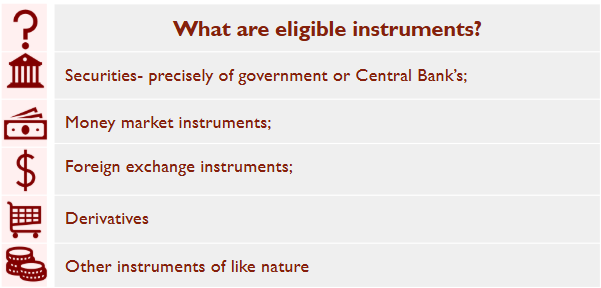
An ETP is a computarised system that facilitates the buying, selling and management of a wide range of financial instruments (listed down below). These platforms enable real-time market data dissemination, order execution, and efficient trade processing. For instance, in India, platforms such as the NDS-OM (Negotiated Dealing System – Order Matching) are well-known examples that specialize in government securities (g-sec) trading. Other entities include various bank-operated ETPs such as BARX operated by Barclays Investment Bank (international) and proprietary systems developed by financial institutions such as 360TGTX operated by Three Sixty Trading Networks (India) Pvt. Ltd.
On June 16, 2025, the RBI issued Master Direction – Reserve Bank of India (Electronic Trading Platforms) Directions, 2025 (‘New ETP Directions’) in supersession of the Electronic Trading Platforms (Reserve Bank) Directions, 2018 dated October 05, 2018 (‘Erstwhile ETP Directions’). This was based on the feedback received on the Draft Directions issued on April 29, 2024.
Applivability:
- Entities operating ETPs facilitating transactions in eligible instruments,under the New ETP Directions,
- Grandfathering clause:
- Any entity already authorised under the Erstwhile ETP Directions shall deemed to have been authorised under the New ETP Directions, or
- any action already taken under the Erstwhile ETP Directions “shall be deemed to have been taken” under the New ETP Directions.
In practical terms, operators need not re-submit applications, seek fresh authorisations or revisit past actions as long as compliant under the Erstwhile ETP Directions.
Effective Date:
Effective immediately i.e. from June 16, 2025.
All about Electronic Trading Platforms (‘ETPs’)
Before going ahead to analyse the changes let us understand what ETPs are. ETPs are electronic systems, other than recognised stock exchanges, on which transactions in eligible instruments are contracted. But why would someone prefer trading on ETP rather than other exchanges/ platforms such as stock exchanges? ETPs offer eligible entities multi-instrument trading platforms (dealing with money-market, G-Secs, FX, swaps etc.) with tailored tenures and faster settlement process while stock exchanges cater to listed equities and futures with standardised contracts, retail participation and fixed trading hours.
Who operates these electronic systems?
Any entity as defined in the New ETP Directions incorporated in the form of a company and authorised by the RBI in this regard can operate an ETP. Currently, there are 12 authorised ETP operators under the Erstwhile ETP Directions who shall continue to operate under the New ETP Directions.
Types of ETP: Single Dealer Platform v. Multi-Dealer Platform
| Basis | Single Dealer Platform | Multi-Dealer Platform |
|---|---|---|
| Seller | A single bank or financial institution | Several banks and financial institutions |
| Pricing | Tailored pricing from one provider. | Competitive pricing with options from several liquidity providers. |
| Liquidity | Low | High |
| Liquidity source | Provided by a single bank or institution. | Aggregated liquidity from multiple banks/institutions. |
| Customisation | Tailored interfaces and services designed for specific clients. | More standardized interfaces across multiple dealers; less tailored. |
| Execution quality | Stable and consistent execution within one controlled environment | Best execution can be sought across multiple quotes and providers |
| Suitability | Clients who value a close banking relationship and prefer a dedicated, controlled trading environment | Clients who want to compare and execute trades across a range of prices and liquidity providers |
| Example | NDS-OM, operated by Clearcorp Dealing Systems (India) Ltd., provides a secondary market platform for government securities owned by RBI | 360TGTX, operated by Three Sixty Trading Networks (India) Pvt. Ltd., provides a platform for trading in FX Spot, Forwards, Swaps and Options |
Players on ETP
- Primary Dealers- In 1995, the RBI introduced the system of PDs in the Government Securities (G-Sec) Market. The objectives of the PD system are to strengthen the infrastructure in G-Sec market, development of underwriting and market making capabilities for G-Sec, improve secondary market trading system and to make PDs an effective conduit for open market operations (OMO).
The RBI currently extends various facilities to the PDs to enable them to fulfill their obligations, including memberships of electronic dealing, trading and settlement systems (NDS platforms/INFINET/RTGS/CCIL).
PDs are classified as below:
- Standalone Primary Dealers- NBFC-ML
- Bank Primary Dealers- Scheduled Commercial Banks and Central Banks- National and International
| Basis | Standalone Primary Dealer | Bank Primary Dealers |
|---|---|---|
| Entity Structure | Operate as independent legal entities, often registered as NBFCs or as dedicated subsidiaries/joint ventures. | Operate as a departmental function within a scheduled commercial bank (or its branch, including foreign banks). |
| Regulatory Framework | RBI guidelines | RBI Guidelines and bank specific norms |
| Business focus | Primarily focused on government securities trading and related activities, often with more flexibility to diversify (e.g., underwriting, trading derivatives). | The primary dealer function is one element of a larger suite of banking services and is more integrated with the bank’s overall operations. |
| Operational Independence | Greater operational autonomy, being solely focused on the government securities market | Functions as an integral part of the bank’s operations, with decisions influenced by the broader business strategy of the bank |
| PDs registered with RBI | SBI DFHI Limited | Bank of Baroda, Bank of America |
- Traders
Analysis of Change
Having understood the nomenclature, we may proceed to analyse the changes and what they mean for Regulated Entities. The primary change and intent of the Draft Directions was to curb unregulated entities and platforms, specifically offshore platforms dealing with foreign exchange trading involving inshore/ domestic investors. Please note that foreign exchange instruments have been a part of eligible instruments, however, due to not being defined, the question whether such offshore ETPs would be covered, was always a question. The Draft Directions recommended certain changes, however, the major change was bringing offshore ETPs under the domain of RBI. However, the finalised New ETP Directions do not deal with this aspect.
While the RBI largely accepted the foundational architecture proposed in the draft, it has revised certain provisions to provide clarity in many areas, especially around risk and operational aspects which are now expressed in more precise terms along with addition of new provisions around enforcement and transitional mechanisms.
Highlights of Major Changes:
- Expanded applicability to include outsourcing entities under the purview of the New ETP Directions in essence
- Carve out to single dealer banks and Standalone Primary Dealer (‘SPD’)
- Transition to an electronic application process: Moving away from physical submission, the application process is now streamlined through the PRAVAAH portal
- Quarterly and annual reporting requirements for the operators introduced mandating regular updates thereby tightening regulatory oversight
- Framework for data preservation and sharing post-authorisation
Comparison at a Glance:
| Area | Erstwhile ETP Directions | New ETP Directions | Implications |
|---|---|---|---|
| Application process for authorisation | Physical submission | Through PRAVAAH Portal of RBI | Streamlining the process, enhancing accessibility, efficiency, and real-time tracking for applicants as well as regulators |
| Quarterly reporting | No such requirement | Quarterly reporting on functioning of ETPs by Operators (details covered below) | Operators to provide periodic updates on operational performance, ensuring regulatory oversight |
| Annual Reporting | No such requirement | Annual reporting on compliance of the New ETP Directions and terms and conditions prescribed (details covered below) | Operators to yearly confirm their adherence to updated regulatory guidelines and contractual conditions |
| Eligibility Criteria | Did not apply to ETPs operated by SCBs | Apply to all the entities including SCBs operated ETPs (except exemption covered below) | Banks must now play by the same rulebook as other operators, additionally Public Sector Banks shall have to incorporate (or spin off) a Companies Act vehicle, infuse requisite capital and adhere to technological standards. Until now, Public Sector Banks that operate an ETP slipped neatly around the RBI’s “company‐only” eligibility gate. The New ETP Direction takes away that privilege. From the day the change takes effect, every ETP, bank-owned or not must meet the same bar |
| Preservation, access and use of data | Did not have a provision for treatment of data in the event of cancellation of authorisation | Specifies the requirement to share data, along with form and manner, with the RBI or any agency in the event of cancellation of authorisation as may be called upon by the RBI or any other agency. | Enhanced regulatory oversight and post-termination accountability on operators |
| Definition of ‘Entity’ | “….an agency formed as a ‘company’ and incorporated under the Companies Act, 2013 (or earlier acts)” | “….any person, natural or legal.” | Language of the New ETP Directions seems to widen the scope of entity, however reading the impact along with para 6(f)(iii), it only brings the outsourcing entities under the widened scope |
| Grandfathering Rule | Not needed (first issue) | All licenses/actions under Erstwhile ETP Directions shall be treated as valid | No fresh registration required |
| Exemption | ETPs operated by banks for their customer on a bilateral basis as long as no market is being created for the securities | Carve out to SCBs (including branches of Foreign Banks operating in India) and SPDs wherein the bank or the SPD operating the electronic system is the sole quote/price provider and a party to all transactions contracted on the system. | Banks and SPDs can operate proprietary trading platforms without the full weight of the standard compliance requirements set for multi-dealer platforms. This can streamline their internal processes and reduce regulatory and technological burdens.Acting as the sole quote provider makes these institutions both the operator and counterparty. This can improve execution speed and reduce inter-dealer friction.A single market maker model may lead to faster execution but can constrain competitive pricing, potentially resulting in wider spreads if the operator does not face rival pricing pressures from other dealers.While banks and SPDs gain efficiency due to lesser compliances, they must remain vigilant about disclosure and transparency requirements to avoid any adverse effects on market integrity.Banks and SPDs may develop more tailored platforms, exclusive systems to capture niche market segments.Synchronization with global norms that treat single-dealer platforms as an extension of the dealer’s book and not that of an exchange. |
Reporting Requirements:
These new requirements shall have to be complied with along with the existing reporting requirements under the Erswhile ETP Directions from the effective date of the New ETP Directions. Accordingly, the first quarterly report shall be required to be submitted on or before 15th July, 2025 and the annual report shall be submitted on or before 30th April, 2026. The manner of reporting by ETP operators as per the New ETP Directions has been listed below:
| Reporting Requirement | Reporting Authority | Frequency | Format | Timeline | |
|---|---|---|---|---|---|
| New | Functioning of the platform, including but not limited to the following points:Events resulting in disruption of activities, during the quarter, if anyInstances of market abuse, during the quarter, if anyDetails about any material change in trading procedure or technology carried out during the quarter | RBI | Quarterly | Annex-2 of the New ETP Directions | On or before 15th day of the month following the quarter |
| Compliance with the New ETP Directions and terms and conditions prescribed at the time of authorisation | RBI | Annually | Not specified | on or before the 30th of April of the succeeding financial year | |
| Data relating to activities on the ETP | RBI | Post cancellation of authorisation | As may be prescribed | As may be prescribed | |
| Existing | Transaction information | Trade repository or trading platform | As may be prescribed | As may be prescribed | As may be prescribed |
| Other report, data and/or information as required by RBI | RBI | As may be prescribed | As may be prescribed | As may be prescribed | |
| Data/information | Any agency as required by Indian Laws | Not specified | Not specified | Not specified | |
| Event resulting in disruption of activities or market abuse | RBI | Event-based | Not specified | Not specified |
Conclusion:
By introducing defined protocols for risk management, data governance and reporting, the updated framework seeks to close existing regulatory gaps. Key provisions of the New ETP Directions include, amongst others, a clear exemption for single–dealer platforms and a streamlined application process via the PRAVAAH portal. These measures ensure legal continuity. Ultimately, this transformative framework not only reinforces the integrity of the trading ecosystem but also cultivates an environment conducive to innovation.