
SEBI introduces enhanced disclosure and standardized reporting for AIFs
Timothy Lopes, Executive, Vinod Kothari Consultants Pvt. Ltd.
SEBI has vide circular dated 5th February, 2020[1] introduced a standard Private Placement Memorandum (PPM) and mandatory performance bench-marking for Alternative Investment Funds (AIF). The move is part of SEBI’s initiative to streamline disclosure standards in the growing AIF space. The changes are made based on the recommendations of the SEBI Consultation Paper[2] on ‘Introduction of Performance Bench-marking’ and ‘Standardization of Private Placement Memorandum for AIFs’.
Template for Private Placement Memorandum (PPM)
The SEBI (AIF) Regulations, 2012 specified broad areas of disclosures required to be made in the PPM. This led to a significant variation in the manner in which various clauses, explanations and illustrations are incorporated in the PPMs. Hence, this led to concerns that the investors receive a PPM which provides information in a manner which is too complex to easily comprehend or with too little information on important aspects of the AIF, e.g. potential conflicts of interests, risk factors specific to AIF or its investment strategy, etc.
Thus, SEBI has mandated a template[3] for the PPM providing certain minimum level of information in a simple and comparable format. The template for PPM consists of two parts –
Part A – Section for minimum disclosures, which includes the following –
- Executive Summary –
This lays down the summary of the parties and terms of the transaction. In effect, it is a summary term sheet of the PPM, laying down essential features of the transaction.
- Market opportunity / Indian Economy / Industry Outlook;
The theme of this section includes a general economic background followed by investment outlook and sector/ industry outlook. This section may include any additional information as well which may be relevant. An illustrative list of additional items which may be included has been specified in the template.
- Investment Objective, Strategy and Process;
A tabular representation of the investment areas and strategy to be employed is laid down in under this head. Further, a flow chart depicting the investment decision making process and detailed description of the same is required to be specified. This will give investors a comprehensive idea of the ultimate investment objective and strategy.
- Fund/Scheme Structure;
A diagrammatic structure of the Fund/ Scheme which discloses all the key constituents and a brief description of the activities of the Fund/ Scheme.
The diagrammatic representation shall specify, for instance, the sponsor, trustee, manager, custodian, investment advisor, offshore feeder, etc.
- Governance Structure;
To enhance the governance disclosures to investors and ensure transparency this section mandates disclosures of all details of each person involved in the Fund/ Scheme structure, including details about the investment team, advisory committees, operating partners, etc.
- Track Record of the Manager;
The track record of the Fund Manager is of great significance since investors would like to know the skill, experience and competence of the Manager before making an investment.
The template mandates disclosures about the manager including explicit disclosure of whether he is a first time manager or experienced manager.
- Principal terms of the Fund/ Scheme;
Explicit disclosures about the principal terms such as minimum investment commitment, size of the scheme, target investors, expenses, fees and other charges, etc. are required to be disclosed as per the template.
Major terms and disclosures are covered under this section.
- Principles of Portfolio Valuation;
This section would broadly lay down the principles that will be used by the Manager for valuation of the portfolio company.
The investors would get a fair idea of the manner in which valuation of the portfolio would be undertaken, in this section.
- Conflicts of interest;
All present and potential conflicts of interests that the manager would envisage during the operation of the Fund/ Scheme at various levels are to be disclosed under this section.
This would enable investors to factor in the conflicts of interests existing or which may arise in the future of the fund and make an informed decision.
- Risk Factors;
All risk factors that investors should take into account such as specific risks of the portfolio investment or the fund structure are required to be disclosed in the PPM.
These risks would include operational risks, tax risks, regulatory risks, etc. among other risk factors.
- Legal, Regulatory, and Tax Consideration;
This section shall include standard language for legal, regulatory and tax considerations as applicable to the Fund/Scheme, including the SEBI (AIF) Regulations, 2012, Takeover Regulations, Insider Trading Regulations, Anti-Money Laundering, Companies Act, 2013. Taxation aspects of the fund are also to be disclosed.
- Illustration of fees, expenses and other charges;
A tabular representation of the fees and other charges along with the expenses of the Fund are required to be disclosed for transparency of investors and no hidden charges.
- Distribution Waterfall;
The payment waterfall to different classes of investors is required to be disclosed in detail.
- Disciplinary History.
Any prior disciplinary action taken against the sponsor, manager, etc. will be required to be disclosed for better informed decision making of investors.
Part B – Supplementary section to allow full flexibility to the Fund in order to provide any additional information, which it deems fit.
The template requires enhanced disclosures mandatorily required to be made by the AIF, such as risk factors, investment strategy, conflicts of interest and several other areas that may affect the interest of the investors of AIFs.
This will standardize disclosures across the AIF space and increase simplicity of information to investors in a standard reporting format. Enhancing disclosure requirements will increase investor understanding about AIF schemes.
Further there is a mandatory requirement to carry out an annual audit of the compliance of the PPM by either an internal or external auditor/ legal professional. The findings arising out of the audit are required to be communicated to the Trustee or Board or Designated Partners of the AI, Board of the Manager and SEBI.
Exemption has been provided from the above PPM and audit requirements to the following classes of funds:
- Angel Funds as defined in SEBI (Alternative Investment Funds), Regulations 2012.
- AIFs/Schemes in which each investor commits to a minimum capital contribution of Rs. 70 crores (USD 10 million or equivalent, in case of capital commitment in non-INR currency) and also provides a waiver to the fund from the requirement of PPM in the SEBI prescribed template and annual audit of terms of PPM, in the manner provided at Annexure 3 of the SEBI Circular.
These requirements are however applicable from 01st March, 2020.
Bench-marking for disclosure of performance
Considering that investments by AIFs have grown at a rate of 75% year on year in the past two years, a need was felt to introduce disclosures by AIFs indicating returns on their investments. Prior to the SEBI circular there was no disclosure requirement for AIFs on their investment performance.
There was no bench-marking of returns disclosed by AIFs to their prospective or existing investors. However, returns generated on investment is one of the most important factors taken into consideration by potential investors and is also important for existing investors in order to be informed about the performance of their investment in comparison to a benchmark.
Therefore, it is felt that there is a need to provide a framework to bench-marking the performance of AIFs to be available for the investors and to minimize potential misselling.
In this regard SEBI has introduced the following –
- Mandatory bench-marking of the performance of AIFs (including Venture Capital Funds) and the AIF industry.
- A framework for facilitating the use of data collected by Bench-marking Agencies to provide customized performance reports.
The new bench-marking framework prescribes that each AIF must enter into an agreement with a Bench-marking Agency (notified by an AIF association representing at least 51% of the number of AIFs) for carrying out the bench-marking process.
The agreement between the Bench-marking Agencies and AIFs shall cover the mode and manner of data reporting, specific data that needs to be reported, terms including confidentiality in the manner in which the data received by the Bench-marking Agencies may be used, etc.
Reporting to the Bench marking Agency –
AIFs are required to report all the necessary information including scheme-wise valuation and cash flow data to the Bench-marking Agencies in a timely manner for all schemes which have completed at least one year from the date of ‘First Close’. The form and format of reporting shall be mutually decided by the Association and the Benchmarking Agencies.
If an applicant claims a track-record on the basis of India performance of funds incorporated overseas, it shall also provide the data of the investments of the said funds in Indian companies to the Benchmarking Agencies, when they seek registration as AIF.
PPM and Marketing material –
In case past performance of the AIF is mentioned in the PPM or any marketing material the performance versus benchmark report provided by the benchmarking agencies for such AIF/Scheme is also required to be provided.
Operational Guidelines for the benchmarking criteria is placed in Annexure 4 to the SEBI Circular.
Further there is an exemption from the above requirements to Angel Funds registered under sub-category of Venture Capital Fund under Category-1 AIF.
Conclusion
These changes are likely to bring about higher disclosure and transparency in the AIF space, especially for existing as well as potential investors of AIFs. Standardization of PPM will eliminate any variance from the manner of disclosures made by various AIFs.
Links to related write ups –
https://vinodkothari.com/2018/03/can-aif-grant-loans/
https://vinodkothari.com/aifart/
[1] https://www.sebi.gov.in/legal/circulars/feb-2020/disclosure-standards-for-alternative-investment-funds-aifs-_45919.html
[2] https://www.sebi.gov.in/reports-and-statistics/reports/dec-2019/consultation-paper-on-introduction-of-performance-benchmarking-and-standardization-of-private-placement-memorandum-for-alternative-investment-funds_45215.html
[3] https://www.sebi.gov.in/sebi_data/commondocs/feb-2020/an_1_p.pdf
SEBI brings in revised norms for Portfolio Managers
Timothy Lopes, Senior Executive
Harshil Matalia, Assistant Manager
Updated as on 27th August, 2020
The securities market regulator has recently introduced the new SEBI (Portfolio Managers) Regulations, 2020 (PMS Regulations), bringing in several changes to the Portfolio Management industry, including doubling the ticket size for investments and increasing the net-worth requirement of Portfolio Managers.
The Portfolio Management Services (PMS) industry has witnessed substantial growth in its Assets Under Management (AUM) in the last 5 years as shown in the data below. There has also been a substantial increase in the number of clients, indicating that the PMS industry plays a significant role in managing funds of High Net-worth Individuals.
Recent Developments in Corporate Laws
In its stride to achieve transparency, good governance, and ease of doing business, the Government has time and again introduced amendments, proposed new ideas in the corporate laws. The very recent example of such changes are (a) Changes in RPTs proposed in LODR; (b) Minority Squeeze outs under Companies Act; and (c) introduction of Winding-up Rules, 2020.
In light of the these amendments/ proposed amendments, it becomes important to understand its impact on the already existing set-up. A brief analysis of the aforementioned topics has been discussed here
Comparative Analysis of provisions enabling majority shareholders to squeeze out minorities
Harshil Matalia, Executive, Vinod Kothari & Company
Introduction
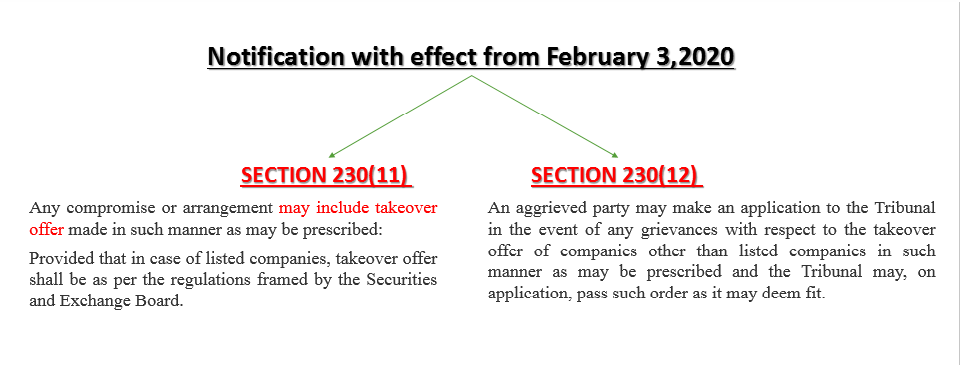
Squeezing out minority shareholders has gradually become an area of intense interest and scrutiny. With the recent set of notifications, Ministry of Corporate Affairs (MCA) has opened yet another way of squeezing out minority shareholders. The MCA has recently notified[1] sub section (11) and (12) of section 230 of the Companies Act, 2013 (‘Act’) on 3rd February, 2020 (effective from the date of notification itself), whereby power has been given to the majority shareholders holding atleast 3/4th of the share capital of the target company to enter into arrangement for acquisition of any part of the remaining shares of the target company.
While section 236 of the Act specifically provides for squeezing out of minority shareholders, the prerequisite of holding atleast 90% of the share capital is a challenge to implement. Whereas, with the notification, those holding atleast 75% can move ahead with the proposal before the NCLT via Scheme and can acquire the balance by offering a fair price determined by the Registered valuer.
The term ‘squeeze out’ reflects a situation whereby controller shareholders undertakes a transaction to forcibly acquire remaining shares of a company. There are number of methods provided in the Act through which minorities can be squeeze out by majorities, viz. reduction of share capital, consolidation of shares etc.
This write up is an attempt to analyse the implementation of the recently notified provisions and a brief comparison of the same with the existing options of squeezing out minority shareholders.
An Overview of Section 230
Section 230 of the Act provides for any compromise and arrangement between shareholders or creditors of a company with the company pursuant to a scheme. The company or any shareholder or creditor or liquidator (in case the company is under liquidation) can file application before the National Company Law Tribunal (NCLT) for the approval of the scheme of compromise or arrangement along with the documents as provided under rule 3 of the Companies (Compromises, Arrangements and Amalgamations ) Rule, 2016.
Approval from at least 90% of shareholder and creditors of applicant companies will enable the companies to get dispensation from the NCLT convened meeting, otherwise, dual approval as per section 230 (6) of the Act will be required, which is ‘majority of persons representing 3/4th in value.
Further, the Act also provides for sending of a copy of application to all the regulatory authorities, such as Registrar of Companies, Central Government (power delegated to Regional Director), Official Liquidator, Income Tax Authorities, Securities and exchange board of India (in case of listed companies), CCI and Reserve bank of India (in case of NBFC, for inviting their objection, if any on the proposed scheme. In consideration of all the respective Tribunal can allow the scheme. The scheme, once approved by the Tribunal, shall be binding on the company, all the shareholders, creditors, and in case of company being wound up, on the liquidator and the contributories of the company.
Proviso to section 230 (4) provides for right to object to the shareholder holding 10% of the share capital of company either individually or together with other shareholders; and the creditors holding 5% of the outstanding debt either individually or together with other creditors.
The enabling notifications[2] provides for ‘takeover offer’ by the shareholders holding at least 3/4th of the shares of a company to the remaining shareholders, which means shareholders holding 75% or more of the issued share capital of the a company can now enter into an arrangement with the target company to acquire remaining shares by offering them the price determined by the registered valuers. While the other compliance as set out in section 230 of the Act will remain same for the scheme involving takeover offer, the applicant shall additionally be required to deposit 50% of the offer price in a separate bank account after getting requisite approval from the shareholders and creditors but before getting approval from the Tribunal.
In addition to the right to object u/s 230 (4), further liberty has been given to the aggrieved party, other than listed companies, to make application before the NCLT in case of any grievances with the said takeover.
Analysis of acquisition of minority shareholding in terms of section 236
Section 236 empowers the registered holders holding at least 90% of the issued share capital of a company, either individually or along with person acting in concert, by virtue of:
- an amalgamation,
- share exchange,
- conversion of securities or
- for any other reason
to first intimate the company regarding their intention to buy the remaining shares or part thereof, then to make offer to the minority shareholders at a price determined by the registered valuer and finally getting the possession of the shares by depositing the amount equal to the value of shares to be acquired in a separate bank account. Alternatively, the minority shareholders may also offer the shares to the acquirer at a price determined on the basis of valuation by a registered valuer in accordance with prescribed rules.
However, in the practical scenario, the section fails to achieve its objective of releasing the minority shareholders as the section does not clarify whether upon receiving such an offer the minority shareholders or the Acquirer is obligated to sell or buy the shares, and no specific timelines have been prescribed for acceptance of such an offer or for the tender of shares. Further, the instance where the shares are held in demat form, has also not been considered.
The process under section 236 can be seen below:

Other methods of acquiring minority shares under the Act
Apart from the transactions mentioned above, there are several other methods available to implement squeeze out minority shareholders within the Act, such as consolidation of shares, reductions of share capital etc. out of which, most commonly used method is reduction of share capital. However, all the provisions have their own benefits and lacuna’s. The brief overview of the said transactions are as follows:
Consolidation of shares:
Consolidation of shares means consolidating nominal value of shares that results into decrease in the number of shares with increase in nominal value of each share. For example 100 shares of face value of Rs. 10 each may be consolidated into 1 share of face value of Rs 1000 each. Consolidation is also known as reverse stock split, which is the effective tool by which a company can restructure its capital and can eliminate minority holding with the approval of Tribunal in terms of section 61 (1) (b) of the Act and Rule 71 of the NCLT Rules, 2016.
Reduction of share capital:
A company limited by shares can reduce its share capital through: (a) reducing/extinguishing its liabilities on unpaid share capital; (b) with or without extinguishing or reducing its liabilities on any shares which is lost or is unrepresented by its existing assets; or (c) with or without extinguishing or reducing its liabilities on any shares which is in excess of its requirement. Section 66 of the Act provides for the reduction of capital by a company with the approval of Tribunal, only if it is not defaulted in repayment of any deposit accepted by it or interest thereon.
Acquiring Minority shareholding in terms of section 235:
An Acquirer/Transferee Company can acquire the shares of Transferor Company under a scheme or contract subject to the approval of holders of minimum 90% of value of shares other than shares already held by Transferee Company or its nominee or its subsidiary companies. Such approval is required to be obtained by Transferee Company within 4 months after making such offer. Upon receipt of the said approval, within 2 months from the expiry of the offer period, the Transferee Company shall give notice to dissenting shareholders by conveying its intention to acquire their shares and the dissenting shareholders may then approach NCLT for seeking remedy within one month from the date of such notice.
The entire process of acquiring the shares from the dissenting shareholders is extensive and time consuming for the acquirer. This makes the process of squeezing out dissenting shareholders unreasonably lengthy.
Conclusion
In conclusion, the notified section has added a way for unlisted companies to eliminate minorities smoothly vide scheme of arrangement which will further boost the dominance of majority over minority. On prima-facie view, one can say that the section seems to have covered the lacuna’s of other squeezing out provisions of the Act, however, the supervisory role of the respective regulatory authorities and the views to be taken by respective Tribunals will decide the materialisation of the notification.
Links to related write ups –
Takeover under Companies Act, 2013- https://vinodkothari.com/2020/02/takeover-under-ca-2013/
[1] http://www.mca.gov.in/Ministry/pdf/Notification_04022020.pdf
