
The will of the borrower: Do Balance Transfers Count as Loan Transfers?
-Dayita Kanodia & Chirag Agarwal | finserv@vinodkothari.com
The RBI, as part of its recent consolidation exercise, has consolidated various instructions applicable to NBFCs and issued 34 Master Directions. Our analysis of these can be accessed here.
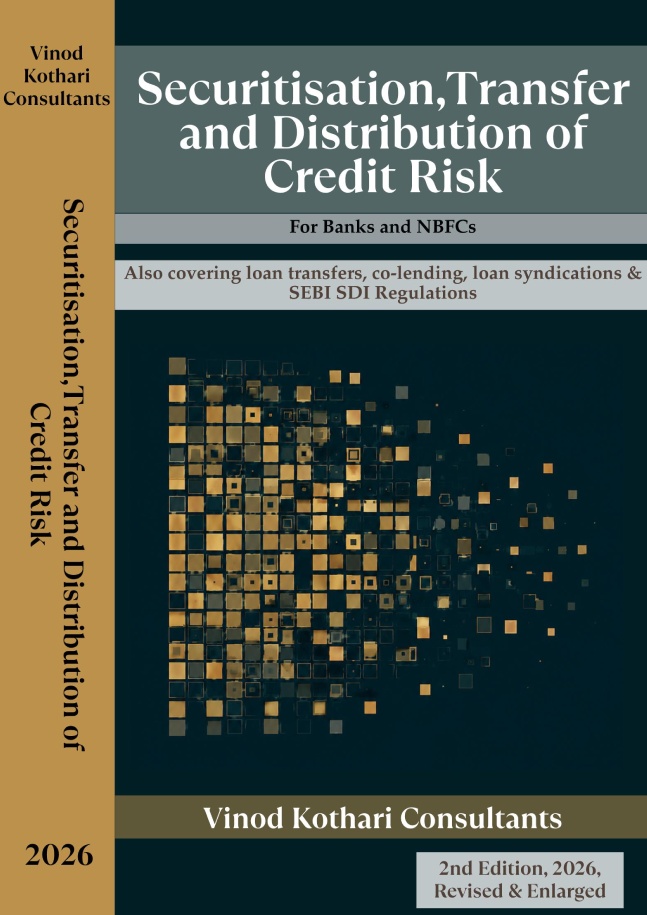
Loan transfers are now governed by the RBI (Non-Banking Financial Companies – Transfer and Distribution of Credit Risk) Directions, 2025 (‘Transfer Directions’), which assimilates the erstwhile TLE and Co-lending Directions.
One notable change (which was not there in the Draft) appears in the provisions relating to transfer of loan exposures. Para 31 of the Directions provides a carveout for items which will be excluded from the purview of the Directions. One of the exclusions, which has existed since the 2012 Guidelines, is the exclusion for balance transfers. That exclusion has now been removed.
This change raises the question of whether NBFCs are now required to comply with the provisions of the Transfer Directions, even in cases where it is the borrower who requests the transfer of its loan account.
Case of Balance Transfer
Balance transfer is an arrangement where a borrower who has already availed credit from a particular RE identifies another lender willing to offer a loan at a lower interest rate. In such cases, the borrower requests the existing lender to pre-close the loan account using the funds provided by the new lender. The essence is that the transaction happens at the instance of the borrower.
While BTs can take place for a number of reasons, it generally happens when the borrower finds another lender offering loans at a lower interest rate. Other common BT causes include:
- Better Loan Terms: More flexible repayment schedules, lower processing fees, reduced foreclosure charges, or longer tenure options.
- Top-Up Loan Facility: The new lender may offer a top-up loan along with the transfer at attractive rates.
- Improved Customer Service: Borrowers often move due to dissatisfaction with the existing lender’s service quality, delays, or poor communication.
- Switching from Floating to Fixed (or vice versa): A borrower may want to change the interest type depending on market outlook or personal preference.
- Consolidation of Loans: Borrowers might transfer in order to consolidate multiple loans under one lender for easier management.
BTs typically take place in longer-term loans such as housing loans and LAP.
Typically, the borrower is also charged a prepayment penalty when the existing lender pre-closes the loan account.
Is BT a case of Transfer?
As discussed above, balance transfer is not, per se, a transfer of the loan account between lenders; rather, it is a situation in which one lender effectively steps into the place of another at the request of the borrower.
It may also be noted that the Directions recognise only three modes of transfer of loan accounts:
- Assignment
- Novation
- Loan participation
BT, however, does not fall under any of the above modes.
Further, the introduction to the Transfer Directions states:
Loan transfers are essential to the development of a credit risk market, enabling diversification of credit risk originating in the financial sector and ensure the availability of market-based credit products for a diversified set of investors having commensurate capacity and risk appetite.
BT, on the other hand, does not achieve any credit-risk redistribution. The incoming lender is not purchasing risk, but issuing a fresh loan directly to the borrower. In essence, a balance transfer is not a credit risk transfer; rather a refinancing transaction driven by the borrower’s choice, without any movement of the underlying asset.
Situation for Banks
It may be noted that, in the case of banks, a specific exclusion has been provided for situations where the transfer of a loan account occurs at the instance of the borrower. In such cases, banks are required to comply with the provisions set out under Chapter III of Part C of the Reserve Bank of India (Commercial Banks- Transfer and Distribution of Credit Risk) Directions, 2025.
However, for banks, the concept of inter-bank transfer of loan accounts exists, whereas for NBFCs, there is only a pre-closure of the loan account by one lender using funds obtained from another lender.
Conclusion
Accordingly, in our view, the position for NBFCs in respect of balance transfers remains unchanged, and there is no requirement to comply with the provisions of the Transfer Directions. It must, however, be ensured that such borrower-initiated transfer requests are responded to by the concerned NBFC within 21 days, as required under Para 19 of Reserve Bank of India (Non-Banking Financial Companies – Responsible Business Conduct) Directions, 2025.
Leave a Reply
Want to join the discussion?Feel free to contribute!