
IBC for a makeover: bold and beautiful! Quick highlights of the IBC Amendment Bill, 2025
– Team Resolution | resolution@vinodkothari.com

Far reaching changes, several strategic initiatives, bold moves to overcome impact of jurisprudence that did not seem to serve the policy framework – these few words may just approximately describe the IBC Amendment Bill. The Bill has been put to a Select Committee of the Parliament, and may hopefully come back in the Winter Session. However, the mind of the Government is clear: if a bold legal reform has faced implementation challenges, the Government will clear the roadblocks. Some extremely crucial amendments might soon see the light of day, providing much-required clarity on priority of creditors, role of AA, group insolvency, among others.
Here are the major highlights:
- Government dues not secured debt: Dilemma of Rainbow Papers resolved [Sections 3(31), 53]:
- Mere operation of law cannot be said to have created security interest.
- Government dues pertaining to 2 years preceding the liquidation commencement date, whether secured or unsecured falls under clause (e) and remaining amount beyond two years, if any to fall under clause (f). [Explanation to section 53(1)(e)]
- Riddle created by Rainbow Papers put to rest.
- Failure to pay suffices; mandatory CIRP if default has occurred (Vidarbha ka sandharbha) [Section 7] –
- Three exhaustive and self-sufficient conditions for admission of CIRP – (i) default, (ii) application being complete, and iii) no disciplinary proceeding against IP. Rejection not possible on any other ground.
- Further, IU records to be conclusive evidence of default. Mandatory admission of CIRP if the default is proved
- SC in review petition indicated that the ruling in Vidharbha Industries was peculiar to facts and circumstances of the case. The amendment effectively nullifies the Vidarbha judgment, and AA will not have any discretionary powers while dealing with CIRP applications
- Restricted timeframe for filing withdrawal application [Section 12A]:
- Application for CIRP, once admitted, can only be withdrawn after the constitution of the CoC, and solely upon obtaining the consent of CoC members representing not less than 90% of the voting shares.
- No withdrawal application can be entertained after issuing the first invitation for a resolution plan.
- Service providers of CD to cooperate with IP, besides personnel/promoters or any other person associated with management [Section 19, also, section 34(3)].
- Therefore, outreach of IPs extended to service providers like auditors, etc.
- Possible transfer of assets of guarantor to CD as part of CIRP [Section 28A inserted]:
- Proposal to introduce Section 28A, which would allow a creditor – who has a security interest and possession of a guarantor’s asset by enforcing security interest u/s 13 of SARFAESI, 2002 – to transfer that asset as part of the CD’s CIRP, with the CoC’s approval.
- If the guarantor is also in insolvency or bankruptcy, their own creditors’ approval would also be needed.
- The sale proceeds would first go toward the guarantor’s debt (after costs), and any surplus will be returned to the guarantor or added to their insolvency or liquidation estate, as the case may be.
- Separate approvals for implementation and distribution [Section 31(1)]: Application may be filed with the consent of majority of CoC to first approve the implementation of the resolution plan and thereafter approve the manner of distribution provided. Was earlier discussed in the Discussion Paper of February 04, 2025.
- Life after CIRP [Section 33 (1A)]: The usual process is that liquidation is the fait accompli, if resolution has failed; however, it is proposed to give life one more chance over corporate death. Hence, even though the case is fit to go for liquidation under section 31, a supermajority (66%) of financial creditors may vote to restore the CIRP. The second chance, of course, has only a 120 days’ term for resolution.
- Reinstatement of CIRP on contravention of plan [Section 33(4)]: Where a resolution plan is contravened by the CD (that is, after resolution by the successful resolution applicant), and any person whose interests are prejudicially affected by such contravention makes an application, the AA may reinstate the CIRP. Notably, there is no limit on the number of times such restatement can happen.
- Enabling direct dissolution after failed CIRP, bypassing the liquidation stage [Section 54(2A)]: AA may order direct dissolution of the CD after a failed CIRP upon receipt of application by CoC, approved with a voting majority of 66%. Dissolution order shall not impact the avoidance matters or any suit or other legal proceeding against the CD in respect of any proceeds to be distributed under section 53.
- Moratorium u/s 14 to apply to liquidation [Section 33(1)]: Amendment in sec. 33 proposes moratorium on institution of suits against the CD, and enforcement of security interests, during liquidation. In our view, while institution of suits against the CD will still need a comprehensive litigation-consolution provision [similar to sec. 446 of the CA, 1956; please also see our comments on proposed sec 33 (1) ((b) (iii) of the Bill], the moratorium on enforcement of security interests is unnecessary, as all claims become claims on the liquidation estate immediately on commencement of liquidation. Creditor action u/s 52 is anyways protected.
- Wordplay in the context of forum shopping [Section 33]: The provision of sec 33(6) is proposed to be amended to provide that where a liquidation order has been passed, no suit or other legal proceeding shall be commenced, or if pending at the date of the liquidation order, shall be proceeded with by the liquidator, on behalf of the corporate debtor, except with the leave of the AA and subject to such terms as the AA may impose.The provision is so worded that it creates scope for dual interpretation:
- First, implying to restrict the liquidator to proceed with such applications except with the leave of the AA.
- Second, the liquidator cannot proceed with suits or other legal proceedings, without the leave of the AA.
- Failed RP cannot be appointed as liquidator [Section 34(4)]: Where the resolution plan is rejected for non-compliance of conditions under section 30(2), the RP shall not be eligible to be appointed as liquidator.
- No “stakeholder” consultation in liquidation; CoC will continue to supervise [Section 35(2)]:
- “Power” of liquidator to “consult” stakeholders under section 35(2) deleted. CoC from CIRP (which consists of financial creditors only) shall supervise the liquidation conducted by the liquidator in the manner specified by IBBI.
- Presently, Liquidation Regulations provide for a multi-stakeholder consulting forum, and liquidator has to lean on that body for most significant decisions. Deviations have to be reported to AA and IBBI, thereby putting the liquidator in an indecisive position. .
- Proposed law admittedly moves from “consultation” to “supervision”. Basically, liquidation to become a creditor-driven process similar to resolution.
- No repetitive job for liquidator, sections 38 to 42 deleted, liquidator to only update the claims received during CIRP, as per IBBI regulations.
- Adjudicatory role of liquidator (different from the role of RP as held by NCLAT in Concept Management Consulting Ltd. Vs. Anand Chandra Swain & Anr) seemingly goes away
- Changes in framework of avoidance transactions [Sections 43 to 49]:
- Look-back period change: For preferential and undervalued transactions, the start point shifts from the insolvency commencement date to the initiation date (date of filing the CIRP application). The period between filing and admission will also be counted.
- Amendment in Section 49 proposes to extend ambit to assets of not just the CD, but also that of a related party of the CD to ensure that property of a CD routed through a related party before being sold to a third party will not get the “good faith” exemption for transactions defrauding creditors.
- Bye-bye Fast-track CIRP: Chapter IV proposed to be deleted. Anyway, there were no fast-track CIRPs so far.
- Majority consensus to enforce security interest during liquidation [Section 52]: In case of multiple security interests over the same asset(s), realisation outside liquidation possible only with the consent of 66% of the value of all claims that are secured by such security interests. Has been earlier clarified in rulings and similar provision exists in section 13(9) of SARFAESI.
- Secured creditor secured only for the value of security interest [Section 53]: For the balance part, he becomes unsecured. We have argued this earlier1. A creditor cannot derive value from the liquidation estate more than what he puts into it. This provision, sought to be inserted as “for removal of doubts” (which gives it a retrospective reach), may impact almost every liquidation or resolution in the past. This states that the secured creditor will be deemed secured only up to the value of the securities, valued in the prescribed manner. Since the valuation rule for security interest may only be prospective, the provision cannot be taken to be retrospective.
- Inter-se priorities among secured creditors to be respected [Section 53]: Senior chargeholder will have priority over second chargeholder [See Illustration II inserted under section 53(2)]. This has been a well-settled principle [see, ICICI v. SIDCO Leathers], however, was amenable to varied judicial interpretation. The rule shall equally apply to resolution (by reference of section 53 and “fair and equitable” clause in section 30). [See our write up here.]
- Workmen’s parity with secured creditors cannot be defied by contract [Section 53]: Any contractual priority between secured creditor and workmen to be disregarded [see Illustration I to section 53(2)]. That is, contracts cannot override the priorities articulated under section 53.
- Fate of pending proceedings at the time of dissolution to be decided by COC [Section 54(1A) and (1B)]: COC to determine the manner of pursuing any avoidance proceedings and distribution of proceeds thereunder, as well as manner of pursuing any suit or other legal proceeding against the corporate debtor in respect of any proceeds to be distributed under section 53
- Completely non-adjudicatory process of creditor-initiated Insolvency [New Chap IV-A]: As adjudication has been slow and painful, we are now experimenting with non-adjudicatory process. Creditors holding at least 51% of financial debt may initiate insolvency, after giving a 30 days’ time to the CD for representation. RP is appointed by the creditor itself. There is a process for appeal, but the initiation of the insolvency may be declared void ab initio only if there was no default; if default was there and there is a process breach, the creditor-led process may be converted into regular CIRP. Here, of course the moratorium is not automatic – it has to be applied for and obtained. Also the Board remains operational – the RP simply gets to participate in board proceedings. Further, the resolution plan will still have to be approved by the AA.
- In our view, the provision suffers from a basic flaw – the moratorium will be applicable only when ordered. Moratorium is the very essence of resolution, and as creditors get to be aware of a resolution minus moratorium, they will maximise efforts to grab the assets of the CD..
- Group Insolvency [Chapter VA inserted]:
- The term ‘group’ shall mean and include ‘two or more corporate debtors that are interconnected by way of control or significant ownership, and shall include a holding company, subsidiary company, or associate company of a corporate debtor, as such terms are defined under the Companies Act, 2013.’
- Procedural coordination enabled. Majorly left to rules to be framed by CG – broadly, common bench, coordination between CoC, etc. by common RP, coordination agreement, among others.
- Voluntary liquidation to become reversible [Section 59]: Amendments proposed in sec. 59 (5A) allow a CD to pass a special resolution to terminate voluntary liquidation proceedings, subject to creditors’ (if any) approval as well.
- Penalty for vexatious proceedings [Section 64A]: In one of our earlier write ups we have raised this concern that – NCLT Benches are overburdened with vexatious litigation with no fear of penalty/costs, etc., routine, non-adjudicatory matters etc. Hence, rather than reducing the timeline of CIRP and Liquidation process, reforms are needed to declog the NCLTs so that matters which are non-adjudicative in nature do not need to go before the Benches and Benches can focus on Core matters. [See here] . Now the Bill proposes to insert a penalty for initiating frivolous or vexatious proceedings before the Adjudicating Authority. This provision aims to deter persons from initiating such proceedings and delay the insolvency resolution and liquidation processes. Such a penalty has been introduced for Insolvency resolution and liquidation for Corporate Persons(Section 64A) as well as for Insolvency Resolution and bankruptcy for individuals and partnership firms (Section 183A).
- Reduction in timeline for completing the liquidation process [Section 54(1)]: When the Code was enacted, a statutory timeline of 2 years was provided for the completion of the liquidation process. Subsequently, vide an amendment dated July 25, 2019 in the IBBI (Liquidation Process) Regulations, 2016, this time period was further reduced to 1 year.
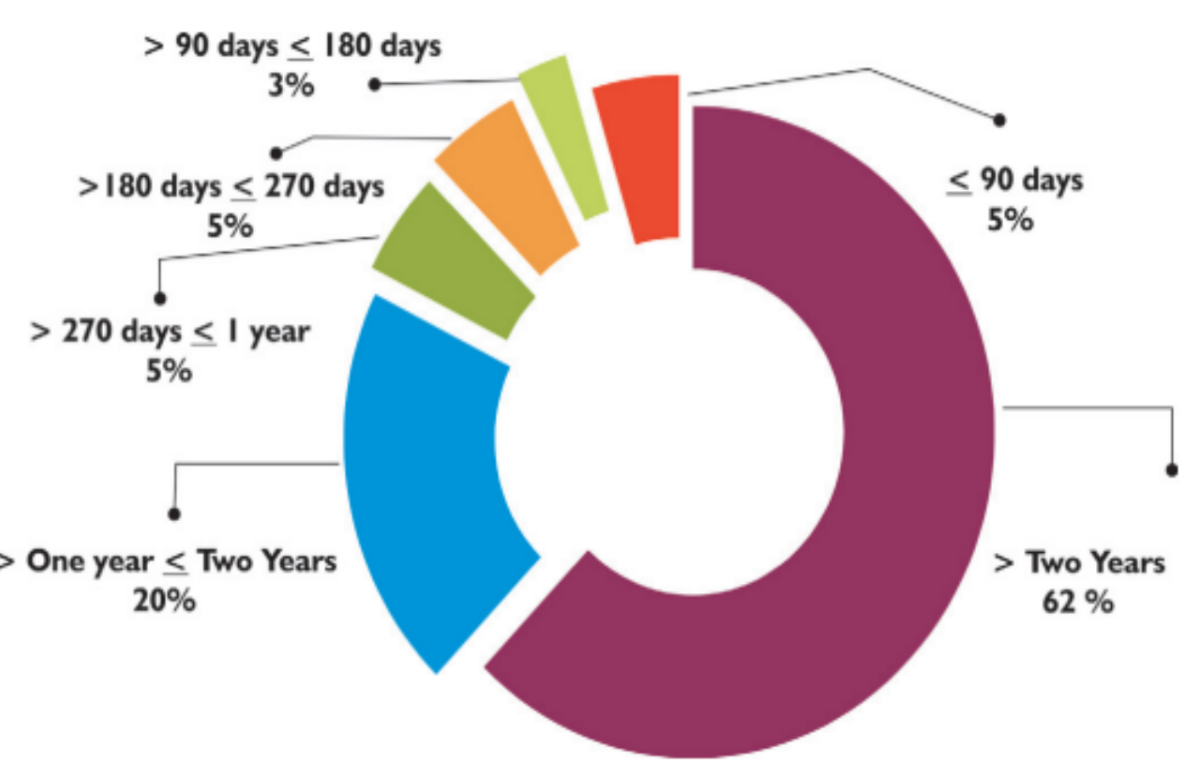
Now, the timeline is proposed to be further reduced mandating the liquidator to completely liquidate the assets of the CD and make an application for its dissolution within a period of 180 days from the liquidation commencement. Extension of 90 days is permitted on an application by the liquidator along with sufficient reasons. The proposal signifies a noble intent, however, the practical application of the same looks quite questionable, as the data clearly suggests that delays are a norm in liquidation processes.
- Mandatory IU filing for OCs [Section 215(3)]
- It is now made mandatory for the operational creditors to submit financial information to the information utility, before filing an application under section 9 of the Code. A similar mande is provided in IU Regulations.
- Practically speaking, this mandate cast an operational hassle for the OCs because of the following reasons: (i) Typically the operating cycle for Operational Debts are shorter as compared to Financial Debts, making it very difficult for the OCs to repeatedly update financial information in the IU (ii) Also in comparison with FCs, who primarily deal with lending money, OCs are less tech-savvy and primarily deal with providing goods and services, making it much of a hassle for them to follow this mandate (especially for MSMEs).
- Penalty regime to avoid prosecutions [Section 235A]: While prosecutions under IBC are scanty, and of course, as lengthy as any court proceeding, the Code now has a penalty provision, to be imposed by the AA. Sec 235A provides for penalty for breach of any of the provisions of the Code, rules or regulations, and authorises imposition of penalty which may go up to Rs 5 crores, or thrice the amount of undue gain made or loss caused. This adds a completely new force to the provisions of the Code.
- A whole lot of rule-making powers added [Sections 239/240]: Sections 239/ 240 are proposed to have a much expanded list of rule and regulation making powers, of the CG and IBBI respectively, the same inter-alia includes:.
- Persons who can have access to information stored in IU;
- Circumstances in which supply of critical goods and services may be terminated, suspended during moratorium;
- Composition of CoC, its function and manner of assigning voting powers;
- Conditions and manner of providing basis for evaluation of resolution plan;
- Manner of evaluating the assets and manner of selling during liquidation
- Proposals in the context of personal insolvency
- Interim moratorium not applicable in cases involving personal guarantor to a CD
- Bankruptcy to follow absence of resolution plan:
- If no repayment plan is submitted within 21 days from the date of submission of claims, AA shall pass an order terminating the insolvency resolution process of the debtor and the debtor or the creditors shall be entitled to file an application for bankruptcy.
- Meeting of creditors to consider repayment plan:
- If repayment plan is in respect of the debtor who is a personal guarantor to a corporate debtor, the resolution professional shall summon the meeting of the creditors. In other cases, the same shall be at the discretion of the RP whether meeting of CoC is required or not.
- Waterfall priority concerning government dues:
- Similar clarification as is proposed in section 53(1)(e), concerning government dues have been proposed in case of personal insolvency as well. Any amount due to CG or SG that amount due for in respect of the whole or any part of the period of two years preceding the bankruptcy commencement date whether or not a security interest is created to secure such amount shall be paid at the 4th priority. Remaining dues shall be covered under the residual debts provided in clause (e).
- Undervalued transactions to keep assets beyond reach of claimants
- Where the debtor has entered into an undervalued transaction and the AA is satisfied that such transaction was deliberately entered into by such debtor for keeping its assets beyond the reach of any person who is entitled to make a claim against the debtor; or in order to adversely affect the interests of such a person in relation to the claim.
- Insertion of section 183A – frivolous or vexatious proceeding
- Penalty not less than one lakh rupees but which may extend to two crore rupees
These proposals seek to give a much-needed resolution to IBC. While the proposals need to be evaluated in detail to understand the possible impact these would have; however, there are several clauses in the Amendment which would put to rest various issues plaguing the implementation of IBC.
- We have dealt with this in detail in our article titled “Secured Creditors under the Insolvency Code: Searching for Equilibrium” by Vinod Kothari and Sikha Bansal, published in IBBI Annual Publication available at https://www.ibbi.gov.in/uploads/whatsnew/2020-10-01-210733-43cms-9224c9b668aac0d6149a5d866bfb4c79.pdf ↩︎
Read More:
Leave a Reply
Want to join the discussion?Feel free to contribute!