Cracking the ‘Bitcoin’ nut this Budget Session

Vallari Dubey & Saloni Mathur

finserv@vinodkothari.com
corplaw@vinodkothari.com

Introduction

In the words of Mr. Nassim Nicolas Talib, “Bitcoin is the beginning of something great, a currency without a government, something necessary and imperative.” Read more

Fresh set of conditions for strategic investments in REITs and InvITs

By Saloni Mathur , (finserv@vinodkothari.com)

The SEBI vide its circular dated 18th January 2018[1](‘Circular’) issued guidelines on participation by the strategic investors in InVIT’s and REIT’s. These guidelines have been issued in pursuance to the powers conferred on SEBI as per the provisions of the section 11(1) of the Securities and Exchange Board of India Act, 1992(‘SEBI Act’) read with regulation 33 of the Securities and Exchange Board of India (Real Estate Investment trusts) and (Infrastructure Investment trusts) regulations, 2014.[2]

Read more

Companies (Amendment) Act, 2017 brings relief under sections 185 and 186

By CS Nikita Snehil | (corplaw@vinodkothari.com)

Manager | Vinod Kothari & Company

The intent behind bringing the amendment in Companies Act, 2013 is to clear the ambiguities in the current provisions in order to strengthen the corporate governance and to help improve ease of doing business in the country. Therefore, in order to remove the ambiguities and to bring clarity, the Companies (Amendment) Bill, 2017 which was passed by Rajya Sabha on December 19, 2017 and received the assent of the President on January 01, 2018[1], has brought many changes. Among the various changes, the present Article deals with the changes brought under the sections 185 and 186 of the Companies Act, 2013.

Changes in section 185

With the very introduction of Companies Act, 2013, section 185, being a prohibitory section, was of great importance. There was no scope of any carve out or any route to apply to Central Government’s approval for non-applicability of such restrictions, unlike section 295 of the Companies Act, 1956. Further, the said section was applicable to both pubic as well as private companies, which was totally unacceptable by private companies. Then MCA vide exemption notification dated June 5, 2015[2] exempted private companies form the provisions of section 185 which brought great relief to the private companies, however, such relief is even subject to stipulated conditions. Therefore, to promote ease of doing business, the entire section has been substituted.

Deletion of the non obstante clause

The extant provision of section 185 starts with the following words “Save as otherwise provided in this Act”, which provides that if there is any other provision of the Act permitting lending as covered by the section then such specific permission shall prevail over this section. This creates confusion as to whether specific sanction of section 186 which starts with “without prejudice to the other provisions” can exclude section 185. To avoid such ambiguity the same has been omitted in the amended provision.

The new provisions of section 185 is partly restrictive and partly prohibitive

The intent of the current provisions of Section 185 is to ensure that directors who hold a fiduciary position with respect to shareholders do not utilize the funds of the company for their own benefit. However, the company laws over the world do not provide for a complete blanket prohibition on advancement of such loans/guarantee/security to directors and their related entities.

It is pertinent to note that where the shareholders of the company, being the ultimate owners, themselves approve the utilization of the funds of the company in the specified manner, the law need not create a bar on the same. Thus, at par with the global company laws, the provision has been amended to remove the prohibition to an extent and provides for the passing of shareholders’ resolution for granting of loans/guarantees/securities to entities in which directors are interested.

The amended provisions are partly prohibitive and partly restrictive. The section continues to prohibit the granting of loan/guarantee/security to some, while restricts the others in the following way:

  • Prohibitive to:
  • directors of the co., or
  • directors of a co. which is its holding co.; or
  • any partner of such director; or
  • relative of such director
  • Restrictive to:
  • any private co. of which any such director is a director or member;
  • any body corporate at a general meeting of which not less than 25% of the total voting power may be exercised or controlled by any such director, or by two or more such directors, together;
  • any body corporate, the BoD, MD or manager, whereof is accustomed to act in accordance with the directions or instructions of the BoD, or of any director or directors, of the lending company.

The amended provisions allow the companies to grant loans/guarantees/securities to entities in which directors are interested, in the above mentioned restrictive cases, subject to prior approval of the shareholders by a special resolution and on the condition that such loans are utilised by the borrower for its principal business activities.

Significance of principal business activity in the amended provisions

In order to ensure that the companies do not take advantage of the relief, the amended provisions ensure that there is no siphoning of funds received by the companies, as the amount received under the section should be utilised by the borrower for its principal business activities and not for further investment or grant of loan.

Further, loans extended to persons, including subsidiaries, falling within the restrictive purview of Section 185 should be used by the subsidiary for its principal business activity only, and not for further investment or grant of loan.

Shareholders’ approval — whether ‘prior’ or ‘post’?

It is pertinent to note that the provisions of the amended law, do not explicitly requires any prior approval, as is the case in section 186 and 188 of the Companies Act, 2013.

Though, the Report of the Companies Law Committee, 2016 recommended the special resolution to be a prior resolution. However, the language of the amended section 185 does not specify whether the special resolution should be prior to advancing the loan/guarantee/security.

Further, as per the provision of the amended law, the explanatory statement to the notice of the general meeting is required to disclose the full details of the loan/guarantee/security given. Thus, one may infer that such resolution may be passed after granting of such loan/guarantee/security.

Rate of interest to be charged for the loans granted under the amended section

As per the Report of the Companies Law Committee 2016, the rate of interest for loans granted under section 185 was proposed to be aligned with section 186(7). Further, the report also suggested that it may not be appropriate to apply Indian interest rates bench marks prescribed under section 186(7) to loans given by companies to foreign entities and the effective yield against the loan given, irrespective of whether the loan is given to a company incorporated outside India should not be less than the prescribed rate under section 186(7).

Though the exemption provided to companies which in the ordinary course of its business provides loans or gives guarantees or securities for the due repayment of any loan requires the rate not to be less than the rate of prevailing yield of one year, three year, five year or ten year Government security closest to the tenor of the loan, however, no such interest rate is provided for the persons falling within the restrictive purview of Section 185.

Extension of the penal provisions

The amended section 185 has extended the penal provisions to an officer of the company, which has been defined in section 2 (59) to include any director, manager or key managerial personnel or any person in accordance with whose directions or instructions the Board of Directors or any one or more of the directors is or are accustomed to act. Therefore, the ambit of the penal provision has been widely extended.

Status of exemptions provided to the private companies

The amended section 185 seeks to completely replace the existing provisions of section 185 of Companies Act, 2013. However, the exemption notification dated June 5, 2015 shall continue to hold good and the amended provisions of section 185 shall be not applicable to private companies subject to the conditions prescribed in the notification.

As per the exemption notification dated June 5, 2015 only those private companies which fulfil the prescribed conditions are exempted from the provisions of section 185. Hence, private companies which do not fulfil the conditions prescribed are subject to the prohibition as per the amended section 185, i.e., the private companies, which do not fulfil the conditions for availing the exemption, will be able to grant loan/guarantee/ security under the restrictive purview.

Comparison between the current and amended provisions of section 185

Sl No. As per Act, 2013 As per Act, 2017
 

1

Prohibition on         giving  of loan/ guarantee/ security to the director of the Company Continues to be prohibited
 

2

Prohibition on giving of loan/guarantee/ security to the director of the holding company Continues to be prohibited
 

3

Prohibition on giving of loan/ guarantee/ security to        any partner or relative of any such director Continues to be prohibited
 

4

Prohibition on giving of loan/guarantee/

security to any firm in which any such director is a relative or partner

Continues to be prohibited
 

5

Prohibition on giving of loan/guarantee/

security to any private company of which any such director is a director or member

Requires passing of a special resolution
 

6

Prohibition on giving of loan/guarantee/

security to any body corporate at a general

meeting of which not less than twenty-five

per cent. of the total voting power may be

exercised or controlled by any such director, or by two or more such directors, together

Requires passing of a special resolution
 

7

Prohibition on giving of loan/guarantee/

security to any body corporate, the Board of directors, managing director or  manager, whereof is accustomed to act in accordance with the directions or instructions of the Board, or of any director or directors, of the lending company

Requires passing of a special resolution
 

8


No parallel provision

Loans to be utilised by the borrower for its principal activities
Status of applicability of the section on the following transactions
Particulars As per Act, 2013 As per Act, 2017
Any loan made by a holding company to its wholly owned subsidiary company.

Provided that the loans made are utilized by the wholly owned subsidiary company for            its principal business activities.

Exempted Continues to be exempted
Any guarantee/security provided        by        a holding company in respect of any loan made to its wholly owned subsidiary company.


Provided that the loans made are utilized by the wholly owned subsidiary company for            its principal business activities.

Exempted Continues to be exempted
Any loan made by a holding company      to its subsidiary company. Not exempted Continues not to be exempted
Any     Guarantee given or

security provided by a holding company in respect of loan made by any bank or financial institution   to            its subsidiary company.

Exempted Continues to be exempted

Changes in section 186

Incorporating MCA’s clarification in the provisions of law

The amended provision clearly excludes employees of the company from the term ‘person’ to whom a company cannot directly or indirectly give loan exceeding the prescribed threshold. The same was clarified by the Ministry vide its General Circular[3] dated 10th March, 2015. However, the said Circular provided two conditions for such exclusion i.e. the loan being given should be in terms of service policy of the company along with the same being in terms of remuneration policy of the company – these conditions are no more applicable, as the provision directly excludes employees from the term ‘person’.

Exemption from shareholders’ approval in certain cases

As per the amended provisions the shareholders’ approval will not be required where a loan or guarantee is given or where a security has been provided by a company to its:

  • wholly owned subsidiary company or
  • a joint venture company, or
  • acquisition is made by a holding company, by way of subscription, purchase or otherwise of, the securities of its wholly owned subsidiary company.

The exemption will increase the investing power of the company.

Other changes

  • The exemption of the non-applicability of the provision of section 186 (except the provision relation to restriction on layers of subsidiaries) has been extended to a rights issue made by a body corporate specifically to include foreign company.
  • The meaning of the investment company has been clarified, which is in line with the explanation provided by the RBI in its FAQ’s on NBFC. As per the amended provisions:

“a company will be deemed to be principally engaged in the business of acquisition of shares, debentures or other securities, if its assets in the form of investment in shares, debentures or other securities constitute not less than fifty per cent. of its total assets, or if its income derived from investment business constitutes not less than fifty per cent. as a proportion of its gross income”

The same is also referred as the 50-50 test, and is applied to test whether the company is into financial business or not. Therefore, this provision will bring clarity in determining the non-applicability.

Therefore, the relief brought under both the section will be widely accepted by all and we hope that the said provisions shall be enforced soonest.


[1] http://ca2013.com/wp-content/uploads/2018/01/181439.pdf

[2] http://www.mca.gov.in/Ministry/pdf/Exemptions_to_private_companies_05062015.pdf

[3] http://www.mca.gov.in/Ministry/pdf/Notice_29062017.pdf

GST Council brings down the rate of GST on used cars, besides others

By Abhirup Ghosh, (abhirup@vinodkothari.com, finserv@vinodkothari.com)

The GST Council met for the 25th time on 18th January, 2018 to modify the GST law in order to tackle the difficulties being faced in the market. The Council recommended several changes to the law among and one of the change that has can cause a significant impact on the vehicle industry is reduction of rate of tax on sale or purchase of used motor vehicles. Read more

Abstaining creditors in CoC will not be counted in voting

Absenteeism in voting – an Oxymoron

Nitu Poddar

resolution@vinodkothari.com

This note deals with the question whether, in determination of the assent at a Committee of Creditors in resolution proceedings, the votes of such creditors who (a) do not vote at all, at an electronic voting; or (b) abstain from voting at the meeting itself [collectively referred to as “abstaining creditors”] will be considered while computing the voting strength of 75% required.

Read more

An Insight on Direct Selling Guidelines, 2016 Pyramid Schemes vis-a-vis MLM

By Saloni Mathur (finserv@vinodkothari.com)

Introduction

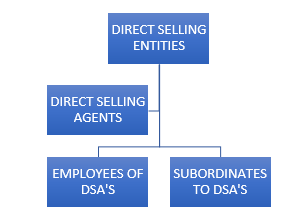
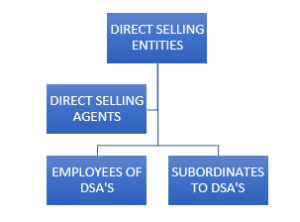
There has been a shift in the paradigm of the performance of the direct selling agents. The role and responsibilities of the direct selling agents have witnessed a revolution, where they are required to comply with certain codes as prescribed by the government from time to time, and follow certain practises while discharging their responsibilities. The RBI’s master directions[1]on the outsourcing norms have put stringent compliances on the service providers while discharging their functions, and increased responsibility and monitoring on the part of the non-banking financial companies. The question that arises here is whether those non- banking companies complying with the outsourcing guidelines, fall under the ambit of the direct selling guidelines also and if they, then what is the nature of the applicability of these direct selling guidelines on them.

According to a report on the Indian direct selling industry published by FICCI and KPMG, the direct selling market in India has grown at a CAGR of 16 per cent over the past five years to reach INR75 billion today.[2] Due to this unprecedented rise in direct selling industry and the growth of a large distribution base, major scams have been witnessed over the years in reputed companies owing to the nature of marketing methods adopted by them.

The Government of India, Ministry of consumer affairs, food and public distribution, department of consumer affairs, vide its notification number F.No.21/18/2014-IT (vol II) dated 09th September, 2016 modelled certain guidelines on the direct selling regulating the business of direct selling and the multi-level marketing.

This article is an attempt to envisage the rationale behind these guidelines and the applicability of these guidelines on the direct selling agents and the various compliances that are required to be made by the direct selling entities and the direct sellers.[3] Further this article also takes into account the concept of Multi-level marketing and the pyramid schemes with reference to the applicability on the direct selling agents.

Rationale behind the launch of the Scheme

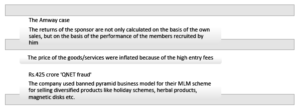
The direct selling industry has brought about with itself a huge reservoir of marketing, selling and distribution base for the goods and services, which has given rise to various fraudulent practises in the marketing and the distribution system. Instances can be drawn from the famous Amway and the Qnet case where entire money in the chain was earned only through the recruitment of new members and adding more participants to the channels of distribution, rather than the actual sale of the goods and services. Though the Amway was convicted of “illegal pyramid scheme” it could finally escape all criticism under the umbrella of the “the Amway safeguard rules”. However, the case has left strong marks of scepticism in the validity of the direct selling business.

The companies which were engaged in multi-level marketing were carrying out various frauds through the recruitment of large number of participants in the system. Thus, a need was felt where a robust system of direct selling guidelines was required to protect the interest of the consumers.
Defining the Pyramid and the MLM schemes

Defining the Pyramid Scheme

“Pyramid Scheme” as defined in the guidelines mean a multi layered network of subscribers to a scheme formed by subscribers enrolling one or more subscribers in order to receive any benefit, directly or indirectly, as a result of enrolment, action or performance of additional subscribers to the scheme. The subscribers enrolling further subscriber(s) occupy higher position and the enrolled subscriber(s) lower position, thus, with successive enrolments, they form multi-layered network of subscribers.

The key feature of the pyramid is that as the entrants in the last layer of the pyramid continue to get more and more participants who pay money. By way of this a hierarchy is created and the sponsor who holds the top most position is the recipient of the highest commission. The Amway case is the perfect example of the “illegal Pyramid scheme” where the purpose of the scheme was to make money through recruiting more distributors at various levels.

The pyramid scheme is illegal in India under the Prize chits and Money Circulation Schemes (banning) act, 1978. Hence there is a non-applicability of this scheme.

Following are some of the key constituents of the Pyramid Schemes

High registration fees

The basic quality of a pyramid scheme is that there is a high registration and entry fees upfront that the participants in the scheme have to pay. The entry fee is so high that the participants holding top position get a very high commission fees.

Goods sold at a price higher than the fair value and a higher quantity that is generally sold in the market

The goods and services under the pyramid schemes are not sold at the fair value. Fair value means the price at which the goods and services are generally available in the market. If the goods are sold to the consumers at a price higher than what is a general fair market price, it is a pyramid scheme.  Similarly, if the goods are sold at a quantity higher than what is expected to be consumed by, or sold, resold to consumers, it will constitute to be a pyramid scheme. The price of the goods and services have a higher component of commission cost rather than the actual product price. The price of the product generally has 70% commission cost and remaining 30% cost of the product.

The level of unsold inventory

Under the pyramid schemes the unsold inventories of the participants is not generally brought back by the distributor.

Emphasis on the recruitment of more members

There is a greater emphasis on the recruitment of more members rather than promoting and distributing the product. The purpose here is to fetch higher commissions for the sponsors at the top most level.

No material contract between the direct selling entity and the direct seller

There is no material agreement entered between the direct selling entity and the direct seller on buy back, refund, repurchase policy of the unsold inventory.

No cooling off period

There is no cooling off period given to the direct sellers up to which they can cancel the contract.

Defining the Multi-level Marketing (MLM) scheme

In an MLM structure, multi-level marketing or the network marketing are used to sell the products directly to the consumers in which the salesmen are compensated not only for the work done by them but also for the sales of the people who have joined the company through them.[4]

The main purpose of the MLM scheme is to ensure wide distribution of the products or services and the intent is to sell the product through a network of wide range of distributors. Thus, it is just a marketing strategy unlike a fraudulent pyramid scheme where there are tangible distribution of the goods and services.
Comparing the MLM and the ‘Pyramid’

The big difference between multilevel marketing and a pyramid scheme is in the way the business operates. The entire purpose of a pyramid scheme is to get distributors’ money and then use it to recruit other distributors. The entire purpose of MLM is to move the product and ultimately achieve the sales of the product. The theory behind MLM is that the larger the network of distributors in a chain, the more products the business will be able to sell. Therefore, whether it is a pyramid scheme or an MLM approach depends upon the legality of the schemes and the purpose behind their operation as the Pyramid scheme is illegal.

Defining key concepts under the ‘direct selling guidelines 2016’

‘Direct selling’ has been clearly defined in regulation 6 which means marketing, distribution and the sale of the goods or providing of any services as a part of network of direct selling other than under a pyramid scheme.

Thus, what constitutes to be a direct selling is based on four conditions i.e direct selling has to be marketing, distribution, and selling of the goods and services as a part of network of direct selling. Thus all the four conditions need to be qualified simultaneously for determining direct selling. Thus, a direct selling agent, if restricts its services only to marketing of products and not to selling and distribution would not be required to comply with these guidelines.

Similarly, the network is defined as an arrangement of intersecting horizontal and vertical lines. To be a network it is therefore necessary that there is a hierarchy of a direct selling agents such that there is a superior subordinate relationship at all levels of distribution

The ‘network of direct selling’ means a network of direct sellers at different levels of distribution who may recruit or sponsor further levels of the direct sellers, who they then support. “Network of direct selling” shall mean any system of distribution or marketing adopted by a direct selling entity to undertake direct selling business and shall include the multi-level marketing method of distribution.

This network of direct sellers also includes the multi-level marketing method of distribution.

Thus, network of direct selling shall be hierarchical. Single level of distribution would not constitute any network.

Comparing the network, the Pyramid and the MLM

The network may be at a horizontal level also. For example, if there is one direct selling entity selling goods and services through a single level of the direct sellers, all at the same level shall constitute a network. However, Pyramid necessarily has to be a vertical hierarchy such that there should a superior subordinate relationship. Multi-level marketing shall have to a be a legal marketing strategy and not a fraudulent scheme.

Understanding the applicability of the scheme

The applicability of the above guidelines on the direct and selling agents have to be checked from the following facts:

This scheme is applicable on the following companies.

  1. Companies engaged in marketing as well as selling and distributing the products simultaneously under the network of direct selling.
  2. All the multi-level marketing schemes such that there are different levels of distribution and the participants are at different distribution levels. Here the participants at the same level of distribution shall not be required to comply with the scheme.
  3. Company carrying its operations through a hierarchical multi-level system.
  4. Companies appointing the direct selling agents in such a way, such that they are sponsoring or carrying out recruitment further so that a large network of distribution is created
  5. Companies that have relevant clauses in the outsourcing agreement and which specifically reflect the outsourcing or subcontracting of the service to the third parties.
  6. Companies requiring direct selling agents to pay high membership fees and greater entry costs.

Non-Applicability of the guidelines to Pyramid schemes and companies having only one level of distribution

The guidelines shall not be applicable to the pyramid scheme. This is because these schemes are generally money-making schemes and not any legal marketing strategy. This comes from the fact that pyramid schemes are generally created not to market the products, but to create a distributor base for earning large money through promotion. Thus, the direct selling guidelines take a legal view and apply to only legal MLM schemes and direct selling.

Further the companies having only a horizontal distribution base such that they are not recruiting or sponsoring further levels in the chain shall be kept out of the purview of these guidelines.

Quick compliance checklist for direct selling guidelines 2016

  1. All direct selling companies in India shall submit an undertaking to the department of the consumer affairs within 90 days from 12th September 2016.
  2. Direct seller cannot receive remuneration or incentive for the recruitment/enrolment of the new participants.
  3. Direct sellers can only receive remuneration derived from the sale of goods or services
  4. Direct seller shall carry its identity card and not visit the customers premises without prior intimation/approval.
  5. Direct selling company cannot force its direct sellers to purchase more goods or service than they can expect to consume or sell.
  6. Direct selling company cannot demand any entry fee/registration fee.
  7. Company must provide every participant written contracts describing the material terms (buy back, re-purchase policy, cooling period, warranty and refund policy.
  8. Mandatory orientation session with accurate information for the newly recruited direct selling agents
  9. There shall be prohibition of the pyramid scheme and the money circulation scheme.
  10. There shall be a monitoring authority to deal with the issues related to the direct selling.

Conclusion

There is no scepticism regarding the benefits of the direct selling guidelines on the interest of the consumers in prevention of the frauds against them, however comprehending the applicability of these directions is a hard nut to crack for various entities who are in a dilemma to comply with these guidelines. The guidelines do not specifically state the extent of the applicability; however, they do give certain apparent indications to the entities to whom these guidelines shall be applicable.

Thus, any company desirous of increasing their distribution base for selling wide range of products or services and who intend to do it by creating a hierarchical distribution that requires further outsourcing and recruitment shall be required to comply with the guidelines. Further the outsourcing agreement between the DSA and the service provider shall clearly state the provisions regarding contracting and the sub-contracting, subsequent to which only a network of distributors could be created.


[1] https://rbidocs.rbi.org.in/rdocs/notification/PDFs/NT87_091117658624E4F2D041A699F73068D55BF6C5.PDF

[2] https://www.souravghosh.com/blog/direct-selling-guidelines-2016/

[3] https://consumeraffairs.nic.in/sites/default/files/file-uploads/direct-selling/Direct%20Selling%20Guidelines%20Final%20_0.pdf

[4] https://www.icsi.edu/WebModules/LinksOfWeeks/JuneCS_2014.pdf

Rights of Defaulting Promoters to submit Resolution Plan

Vallari Dubey

resolution@vinodkothari.com


In the matter of RBL Bank Ltd. v. MBL Infrastructures Ltd., Order of NCLT dated 18th December, 2017.

Background of the Case:

In the case of RBL Bank Ltd. v. MBL Infrastructures Ltd.[1] a resolution plan, submitted by the promoter was rejected after the Insolvency and Bankruptcy (Amendment) Ordinance, 2017 (‘Ordinance’), which notified Section 29A to the Insolvency and Bankruptcy Code, 2016 (‘the Code’), was brought into force.

The Plan was rejected by the Committee of Creditors as per clause (c) and (h) of Section 29A, on account of attraction of ineligibility under the aforesaid new provision. Application is thereon filed by the resolution applicant under Section 60 of the Code, before the Adjudicating Authority (‘NCLT’) to set aside the decision of the Committee of Creditors.

Read more